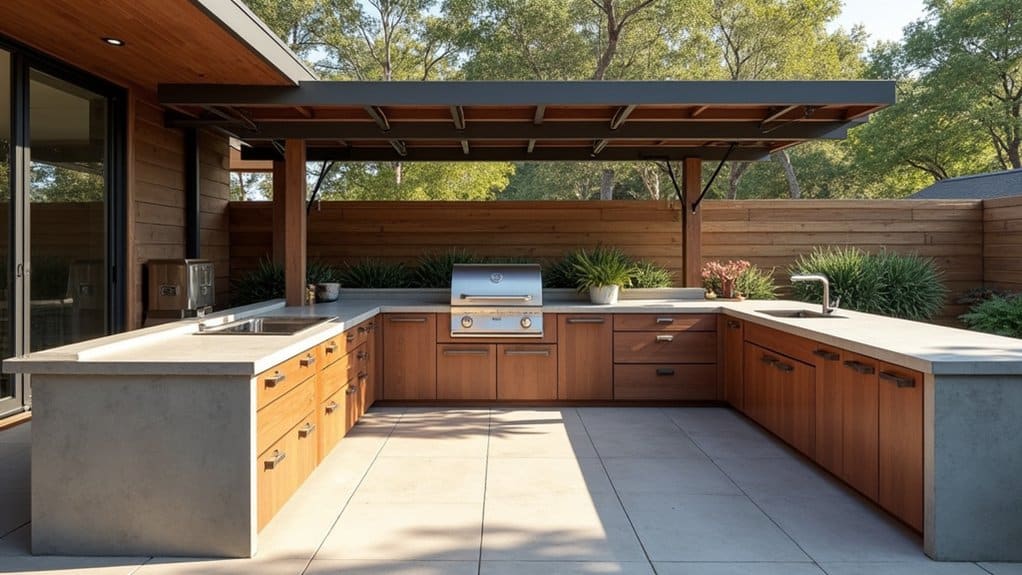
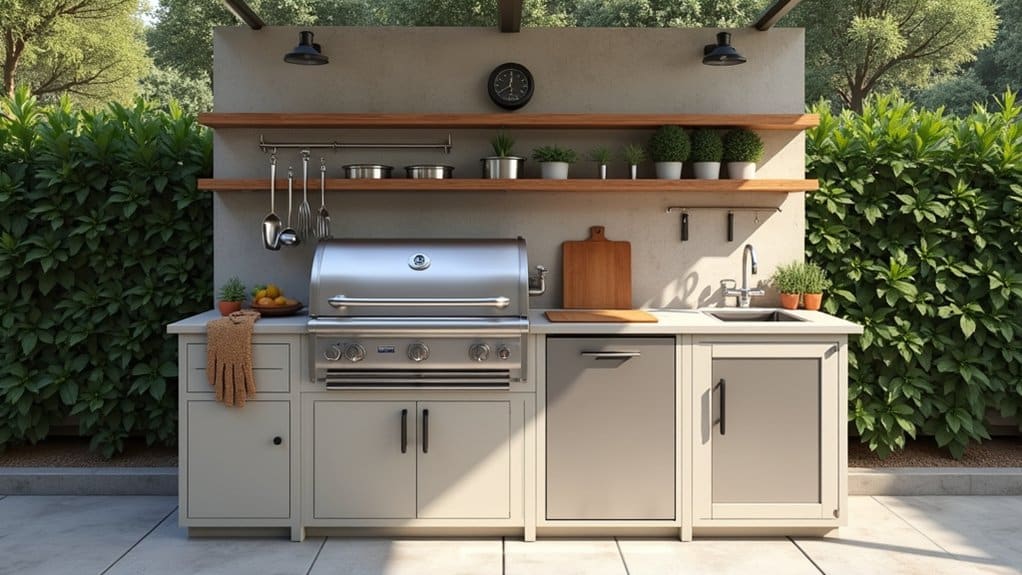
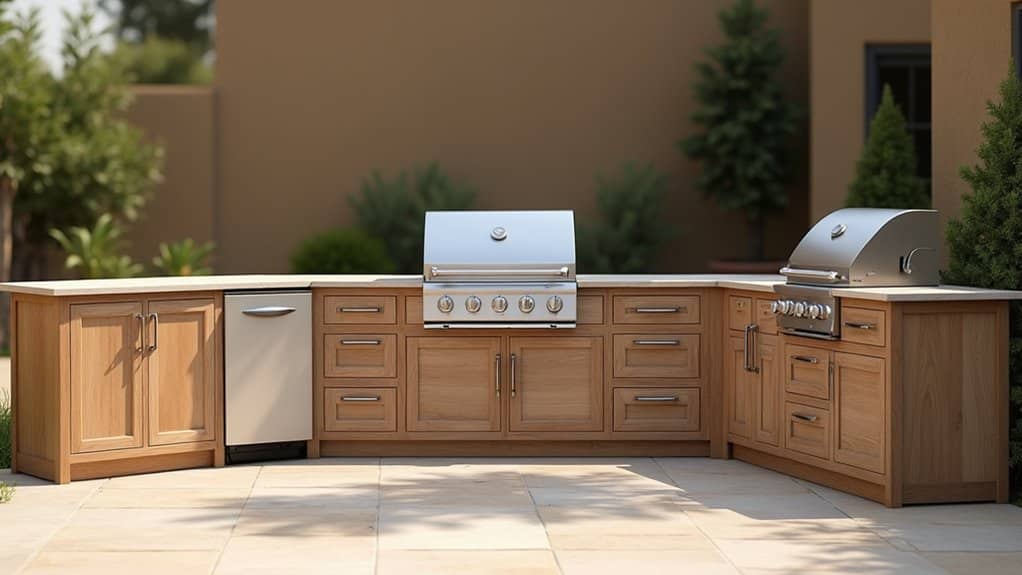
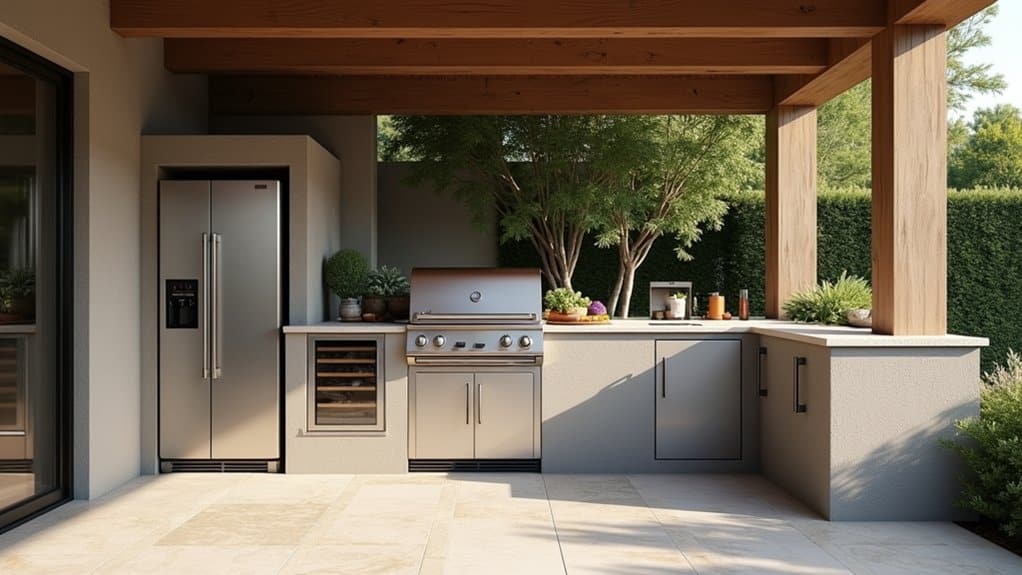
Transform your outdoor space into a tech-enabled living sanctuary by integrating smart home features with seamless indoor-outdoor shifts. You’ll optimize functionality through retractable glass walls, sustainable materials, and connected outdoor kitchens. Create distinct zones for wellness activities, incorporating meditation gardens and spa features. Add climate-resilient elements like solar panels and smart irrigation systems. The future of modern outdoor living combines sophistication with sustainability in ways you’ll want to investigate further.
Seamless Indoor-Outdoor Living Spaces

How can modern homes blur the boundaries between indoor and outdoor spaces? By integrating outdoor living spaces through strategic design elements like solariums, retractable glass walls, and carefully planned hardscaping components, you’ll create a functional flow that extends your living area beyond traditional walls.
Consider incorporating diverse shapes and materials to create cohesive shifts in your overall landscape. Install sophisticated outdoor furniture that mirrors your indoor aesthetic, establishing dedicated zones for dining, lounging, and even working. With 35% of Americans now working remotely, a peaceful and relaxing outdoor office setup can revolutionize your daily routine.
Transform your yard into an extension of your home by adding outdoor kitchens, shade structures, and weather-resistant amenities. These indoor and outdoor living solutions guarantee year-round usability while maintaining design continuity throughout your space.
Smart Technology Integration for Outdoor Comfort

Your outdoor living space can transform into a sophisticated command center with integrated smart technology solutions. By installing outdoor Wi-Fi extenders and smart plugs, you’ll create a powerful network that powers automated features throughout your yard. Connect smart home technology like automated lighting, sprinklers, and grills to optimize efficiency and improve your outdoor experience.
Integrated smart systems let you manage multiple outdoor features through a single app, giving you complete remote control over lighting, irrigation, and security. You’ll reduce energy consumption while maximizing comfort by programming automated schedules for your outdoor systems. As demand for smart outdoor technology continues to rise, incorporating these solutions into your design will future-proof your space. Consider adding whole-home batteries and solar panels to create a sustainable, tech-enabled outdoor environment that functions year-round.
Sustainable Materials and Energy Solutions

The shift in the direction of sustainable outdoor living has revolutionized material selection and energy management in modern home design. You’ll find eco-conscious homeowners incorporating teak wood and rope materials into their outdoor spaces, creating both aesthetic appeal and environmental responsibility. Solar panels, now integrated seamlessly into the terrain, power everything from irrigation systems to fire features.
Your outdoor spaces can become more resilient with smart water features that include catchment systems and retractable flood barriers. By combining whole-home batteries with solar technology, you’re able to maintain consistent power for outdoor lighting and entertainment areas. Consider recycled materials for pathways and decorative elements, while strategically placing plants to optimize natural shade and reduce energy consumption. These sustainable choices align perfectly with the growing demand for energy-efficient outdoor living environments.
Wellness-Focused Backyard Retreats
Modern wellness sanctuaries have transformed traditional backyards into rejuvenating outdoor retreats, reflecting a growing $1.8 trillion wellness industry trend. You’ll optimize your outdoor living spaces by integrating natural elements like meditation gardens, soothing water features, and native plantings that create visual interest while promoting biodiversity.
Consider incorporating a spa zone with a sauna and cold plunge pool, complemented by strategic landscaping ideas that buffer noise and augment privacy. Your modern outdoor design can seamlessly blend wellness features with functionality through thoughtfully placed fire pits and outdoor kitchens. These elements don’t just add aesthetic value they create dedicated zones for relaxation and recreation.
Modern Outdoor Kitchen and Entertainment Areas
Your modern outdoor kitchen can combine a luxury cooking station featuring professional-grade appliances with smart technology integration that lets you control lighting, music, and cooking temperatures from your smartphone. You’ll optimize functionality by creating distinct zones for food preparation, dining, and lounging, with each area thoughtfully positioned to maintain seamless flow while protecting guests from smoke and heat. The strategic layout should incorporate weather-resistant materials and energy-efficient fixtures that extend your outdoor entertaining capabilities throughout multiple seasons, making the most of your investment with a projected 100% cost recovery.
Luxury Cooking Station Design
Why limit culinary creativity to indoor spaces when you can design a sophisticated outdoor cooking station that seamlessly integrates with your home’s architecture?
Your outdoor design ideas should focus on creating a functional yet striking cooking hub. Install professional-grade stainless steel appliances, including a built-in grill, rotisserie, and pizza oven, arranged in an ergonomic workflow pattern. Incorporate smart storage solutions with weather-resistant cabinetry and pull-out organizers. Position your cooking station to connect naturally with your dining space and outdoor living room, creating a cohesive entertainment zone.
Consider sustainable materials like recycled composite decking and solar-powered lighting to align with current outdoor living trends. Add a protective pergola with retractable shading to extend your cooking season and shield outdoor furniture. Remember to include adequate task lighting for evening meal preparation.
Smart Appliance Integration Features
Building upon the outdoor cooking station’s foundation, smart appliance integration transforms your exterior space into a tech-enabled culinary command center. Your design choices now include WiFi-connected grills, cooktops, and refrigerators that you’ll control through smartphone apps, streamlining your outdoor entertaining experience.
Create a seamless flow between cooking and entertainment zones by incorporating smart Hardscape features like automated lighting systems and weather-resistant speakers. These outdoor designs boost your space with synchronized ambiance controls and personalized settings. Smart irrigation sensors and sustainable water management systems complement your decorating ideas while reducing maintenance needs. You’ll amplify efficiency with integrated solar panels and home batteries, powering your smart appliances while maintaining energy independence. Advanced features like geofencing and facial recognition provide hands-free control, elevating your outdoor living experience through intelligent automation.
Multi-Zone Entertainment Layouts
While modern homes demand versatile outdoor spaces, strategically designed multi-zone entertainment layouts optimize functionality through distinct yet interconnected areas. You’ll maximize your time and money by dividing your backyard into purposeful outdoor rooms that flow seamlessly from indoor living spaces.
| Zone Type | Key Features | Usage Pattern |
|---|---|---|
| Cooking | Built-in grill, pizza oven | High-traffic evening |
| Dining | Shade structures, seating | Peak meal times |
| Lounge | Fire pit, water features | All-day relaxation |
Your spatial design ideas should incorporate smart technology while maintaining distinct zones within 100-400 square feet. Current backyard trends emphasize patio trends that blend cooking, dining, and lounging areas. By integrating fire and water elements strategically throughout these zones, you’ll create year-round entertainment spaces that augment your property’s versatility and value.
Climate-Resilient Landscape Design
When designing your climate-resilient outdoor space, you’ll want to select drought-resistant native plants that can thrive with minimal water while providing year-round visual interest and habitat support. You can improve your scenery’s weather adaptability by incorporating strategic features like retractable shade structures, permeable paving, and smart irrigation systems that respond to real-time weather conditions. Your outdoor living space becomes more sustainable and functional with the inclusion of rain gardens, bioswales, and green infrastructure that capture stormwater runoff while creating natural cooling effects.
Drought-Resistant Plant Selection
As climate patterns become increasingly unpredictable, choosing drought-resistant plants stands as a critical strategy for sustainable scenery design. You’ll find that native plants and climate-adaptive perennials can transform your outdoor space while reducing water usage by up to 60%. By incorporating xeriscape design principles and strategic mulching of garden beds, you’re creating a resilient terrain that’s both beautiful and practical for your local climate.
- Select agave, cacti, and yucca as foundational elements to conserve water
- Integrate lavender and rosemary for year-round color with minimal irrigation
- Layer decomposed granite or wood chips to maintain soil moisture
- Use lantana as ground cover to suppress weed growth
- Combine ornamental grasses with succulents for visual depth and texture
These drought-tolerant plants won’t just survive they’ll thrive in your modern scenery while supporting environmental sustainability.
Weather-Adaptive Outdoor Features
How can modern homes adjust to increasingly volatile weather patterns? Transform your outdoor space with strategic weather-adaptive features that combine functionality and resilience. Install retractable flood barriers and retaining walls to protect against extreme weather events while creating an outdoor environment that’s both beautiful and practical.
You’ll find everything you need for climate resilience in modern design elements. Incorporate adjustable shade sails and retractable canopies to manage sun exposure, while using plants native to your region for drought-resistant landscaping. Augment your outdoor décor with smart water catchment systems and energy-efficient lighting that respond to changing weather conditions. Choose plant material that thrives in your local climate, and position them strategically near retaining walls for ideal growth and protection. These adaptations guarantee your outdoor space remains functional regardless of weather challenges.
Frequently Asked Questions
What Are the Best Low-Maintenance Plants for Modern Outdoor Spaces?
You’ll find drought-tolerant succulents and native wildflower gardens are perfect for modern spaces, requiring minimal upkeep while maximizing visual impact. Install self-watering planters and automated irrigation systems to reduce maintenance time. Consider vertical greenery walls that create dynamic focal points, and incorporate low-profile ground covers or no-mow grass alternatives. Add aromatic herb gardens and pollinator-friendly plantings to create a sustainable ecosystem that practically maintains itself.
How Much Does a Complete Backyard Renovation Typically Cost in 2025?
You’ll typically invest between $35,000 to $75,000 for a complete backyard renovation. Your average project budget should account for design consultant fees ($2,500-5,000), material sourcing costs ($15,000-25,000), and labor and installation expenses ($18,000-45,000). Landscaping and hardscaping elements form the bulk of costs, while energy efficient upgrades and smart home integration add $5,000-10,000. Sustainable design elements might increase your budget by 15-20%, but they’ll reduce long-term maintenance costs.
Which Outdoor Design Trends Offer the Highest Return on Investment?
You’ll get the best ROI from sustainable landscaping options and low maintenance hardscaping materials, which can reduce your long-term costs while enhancing property value. Smart home technology integration and weather-resistant patio furniture offer durability and modern appeal. Consider investing in customizable shade structures and low-cost outdoor lighting solutions for immediate impact. Water features for small spaces and raised garden beds provide both aesthetic value and practical functionality, particularly in urban settings.
How Can Small Backyards Incorporate Luxury Design Elements Effectively?
You’ll optimize your small backyard’s potential by implementing compact seating arrangements with modular furniture pieces that adapt to your needs. Create depth through lush vertical gardens and discrete lighting fixtures mounted on walls. Incorporate space-saving storage solutions beneath built-in benches, while adding a minimalist water feature for ambiance. Establish seamless indoor-outdoor flow with sliding glass doors, and integrate smart technologies for automated irrigation and lighting control.
What Permits Are Typically Required for Major Outdoor Design Renovations?
You’ll need to navigate zoning regulations by starting with your local building department. The permit application process typically requires detailed plans, and you should allow 4-8 weeks for permit submission timeline and approval duration. You’ll encounter permit fees based on project scope, and you must schedule required inspections throughout construction. Be prepared for potential permit revisions if plans change. Maintaining permit compliance is essential, as permit enforcement can halt work and impose fines.