Hardscapes And Turf
Premium Outdoor Surfaces Engineered for Beauty, Strength & Long-Term Performance
Compare Materials Before Planning Your Patio or Pool Deck
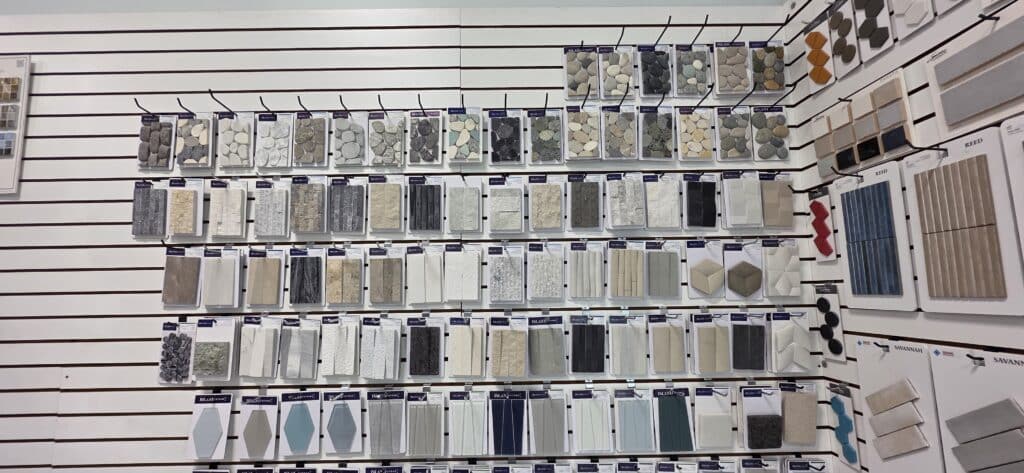
Start with the way you use the space: walking barefoot around a pool, outdoor dining, furniture placement or a combination. Our material selection guide helps you prepare to compare tile, stone and decking choices in the Jupiter showroom.
Bring Photos, Measurements and Your Priorities
- Photos of the current patio, pool coping, door thresholds and any uneven or damaged areas.
- Approximate dimensions and a sketch showing the pool, house, existing planting and walking routes.
- Your priorities for appearance, maintenance, barefoot comfort and wet-area use.
- Photos or samples of finishes you want to coordinate, plus your budget and target timing.
Ask about the intended use, finish and care instructions for each material. Site conditions and the specific product help determine the right installation approach.
Plan surface changes alongside patio furniture, pool loungers, shade structures and landscape lighting so seating, circulation and finishes work together.
Visit our 7,000 sq ft showroom at 14701 Walgreens Dr, Unit A, Jupiter, FL 33478. Open Monday, Friday 9 am, 5 pm and Saturday 10 am, 3 pm. Call 561-594-1495 to confirm the samples or displays you want to see.
Reach Out Today!
I recently had outdoor pool make from this company and I couldn't be happier. The quality is fantastic and it was exactly what I was looking for. The customer service was great too, they were very helpful and accommodating


We had a vision for our backyard, and Innovative Outdoor Living brought it to life beyond anything we imagined. The team was professional, attentive, and delivered a space that has quickly become our favorite spot at home. We love every detail, from the elegant pergola to the cozy firepit."

Hardscaping is the built, non-planted part of a yard, the paver patio, the pool deck, the driveway, walkways, retaining walls, and fire features, plus artificial turf where a low-water lawn makes more sense than grass. We design and install all of it with one crew, so the surfaces line up, drain correctly, and hold together as one finished space.
What Hardscaping Covers
Hardscape is everything underfoot and every built surface in the yard: the patio you set furniture on, the deck around the pool, the path to the front door, the wall that holds back a grade, and the fire feature you gather around. Done right, these are not separate add-ons. They are laid out together so levels meet cleanly, water runs where it should, and the whole ground plane reads as one design instead of a patchwork of surfaces poured at different times.
A full hardscape and turf scope usually includes several of these:
- Paver patios, in travertine, porcelain, or concrete paver, laid for entertaining and everyday use
- Pool decks that stay cooler underfoot and give better grip around the water
- Driveways and walkways that carry load and tie the front and back of the property together
- Retaining walls and seating walls that manage grade and build in usable seating
- Fire pits and outdoor fireplaces as a focal point for evening use
- Artificial turf and synthetic putting greens where a green surface is wanted without the watering and mowing
Patio Installation And Remodels
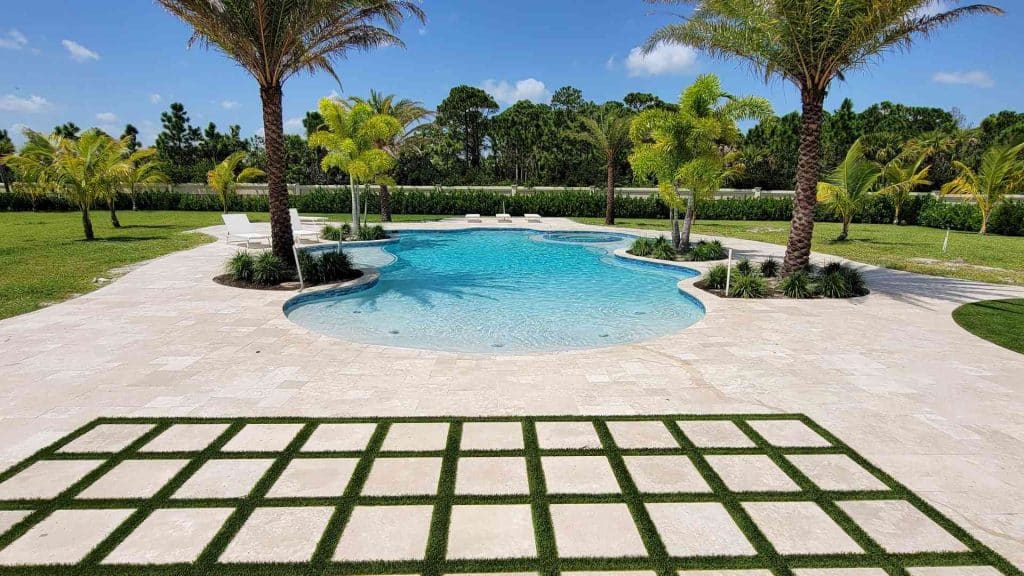
A patio remodel replaces a cracked, sunken, or dated surface with a new paver patio built on a properly prepared base, so it does not shift or pool water the way the old one did. As a custom patio builder and patio contractor doing both new installation and remodels, we handle the full job: pulling the old surface, correcting the base and grade, and laying the new pavers to a pattern and border that fits the house. Homeowners comparing patio remodel companies and contractors are usually weighing who actually prepares the base correctly, which is the part that decides whether the finished patio lasts.
New patio installation follows the same discipline. The base is excavated and compacted, drainage is set before a single paver goes down, and edges are restrained so the field stays tight over years of sun and rain. The finish, whether a large-format travertine or a tighter paver pattern, is chosen to match how the space is used and how the rest of the yard reads.
Choosing The Right Surface Material
Material choice drives how a hardscape looks, how hot it gets, and how it wears. The best pavers for a patio or deck are the ones matched to where the surface sits and how it is used, so most paver patio designs come down to sun, traffic, and the look of the house rather than one material being best for everything.
Pavers Versus Poured Concrete
The most common question on a patio or pool deck is pavers versus concrete. Poured concrete is cheaper up front but cracks as the ground shifts, and a crack means resurfacing a whole slab. Pavers cost more to install but flex with the ground instead of cracking, and a damaged unit can be lifted and swapped without touching the rest. Pavers also drain through the joints and give better grip underfoot, which is why they win for pool decks. Concrete makes sense for a plain, low-traffic slab; pavers make sense almost everywhere a surface is seen and used.
Travertine And Natural Stone
Travertine stays relatively cool underfoot and gives a natural, high-end look, which makes it a common pick for pool decks and patios in full sun.
Porcelain And Concrete Pavers
Porcelain and concrete pavers come in a wide range of looks, resist cracking and settling on a proper base, and let individual units be lifted and reset if anything ever needs a repair.
Paver Patterns And Layout
The paver pattern sets how a surface reads and how well it holds up. Running-bond and herringbone patterns interlock tightly and resist shifting under traffic, which is why herringbone is common on driveways, while larger-format and banded paver patio designs suit open patios and pool decks. The pattern is chosen with the border and the size of the space, not picked at random.
Pool Deck Surfaces
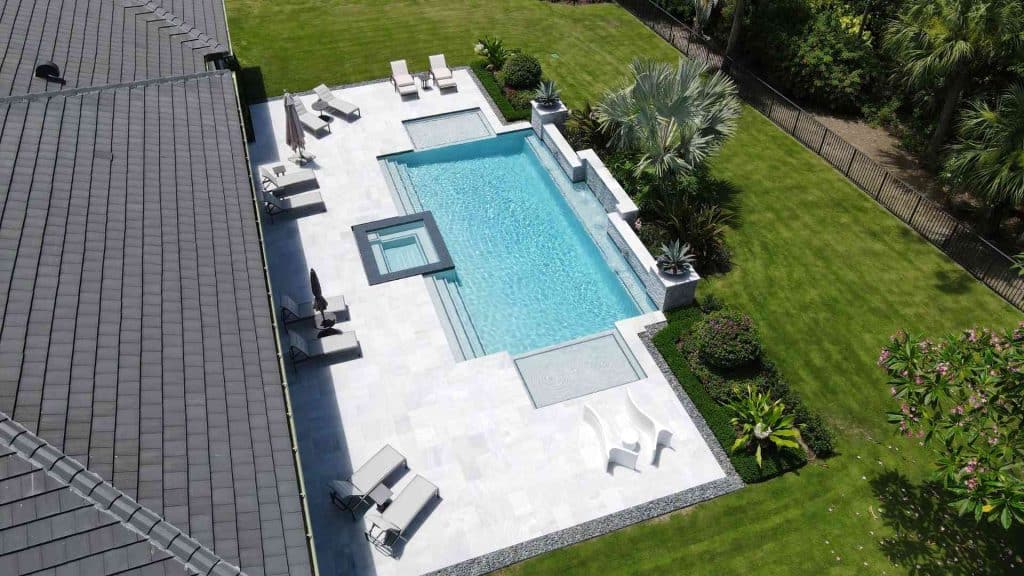
A pool deck has to handle water, bare feet, and sun at once, so the surface is chosen for grip and heat as much as looks. The best pool deck material is the one that stays cool and keeps its grip in your specific sun exposure; cool deck pavers and travertine both handle this better than poured concrete. Interlocking pavers replace slippery, dated concrete with a safer, better-draining surface.
Artificial Turf And Putting Greens
Artificial turf gives a green, even lawn without the watering, mowing, or muddy patches, which is why it works well in high-traffic areas, around pools, and in spots where grass never quite takes. We install turf for full lawns, pet areas, and synthetic putting greens, set over a prepared, draining base so it stays flat and sheds water. Pairing turf with paver bands is a common way to break up a large surface and keep the layout looking planned.
How A Hardscape Project Is Built
Every hardscape stands or fails on what happens under the surface, so the sequence matters more than the material.
- Design and layout: we plan the surfaces together, patio, deck, walkways, walls, and turf, so levels, borders, and drainage are resolved before work starts.
- Excavation and base: the area is dug out, graded, and compacted in lifts, the step that decides whether the surface stays flat or settles.
- Drainage: slopes and any drains are set so water moves away from the house and off the surface, not into low spots.
- Installation: pavers, stone, or turf go down to the planned pattern, with edges restrained so the field holds tight.
- Finishing: joints are filled and compacted, surfaces are cleaned, and the site is walked with you before it is called done.
Hardscape As Part Of The Whole Yard
Hardscape rarely stands alone. The patio meets the pool deck, the deck meets the outdoor kitchen, walkways tie the landscape together, and turf fills what is left. Because the same team handles pools, kitchens, shade structures, landscape, and lighting, the hardscape is planned to meet those features cleanly rather than being poured around them afterward. That is the difference between surfaces that line up and surfaces that fight each other at every seam.
Most paver contractors do pavers and turf and stop there, then coordinate with whoever is building the pool or the kitchen. When the same team designs and builds the pool, the deck, the kitchen, and the hardscape, the base heights, drainage, and borders are planned as one job, so the surface meets the pool coping and the kitchen slab cleanly instead of being cut in around them later.
Why Homeowners Choose Our Crew
We design and install hardscape and turf with our own crews rather than subcontractors, so one team owns the base, the drainage, and the finish. Homeowners can see and handle the actual pavers, travertine, stone, and decking in the region’s largest outdoor-living material library at our showroom before choosing, rather than picking from a small sample board. Decades of building on coastal ground mean we plan for the grade, drainage, and sun that a surface here has to survive.
Areas We Serve
We design and install hardscapes and turf in Jupiter, Palm Beach Gardens and communities across Palm Beach County and the Treasure Coast. Explore our local Jupiter artificial turf and Palm Beach Gardens paver and turf services. You can also explore Wellington turf and hardscape planning and Boca Raton paver and pool deck planning. Visit our Jupiter materials showroom at 14701 Walgreens Dr to compare pavers, stone and decking.
- West Palm Beach and Palm Beach Gardens
- Jupiter, Jupiter Farms, Juno Beach, and Riviera Beach
- Boynton Beach, Delray Beach, and Lake Worth
- Wellington, Royal Palm Beach, and Boca Raton
- Palm City, Stuart, Fort Pierce, and Vero Beach
Frequently Asked Questions
What Is The Difference Between Hardscape And Landscape?
Hardscape is the built, non-living part of a yard, patios, decks, driveways, walkways, walls, and fire features, while landscape is the planted part, grass, beds, and trees. Most yards need both, and planning them together is what keeps the finished space looking coordinated.
How Long Does A Paver Patio Installation Take?
Most paver patios and walkways are installed in a few days, while larger multi-level hardscapes or a full pool deck can run one to two weeks. The base and drainage work is what sets the schedule, and we map it before starting.
Is Travertine Or Paver Better For A Pool Deck?
Both work well; travertine stays cooler underfoot and gives a natural stone look, while concrete and porcelain pavers offer more pattern and color options and are simple to lift and reset for repairs. The right pick depends on sun exposure, budget, and the look you want.
Do Paver Patios Crack Or Sink Over Time?
Properly installed pavers resist cracking and sinking because they sit on an excavated, compacted base with restrained edges and set drainage. Most settling problems come from a skipped or rushed base, which is the step we do not cut.
Is Artificial Turf Worth It Instead Of Grass?
Artificial turf makes sense where grass struggles, in heavy-traffic areas, around pools, in shade, or where you want to stop watering and mowing. It stays green year-round on a properly draining base, and it pairs well with pavers to break up a large surface.
Can You Replace An Existing Patio Or Pool Deck?
Yes. A remodel pulls the old surface, corrects the base and grade, and lays a new paver or stone surface that drains correctly. Replacing a slippery or cracked pool deck with interlocking pavers is one of the most common projects we do.
Are Pavers Better Than Concrete For A Patio Or Pool Deck?
For most patios and pool decks, yes. Pavers flex with the ground instead of cracking like a poured slab, drain through the joints, and give better grip underfoot, and a damaged paver can be lifted and replaced without redoing the whole surface. Concrete is cheaper up front for a plain slab, but it cracks and has to be resurfaced in sections.
Do You Install Hardscape And Turf Together?
Yes. Planning pavers and turf as one layout is how the yard ends up looking designed rather than assembled, with turf bands breaking up paver fields and both set on bases built to drain. One crew installs the whole surface so the seams line up.
Ready To Rebuild Your Patio Or Yard Surface?
Explore our local planning pages for Jupiter hardscapes and turf and Palm Beach Gardens pavers, pool decks and turf. Bring photos and measurements to our Jupiter showroom, or request a project consultation to discuss your scope and next steps.