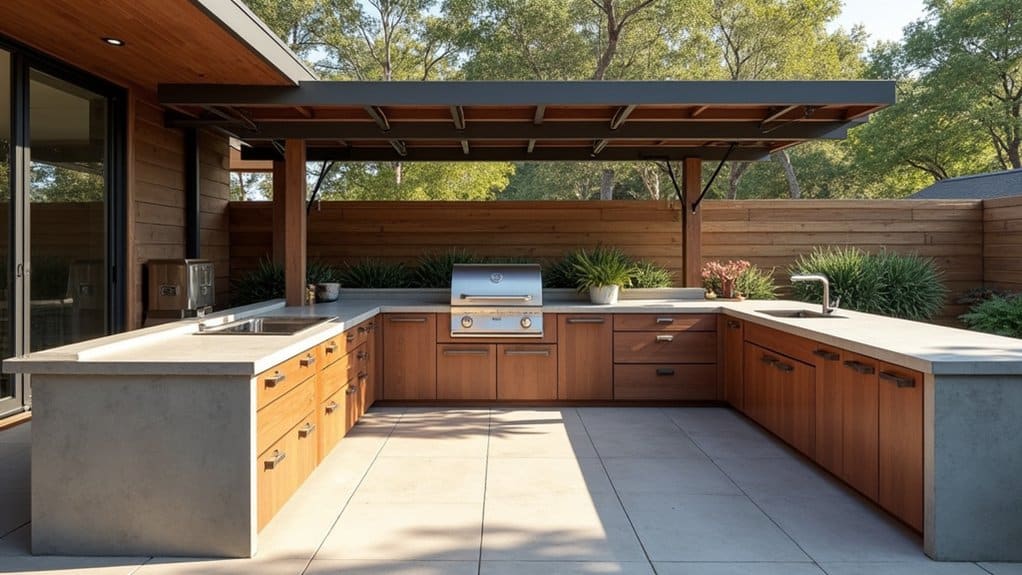
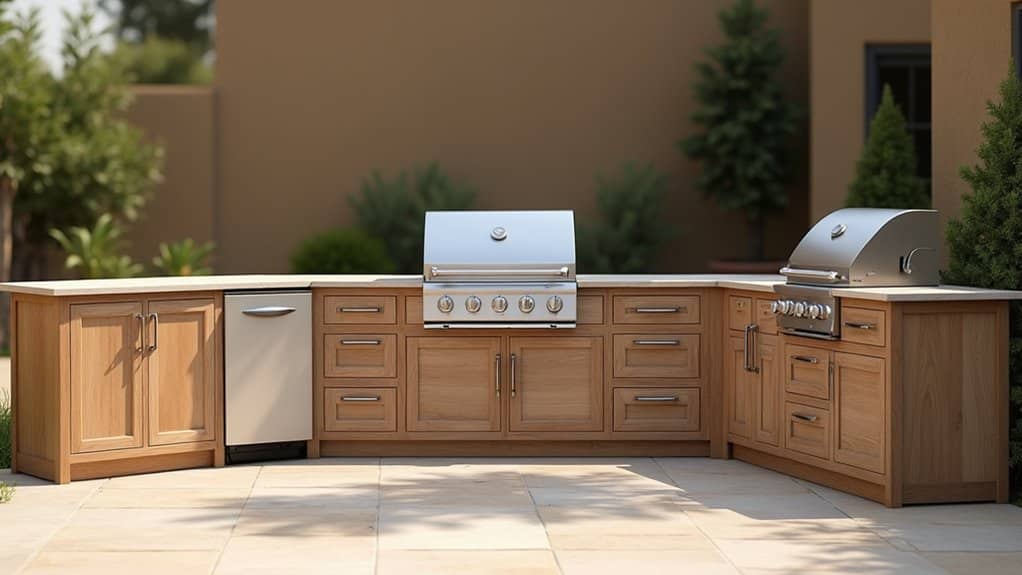
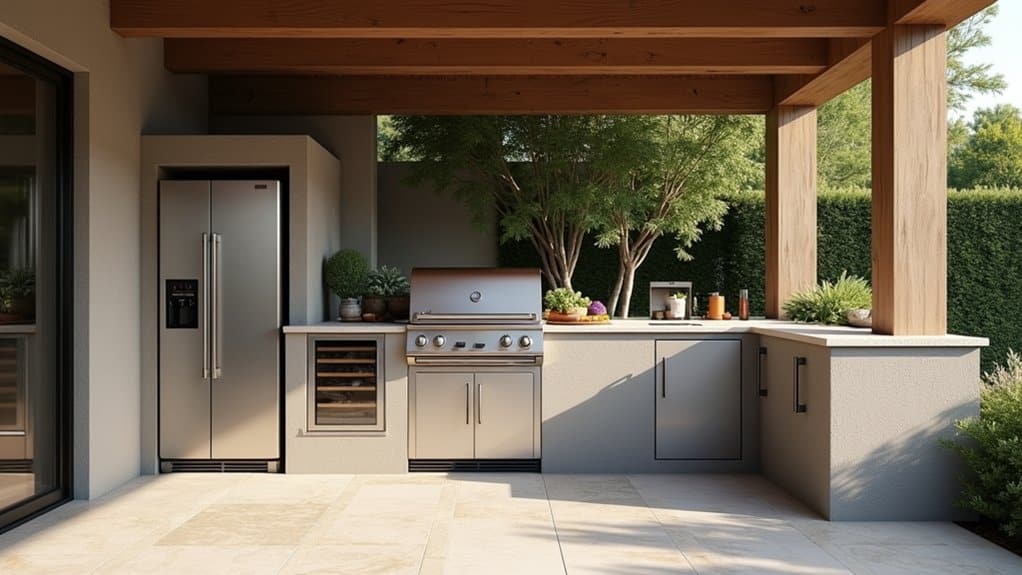
Yes, you’ll need these five appliances to create a truly functional outdoor kitchen in 2026. A high-performance grill serves as your centerpiece, while side burners expand your cooking versatility. An outdoor-rated refrigerator keeps ingredients fresh without indoor trips, and a properly sized sink with storage streamlines your prep work. Adding eco-friendly smart features future-proofs your investment. Each appliance plays a specific role in maximizing your outdoor space’s potential.
High-Performance Grills: The Outdoor Kitchen Centerpiece
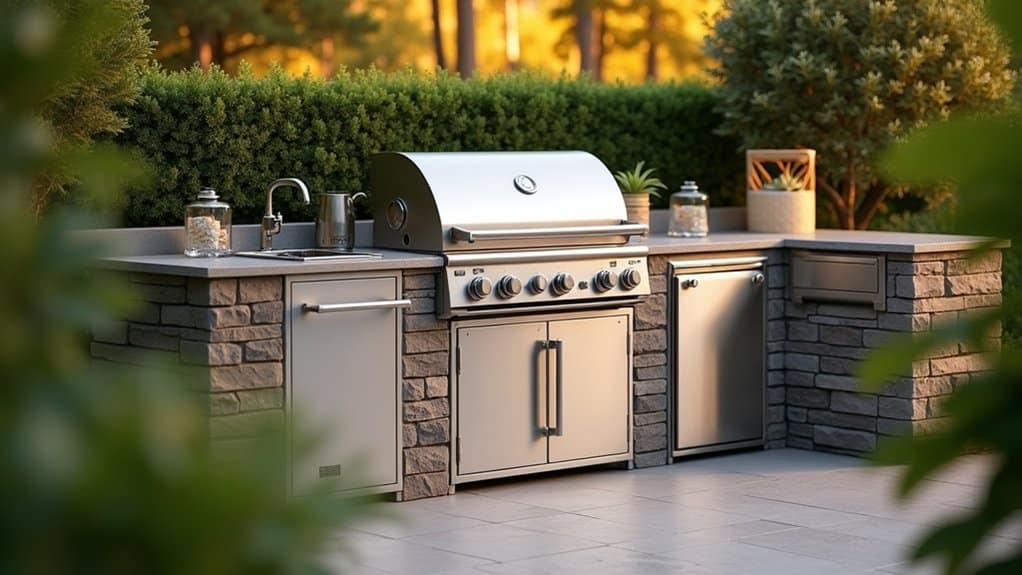
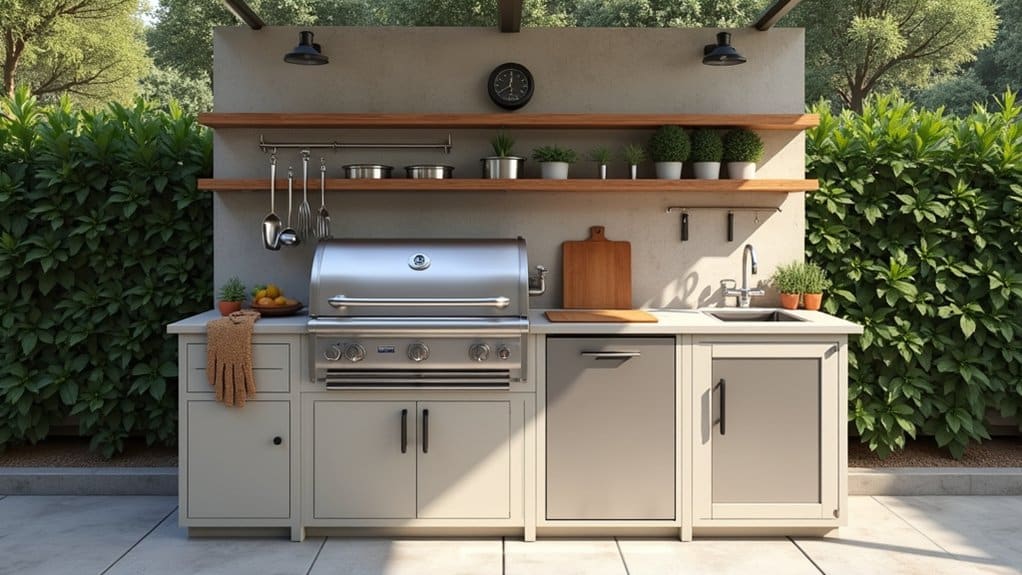
When you’re designing an outdoor kitchen, the grill serves as your primary cooking station and deserves careful consideration. Today’s built-in models deliver exceptional grill BTU output, with units reaching 125,000 BTUs through electronic fuel injection systems. You’ll find options featuring 774-square-inch cooking surfaces that handle large gatherings effortlessly.
Infrared burner performance has transformed outdoor cooking capabilities. Premium grills now incorporate ceramic infrared sear burners outputting 25,000 BTUs each, giving you restaurant-quality results at home. Napoleon grills feature infrared technology and upgraded stainless steel components that produce restaurant-style sear marks and rapid heating. Look for models with electronic thermal control that maintains consistent temperatures while eliminating flare-ups. This technology keeps the grill bottom at a controlled 200°F, actively preventing grease fires during cooking.
Your investment should prioritize durability, 304 stainless steel grates and marine-grade aluminum construction extend your grill’s lifespan considerably. Smart connectivity features let you monitor temperatures remotely, making precision cooking accessible for any skill level.
Side Burners That Expand Your Outdoor Cooking Options
Side burners transform your outdoor kitchen from a simple grilling station into a complete cooking environment. You’ll find options ranging from single 12,000 BTU units to powerful double burners with independent zones, letting you simmer sauces while searing steaks on your main grill.
Drop-in models maximize underutilized countertop spaces, while power burners handle low-country boils up to 40 quarts. Premium units feature brass burner elements paired with 304 stainless steel construction for lasting durability. Many models now incorporate innovative fuel sources and convenient temperature controls through LED-illuminated knobs that match your existing appliances. Before purchasing, remember that propane and natural gas burners are not interchangeable, so consult a licensed gas plumber to determine the appropriate fuel type for your setup.
Wind guards protect flames in outdoor conditions, ensuring consistent heat distribution. Whether you choose a single burner or combination unit with integrated griddles, side burners give you the temperature flexibility your primary grill can’t provide. For high-heat cooking enthusiasts, searing stations use infrared heat to reach extremely high temperatures perfect for locking in juices on steaks and chops. This versatility eliminates constant trips between indoor and outdoor kitchens, allowing you to prepare entire meals in one location.
Outdoor Refrigerators Built to Handle the Heat
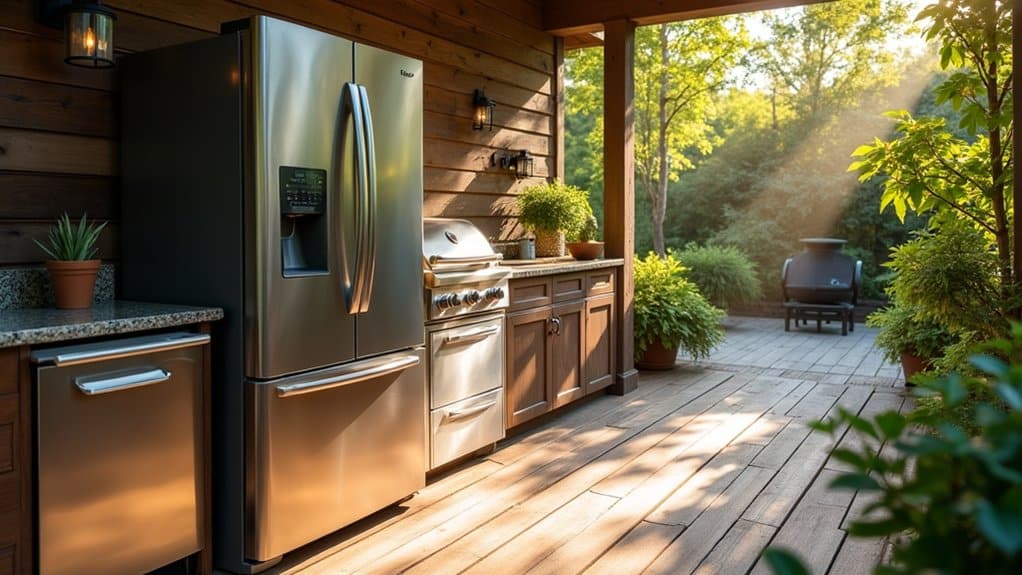
Unlike indoor refrigerators that struggle in outdoor environments, outdoor-rated units feature variable-speed compressors engineered to maintain consistent temperatures even when Houston’s heat climbs past 100°F. You’ll want Grade 304 stainless steel construction at minimum, though Grade 316 marine-grade offers superior chloride corrosion resistance for poolside installations. The added molybdenum in Grade 316 ensures your appliance maintains its brushed silver integrity without constant polishing, even against salt-laden air.
Consider these essential features for your outdoor kitchen:
- UL-rated electrical components with conformal coated circuit boards prevent moisture damage
- Front-venting systems allow zero-clearance installation in stone islands
- Solid stainless doors block solar heat better than glass alternatives
Beyond standard refrigeration, you can integrate ice makers to chill drinks instantly and wine coolers for al fresco dining. Extra heavy-duty insulation and digital thermostats maintain precise temperatures between 33°F-42°F despite dramatic outdoor thermal swings. Premium outdoor refrigerators also include audible alarms that alert you when doors are left ajar or temperatures fluctuate outside safe ranges. When planning your layout, position your refrigerator under the counter, near seating areas, or close to your sink while avoiding direct sunlight and tight unventilated spaces.
Outdoor Kitchen Sinks and Storage for Easier Prep
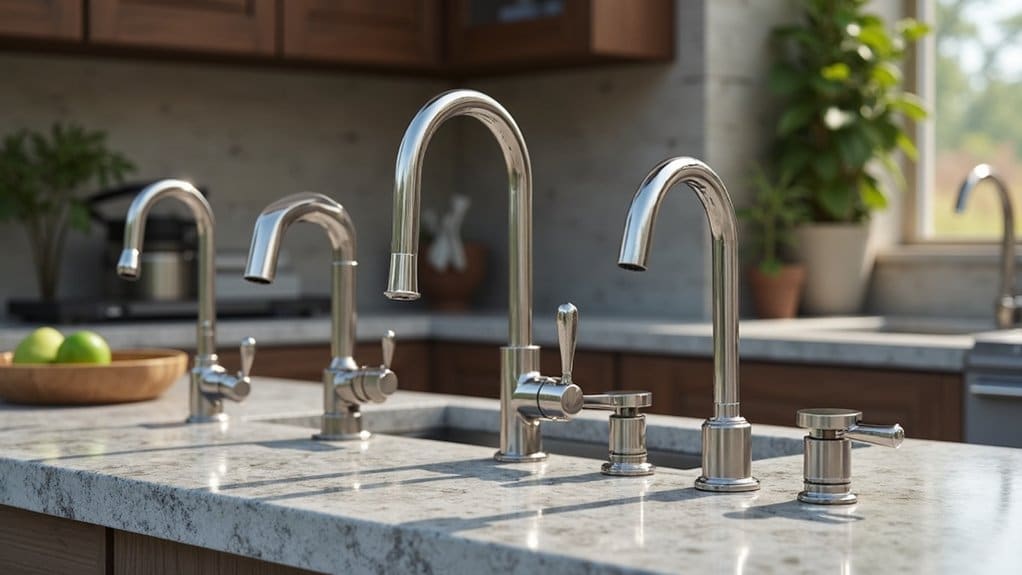
Although refrigeration keeps ingredients fresh, you’ll need a well-designed sink and storage setup to handle the actual prep work in your outdoor kitchen. When evaluating sink configurations, consider your available space and cooking habits. Primary sinks measuring 18-24 inches accommodate platters and cutting boards, while compact 12-15 inch secondary sinks work for hand-washing or quick prep tasks. Single bowl sinks deliver better value than double bowls in small backyards, making them the practical choice for compact outdoor kitchens.
Material durability matters considerably outdoors. Choose 304 stainless steel minimum for rust resistance, or upgrade to 316 marine-grade if you’re near coastal salt air. Select 16-gauge thickness to resist dents from heavy use.
Undermount installations add two inches of usable counter space compared to drop-in models. However, undermount sinks are more difficult to install and often come at a higher price point than drop-in alternatives. Provide exact sink specifications to your countertop provider before measurement so the countertop is built with the correct hole size and edge finish for your selected style. Bundled options from brands like Coyote include soap dispensers and cutting boards, maximizing functionality without cluttering your workspace. Pair sinks with weather-resistant HDPE cabinets for integrated storage solutions.
Eco-Friendly Outdoor Kitchen Appliances for 2026
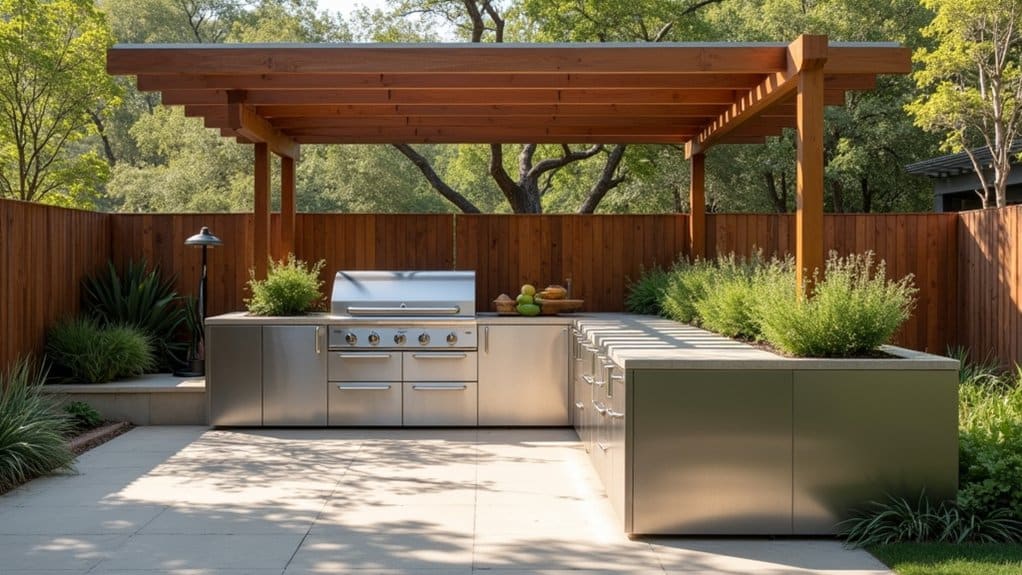
Three key innovations, solar power, smart connectivity, and sustainable materials, define eco-friendly outdoor kitchen appliances heading into 2026. You’ll find solar-powered grills and refrigeration units that operate independently from grid electricity, cutting your operational costs drastically. Smart cooking timers and Wi-Fi-enabled controls optimize fuel consumption while delivering precision results. Voice-controlled assistants can also manage your cooking timers and alarms hands-free, adding another layer of convenience to your eco-conscious setup.
Water recycling systems integrate seamlessly with modern outdoor kitchens, capturing greywater for landscape irrigation and reducing your overall consumption. Many homeowners are also incorporating rainwater collection systems alongside compost integration to create fully sustainable outdoor cooking environments. You can even dedicate space for local Indiana herbs and vegetables, creating a garden that supplies fresh ingredients steps away from your cooking station.
- Stainless steel construction (304/316 marine grade) offers 100% recyclability and lasting durability
- Ceramic appliance components achieve near-complete recycling rates at end-of-life
- HDPE cabinets provide weather-resistant, sustainable alternatives to traditional materials
These appliances don’t just reduce your environmental footprint, they’re engineered to maximize your outdoor space while minimizing long-term expenses.
Frequently Asked Questions
How Much Does a Fully Functional Outdoor Kitchen Cost to Install in 2026?
You’ll typically spend $10,000 to $35,000 to install a fully functional outdoor kitchen in 2026. Your material costs, including countertops, stone veneer, and appliances, make up the bulk of your budget. Labor requirements for plumbing, electrical, and gas line installation add $250 to $2,000. Pre-built options start around $7,000, while custom designs maximizing your space can reach $40,000 or more depending on your specific needs.
Do Outdoor Kitchen Appliances Require Special Electrical or Gas Line Installations?
Yes, your outdoor kitchen appliances require a specialized electrical setup and custom gas fittings to operate safely. You’ll need dedicated 20-amp circuits with GFCI protection for refrigeration and other electrical units. For grills and cooktops, you’ll need gas lines installed to local code specifications. All components must carry outdoor ratings, typically IP44 or higher, to withstand weather exposure. Working with licensed professionals guarantees your installation meets 2026 NEC requirements.
What Permits Are Needed to Build an Outdoor Kitchen in Residential Areas?
You’ll typically need several permits for your outdoor kitchen project. Building permits cover structural elements like counters and roofing. Electrical permits handle outlets and lighting, while plumbing permits address sinks and water connections. Gas permits are essential for built-in grills and burners. Don’t overlook zoning regulations and HOA requirements that may affect your design. Check your local permit requirements early, they’ll vary by city and help you avoid costly delays.
How Do I Protect My Outdoor Kitchen Appliances During Winter Months?
You’ll protect your outdoor kitchen appliances by implementing effective weatherproofing techniques and smart storage solutions. Start by disconnecting power and fuel sources, then drain all water lines completely. Cover each appliance with breathable, manufacturer-specific covers secured tightly at the base. Store removable components like shelves and electronic parts indoors to prevent freeze damage. Clean and dry all surfaces thoroughly before covering, and wrap exposed pipes with foam insulation for maximum protection.
Can Outdoor Kitchen Appliances Be Converted From Natural Gas to Propane?
Yes, you can convert most outdoor kitchen appliances from natural gas to propane using brand-specific conversion kits. Your propane conversion costs typically range from $199 to $224, depending on the manufacturer. You’ll need to swap orifices, adjust regulators, and guarantee proper gas flow. To meet appliance maintenance requirements and ensure safety, you should hire a licensed plumber for the conversion. Brand-specific kits from manufacturers like Lynx, Coyote, and Thor Kitchen guarantee compatibility with your equipment.