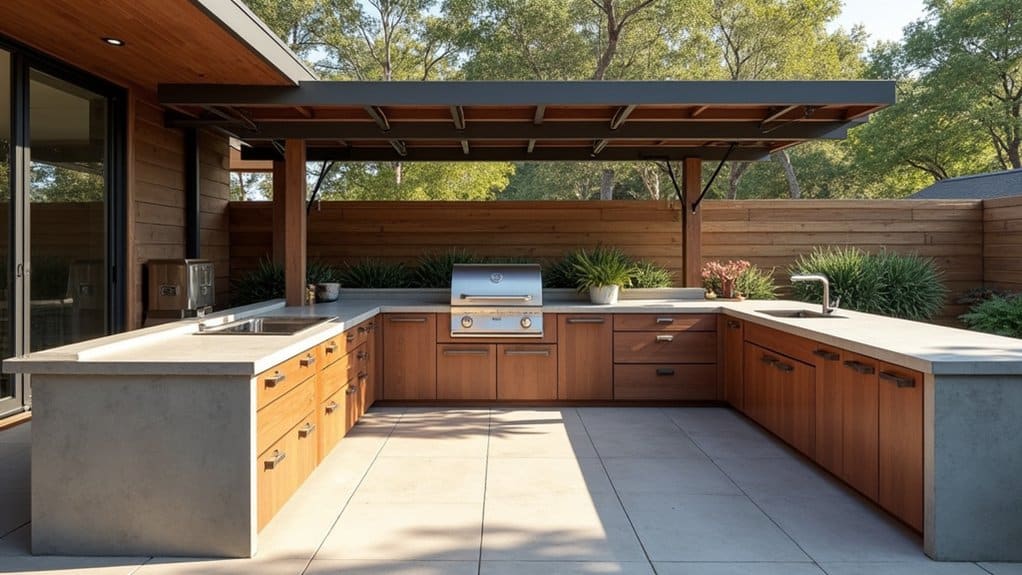
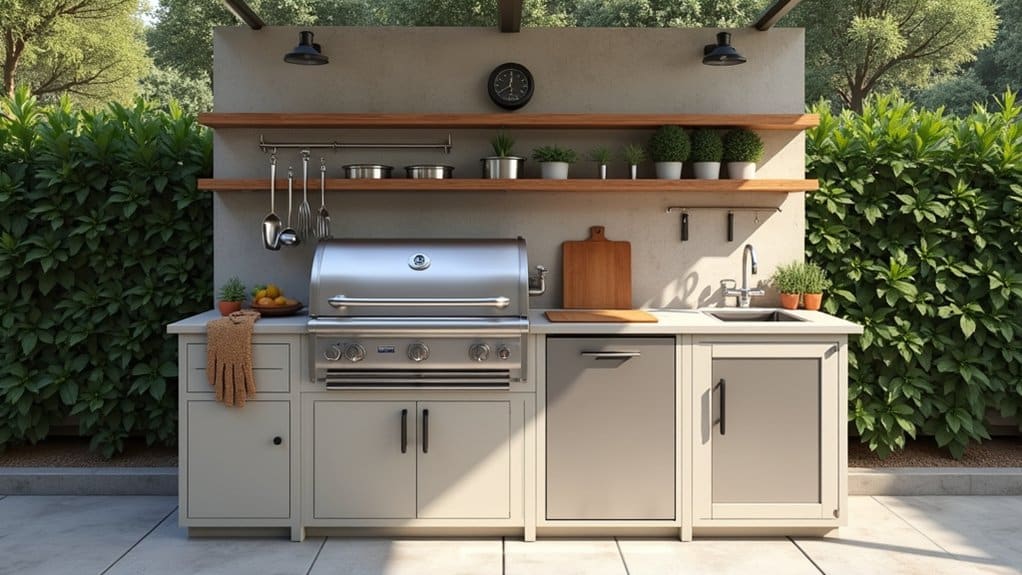
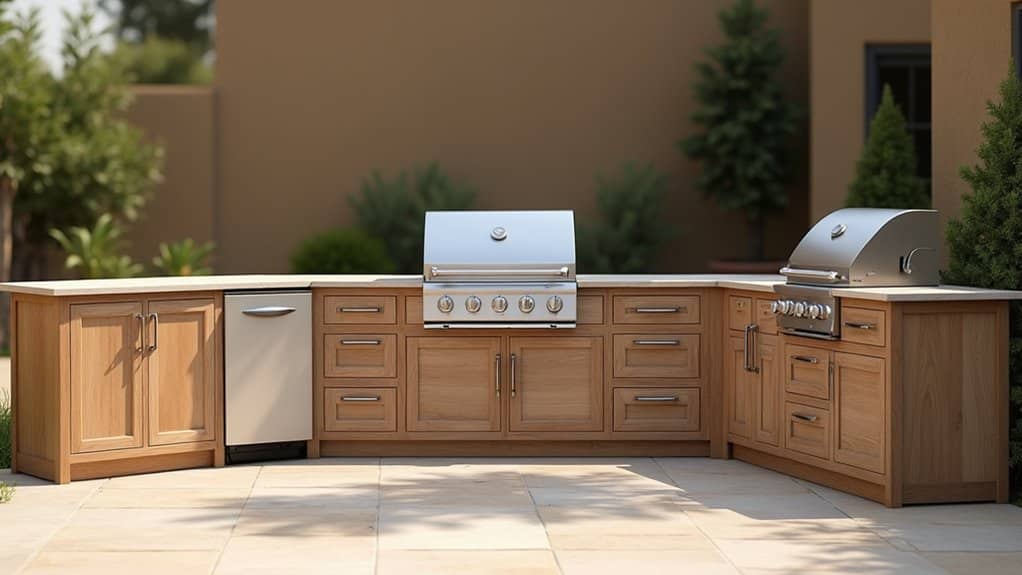
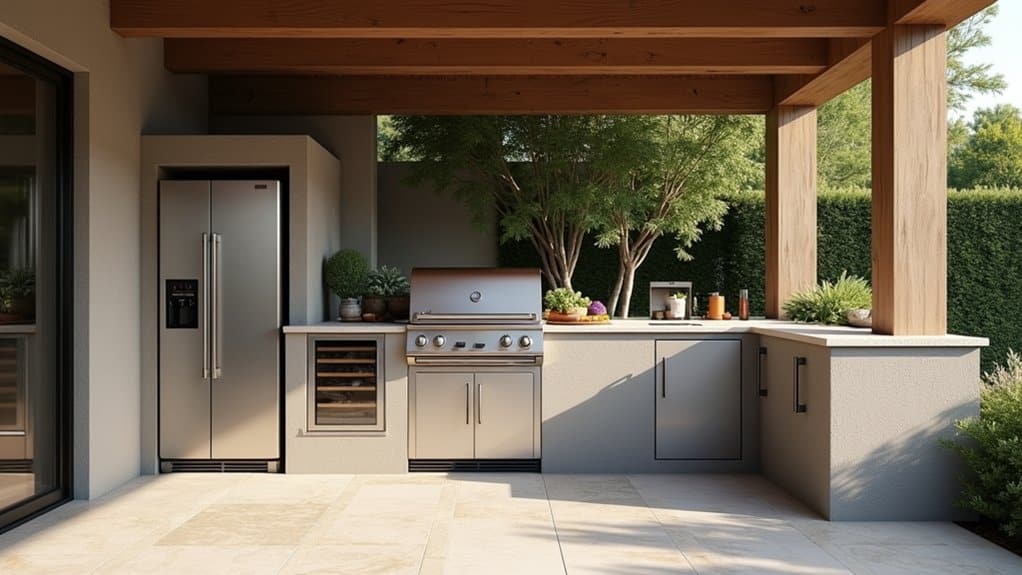
The best outdoor kitchen cabinets in 2026 include 316 marine-grade stainless steel for coastal areas, HDPE for freeze-thaw climates, powder-coated aluminum for lightweight durability, and marine-grade plywood for covered spaces. Your climate dictates the ideal material, you’ll want molybdenum-enriched stainless steel near saltwater, UV-stabilized HDPE in desert heat, or non-porous HDF in humid regions. Each option below breaks down exactly which cabinet material matches your specific environment and budget.
How to Choose Outdoor Kitchen Cabinets by Climate
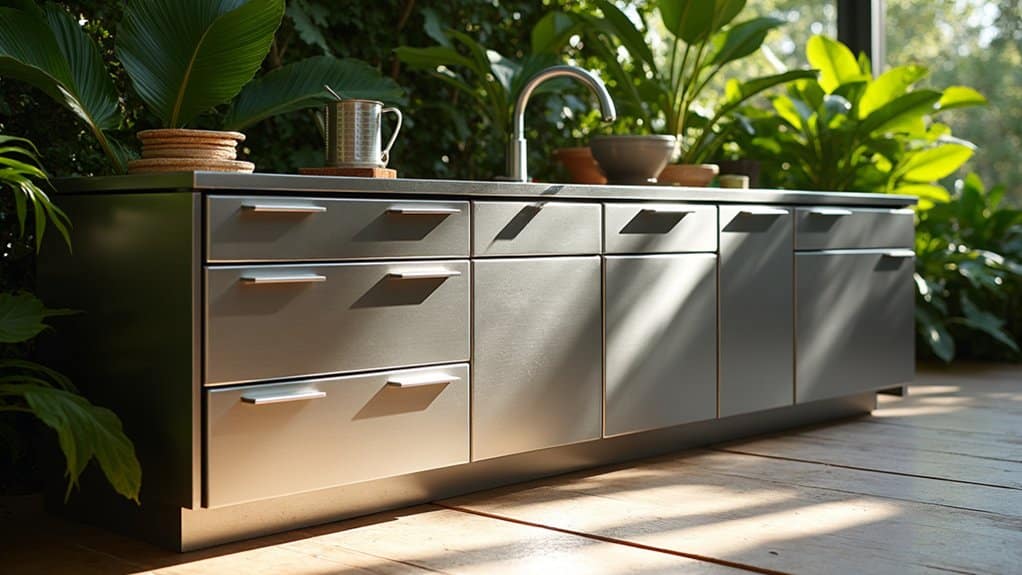
When you’re selecting cabinets for your outdoor kitchen, climate should drive every material decision you make. Coastal environments demand marine-grade polymer or powder-coated aluminum that won’t corrode from salt spray. Desert dwellers need UV-stabilized finishes and light-colored surfaces that reflect solar radiation.
Your cabinet design considerations must account for regional weather patterns. In freeze-thaw climates, HDPE’s flexibility prevents cracking as temperatures swing between extremes, it maintains 98% finish integrity after five years. High-humidity regions require non-porous materials like marine-grade plywood or HDF that resist mold growth. Construction details like weep holes are essential for draining standing water and melting ice in regions with harsh winters.
Don’t overlook customized storage solutions tailored to your specific conditions. Stainless steel 304 and 316 grades work across multiple climates, while polymer materials stay cooler in intense heat. Match your materials to your environment for lasting performance. Powder coating on aluminum cabinets provides all-weather protection by shielding surfaces from scratches, fading, and moisture damage regardless of your regional climate challenges. Marine-grade polymer remains the ultimate choice for tropical and coastal areas because it offers complete waterproof protection while resisting the corrosive effects of high humidity and salinity.
HDPE Outdoor Cabinets: Low-Maintenance for Any Climate
When you’re designing an outdoor kitchen that needs to handle everything from scorching summers to freezing winters, HDPE cabinets deliver the resilience you need without the maintenance headaches. This marine-grade polymer withstands UV exposure, salt air, temperature extremes, and moisture while resisting rust, rot, and mold, making it ideal whether you’re cooking on the coast or in the mountains. Unlike stainless steel alternatives that can become uncomfortably hot or cold depending on the weather, HDPE maintains a consistent feel regardless of temperature changes. You’ll spend less time protecting your investment and more time using it, since these cabinets require only basic wiping to stay looking sharp season after season. The material’s through-body color helps conceal any scratches or wear that may occur over time, keeping your cabinets looking pristine for years. With 100% in-house manufacturing, every cabinet meets exacting standards for quality and craftsmanship before reaching your outdoor space.
Extreme Weather Durability
How well do your outdoor cabinets hold up when Mother Nature evokes her worst? HDPE cabinets deliver exceptional water resistance that prevents warping, mold, and corrosion, even in coastal environments with salt air exposure. Their thermal insulation properties maintain structural integrity through extreme temperature swings without cracking or degrading. As a food-safe material, HDPE provides waterproof protection without introducing harmful chemicals to your cooking environment.
These cabinets protect your outdoor kitchen investment by offering:
- Weatherproof construction that repels rain, hail, snow, and humidity
- UV-stabilized coloring that won’t fade, peel, or flake under prolonged sun
- Impact-resistant surfaces that resist dents, scratches, and stains
- Non-porous material that eliminates mold buildup in corners and seams
Unlike PVC that warps under heat or wood that succumbs to moisture damage, HDPE outperforms competing materials across every climate condition. You’ll maximize your outdoor space with cabinets built to last.
Minimal Upkeep Required
Because HDPE cabinets resist stains, moisture, and UV damage at the molecular level, they’ll demand far less of your time than wood, metal, or PVC alternatives. The non-porous surface wipes clean with warm soapy water, and you won’t battle grease buildup or food stains that plague traditional materials.
Your weekly maintenance takes minutes: a soft cloth with diluted dish soap handles routine cleaning. For deeper seasonal cleaning, simply rinse with a garden hose to remove dust and debris. HDPE’s resistant to staining properties mean spills won’t penetrate, and the material does not require sanding or resealing, ever. For stubborn buildup, a nylon brush and Lime-A-Way can restore your cabinets to their original appearance.
Built-in UV stabilizers protect integrated colors from fading, eliminating annual protective treatments. However, be aware that despite these stabilizers, HDPE outdoor cabinets can still experience color fading from sun exposure over extended periods. For enhanced protection, apply a marine-grade UV protectant spray periodically to maintain that just-installed shine. This translates to a Lifetime Material Warranty backed by minimal effort, preserving your outdoor kitchen’s appearance across every season.
316 Stainless Steel Cabinets for Coastal Kitchens
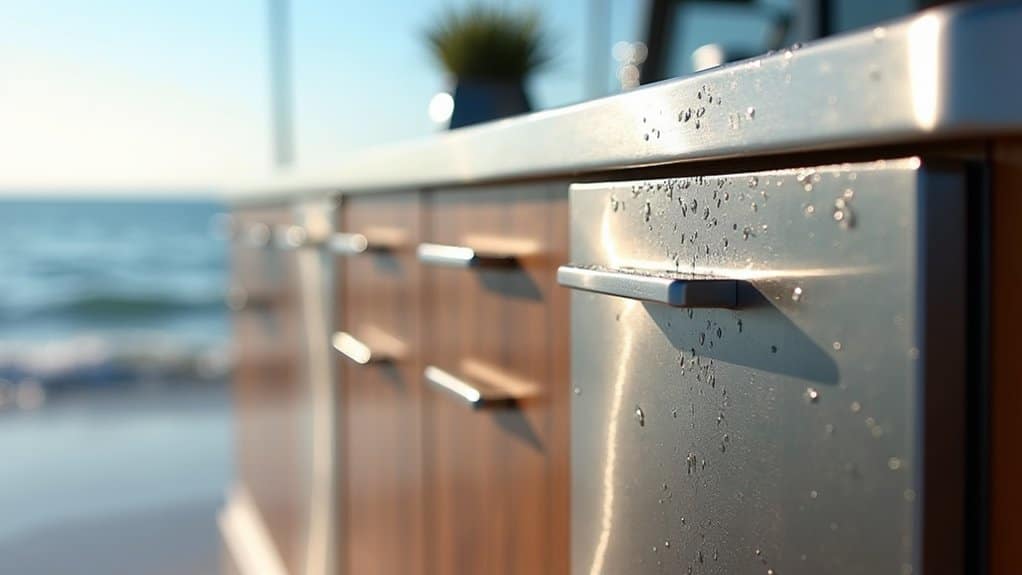
When you’re designing an outdoor kitchen near the coast, you’ll want cabinets that can handle relentless salt spray without corroding. Marine-grade 316 stainless steel contains molybdenum, which provides exceptional protection against the pitting and rust that destroy standard metals in beachfront environments. This durability means your coastal kitchen investment will maintain both its function and appearance for years despite constant exposure to salty air, humidity, and wind-driven sand. Additionally, these cabinets feature weather-resistant rain gaskets and magnetic closures that create a tight seal against humidity and wind. While stainless steel offers a sleek, modern design perfect for contemporary outdoor spaces, keep in mind that the surface can get uncomfortably hot when exposed to intense sunlight. For an alternative that lacks iron content, aluminum cabinetry provides an added barrier against rust and corrosion in coastal environments.
Superior Salt Spray Resistance
Anyone planning a beachfront outdoor kitchen knows salt spray poses the greatest threat to cabinet longevity. Your investment demands materials with proven salt water resistance that won’t fail when exposed to constant marine conditions.
316 marine-grade stainless steel delivers the oceanfront durability you need:
- Maintains 90% finish integrity after 5 years in coastal conditions
- Contains molybdenum that actively resists pitting from salt exposure
- Withstands environments that destroy standard metals within years
- Requires only regular cleaning to prevent salt from gaining a foothold
You’ll find that 304 grade falls short, retaining just 70% finish integrity in beachfront settings due to its lack of molybdenum. For maximum protection, choose 1.2mm thick stainless steel that’s been salt spray tested specifically for outdoor applications. Traditional wood cabinets are particularly vulnerable in these environments, prone to warping, rotting, swelling, and fading under Florida’s harsh coastal climate. While this premium material is approximately 20-22% more expensive than 304 stainless steel, the investment pays off in long-lasting performance for coastal outdoor cabinets.
Molybdenum Corrosion Protection
While 316 marine-grade stainless steel costs more than standard options, its 2-3% molybdenum content provides the chloride resistance your coastal kitchen demands.
Molybdenum rich alloys form a protective passive film that shields your cabinets from salt spray, pitting, and crevice corrosion. This element distinguishes 316 from 304 steel, which lacks molybdenum entirely and fails quickly in marine environments. Standard 304 stainless steel contains 17.50, 19.00% chromium and 8.00, 10.00% nickel, which provides adequate corrosion resistance for inland locations but proves insufficient against harsh coastal conditions.
Your beachfront kitchen faces constant exposure to ocean spray, humidity, and wind-driven salt particles. The molybdenum in 316L steel retards these corrosive forces, extending cabinet lifespan considerably. For maximum protection, pair stainless construction with corrosion resistant coatings like powder coating.
You’ll pay a premium upfront, but 316’s exceptional durability saves replacement costs long-term. Regular maintenance remains essential since molybdenum slows corrosion rather than eliminating it entirely.
Beachfront Longevity Performance
Because salt air attacks standard metals relentlessly, your beachfront kitchen needs 316 marine-grade stainless steel cabinets to deliver lasting performance. With proper corrosion mitigation strategies, you’ll extend your investment’s lifespan beyond 20 years while maintaining structural integrity and visual appeal.
Your coastal cabinets deliver:
- Molybdenum protection against pitting from salt exposure
- Waterproof gaskets sealing doors and drawers from moisture intrusion
- Powder-coated finishes minimizing direct salt contact
- Non-porous surfaces resisting rust in humid conditions
Longevity expectations depend on consistent maintenance. Regular cleaning removes salt buildup before it compromises protective barriers. These cabinets withstand temperature fluctuations, heavy rainfall, and powerful coastal winds without warping or cracking. You’re securing weather-resistant storage that performs reliably through harsh beachfront conditions year after year.
Aluminum Outdoor Cabinets: Lightweight and Rust-Proof
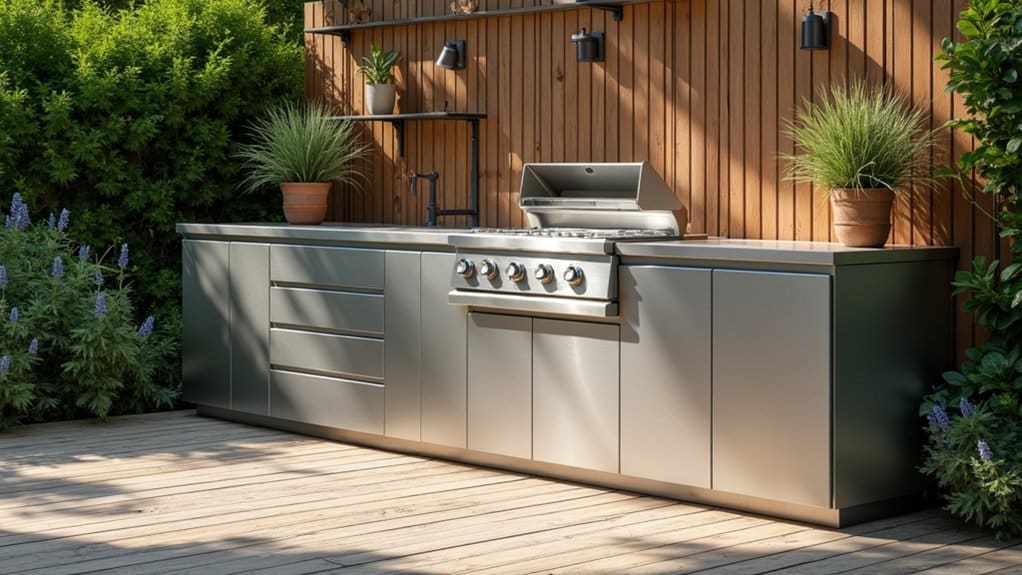
Aluminum outdoor cabinets deliver rust-proof performance that steel simply can’t match, making them a smart choice for moisture-prone environments. You’ll find marine-grade options offer twice the thickness of stainless steel at nearly half the weight, maximizing storage capacity without stressing decks or rooftops.
| Feature | Benefit |
|---|---|
| Self-leveling feet | Adapts to uneven patios |
| Modular design | Reconfigure layouts easily |
| Powder-coat decorative finishes | Withstands salt exposure |
| Lightweight construction | Reduces installation labor |
| Five-year warranties | Rust-free guarantees included |
You should note aluminum’s heat sensitivity makes it unsuitable for grill cabinet placement. The soft metal dents under impact, potentially causing door misalignment. However, sealed storage compartments and protective coatings minimize maintenance while extending your cabinet lifespan in coastal regions.
Marine-Grade Plywood Cabinets for Covered Outdoor Kitchens
Marine-grade plywood cabinets offer a compelling alternative when you’re building under pergolas, pavilions, or covered patio structures where direct rainfall isn’t a constant threat.
Marine-grade plywood cabinets work best under covered outdoor structures where they’re shielded from direct rainfall exposure.
Waterproof adhesive bonding guarantees cabinet structural integrity through humidity swings and temperature fluctuations. You’ll find these cabinets maintain their form without the delamination risks that plague standard plywood in outdoor settings.
Consider marine-grade plywood when you want:
- Weathered wood aesthetic that complements natural outdoor design elements
- 19mm or 25mm thickness for heavy-duty countertop and furniture applications
- Resistance to swelling during extended moisture exposure
- Lower cost than stainless steel without sacrificing durability
Choose 3/4-inch exterior grade material for optimal load-bearing capacity. The layered construction handles coastal humidity while delivering consistent performance across seasons.
HDF Outdoor Cabinets for Poolside and Humid Spaces
High-density fiberboard (HDF) delivers exceptional performance in poolside and humid spaces where moisture exposure occurs daily. You’ll find HMR HDF variants specifically engineered to withstand humidity, rain, and temperature fluctuations that would damage standard materials.
When you select HDF cabinets, you’re choosing eco friendly construction, products like Fibrex HDF contain 100% recycled wood content. The dense composition, exceeding 800 kg per cubic meter, provides superior strength compared to particleboard or standard MDF.
For ideal outdoor performance, pair your HDF cabinets with protective coatings that include UV protection features. These treatments extend cabinet life in sun-exposed poolside installations. Available in thicknesses from 4.8mm to 18mm, HDF offers versatile options for your outdoor kitchen. You’ll achieve a smooth, polished finish that resists humid conditions while meeting KCMA load standards.
Outdoor Cabinet Materials Ranked by Durability and Price
When you’re investing in outdoor kitchen cabinets, understanding how each material performs against the elements helps you make a smarter purchase.
Choosing the right cabinet material now saves you from costly replacements and frustrating maintenance battles down the road.
Top Materials Ranked by Durability and Value:
- HDPE Polymer, Delivers five-star weather resistance with minimal upkeep at moderate cost
- Marine-Grade Polymer (PVC), Offers excellent moisture protection and easy cleaning without premium pricing
- Powder-Coated Aluminum, Provides recyclable cabinet options with strong weather performance and lightweight installation
- Stainless Steel (304/316), Commands higher investment but delivers unmatched longevity in coastal environments
Teak wood adds natural beauty but demands more maintenance and budget. For weather-conscious buyers prioritizing long-term value, HDPE and marine-grade polymers deliver the best durability-to-price ratio. Check local supplier recommendations for regional availability and compare warranties before committing to your outdoor kitchen investment.
Frequently Asked Questions
Can I Mix Different Cabinet Materials in the Same Outdoor Kitchen Design?
Yes, you can absolutely mix different cabinet materials in your outdoor kitchen design. You’ll want to prioritize material compatibility by pairing options like HDPE with stainless steel for moisture resistance or wood panels with aluminum for modern contrast. Maintain finish cohesion by selecting complementary colors and textures. Position heat-sensitive materials like PVC in shaded zones while placing durable metals near grills. This approach maximizes durability while optimizing your available space.
How Do Outdoor Cabinet Hinges and Hardware Affect Overall Cabinet Longevity?
Your hinges and hardware directly determine how long your outdoor cabinets last. You’ll want stainless steel options with strong corrosion resistance to handle rain, humidity, and UV exposure without rusting. Proper weather sealing around hardware prevents moisture from penetrating cabinet joints. Avoid soft-close mechanisms outdoors, they corrode internally within months. Choose self-closing stainless steel hinges that perform reliably for 20+ years, and you’ll maintain smooth operation while maximizing your outdoor kitchen’s lifespan.
Are Outdoor Kitchen Cabinets Covered Under Homeowner’s Insurance Policies?
Your outdoor kitchen cabinets typically fall under homeowner’s insurance, but you’ll need to update your policy to reflect their added value. Coverage limitations often apply to detached structures, and policy exclusions may void protection if you haven’t met local building codes. You should notify your insurer before installation to guarantee adequate dwelling coverage. Weather-resistant materials and space-efficient designs don’t automatically qualify for coverage, consult your agent to verify your specific outdoor components are protected.
What Interior Storage Accessories Work Best for Outdoor Kitchen Cabinets?
You’ll get the most functionality from adjustable shelving systems that let you customize compartment heights for different items, from tall bottles to small spice containers. Durable storage baskets keep utensils and accessories organized while allowing airflow to prevent moisture buildup. Pull-out drawer organizers maximize deep cabinet space, and neoprene-lined shelves protect delicate items from vibration and humidity. Choose sealed bins for dry goods to guard against outdoor elements and pests.
Do Outdoor Cabinets Require Professional Installation or Can Homeowners DIY?
You can absolutely DIY outdoor cabinet installation with basic hand tools and no prior experience. Werever cabinets feature pre-assembled sections that simplify positioning and leveling. Your main focus involves durable materials selection and weatherproofing considerations during placement. You’ll need levels, a drill, clamps, and a tape measure. However, you’ll want licensed professionals for final gas, electric, and plumbing connections to meet code requirements and avoid permit issues.