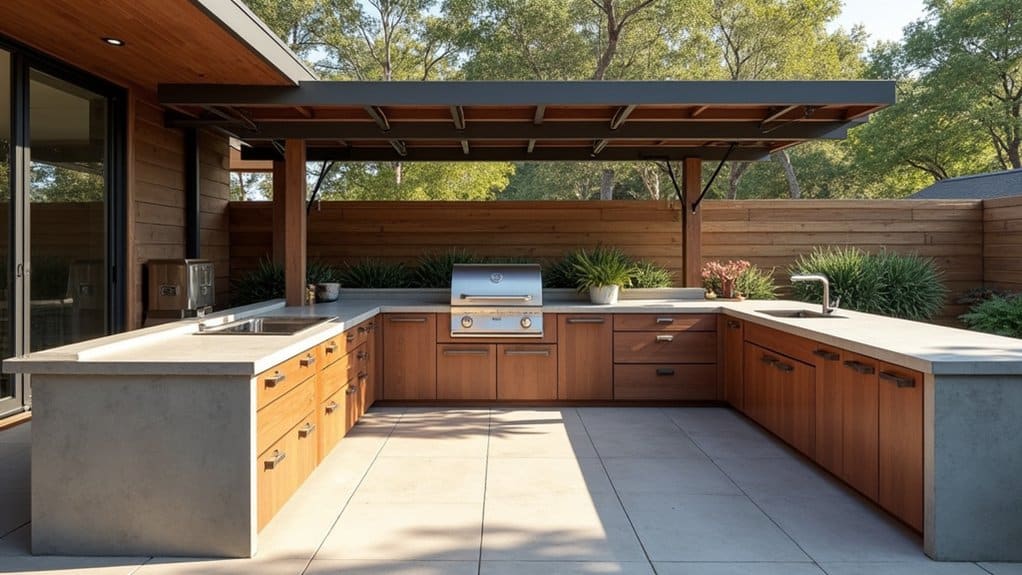
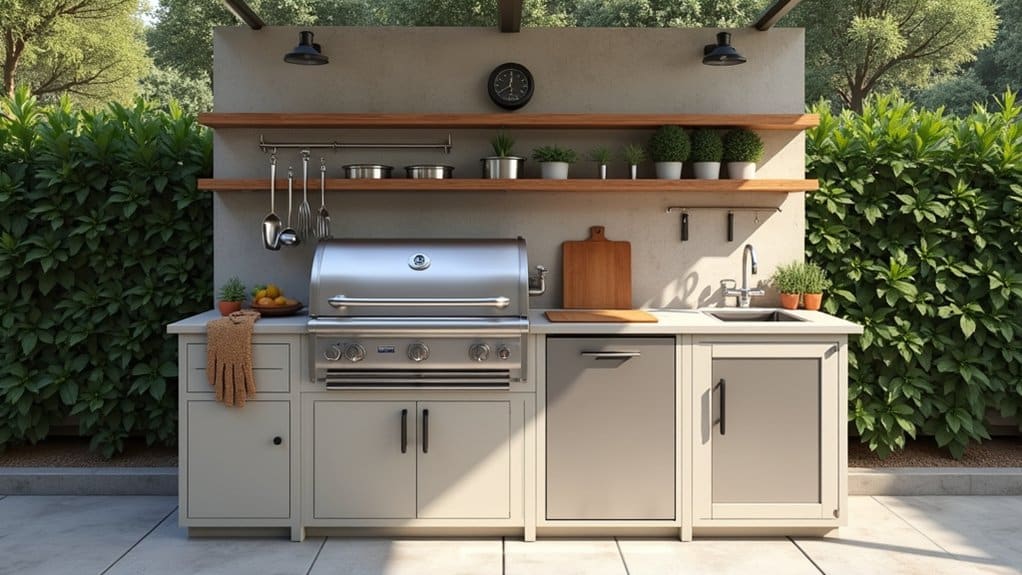
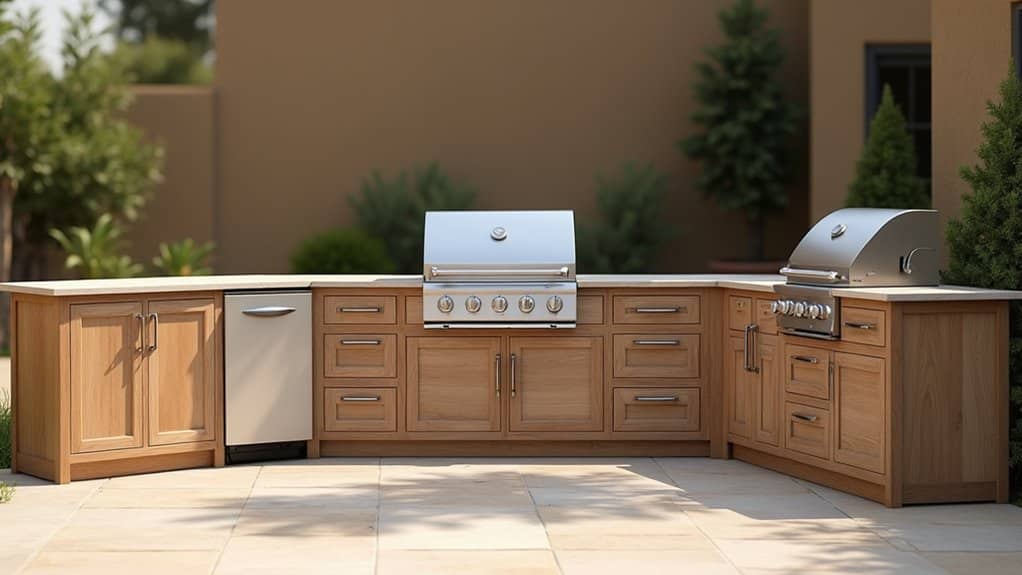
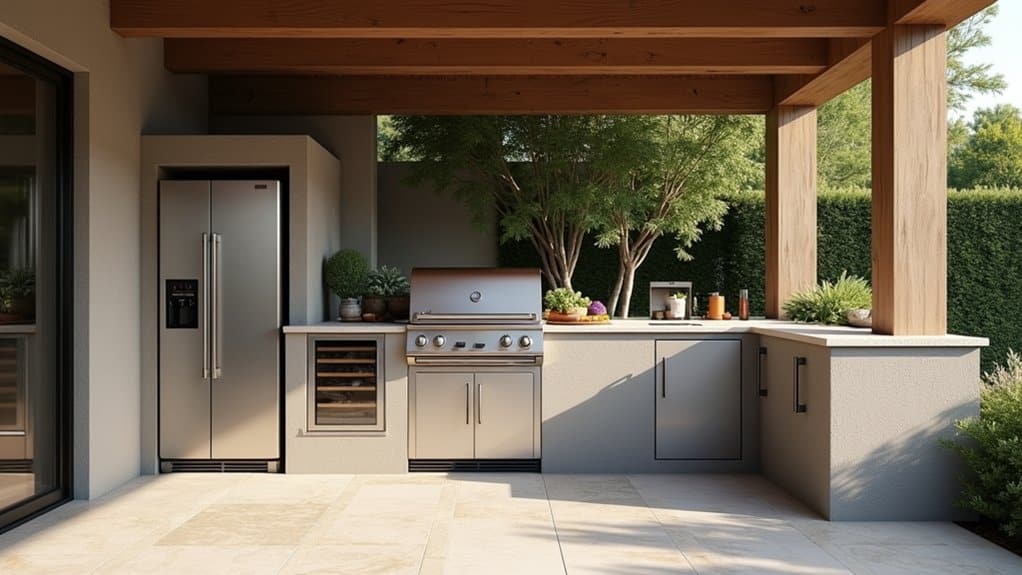
The three best outdoor kitchen layouts for maximum functionality are linear, L-shaped, and U-shaped configurations. Linear layouts work perfectly for compact spaces, positioning your grill centrally with prep surfaces on both sides. L-shaped designs maximize corner potential while creating an efficient work triangle. U-shaped kitchens offer the most counter space and storage across three connected sides. Each layout optimizes workflow differently based on your space, and understanding their unique advantages helps you choose wisely.
Linear Outdoor Kitchen Layouts Work Best in Small Spaces
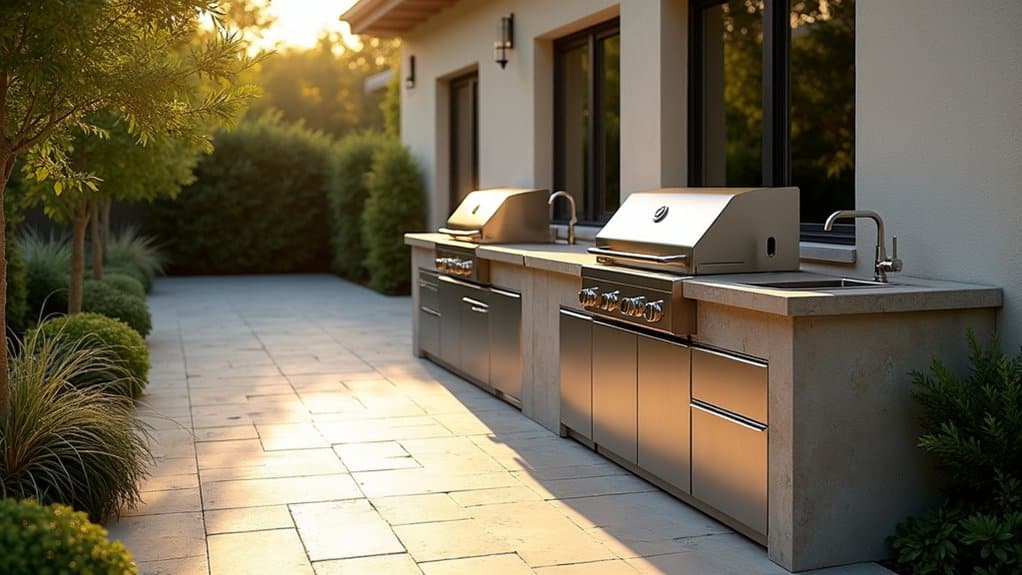
When you’re working with a compact outdoor space, a linear kitchen layout maximizes every square foot. This single-wall configuration extends along one axis, creating a minimized footprint that’s perfect for terraces, balconies, and small gardens. You’ll avoid the dead zones that L-shaped designs create in tight areas.
The compact design positions your grill centrally with prep surfaces on both sides, giving you quick access to every element. An 8-foot layout accommodates a grill, sink, and basic counter, while 10-12 feet provides more breathing room. The modular design allows you to customize components based on your specific needs and make changes as your requirements evolve.
You’ll benefit from easier installation since everything aligns along one wall, simplifying utility connections. Choose durable stainless steel or natural stone materials, and add multifunctional accessories like folding tables and hanging shelves to extend your workspace without sacrificing movement space. This streamlined setup also removes strong cooking smells from your indoor living areas, keeping your home fresh while you entertain guests outside. Positioning your linear kitchen next to your house minimizes your backyard footprint while reducing utility costs for gas, water, and electrical connections.
L-Shaped Outdoor Kitchens Balance Space and Function
Although linear layouts excel in narrow spaces, L-shaped outdoor kitchens liberate corner potential that single-wall designs can’t match. This customizable corner design runs along two perpendicular walls, maximizing your work surface while preserving open floor space on patios and decks. However, this layout requires careful planning to ensure your grill, sink, and refrigerator form an optimized work triangle.
L-shaped outdoor kitchens transform unused corners into functional cooking spaces while keeping your patio open and inviting.
You’ll benefit from a natural work triangle that positions your grill, sink, and refrigerator within arm’s reach:
- Dedicated zones separate prep, cooking, and cleanup across adjacent surfaces
- Extended storage accommodates cabinets, pull-out bins, and floating shelves
- Flexible additions allow island or bar seating for entertaining
The L-shape’s workflow efficiency reduces movement between tasks, keeping essentials close during meal preparation. You can blend with landscape features while maintaining 3-4 feet clearance for functional access. This configuration suits small-to-medium terraces seeking maximum utility. Keep in mind that L-shaped layouts have limited room for multiple cooks, so consider your household’s cooking habits before committing to this design. One advantage is the flexibility to start with a foundational straight-line kitchen and expand into an L-shape later as your needs and budget grow.
U-Shaped Layouts Give You the Most Counter Space
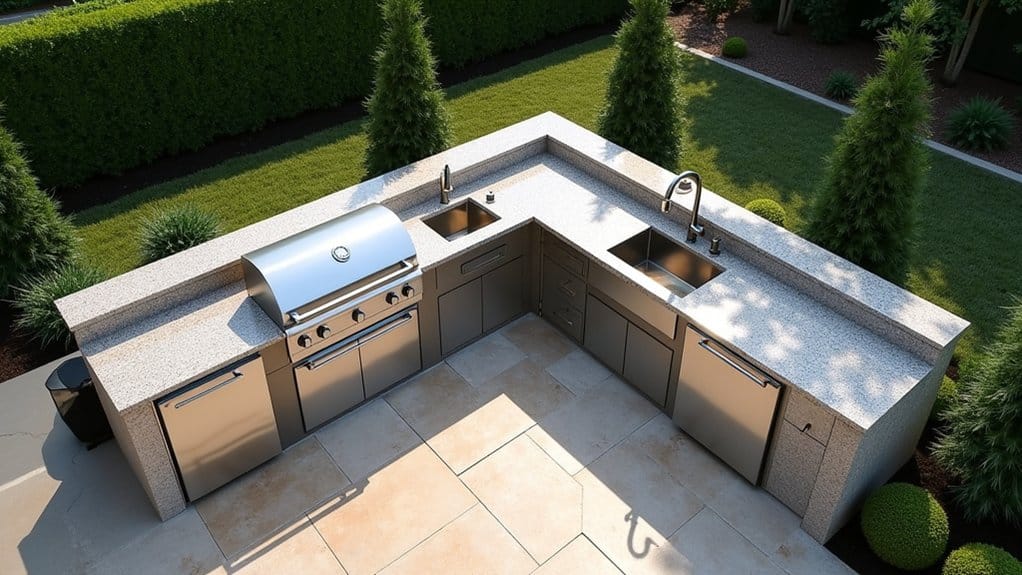
U-shaped outdoor kitchens deliver the most counter space of any layout by wrapping work surfaces across three connected sides. You’ll maximize every square foot with three cabinet lines providing enhanced storage versatility for utensils, tools, and ingredients. This configuration keeps essential items within arm’s reach while maintaining clutter-free prep zones.
The design excels at ergonomic workflow optimization by positioning your grill, sink, and refrigerator in a strategic work triangle. You’ll move fluidly between cooking, prepping, and serving without wasted steps or interruptions.
Three connecting walls eliminate through traffic, reducing spill risks and keeping your work zones unobstructed. This enclosed setup creates defined boundaries that separate cooking areas from guest spaces while still encouraging social interaction. The layout also engenders a cozy, intimate ambiance that defines your outdoor area as a distinct room perfect for gatherings. You’ll need a larger backyard, but the payoff is unmatched functionality for entertaining. Budget for this layout typically ranges from $8,000 to $50,000 depending on size, materials, and additional features you select. This investment also offers high return on investment when it comes time to sell your home.
Frequently Asked Questions
What Is the Ideal Spacing Between Islands in a Galley Outdoor Kitchen Layout?
You’ll want at least 3 to 4 feet of adequate walkway width between your galley islands for best workflow efficiency. This spacing lets you create an ergonomic work triangle while turning between zones rather than walking linearly. You can move freely, pass others comfortably, and keep appliances operating efficiently without heat interference. If you’re entertaining frequently, consider adding extra clearance so guests won’t obstruct your cooking space.
How Do Functional Zones Create an Efficient Workflow in Outdoor Kitchens?
Functional zones create efficient workflow by dividing your outdoor kitchen into dedicated cooking, prep, cleaning, and serving areas. You’ll minimize unnecessary movement when you position each zone strategically, placing your prep station between the refrigerator and grill. This workflow optimization reduces wasted steps during meal preparation. Ergonomic consideration guarantees you’re not crossing high-traffic paths while cooking. By using varied materials, marble for prep, concrete for cooking, you’ll visually delineate zones while maximizing durability and space efficiency.
Why Are Split-Level Counters Recommended for Outdoor Kitchen Designs?
Split-level counters optimize your outdoor kitchen by creating distinct zones for prep work and socializing. You’ll enjoy an ergonomic reach at the lower cooking surface while the raised bar conceals clutter and provides comfortable seating for guests. This design maximizes workflow efficiency, letting you grill and chat simultaneously without interruption. The elevation difference adds visual aesthetic appeal, and durable materials like quartz guarantee your multi-functional space withstands outdoor conditions beautifully.
What Landing Space Do Outdoor Refrigerators Require for Proper Functionality?
You’ll need at least 15 inches of open counter space directly above or next to your outdoor refrigerator for proper functionality. This landing zone guarantees you can load and unload items efficiently without cramped access. When you’re combining appliances, maintain 36 inches of clear space between your grill and refrigerator area. Don’t forget proper ventilation requirements and ideal refrigerator clearance, you’ll want full door swing capability to maximize workflow efficiency in your outdoor kitchen.
How Does Positioning Near Indoor Kitchen Windows Reduce Cabinet Needs?
Positioning your outdoor kitchen near indoor kitchen windows reduces cabinet needs by creating seamless indoor outdoor connections that let you share storage between spaces. You won’t need duplicate items when you can easily pass supplies through. Natural ventilation benefits also eliminate bulky exhaust systems, freeing up wall space. The visual connection makes your outdoor area feel larger, so you’ll require fewer cabinets to maintain an uncluttered, efficient workflow.