Big plunge pools typically start at around 18 feet and can extend beyond 24 feet. This size range offers enough space for you to host small pool parties, exercise comfortably or just relax and enjoy the water. You’ll find these large pools can dramatically enhance your property’s aesthetic, given their potential to become the centerpiece of your outdoor decor. Remember, though, that required maintenance levels rise with the size, so plan accordingly. Further on, find out how to balance factors like design, budget, and available space, to create a plunge pool that perfectly suits your tastes and needs.
Understanding Plunge Pool Dimensions
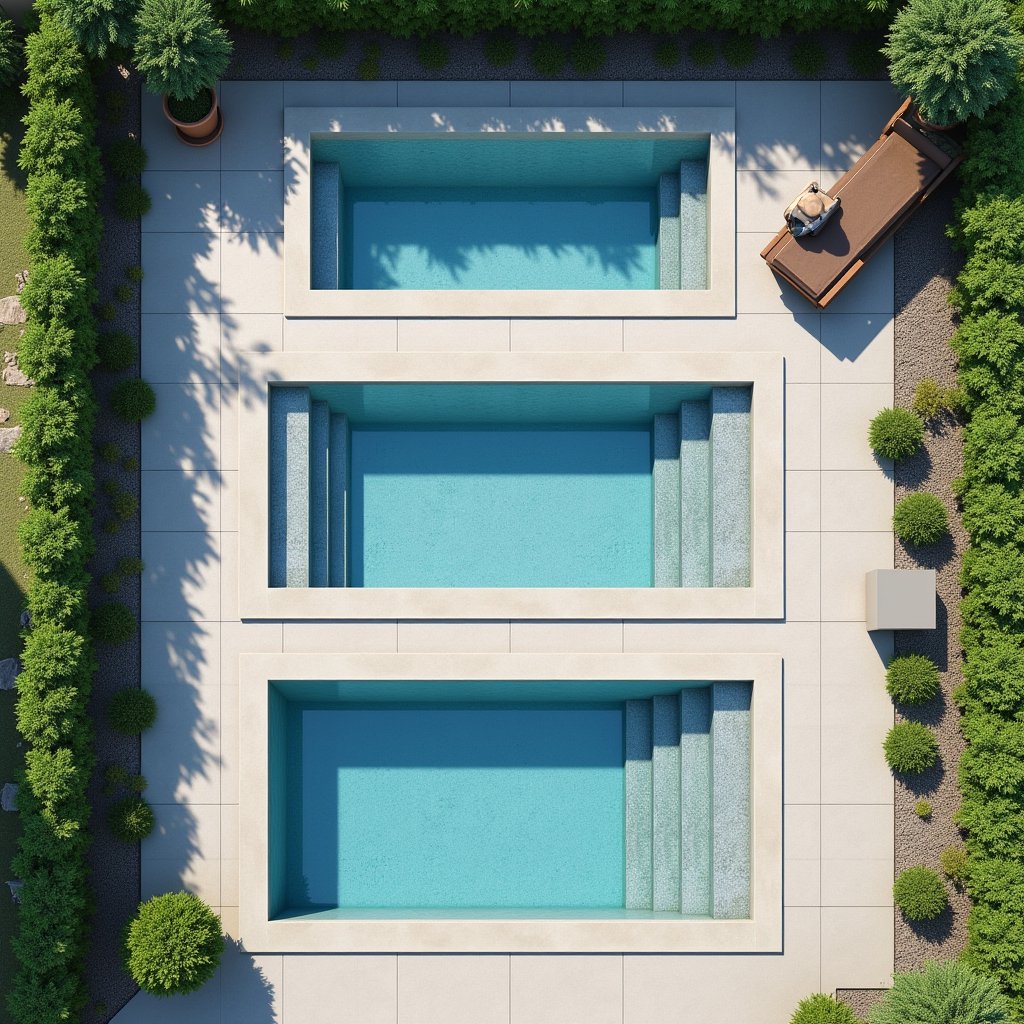
Diving into the topic of plunge pool dimensions, it’s crucial to know that these pools come in an array of sizes.
The bigger plunge pools, measuring from 14 to 16 feet, give you ample space to unwind. Despite their compact nature, you shouldn’t underestimate the plunge pool benefits. They’re perfect for hydrotherapy, cooling down on hot summer days, and even for a quick workout.
Plus, the plunge pool aesthetics are a sight to behold. A well-designed plunge pool, with its sleek lines and shimmering water, is an eye-catching addition to any backyard. It serves as a focal point, inviting you and your guests to take a revitalizing dip.
Small Plunge Pools: 10-13 Feet
Don’t be fooled by their size; plunge pools measuring 10 to 13 feet can pack quite the punch. Their compactness presents distinct design considerations and installation tips.
Their size allows for creative flexibility, while ensuring they fit into smaller yards. Even in limited space, you can have a rejuvenating retreat just a few steps away.
Consider these factors when planning your small plunge pool:
| Consideration | 10 Feet Pool | 13 Feet Pool |
|---|---|---|
| Installation | Easier due to smaller size | Requires more space |
| Design | Less space for features | More space for creative elements |
| Cost | Less expensive | More expensive due to size |
Medium-Sized Plunge Pools: 14-17 Feet
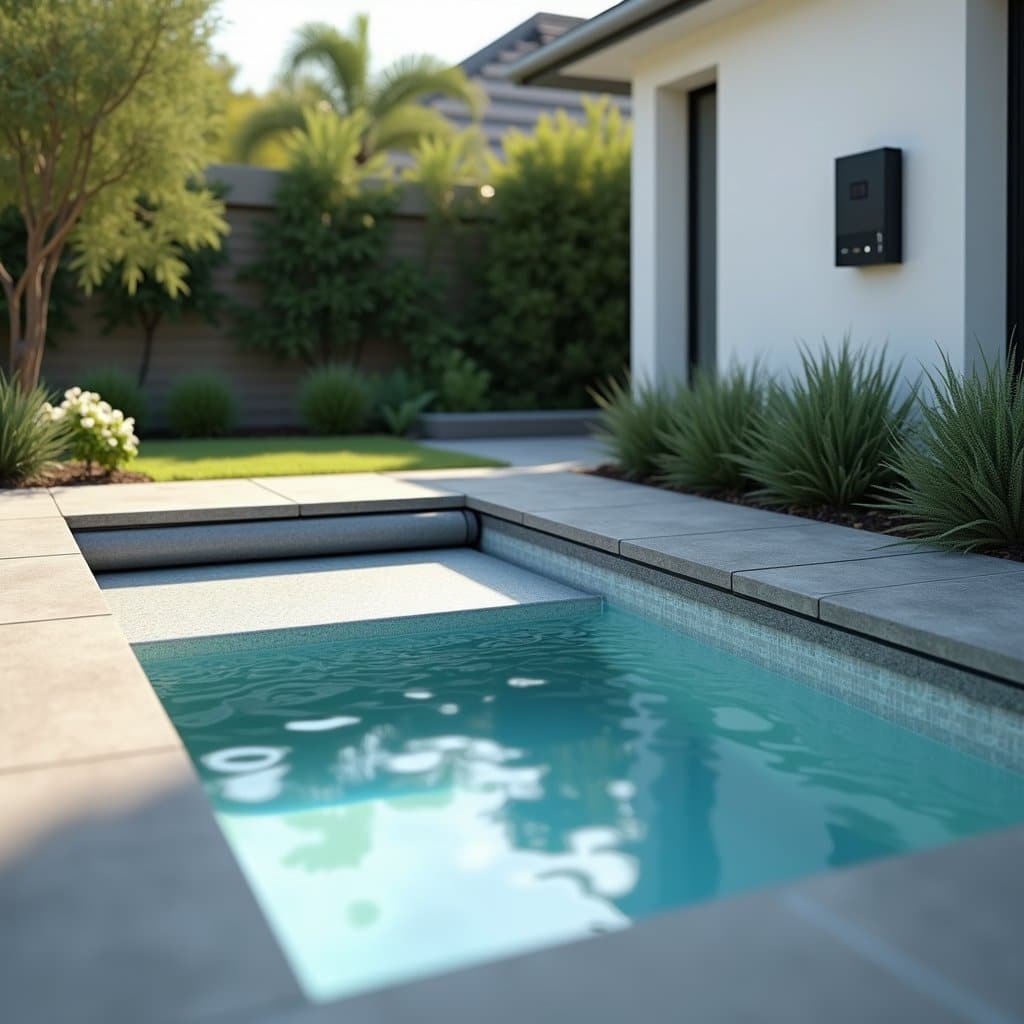
Stepping up in size, medium-sized plunge pools measuring 14 to 17 feet offer a balance of space and functionality.
This pool size is an ideal choice for those who desire a bit more room for movement. To optimize space, the plunge pool design should consider the shape. A rectangular pool allows for maximum swimming lanes, while a freeform design can add a creative touch to your backyard.
It’s also key to incorporate features like built-in seating or steps, which won’t compromise the swimming area. Remember, a proper design can make your medium pool feel bigger and more luxurious.
Large Plunge Pools: 18-23 Feet
Stepping up in size, you’re now looking at large plunge pools spanning 18-23 feet.
This dimension caters to more extensive usage, allowing you to enjoy a revitalizing swim or host a small pool party.
However, it’s essential to analyze your space requirements, ensuring that your yard can comfortably accommodate this pool size without cramping the surrounding area.
Ideal Uses of Size
While you may think that large plunge pools with a size range of 18-23 feet are reserved for luxury resorts or mansions, they’re actually a versatile addition to many homes.
Their size variations allow for multiple ideal uses, perfectly aligning with the needs of different homeowners.
- *Fitness and Exercise:* They’re large enough for swimming laps or water aerobics.
- *Entertainment:* They can accommodate a small crowd for pool parties.
- *Relaxation:* They provide ample space for lounging and unwinding.
- *Physical Therapy:* They’re suitable for water-based rehabilitation exercises.
- *Aesthetic Appeal:* They can enhance the visual appeal of your backyard.
Space Requirements Analysis
Understanding the space requirements for large plunge pools that measure between 18 and 23 feet is just as important as knowing their potential uses.
You must evaluate your property’s layout and consider how best to optimize space, ensuring the pool doesn’t dominate your entire backyard. Remember, you’ll need room for other amenities or landscaping features. It’s not just about fitting the pool in; it’s about creating a harmonious outdoor living space.
Moreover, don’t forget to factor in local zoning regulations. These can dictate where you can place your pool in relation to your property lines and home.
Compliance isn’t optional it’s mandatory. So, plan your pool project with careful attention to these critical elements.
Extra-Large Plunge Pools: 24 Feet and Above
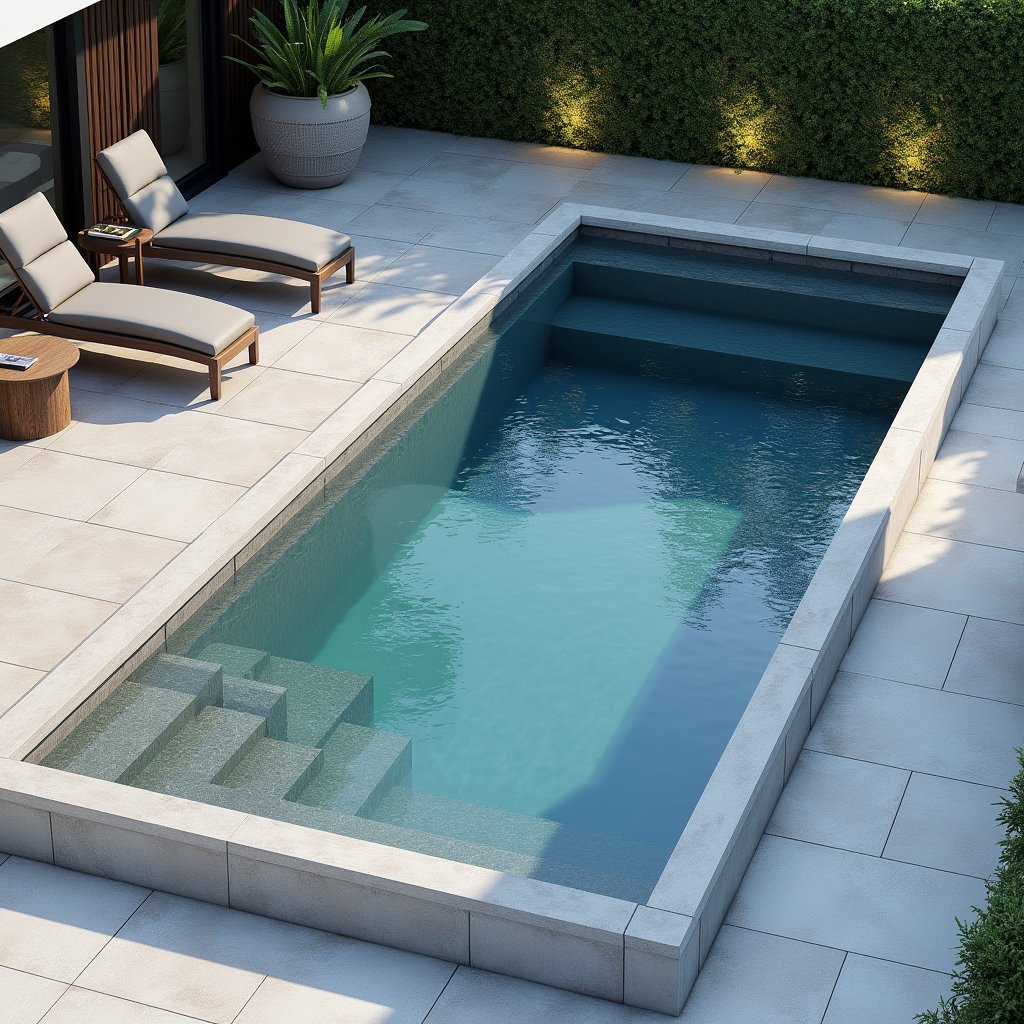
You’re now stepping into the domain of extra-large plunge pools, those that stretch 24 feet and more.
With these grand water features, the benefits are substantial, but they also demand a critical look at your available space and a keen understanding of increased maintenance needs.
Let’s explore these points further to help you make an informed decision.
Benefits of Large Pools
If you’re seeking an aquatic refuge that offers both relaxation and ample space for exercise, consider the benefits of extra-large plunge pools measuring 24 feet and above.
These pools are much more than just a luxury lifestyle amenity; they provide a myriad of advantages that cater to your diverse needs and desires:
- Spaciousness: The sheer size affords plenty of room for swimming laps, water aerobics, or even playing water games promoting family bonding.
- Flexibility: They can accommodate pool parties, or function as a peaceful sanctuary when you’re alone.
- Improved Aesthetics: The grandeur of a large pool can greatly enhance your property’s visual appeal.
- Health Benefits: Regular swimming in your private pool can help maintain physical fitness and mental wellbeing.
- Increased Property Value: A large pool is an attractive feature to potential buyers should you ever decide to sell.
Space Requirements Considerations
Before diving into the installation of an extra-large plunge pool measuring 24 feet and above, it’s crucial to take into account your space requirements.
Reflect on your site layout, think about the shape and size of your backyard, and how the pool will fit within this space.
Besides accommodating the pool itself, you’ll need to allow for decking, landscaping, and a safety zone.
Zoning regulations are another major factor. You must verify your dream pool complies with local building codes and setback requirements.
It’s also wise to contemplate access for construction equipment.
Don’t forget future pool additions or renovations.
Every bit of planning now will make your extra-large plunge pool installation a smoother process.
Maintenance for Big Pools
While owning an extra-large plunge pool can be a luxurious experience, keeping it clean and functional requires a well-planned maintenance routine.
You’ll need to focus on pool cleaning and maintaining the pool’s chemical balance.
Consider these steps:
- Schedule daily skimming and scrubbing. This prevents debris build-up and algae growth.
- Check the pool’s chemical balance at least twice a week. Unbalanced chemicals can harm swimmers and the pool’s surface.
- Regularly clean out filters. Blocked filters can lead to poor water circulation.
- Use a pool vacuum to clean the bottom of the pool.
- Get professional maintenance checks yearly. They can spot potential problems early.
Depth Range for Plunge Pools
Though you may assume that plunge pools are shallow due to their compact size, this isn’t always the case.
In fact, the depth range for plunge pools can vary greatly, adding to the plunge pool benefits. Depths can range from as shallow as three feet to as deep as six feet. This variety in depth provides a multitude of options to suit your individual preferences and needs.
The deeper options not only enhance the plunge pool aesthetics but also allow for activities such as aqua exercising, and the shallower depths make it safer for children.
Thus, when considering a plunge pool, don’t let the size fool you. Its depth can offer a surprising amount of versatility and enjoyment.
Shape Variations in Plunge Pools
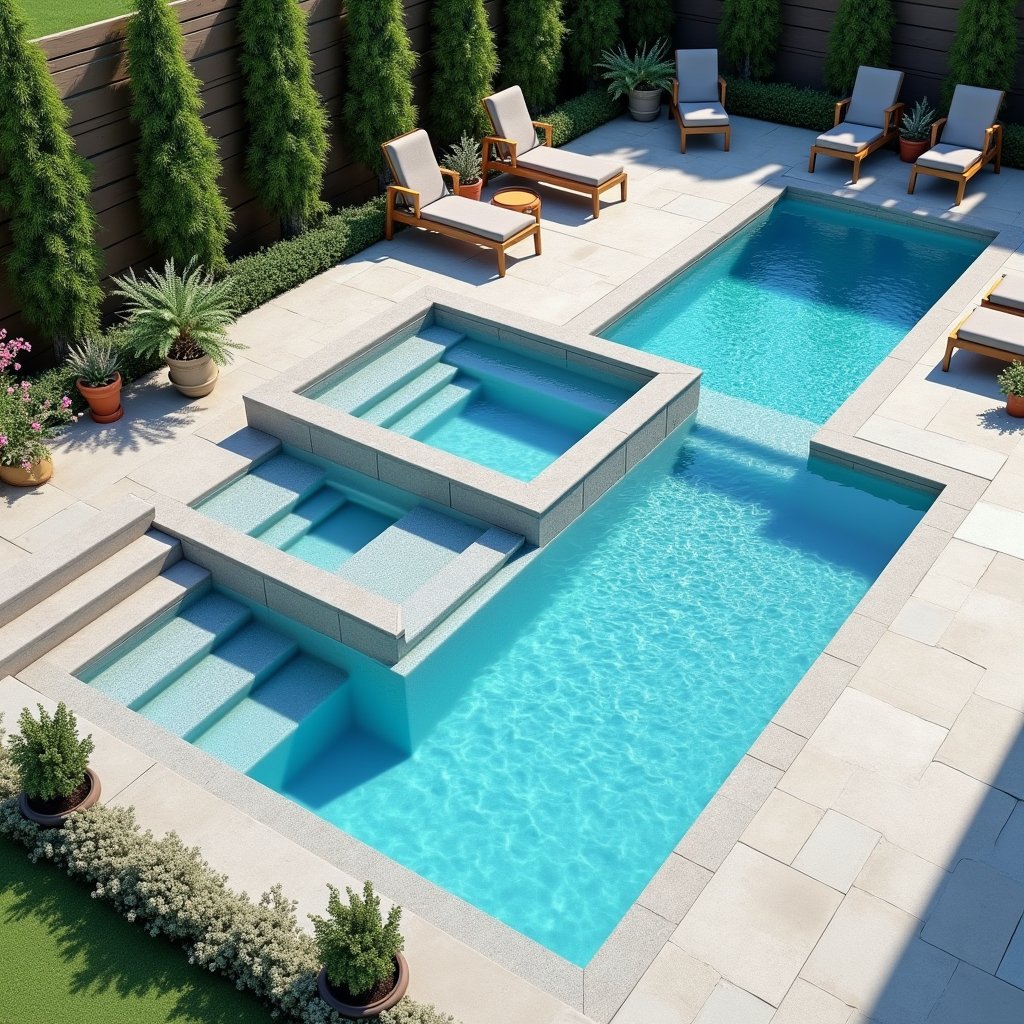
Imagine your backyard transformation with a round plunge pool, its dimensions perfectly suiting your space.
Or perhaps you’re attracted to the sleek, modern appeal of a rectangular plunge pool with its precise sizes.
Don’t forget, if standard shapes don’t quite fit your vision, there’s always the option to design a customized plunge pool shape, crafted to your unique specifications.
Round Plunge Pool Dimensions
Immerse yourself in the realm of round plunge pools, a popular choice for many homeowners.
These pools offer many unique features and advantages that set them apart from other shapes.
Consider these round plunge pool features and their advantages:
- Compact size: Fitting perfectly into small spaces, they’re a great option for compact yards.
- Efficient water circulation: Their round shape guarantees even water flow, enhancing filtration and reducing maintenance.
- Aesthetic appeal: The circular design is visually pleasing and can enhance your backyard’s overall aesthetic.
- Social space: The circular design promotes social interaction as everyone is equidistant in the pool, making conversations easier.
- Ease of installation: Due to their simple shape, round plunge pools are relatively easy and quick to install.
Rectangular Plunge Pool Sizes
Diving into the world of rectangular plunge pools, you’ll find a myriad of advantages and unique features that make them a valuable addition to any backyard.
Their geometric design isn’t just aesthetically pleasing but also efficient, offering more swim space than round pools of comparable size.
In terms of pool dimensions, the typical rectangular plunge pool measures around 10 by 6 feet. Depth variations range from 3 to 5 feet, offering both shallow and deeper areas for relaxation and exercise.
The streamlined shape allows for versatile placement options, including against walls or in corners.
To conclude, rectangular plunge pools offer a blend of functionality and style. Their compact dimensions make them a perfect fit for modern backyards, combining convenience with luxury.
Customized Plunge Pool Shapes
While rectangular pools have their charm, you might crave something unique and customized to your specific needs.
Custom designs allow you to create plunge pools in unique shapes that complement your surroundings and personality. Here are some ideas:
- Irregular Freeform: These mimic natural water bodies, perfect if you’re after a tropical vibe.
- Kidney-Shaped: Its rounded edges and subtle curves are aesthetically pleasing.
- L-Shaped: Ideal for corner spaces, providing a large swimming area.
- Oval: Classic and elegant, it softens the angular lines of your yard.
- Figure-Eight: This dual-zone design can accommodate both adults and kids simultaneously.
With custom designs, your plunge pool can be more than just a rectangular water body.
It can become a unique, stylish extension of your home.
Factors Influencing Pool Size
Although you might think the size of a big plunge pool is standardized, several factors can influence its dimensions. These factors range from the area available for the pool, your budget, to the plunge pool aesthetics you desire. Remember, while larger pools are trending, it’s crucial to balance size with style and functionality.
Here’s a quick snapshot of the key factors:
| Factor | How it influences pool size |
|---|---|
| Available space | Dictates maximum pool dimensions |
| Budget | Larger pools cost more |
| Desired aesthetics | Influences pool shape and depth |
Understanding these factors allows you to make informed decisions about your pool size. It’s not just about following trends, but creating a pool that suits your unique needs and preferences.
Benefits of Larger Plunge Pools
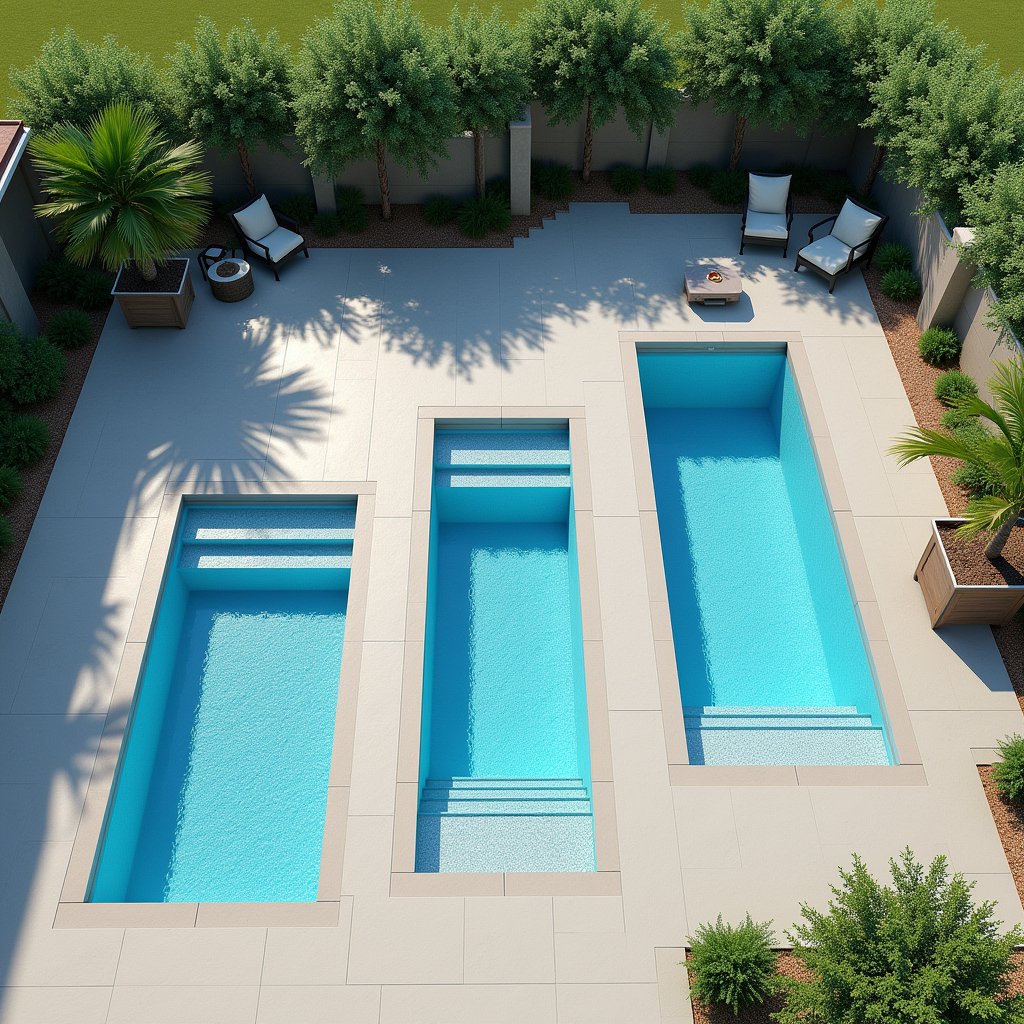
Before you disregard the idea of a larger plunge pool, consider the numerous benefits it can offer.
- Aesthetic Appeal: A large pool can be a visual centerpiece, adding a touch of luxury to your property.
- Social Gatherings: It’s perfect for parties and gatherings, offering plenty of space for guests to enjoy.
- Fitness and Recreation: It provides ample room for swimming and water sports.
- Increased Property Value: A larger pool can greatly boost your property’s value.
- Therapeutic Benefits: A spacious pool allows for hydrotherapy, promoting physical and mental well-being.
Choosing the Right Pool Size for You
Ever wondered how to choose the perfect plunge pool size for your space? It’s not as intimidating as you might think! Your pool size should complement your backyard’s dimensions and align with your design preferences.
Consider these three factors: backyard size, intended use, and aesthetic appeal.
| Backyard Size | Intended Use | Aesthetic Appeal |
|---|---|---|
| Spacious or compact? | Relaxation or fitness? | Minimalist or grand? |
| Choose pool size to fit | Size impacts functionality | Design preferences matter |
Remember: a pool that’s too big can overwhelm your space, while one that’s too small may not meet your needs. So, take your time, consider your options, and choose a pool size that’s just right for you.
Frequently Asked Questions
What Is the Average Cost of Installing a Big Plunge Pool?
The cost of installing a big plunge pool can vary greatly.
It depends on a variety of installation factors such as the complexity of the design, materials used, and the labor involved.
Typically, you’re looking at a range between $10,000 to $25,000.
Remember, unique features or high-end materials will drive up the cost.
You’ll need to balance your budget with your pool dreams to get a clear idea of the final price.
How Long Does It Typically Take to Install a Plunge Pool?
You’re curious about the installation timeline for a plunge pool, aren’t you?
It typically takes between 2 to 3 weeks, depending on construction factors such as the complexity of the design, ground conditions, and weather.
But remember, good things take time.
It may seem long, but in the end, you’ll have a fantastic, invigorating sanctuary in your own backyard.
Can Plunge Pools Be Heated and How Much Energy Does It Consume?
Yes, you can heat plunge pools.
The energy consumption largely depends on the pool’s size, the desired temperature, and the outside weather conditions. Generally, plunge pools are energy efficient due to their smaller size.
However, it’s also important to take into account the type of pool heating system used. Solar heaters, for instance, are more cost-effective and eco-friendly.
Regular maintenance can also help guarantee your heating system performs at its best, reducing unnecessary energy waste.
What Are the Maintenance Requirements for Large Plunge Pools?
For maintaining your large plunge pool, you’ll need to keep a close eye on the water chemistry.
It’s crucial to regularly check pH levels, alkalinity, and sanitizer.
Besides, you’ve got to follow a strict cleaning schedule.
Vacuuming, skimming, and scrubbing the pool’s surfaces help keep it pristine.
Don’t forget to clean the filters and carry out periodic shock treatments.
This might sound like a lot, but it’s essential for keeping your pool safe and inviting.
Are There Any Specific Safety Precautions for Big Plunge Pools?
Yes, there are specific safety precautions for big plunge pools.
You’ll need to adhere to safety guidelines like installing a fence around the pool to prevent accidental falls.
It’s vital you’ve a non-slip deck to avoid slipping incidents.
Also, child supervision is important when kids are in or around the pool.
Don’t forget to keep emergency equipment nearby and make sure your pool’s depth is clearly marked.
Safety should always be your priority.