Start by shaking your outdoor cushions to remove loose debris, then mix a solution of 1/4 cup mild dish soap with a gallon of warm water. Spray or sponge the solution onto the cushions, using a soft brush for stubborn stains. Rinse thoroughly with a garden hose until water runs clear, then stand cushions on edge to dry. For tougher stains and long-term care, there’s more to keeping your cushions looking their best.
Gather Your Cleaning Supplies
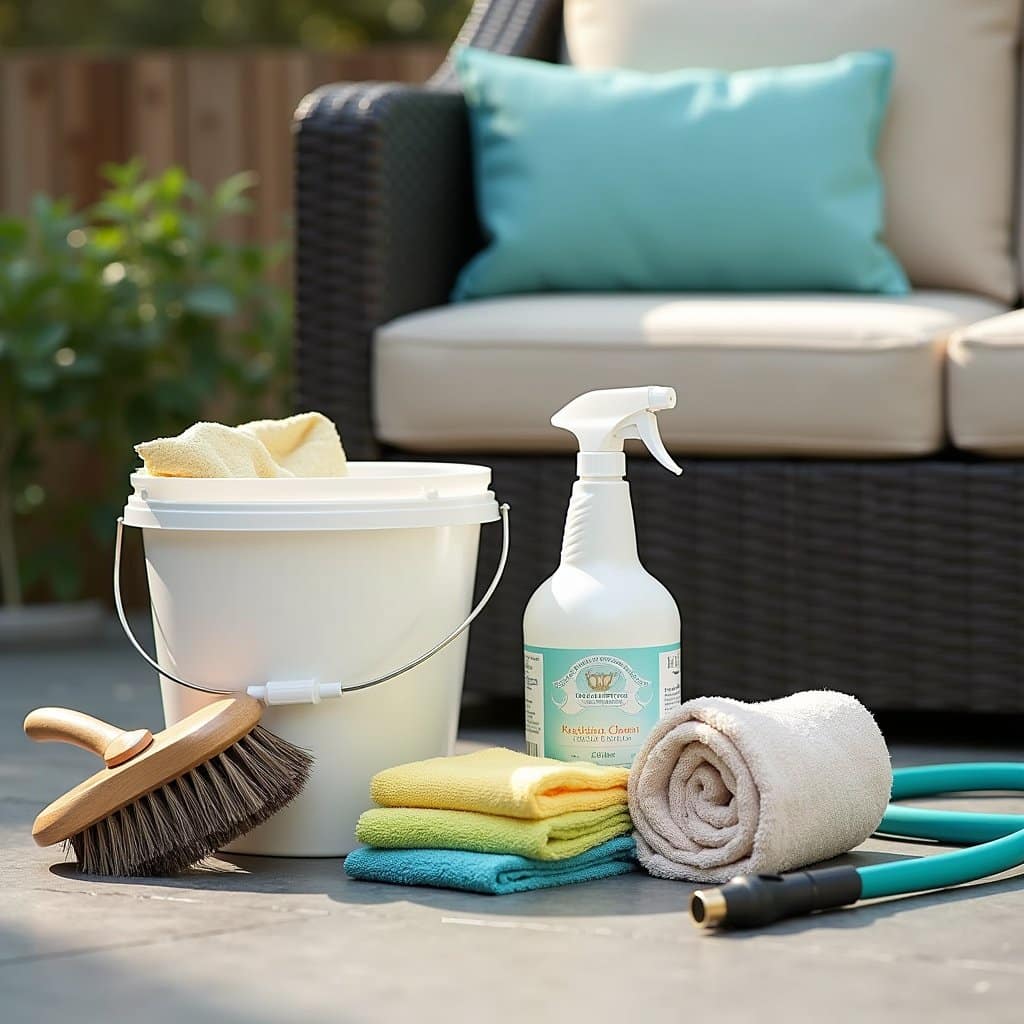
Four essential supplies are needed to properly clean outdoor cushions: mild dish soap, warm water, a soft-bristled brush, and a clean sponge. While these basics will handle most cleaning tasks, you’ll want to assess your fabric types before starting. Different materials may require specific cleaning tools.
For delicate fabrics, you might need a gentler brush or specialized fabric cleaner. Keep a bucket or large container handy to mix your cleaning solution, and gather some clean white cloths for drying. If your cushions have tough stains, you may also want to have a commercial outdoor fabric cleaner on hand. Don’t forget to check your cushions’ care labels they’ll often specify which cleaning products are safe to use.
Remove Loose Dirt and Debris
Before applying any cleaning solutions, you’ll want to remove as much loose debris as possible from your outdoor cushions. Take each cushion and give it a vigorous shake to dislodge dirt, leaves, and other loose materials. Follow up by using a soft-bristled brush to sweep away any remaining surface debris that’s still clinging to the fabric.
Shake Cushions Thoroughly First
The initial step in cleaning outdoor cushions requires a thorough shaking to dislodge loose dirt, dust, and debris. Different cushion types and outdoor materials will accumulate varying amounts of debris, so you’ll need to be thorough with this step before proceeding to deeper cleaning methods.
Take each cushion outside and shake vigorously using these specific techniques:
- Hold the cushion firmly at opposite corners and snap it with quick, sharp movements to release embedded particles
- Flip the cushion over and repeat the shaking process on both sides, paying special attention to seams and crevices
- Stand the cushion upright and tap it gently against a clean, flat surface to dislodge any remaining debris that’s settled at the bottom
Brush Away Surface Debris
After shaking, grab a soft-bristled brush to methodically remove any remaining surface debris from your outdoor cushions. Choose appropriate surface tools based on your cushion’s fabric type a horsehair brush works well for sturdy materials, while a softer nylon brush is better for delicate fabrics.
Start at the top of each cushion and work your way down in overlapping strokes, paying special attention to seams and crevices where debris types like pollen, dust, and dried leaves tend to collect. You’ll want to address different debris types with varying pressure lighter for loose dirt and firmer for stuck-on particles. Don’t forget to brush the sides and backs of the cushions, as dirt can accumulate in these often-overlooked areas.
Mix Your Cleaning Solution
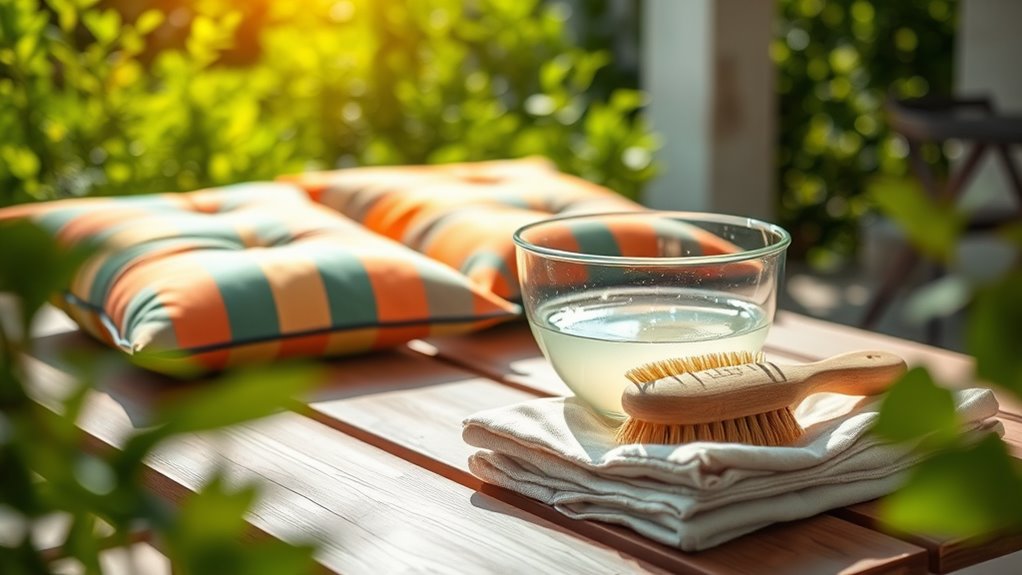
Preparing an effective cleaning solution requires just a few common household ingredients. You’ll want to mix your cleaning agents in the right solution ratios to achieve ideal results without damaging your outdoor cushion fabric.
- Mix 1/4 cup of mild dish soap with 1 gallon of warm water for a basic cleaning solution that’s suitable for most cushions
- Add 1/4 cup of borax to your soap solution if you’re dealing with mildew or stubborn stains
- For synthetic cushions, you can create a stronger solution by combining 1 cup of white vinegar with 1 gallon of warm water and 1/4 cup of dish soap
Pour your chosen solution into a spray bottle or bucket, depending on your preferred application method. Always test the solution on a small, hidden area initially to confirm it won’t damage the fabric.
Treat Stubborn Stains
While general cleaning works for most outdoor cushion maintenance, stubborn stains require targeted treatment with specific techniques and solutions. For tough stains, you’ll need to apply a specialized stain removal product directly to the affected area. Using a soft-bristled brush, work the solution into the fabric in a circular motion, being careful not to damage the fabric’s fibers.
For oil-based stains, sprinkle baking soda or cornstarch to absorb excess oil before applying your cleaning solution. When dealing with mildew, use a mixture of vinegar and water, then scrub gently. Always test your cleaning solution on a hidden area initially to guarantee proper fabric care and prevent discoloration. Let the treated area dry completely in direct sunlight, which helps eliminate remaining stains and odors naturally.
Deep Clean the Cushions
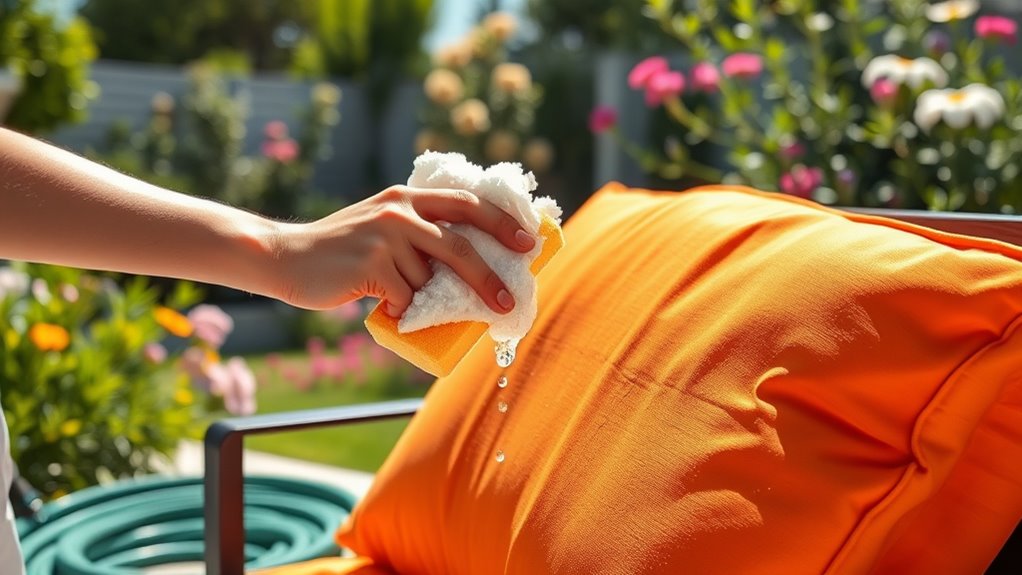
Before you start the deep cleaning process, thoroughly brush away loose debris and vacuum your outdoor cushions to remove surface dirt. You’ll need to prepare an effective cleaning solution by mixing your chosen cleaner according to package instructions, ensuring it’s well-combined. These preliminary steps are essential for achieving the best results when deep cleaning your cushions.
Brush and Vacuum First
Start your deep cleaning process by thoroughly brushing and vacuuming your outdoor cushions. This essential initial step in cushion care removes loose dirt, debris, and surface contaminants before you begin deeper cleaning methods. Proper outdoor maintenance starts with these preliminary cleaning steps to prevent grinding dirt deeper into the fabric.
- Use a stiff-bristled brush to sweep away dried mud, leaves, and caked-on debris from all cushion surfaces, paying special attention to seams and crevices
- Work in small sections, brushing in the same direction to avoid spreading dirt around
- Follow up with a vacuum cleaner using the upholstery attachment to remove fine particles and dust that the brush loosened
This preparation guarantees your subsequent cleaning efforts will be more effective and thorough.
Mix Cleaning Solution Well
Creating an effective cleaning solution is a critical step for deep cleaning outdoor cushions. You’ll need to carefully mix your cleaning agents in the proper solution ratios to guarantee ideal results without damaging the fabric.
In a large bucket, combine one cup of mild dish soap or specialized outdoor fabric cleaner with three cups of warm water. For stubborn stains, add 1/4 cup of borax to enhance cleaning power. Alternatively, mix one cup of white vinegar with two cups of water for a natural cleaning option.
Stir the mixture thoroughly until all cleaning agents are fully dissolved. Test your solution on a small, hidden area of the cushion initially to verify it won’t cause discoloration or fabric damage. Once confirmed safe, you’re ready to proceed with deep cleaning.
Rinse and Dry Properly
Once you’ve finished scrubbing the cushions, thorough rinsing is critical to remove all soap residue and loose dirt. Use proper rinse techniques by spraying with a garden hose at medium pressure, working from top to bottom until the water runs clear. Don’t forget to rinse both sides and all seams thoroughly.
For effective drying methods:
- Stand cushions on their edges in a well-ventilated area to promote airflow and prevent water pooling
- Rotate the cushions every few hours to guarantee even drying and prevent mildew growth
- Avoid direct sunlight during drying, as it can fade or damage the fabric
If you’re in a hurry, you can speed up the process using a fan, but don’t use heat-based methods like dryers or heat guns, which can damage the cushions’ filling and fabric.
Protect and Maintain Your Cushions
Regular protection and maintenance will extend your outdoor cushions’ lifespan by years. Store your cushions in a dry, covered area when they’re not in use, especially during harsh weather conditions. If you don’t have indoor storage space, invest in weather protection covers specifically designed for outdoor furniture.
Apply a fabric protector spray every six months to guard against water damage, stains, and UV rays. Before applying, make sure your cushions are completely clean and dry. Brush off dirt and debris weekly to prevent buildup, and address any stains immediately to avoid permanent damage. When possible, flip and rotate your cushions regularly to guarantee even wear. During winter months, proper cushion storage becomes essential – clean them thoroughly and store them in a climate-controlled space to prevent mold and mildew growth.
Frequently Asked Questions
How Often Should Outdoor Cushions Be Replaced?
You’ll need to replace your outdoor cushions every 2-4 years, depending on their quality and exposure to elements. Watch for key replacement signs like faded fabric, mold growth, torn seams, or flattened filling that doesn’t bounce back. To enhance cushion longevity, store them indoors during harsh weather and clean them regularly. High-end cushions made with quality materials can last up to 5 years with proper care.
Can Outdoor Cushions Be Cleaned in a Washing Machine?
While some outdoor cushions can be machine washed, you’ll need to check the care label initially. Most manufacturers don’t recommend machine washing as it can damage the fabric and filling. If your cushions are machine-washable, use cold water and a gentle cycle. Don’t overload your washer, and avoid harsh detergents. For proper cushion care, it’s safer to hand wash them with mild soap and water.
What’s the Best Way to Store Outdoor Cushions During Winter?
For ideal seasonal storage of your outdoor cushions during winter, you’ll want to verify they’re completely clean and dry initially. Store them in a waterproof container or heavy-duty plastic bags with zipper seals for cushion protection. Keep them in a climate-controlled space like a garage or basement, away from moisture and pests. Don’t compress them too tightly – this helps maintain their shape. Consider using moisture-absorbing silica packets for extra protection.
Are Indoor Cleaning Products Safe for Outdoor Cushion Fabrics?
You’ll need to be cautious when using indoor cleaning products on outdoor cushions, as fabric compatibility is a key concern. While some indoor cleaners might work, they’re often not designed to handle outdoor fabrics‘ specific needs. It’s safer to use cleaners specifically made for outdoor furniture. If you’re determined to use indoor products, always test them initially on a small, hidden area to guarantee there’s no fabric damage or discoloration.
How Can I Remove Mold and Mildew Stains From Outdoor Cushions?
For effective mold removal, mix one part bleach with four parts water, or use white vinegar for a natural solution. Spray the affected areas and let sit for 15 minutes. Scrub gently with a soft brush, then rinse thoroughly. For mildew prevention, make certain your cushions dry completely after cleaning and store them in a dry place when not in use. You can also spray them with a fabric protector to create a moisture-resistant barrier.