For lush, low-maintenance hanging plants, you’ll find success with Epipremnum aureum (Pothos) and Philodendron varieties, which thrive in bright indirect light but tolerate low-light conditions. These resilient species require minimal care beyond occasional watering when the soil’s top inch feels dry. Tradescantia and Hedera helix (English Ivy) offer striking foliage with minimal upkeep, while Peperomia varieties provide succulent-like leaves that retain moisture efficiently. Exploring these adaptable species will reveal even more versatile options for your space.
Essential Features of Low-Maintenance Hanging Plants
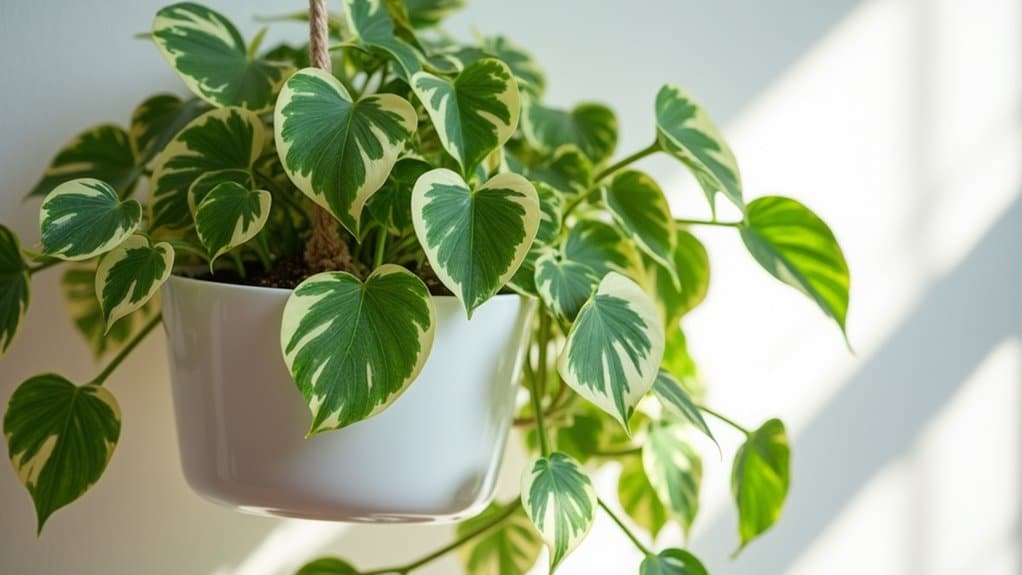
Five essential features define successful low-maintenance hanging plants, with proper light exposure and water management being paramount. You’ll find these indoor plants thrive best in bright, indirect light, though many species can tolerate low light conditions. The trailing growth habit creates cascading foliage that improves vertical spaces while requiring minimal intervention.
Well-draining soil is vital for preventing root rot, and you’ll need to water only when the soil is partially dry. Most resilient hanging plants, including Epipremnum aureum (pothos) and Hedera helix (English ivy), demonstrate remarkable adaptability to varying environmental conditions. Regular pruning maintains an ideal plant architecture and promotes dense foliar development. These characteristics guarantee your hanging plants remain vigorous with minimal care, making them perfect for both novice and experienced indoor gardeners.
Top Beginner-Friendly Trailing Plants for Your Space
When selecting trailing plants for your initial hanging garden, several species stand out for their exceptional adaptability and forgiving nature. Epipremnum aureum (Pothos) offers remarkable resilience across diverse light conditions, while English Ivy (Hedera helix) provides air-purifying benefits alongside its elegant trailing stems.
For vibrant foliage, consider Philodendrons, which adapt effortlessly to different light levels and maintain their lush appearance with minimal care. Tradescantia’s striking striped leaves create visual interest and grow rapidly with regular watering. You’ll find Peperomia’s succulent-like leaves particularly appealing for their low-maintenance requirements and tolerance of bright, indirect light. These five trailing species exemplify the perfect balance of aesthetic appeal and ease of care, making them ideal choices for both novice and experienced plant enthusiasts.
Light and Water Requirements for Success
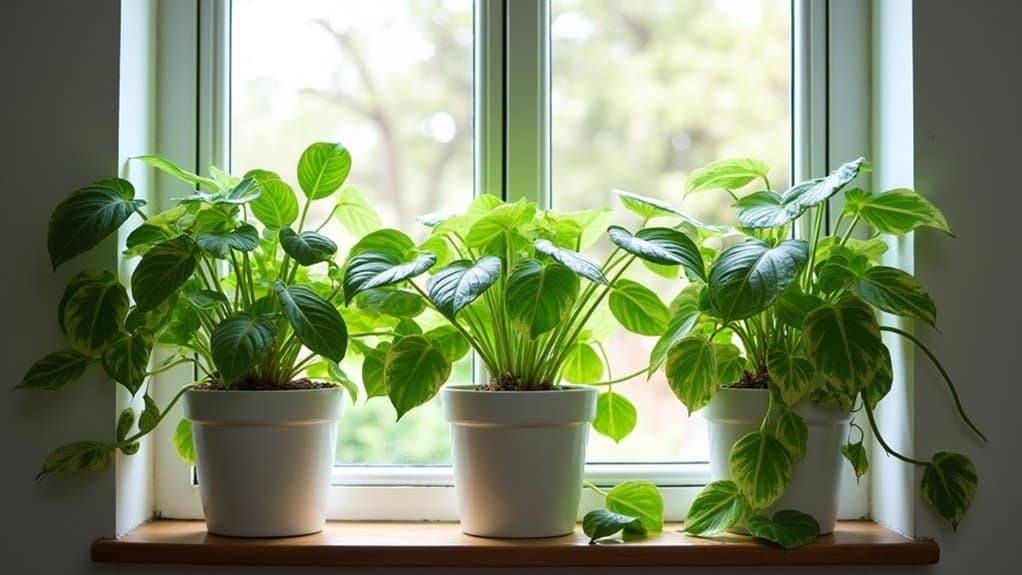
Successful cultivation of hanging plants hinges on understanding their specific light and water requirements. Most low-maintenance hanging plants thrive in bright, indirect light, while adapting to diverse environmental conditions. You’ll need to monitor soil moisture levels carefully, as different species have distinct hydration needs.
- String of Hearts and other succulents require thorough watering only when soil is completely dry, making them exceptionally easy to maintain
- Wandering jew (Tradescantia) and similar species adapt well to moderate or bright indirect light, needing water when the top soil becomes partially dry
- Boston fern demands higher humidity and regular misting, with consistently moist soil that’s never waterlogged
Comprehending these requirements maintains your hanging plants in a vibrant state. Monitor the soil’s moisture content and adjust light exposure according to each species’ specific needs for optimal growth.
Best Hanging Plants for Different Light Conditions
Numerous hanging plants adapt beautifully to varying light conditions, each species exhibiting distinct phototropic responses and growth patterns. You’ll find that low-maintenance pothos and philodendrons excel in bright, indirect light, displaying ideal trailing growth with minimal care requirements.
For shaded environments with elevated humidity levels, Boston ferns and English ivy demonstrate remarkable adaptability. If you’re working with direct sunlight exposure, consider drought-tolerant succulents like string of pearls, which thrive in these conditions while requiring minimal irrigation.
Indoor spaces with filtered light accommodate trailing begonias effectively, while air plants offer versatility through soil-free cultivation in hanging displays. You’ll achieve favorable results by matching each species’ light requirements to your specific environment – whether it’s a sunny window ledge or a dimly lit bathroom corner.
Tips for Long-Term Plant Health and Growth
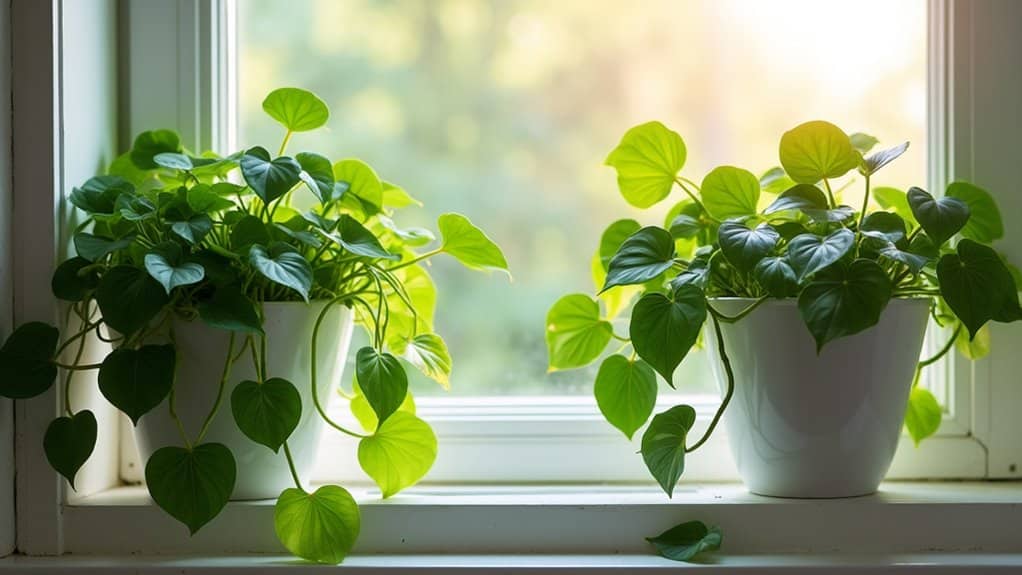
Understanding ideal growing conditions leads naturally to mastering long-term care practices for hanging plants. Appropriate light levels through indirect sunlight encourage robust foliar development while preventing leaf scorch. You’ll need to water when the top inch of soil is dry, maintaining consistent moisture without waterlogging the root zone.
Indoor hanging plants thrive with balanced care indirect light nurtures lush growth while proper watering prevents root problems.
- Implement regular pruning to control growth habit, remove spent foliage, and promote bushier development in your low-maintenance varieties
- Apply water-soluble fertilizer every 2-3 months during active growth periods to replenish essential macro and micronutrients
- Capitalize on vertical space by rotating plants quarterly to guarantee even growth patterns and prevent phototropic stretching
These systematic care tips help establish a sustainable maintenance routine that supports vigorous growth while keeping your hanging specimens healthy with minimal intervention. Keep the soil properly aerated and monitor for early signs of pest activity.
Frequently Asked Questions
What Is the Easiest Hanging Plant to Care For?
Among trailing succulents and cascading plants, low light pothos (Epipremnum aureum) is your easiest hanging plant option. You’ll find it’s exceptionally adaptable, tolerating varied light conditions and irregular watering schedules. While hardy ivies and resilient tradescantias are also low-maintenance contenders, pothos’s vining nature and remarkable durability make it the most forgiving choice. It’ll thrive even if you forget occasional waterings, and it’s resistant to common pests and diseases.
What Is the Best Low-Maintenance Plant for Hanging Baskets?
For the best low-maintenance hanging basket plants, you’ll find trailing pothos (Epipremnum aureum) and vining philodendrons at the top of the list. They’re exceptionally adaptable and thrive with minimal care. You can also consider Tradescantia zebrina for its vibrant foliage, or English ivy (Hedera helix) for its reliable growth pattern. For unique options, try Peperomia prostrata or Senecio rowleyanus (string of pearls), which both feature succulent-like properties requiring infrequent watering.
Which Hanging Plant Lasts the Longest?
Among hanging plants, Pothos (Epipremnum aureum) will give you the longest lifespan, often thriving for decades with minimal care. You’ll also find exceptional longevity in English ivy (Hedera helix) and philodendrons, which can last 10+ years when properly maintained. While trailing succulents like String of Pearls (Senecio rowleyanus) and Spider plants (Chlorophytum comosum) are long-lasting, they don’t quite match the remarkable durability of these top three specimens.
What Is the Most Resilient Hanging Plant?
You’ll find that Pothos (Epipremnum aureum) stands out as the most resilient hanging plant, surpassing even drought tolerant succulents and trailing ivy varieties. It adapts remarkably to both low light philodendron species conditions and brighter environments. While cold hardy English ivy types and heat resistant portulaca options have specific tolerances, Pothos thrives in diverse conditions, recovers easily from neglect, and maintains vigor with minimal care in self-watering hanging baskets.