

The best outdoor pergola fans combine wet-rated construction, corrosion-resistant materials, and powerful motors designed to handle direct exposure to rain, humidity, and temperature swings. You’ll want to look for sealed DC motors, marine-grade stainless steel hardware, and blade spans matched to your pergola’s square footage, typically 50-72 inches for spaces over 225 square feet. Smart controls and integrated LED lighting add convenience without sacrificing durability. Below, you’ll find our top picks for every style and budget.
7 Best Outdoor Pergola Fans for 2025
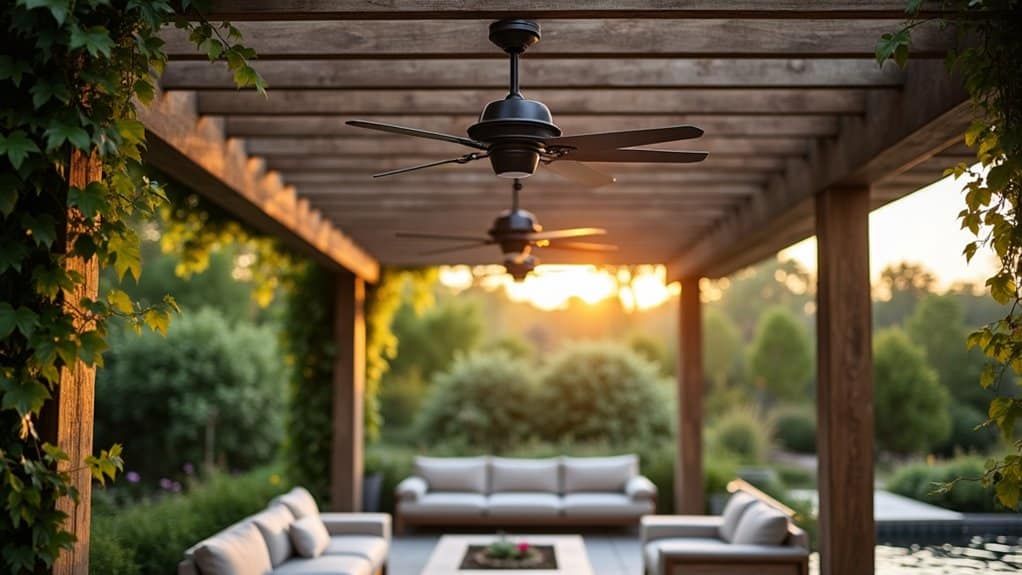
When you’re designing the perfect outdoor living space, selecting the right ceiling fan for your pergola makes all the difference in both comfort and style. The Minka Aire Xtreme H2O 65″ delivers wet-rated durability across five elegant finishes, while Hunter’s Cassius series features ultra high speed models with SureSpeed technology producing 33% higher air velocity.
For energy savings comparisons, Hunter’s ENERGY STAR lineup operates 64% more efficiently than conventional fans. The Inez Outdoor DC 60-inch combines LED lighting with remote control convenience, perfect for evening gatherings. The Aeronaut Outdoor 52-inch Smart Fan works seamlessly with Alexa, HomeKit, and Google Home for voice-controlled convenience. Extras like dimmable lights and easy installation options can further elevate your outdoor entertaining experience.
You’ll want wet-rated construction that withstands direct rain and humidity. Corrosion-resistant materials like aluminum guarantee longevity, while larger blades with steep angles maximize airflow coverage across your pergola’s footprint. Wet-rated fans are specifically designed for direct exposure to moisture, rain, and snow, making them ideal for open pergolas and seaside homes.
What Makes a Pergola Fan Different From Indoor Fans?
When you’re selecting a fan for your pergola, you’ll find critical differences from standard indoor models that determine long-term performance. Pergola fans feature weather-resistant motor designs that seal electrical components against moisture infiltration, while indoor fans leave these elements exposed and vulnerable. You’ll also notice wet-rated UL certification and rust-proof construction materials that allow these fixtures to withstand direct rain, humidity, and temperature extremes without warping, corroding, or creating safety hazards. Indoor fan materials like wood and particle board are unsuitable for pergolas because moisture can cause rotting or mold growth over time. The specific fan requirements also depend on your pergola’s enclosure level, since fully enclosed areas need different specifications than spaces directly exposed to the elements. For homeowners in Southwest Florida, choosing the wrong fan type can lead to costly mistakes when the region’s intense humidity and weather conditions quickly damage unsuitable fixtures.
Weather-Resistant Motor Design
The core distinction between outdoor pergola fans and their indoor counterparts lies entirely within the motor housing. You’ll find weather-resistant materials surrounding every internal component, creating a barrier against moisture and elemental exposure that indoor models simply don’t necessitate.
Sealed bearings block dirt and debris from reaching motor mechanisms, while properly grounded electrical components prevent hazards in wet conditions. Direct-drive neodymium magnet motors deliver virtually silent operation and maintenance-free performance spanning decades. Motors typically range from 1.5 to 2.5 horsepower, providing sufficient power to move air effectively across open pergola spaces. DC motors offer greater energy efficiency and advanced speed control options compared to traditional AC motor designs.
Your outdoor installation demands attention to corrosion monitoring systems that track degradation over time. Shock resistance requirements guarantee motors withstand wind gusts and environmental stress without internal damage. These enclosed configurations protect against rain, humidity, and seasonal variations, engineering details that transform a standard ceiling fan into a durable pergola-worthy investment. Hunter Fan Company’s WeatherMax® technology ensures these motors remain weatherproof even in humidity and rain conditions.
Wet-Rated UL Certification
Understanding UL certification ratings separates a safe pergola installation from a potential hazard waiting to happen.
When you’re selecting a fan for your pergola, you’ll encounter three distinct ratings: Dry, Damp, and Wet. Indoor dry-rated fans lack the protective housing and sealed wiring necessary for outdoor exposure. They’ll quickly suffer motor damage, rust, and electrical hazards when faced with moisture.
UL Wet-Rated certification guarantees your fan meets rigorous safety standards for direct rain, snow, and ocean spray contact. These fans feature waterproof motor housings, rust-resistant materials, and all-weather blades designed specifically for open-air structures like pergolas. The sealed motors and waterproof components in wet-rated fans can even handle direct hose-downs during cleaning.
You’ll also find wet-rated options with Energy Star DC motors, delivering 64% better energy efficiency than conventional models. This certification ascertains your pergola fan performs safely while maximizing airflow and longevity.
Rust-Proof Construction Materials
Beyond certification ratings, the materials themselves determine whether your pergola fan thrives or deteriorates in outdoor conditions. You’ll find premium outdoor fans built with stainless steel hardware that withstands humidity, rain, and salt air without compromising structural integrity.
Corrosion resistant finishes protect against heat and water exposure, while aluminum construction delivers lightweight durability that won’t rust over time. This makes aluminum ideal for coastal installations where marine-grade performance matters.
Weather resilient housings combine durable plastic components with metal frames for both aesthetic appeal and functional protection. These materials shield motors and electrical components from harsh elements without degrading.
Sealed motor designs prevent moisture intrusion, ensuring reliable operation under open pergola roofs. Look for corrosion-resistant mounting hardware that matches your pergola’s finish while guarding against electrical damage from seasonal weather changes. Fans with wet-rated certifications are specifically designed to handle direct rain and moisture exposure that outdoor pergola environments demand. To maintain peak performance, clean fan blades regularly and inspect all components for debris buildup that can affect operation.
How to Match Fan Size to Your Pergola
Selecting the right fan size for your pergola starts with a simple calculation, measure your space’s length and width in feet, then multiply them together. For example, a 12×15-foot pergola equals 180 square feet.
Since pergolas are open structures, increase your total by 25% to guarantee maximum airflow coverage. This adjustment compensates for reduced efficiency in unenclosed spaces.
Match your adjusted square footage to blade diameter: 144-225 square feet calls for 44-54 inches, while 225-400 square feet requires 50-72 inches. Blade span and room square footage are the primary factors when determining the correct fan size for any space.
For fan placement considerations, divide your pergola’s smaller dimension by three, this gives you the maximum blade diameter in feet. Rectangular layouts often benefit from multiple smaller fans rather than one large unit. Always maintain eight feet of clearance between floor and blades for safety. Keep in mind that furniture and guests can create potential obstructions that block airflow, so you may need to size up accordingly. If your pergola has a gabled roof design, you’ll need a drop rod to accommodate the slope and additional height.
Wet-Rated vs. Damp-Rated: Which Do You Need?
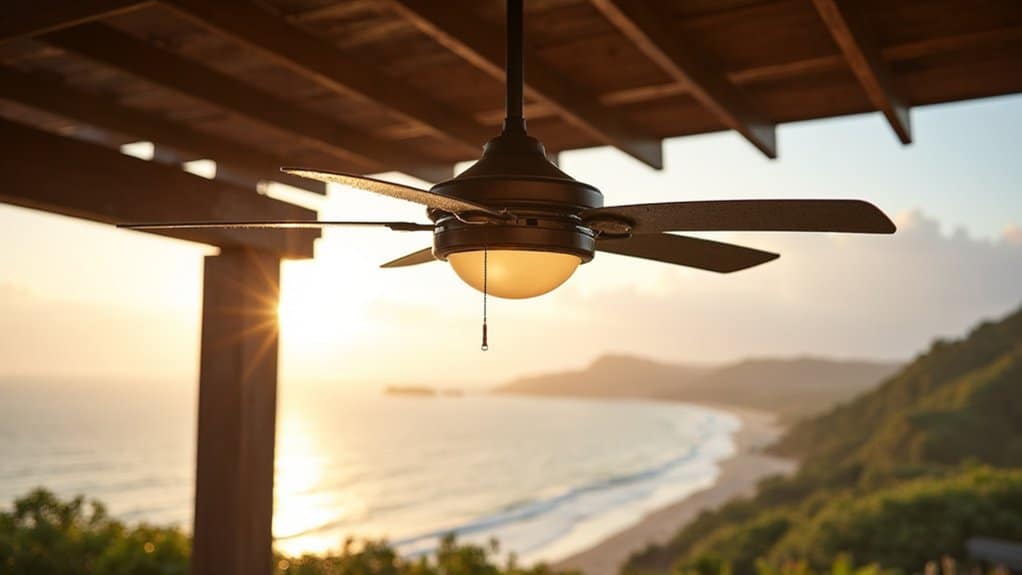
When you’re shopping for a pergola fan, you’ll encounter two critical moisture ratings that determine where your fan can safely operate.
Moisture ratings aren’t just technical jargon, they’re the difference between a fan that lasts and one that fails.
Damp-rated fans resist humidity, condensation, and indirect moisture. They’re ideal for covered pergolas where the fan blade design stays protected from direct rain. Think covered patios or gazebos with solid overhead structures.
Wet-rated fans feature fully sealed motors, waterproof housing, and corrosion-resistant materials. They handle direct rain, snow, and heavy splashing, perfect for open pergolas or poolside installations. These fans are built so durably that they can even be washed with a hose for easy cleaning.
Your installation considerations should focus on exposure level. If your pergola has minimal overhead coverage or sits in a rainy climate, wet-rated is essential. For fully covered structures, damp-rated suffices.
One additional note: coastal locations require salt-air-resistant models beyond standard wet ratings to prevent corrosion damage.
Which Pergola Fan Motor Survives Coastal Conditions?
Coastal environments demand more than standard wet-rated protection, they require motors built with marine-grade 316 stainless steel construction that actively resists salt, sun, and relentless wind exposure. You’ll want fans that have undergone extreme weather testing to guarantee lasting performance where salt air accelerates corrosion.
Look for these essential features in a corrosion resistant design:
- IP56-rated sealed electronics that block dust and water from critical motor components
- Powder-coated or galvanized motor housings paired with stainless steel hardware
- UV-resistant blade finishes that won’t discolor under intense seaside sun
- Sealed mount covers preventing salt spray infiltration
- Marine-grade connectors securing uninterrupted electrical performance
Manufacturers offering salt-specific warranty coverage demonstrate genuine confidence in their coastal durability claims, a detail worth prioritizing in your selection.
Do You Need a Remote, Smart Controls, or a Light Kit?

Beyond motor durability, your pergola fan’s control system shapes how seamlessly it integrates into daily outdoor living, and whether you’ll actually use its features.
Remote controls eliminate the inconvenience of reaching pull chains across expansive patios, while enabling seasonal direction adjustments that reduce heating and cooling costs. Smart home integration through 2.4GHz Wi-Fi connectivity adds voice commands via Alexa or Siri, plus scheduling based on temperature conditions, energy efficient features that minimize manual intervention.
Smart controls transform pergola fans from simple appliances into responsive systems that adapt to your comfort needs automatically.
Integrated LED lighting deserves consideration for streamlined pergola design. These systems combine cooling and ambient illumination in one unit, reducing installation complexity and maintenance requirements. You can customize brightness and color temperature for entertaining without adding separate fixtures.
Wall-mounted controls suit fixed installations, while pull chains accommodate traditional aesthetic preferences where visible technology feels intrusive.
What to Check Before You Buy a Pergola Fan
Before adding a fan to your pergola, you’ll want to confirm two essential details: the UL rating and the size requirements for your space. A UL wet rating is non-negotiable for unsheltered pergolas exposed to rain, while damp-rated models work for covered structures with humidity exposure. Match your blade span to your pergola’s square footage, spaces up to 144 sq ft need 36, 42 inch blades, while areas over 400 sq ft require 60+ inch fans or multiple units for proper airflow coverage.
UL Rating Requirements
When you’re selecting a fan for your outdoor pergola, understanding UL ratings isn’t just a technicality, it’s essential for both safety and longevity. Underwriters Laboratories establishes safety testing requirements that evaluate how electrical components withstand moisture exposure, protecting against shock and fire hazards.
For pergola installations, you’ll encounter three rating categories:
- Dry-rated: Indoor use only; never suitable for outdoor spaces
- Damp-rated: Covered areas with indirect moisture; requires full protection from rain
- Wet-rated: Direct weather exposure including rain, snow, and ocean spray
- Moisture protection features: Sealed wiring, rust-resistant materials, protective housing
- Verification: Check packaging for UL or ETL certification marks
For open pergolas, wet-rated fans are non-negotiable. They’re specifically engineered to handle whatever elements your outdoor space encounters while maintaining safe, reliable operation.
Size and Airflow Needs
Getting the right fan size for your pergola isn’t guesswork, it’s a matter of matching blade span to square footage while accounting for your ceiling’s unique characteristics.
Start by calculating your covered patio area. For spaces up to 144 square feet, you’ll need 36, 42 inch blade spans. Larger areas between 225, 400 square feet require 54, 72 inch fans for ideal air circulation.
Your ceiling height matters too. Standard 10-foot pergolas work well with flush-mount options, while gabled structures need drop rods to achieve optimum fan coverage.
For expansive patios exceeding 400 square feet, consider multiple fan installations. Space them at three times the fan diameter apart, an 18-foot gap for 6-foot fans. Position each unit 1.5 times its diameter from walls. This strategic placement guarantees consistent airflow across your entire outdoor living space.
Frequently Asked Questions
What Tools Do I Need to Install an Outdoor Pergola Fan Myself?
You’ll need a power drill, level, and ladder for mounting the fan securely to your pergola’s structure. Choosing the right hardware matters, grab stainless steel brackets, corrosion-resistant bolts, and HeadLOK screws designed for outdoor use. Don’t forget a weatherproof junction box, UF-rated cable, wire strippers, and a voltage tester for safe electrical connections. Round out your toolkit with caulk, safety glasses, and work gloves to complete your curated installation setup.
How Do I Properly Wire a Pergola Fan Using Outdoor-Rated Cable?
You’ll start by running outdoor-rated UF-B cable or THWN-2 through conduit to your junction box. Strip the wires carefully, then create weatherproof cable connections using UL-listed connectors and seal everything with electrical tape. For appropriate fan mounting methods, secure your junction box to a reinforced brace that handles up to 30 lbs. Connect the fan leads to your power source, tuck excess wiring neatly away, and guarantee GFCI protection throughout.
Can I Install a Pergola Fan Without a Ceiling Joist Above?
You shouldn’t install a pergola fan without proper structural support above, it’s unsafe and risks damage. Instead, consider alternative mounting methods like attaching a fan-rated box directly to pergola beams or rafters. You can also explore DIY hanging solutions such as installing an expandable fan brace between adjacent structural members or adding a wooden support block. Always use weatherproof, fan-rated hardware that complements your pergola’s curated aesthetic while ensuring functional stability.
What Type of Junction Box Is Required for Outdoor Fan Installation?
You’ll need an outdoor rated junction box that’s specifically fan-rated to support your ceiling fan’s weight, typically up to 70 pounds. Choose a weatherproof junction box with NEMA 3R compliance, featuring gaskets and seals that prevent moisture ingress. Non-metallic PVC options resist UV damage and corrosion beautifully while maintaining durability. Don’t forget to add silicone sealant around wiring entrances for a polished, weather-tight installation that protects your curated outdoor space.
How Do I Secure the Fan Mounting Bracket to My Pergola Frame?
Secure the mounting bracket with weather-resistant hardware** directly into your pergola’s wooden beams or joists using lag screws and an impact driver. Ensure a sturdy connection to the pergola frame by aligning holes with structural supports like cross braces or 2×8 beams. You’ll want to add a wooden block** between joists for enhanced stability. After fastening, use a torpedo level to confirm everything’s perfectly aligned for a polished, functional installation.