
The five best rot-resistant wood types safe for outdoor kitchens are Ipe, Cumaru, Tigerwood, Garapa, and Massaranduba. You’ll want hardwoods with natural oils that repel moisture, mold, and insects, Ipe and Cumaru both offer 75+ year lifespans with Class A fire ratings. Tigerwood adds exotic appeal, while Garapa stays cooler underfoot in sunny spots. Massaranduba’s 3,190 lbf hardness makes it a hidden workhorse. Each option brings distinct advantages worth exploring for your specific setup.
What Makes Wood Last in an Outdoor Kitchen?
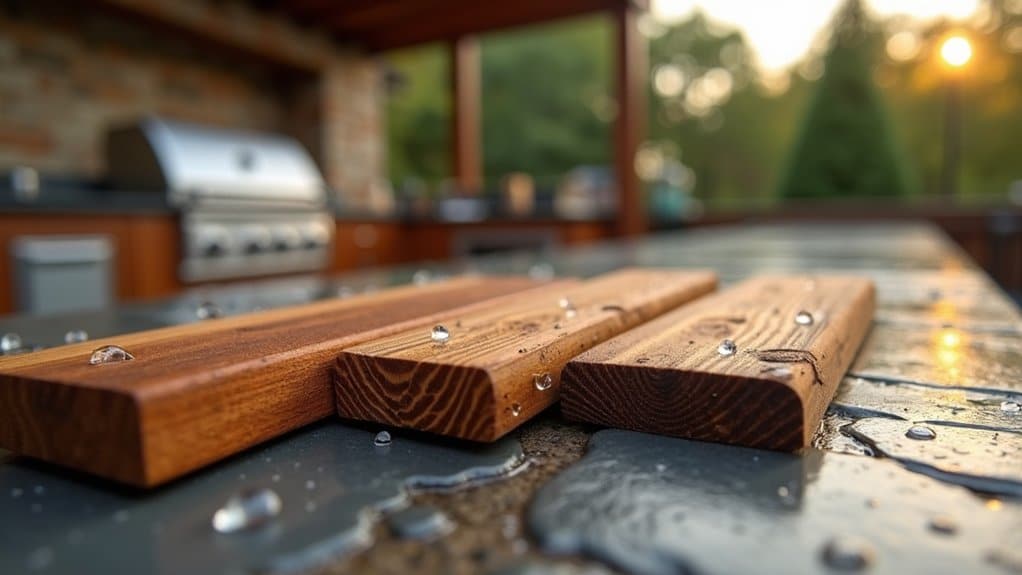
When you’re building an outdoor kitchen, the wood you choose needs to battle constant exposure to rain, humidity, temperature swings, and insects. The best performers share specific moisture resistance properties that prevent water absorption and decay. Woods with high natural oil content, like Teak, Cumaru, and Acacia, create built-in barriers against rot and wood-boring pests.
Structural integrity factors matter equally. Dense hardwoods resist warping and cracking better than softer alternatives. High-density species maintain their shape despite seasonal changes, while pressure-treated lumber often splits and twists over time. Premium hardwoods like Ipe have been proven to last 75+ years on commercial boardwalks, demonstrating their exceptional longevity in demanding outdoor environments. Ipe features a refined, rustic appearance with coloring that ranges from dark rust-red to blackish-brown.
You’ll also want woods that require minimal upkeep. Tropical hardwoods and rot-resistant domestic options like Black Locust and White Oak can last decades without constant sealing. Cedar works well but demands yearly maintenance to stay protected. Beyond durability, the wood you select influences the overall style and aesthetic of your outdoor kitchen space.
Ipe: The 75-Year Outdoor Kitchen Standard
Among all the premium hardwoods that meet these durability standards, Ipe stands at the top for outdoor kitchen construction. With a documented lifespan reaching 75 years under proper care, this Brazilian hardwood delivers unmatched longevity. Its Janka hardness rating of 3,680 lbf makes it nearly four times harder than teak, resisting warping, cracking, and insect damage. The wood’s natural oils enhance its durability by preventing cracking and drying over time.
You’ll find Ipe’s maintenance requirements remarkably minimal. Clean with mild soap and water every 6-12 months, and you’re set. Unlike pressure-treated wood that demands regular stripping, sanding, and staining, Ipe requires only periodic sweeping and warm water rinsing to maintain its appearance. The wood naturally weathers to an attractive silver-gray patina, or you can preserve its chocolate-brown color with periodic oil treatments. Even when weathered to gray, Ipe maintains its strength, insect resistance, and rot resistance without compromise.
When exploring sourcing options, look for FSC-certified suppliers like Jensen Outdoor to promote sustainable forestry practices. The premium upfront cost amortizes substantially across decades of reliable service.
Cumaru Matches Ipe at 30% Lower Cost
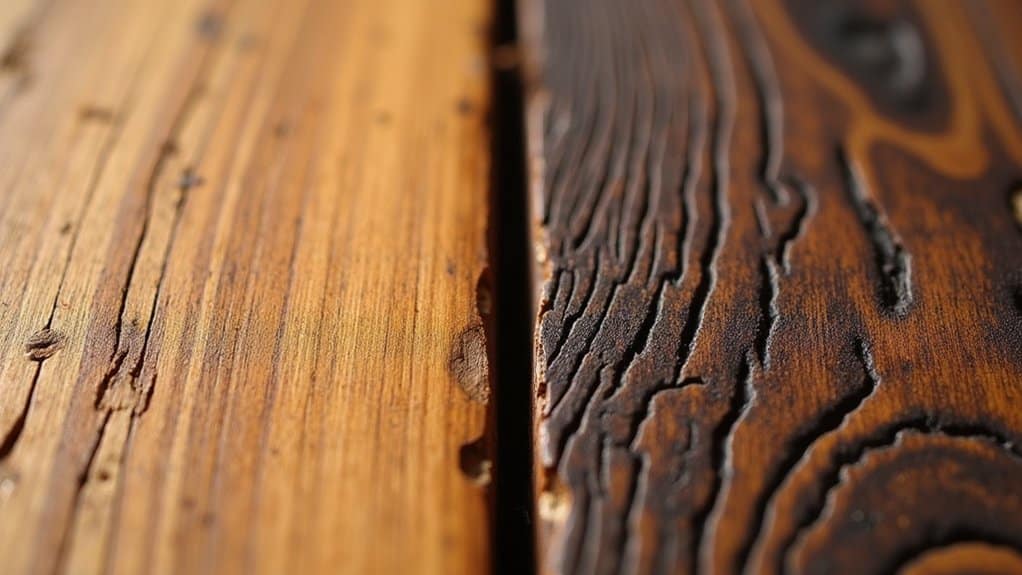
Value drives smart material selection, and Cumaru delivers Ipe-level performance at roughly 30% lower cost. You’ll get the same 75-year lifespan, Class A fire rating, and rot resistance that makes Ipe legendary. Short-length boards stretch your budget further with savings up to 50%.
This Brazilian hardwood handles outdoor kitchen demands without compromise. Its density measures 280% harder than oak, and natural oils repel mold, mildew, and insects. You won’t deal with splintering near food prep areas or warping from humidity swings. The wood’s interlocked grain pattern contributes to its exceptional stability and resistance to splitting under heavy use. When ordering, specify outdoor use since Cumaru is kiln-dried differently for exterior applications, and using interior-dried Cumaru outdoors will cause expansion and warping.
For cost conscious selection, Cumaru checks every box. The golden-brown to reddish-brown tones complement any design aesthetic. Maintenance free longevity comes standard, skip yearly sealing while enjoying decades of service. Beyond decking, this versatile wood works beautifully for outdoor showers, pergolas, and cladding to create a cohesive backyard design. Your outdoor kitchen gains luxury status without the premium price tag.
Tigerwood and Garapa for Style and Value
Tigerwood and Garapa offer distinct visual appeal while keeping your outdoor kitchen budget in check. Tigerwood appearances stand out with orange-brown hues and dark veining that mimics tiger stripes. You’ll get a Janka hardness of 2,160 lbf, more than double Teak’s rating, ensuring your surfaces withstand heavy use. Tigerwood, also known as Goncalo Alves, features a distinctive brownish-orange background that creates its signature exotic look. Apply UV protection to maintain those vivid colors, or let it weather to a natural gray. This rot-resistant hardwood lasts 25+ years outdoors with proper maintenance.
Garapa cost effectiveness makes it the most affordable hardwood option for outdoor kitchens. Its light golden color brightens spaces while delivering 1,280 lbf hardness and natural termite resistance. The wood darkens with age, transitioning from its initial light golden shade to a richer, warmer tone over time. Garapa’s lighter coloring stays cooler underfoot than darker woods, making it comfortable for barefoot use near your cooking area. Both species carry Class A fire ratings, matching premium woods for safety. You’ll achieve durable, weather-resistant results without stretching your budget to Ipe-level pricing.
Massaranduba: The Hidden Workhorse for Outdoor Kitchens
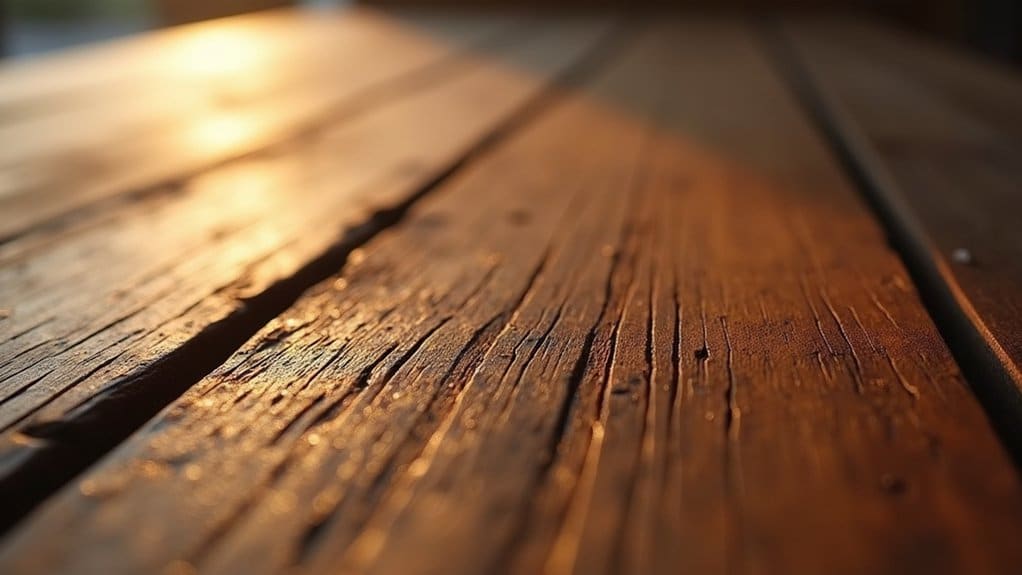
Massaranduba earns its nickname “Brazilian Redwood” through exceptional performance that rivals premium hardwoods at a lower price point. You’ll find this South American timber delivers a Janka hardness of 3,190 lbf, making it incredibly resistant to dents and wear in high-traffic cooking areas.
Key benefits for outdoor kitchens include:
- Massaranduba’s impactful fire resistance with Class B flame spread rating
- Natural immunity to rot, mold, fungi, and insects
- Massaranduba’s minimal maintenance requirements beyond occasional oiling
- 30+ year lifespan with proper care
The wood’s density ranges from 950 to 1,600 kg/m³, so heavy it won’t float. You’ll need to pre-drill before fastening to prevent cracking. Over time, the rich reddish-brown color fades to silver-grey unless you maintain it with protective oil treatments. The wood features a natural satin luster that can be enhanced with oiling, making your outdoor kitchen surfaces visually captivating. Massaranduba decking boards come in a smooth/smooth profile that allows for vertical or horizontal installation, giving you flexibility in designing countertops, bar fronts, and accent walls. The planed surface creates a supple barefoot-friendly feel, making it comfortable for outdoor spaces where family and guests gather around the cooking area.
Frequently Asked Questions
Can I Use Regular Hardware Store Sealers on Tropical Hardwoods?
You can use regular hardware store sealers on tropical hardwoods, but they’re not ideal. The suitability of water based sealers varies, as conventional options like Thompson’s WaterSeal offer weak UV resistance and fade quickly. Oil based sealer application techniques matter too, standard oil varnishes wash out over time on dense tropical species. You’ll face annual reapplication instead of the 4-6 years protection marine-grade alternatives provide. Choose specialized tropical wood sealers for lasting outdoor performance.
How Often Should Outdoor Kitchen Wood Cabinets Be Refinished?
You should plan for professional refinishing frequency every two to three years for outdoor kitchen wood cabinets, though harsh climates may demand annual attention. Between refinishing, maintain an annual cleaning schedule that includes inspecting seals, removing debris, and applying UV-protective treatments. Watch for fading, peeling, or moisture damage, these signs indicate you’ll need to refinish sooner. South-facing cabinets and those near grills typically require more frequent maintenance than protected installations.
Will Tropical Hardwoods Change Color Over Time Without Maintenance?
Yes, tropical hardwoods will change color over time without maintenance. You’ll notice significant color variations as UV exposure breaks down lignin and oxidizes natural extractives. Ipe turns silver-gray, while Brazilian Cherry and Tigerwood darken considerably. Padauk shifts to deep reddish-brown tones. Understanding these maintenance requirements helps you decide whether to embrace the natural weathering or apply UV-protective finishes and oils to preserve your outdoor kitchen cabinets’ original rich tones.
Are There Food-Safe Finishes Recommended for Wood Near Grilling Areas?
Yes, you’ll find excellent food safe sealants designed specifically for grilling areas. Non-toxic drying oils like tung oil penetrate wood deeply, providing moisture resistant coatings that repel splashes and stains. For enhanced protection, apply beeswax or carnauba wax blends over oil finishes. These combinations withstand temperatures up to 150°F during normal use. You’ll need two initial coats with 5-7 days cure time, plus annual maintenance applications to maintain water resistance.
Can These Hardwoods Be Installed Directly Over Concrete Patios?
Yes, you can install hardwoods like Ipe and Cumaru directly over concrete patios. These dense species tolerate moisture contact far better than softwoods. For concrete patio preparation, guarantee the surface slopes slightly away from structures. Drainage considerations matter enormously, standing water accelerates deterioration even in rot-resistant hardwoods. You’ll want to verify water flows properly before installation. Consider using spacers or sleepers to promote airflow beneath the wood, extending your outdoor kitchen’s lifespan significantly.