You’ll get the best winter feeding results when soil temperatures hold between 50–65°F for cool-season grasses, roughly two to three weeks before your ground freezes. Target late summer through mid-October, or late October to early November in northern regions. Watch for grass that’s still green while top growth slows, that’s when roots actively store nutrients. Warm-season lawns need earlier timing, mid-August through late September.
Key Takeaways
- Fertilize in early to mid-fall, targeting late summer through mid-October while grass stays green but top growth slows.
- Apply nutrients 2–3 weeks before the ground freezes or the first expected frost arrives.
- Use soil temperature as your guide: 50–65°F for cool-season grasses, 65–75°F for warm-season grasses.
- Feed cool-season grasses from late August to mid-October, and warm-season grasses from mid-August to late September.
- Choose slow-release nitrogen for cool-season lawns, and light, potassium-focused blends for warm-season lawns nearing dormancy.
When is the best time to fertilize your lawn for winter
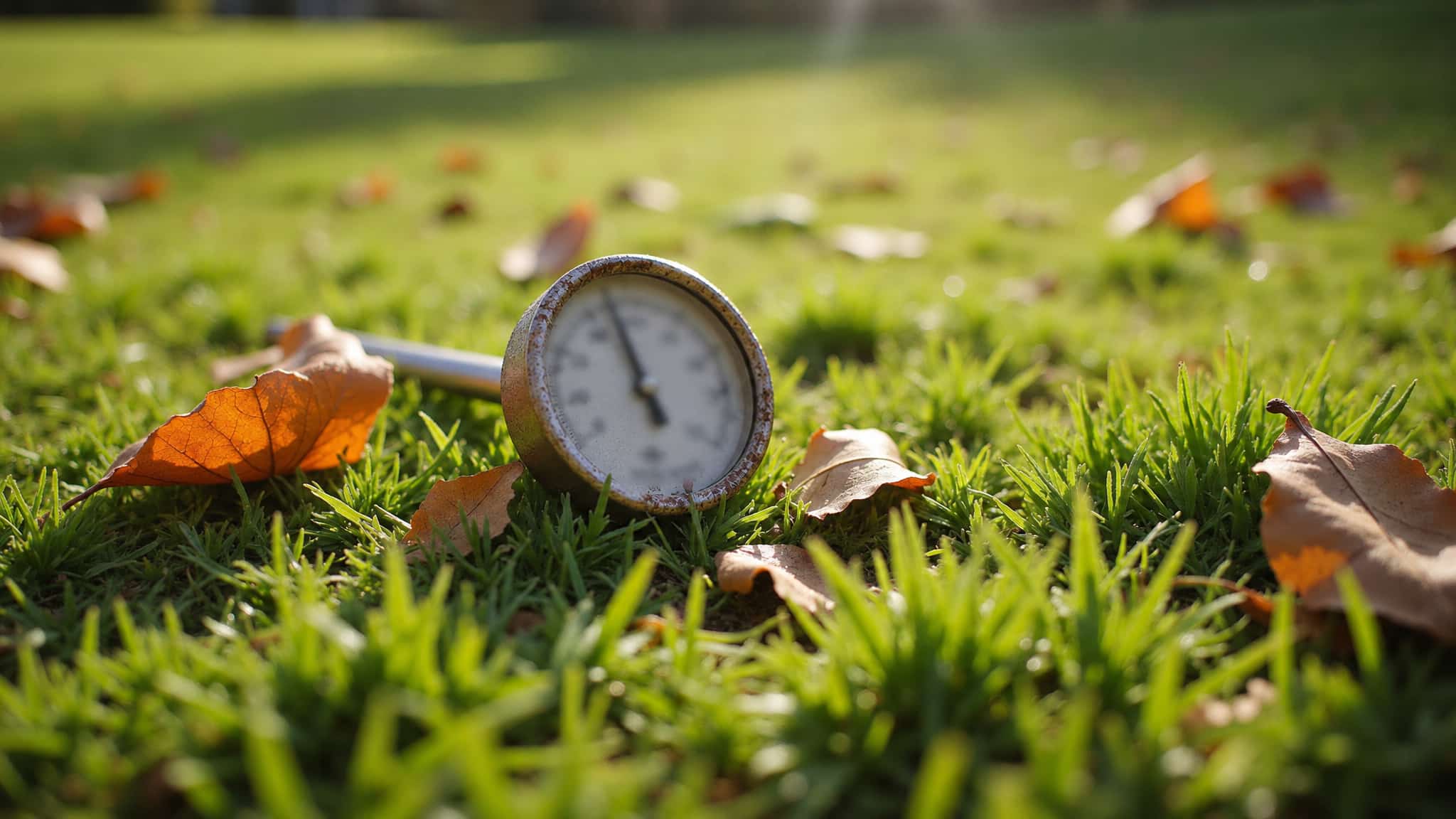
Fertilize your lawn for winter in early fall to mid-fall, once summer heat eases but grass still grows actively. Effective fertilization timing hinges on applying nutrients 2–3 weeks before the ground freezes, while the lawn stays green. This late-summer through mid-October window drives smart fall lawn care, letting roots store nutrients before dormancy begins.
Soil temperature guides you better than the calendar. Target 50–65°F for cool-season grasses like fescue, Kentucky bluegrass, and ryegrass. In northern regions, you’ll often winterize in late October to early November.
Winterizing lawn success depends on feeding before consistent freezing arrives, when top growth slows but roots stay active. Fertilize after full dormancy and nutrient uptake drops sharply.
Why is fertilizing your lawn before winter important
Fertilizing your lawn before winter is important because it strengthens roots and helps grass store nutrients for cold-weather survival. When you feed your lawn before winter, you’re directing energy toward root development rather than top growth. As grass slows its rapid blade production, the roots stay active, storing nutrients that fuel survival through freezing conditions. This is why fall fertilization is widely described as the most important feeding of the year for winter prep.
Applying 1.5 to 2.5 pounds of nitrogen per 1,000 square feet strengthens your root system, improving winter survival and driving faster spring green-up. Nutrients absorbed now get stored in the roots before dormancy, so your lawn emerges healthier once temperatures rise. Skip this step, and you’ll sacrifice both cold tolerance and next season’s vigor.
How does grass type affect winter fertilizing timing
Grass type affects winter fertilizing timing because cool-season and warm-season lawns grow and store nutrients on different schedules. Cool-season grasses like fescue, Kentucky bluegrass, and ryegrass benefit most from feeding between late August and mid-October, with late-fall fertilization possible in northern regions from late October to early November, as long as the grass stays green and active. Warm-season grasses like Bermuda, zoysia, and St. Augustine feed earlier, typically mid-August to late September, and rarely need heavy late-fall nitrogen. If you apply anything late on warm-season lawns, keep it light and potassium-focused. Frost timing anchors both approaches: you’ll want nutrients absorbed before consistent freezing arrives, roughly 2–3 weeks before the ground freezes, while roots remain actively storing reserves.
What signs tell you it is time to fertilize for winter
Your lawn is ready for winter feeding when it is still green and active, but rapid top growth has slowed while roots remain metabolically busy storing nutrients. This physiological shift signals ideal fertilization timing for effective fall lawn care. Track frost and ground freeze indicators closely, since you’ll want to apply roughly 2–3 weeks before the ground freezes and just before the first expected frost. Soil temperature offers a precise gauge too, target 50–65°F for cool-season grasses and 65–75°F for warm-season varieties. Once dormancy sets in, nutrient uptake drops sharply, so don’t wait. When the lawn’s still green, top growth’s tapering, and freezing temperatures loom, you’ve hit the window to feed for winter survival.
What type of fertilizer should you use for winter

Use a fertilizer formulation that matches your grass type and its metabolic state, since fall feeding shifts energy toward root development rather than top growth.
- Apply 1.5 to 2.5 pounds of nitrogen per 1,000 square feet for cool-season winterization, supporting root reserves and spring green-up.
- Choose a potassium-focused, low-nitrogen blend for warm-season grasses nearing dormancy.
- Favor a slow-release nitrogen source to sustain uptake while top growth slows.
- Confirm soil temperatures hit 50–65°F for cool-season and 65–75°F for warm-season grasses before applying.
- Pair fertilizer with aeration to boost nutrient absorption.
Match your fertilizer type to grass physiology, and you’ll maximize stored reserves before freeze-up.
How do fertilizing schedules compare by region and grass
Fertilizing schedules vary by region and grass because cool-season vs warm-season grass determines the main timing, then local climate refines the window. Fescue, Kentucky bluegrass, and ryegrass feed best from late August through mid-October, while Bermuda, zoysia, and St. Augustine take fall fertilization earlier, mid-August to late September. Regional timing then refines this window, especially across Illinois and warmer climates.
| Region/Grass | Late-Season Window |
|---|---|
| Northern Illinois | Late Oct–early Nov |
| Central Illinois | November |
| Southern Illinois | Late November |
| Transition zone | Early Nov–Thanksgiving |
Match your soil temperature too, 50–65°F for cool-season, 65–75°F for warm-season. If you time it before freeze-up while grass stays green, you’ll store nutrients in the roots effectively.
How do you apply winter lawn fertilizer correctly
Proper application technique ensures winter lawn fertilizer reaches active roots evenly before dormancy sets in. Even perfect fertilizer timing fails if you apply nutrients poorly. Effective fall feeding and winter lawn care depend on precise delivery, ensuring nutrients reach active roots before dormancy sets in.
- Aerate first: Core aeration before fertilizing improves nutrient absorption and root penetration.
- Calibrate your spreader: Apply 1.5–2.5 pounds of nitrogen per 1,000 square feet for balanced coverage.
- Check soil temperature: Target 50–65°F for cool-season grasses, 65–75°F for warm-season lawns.
- Apply while green: Feed when top growth slows but roots stay active, before the ground freezes.
- Water in thoroughly: Irrigate lightly afterward to move nutrients into the root zone.
Done correctly, you’ll build stronger roots and faster spring green-up.
Conclusion
Fall is the right time to give a Florida lawn its last meaningful feeding of the year, while warm-season grass is still growing and roots are storing energy. Watch soil temperature rather than the calendar, keep nitrogen moderate, and finish feeding before the grass slows for the cooler months so you avoid pushing weak late growth. Water the fertilizer in lightly so nutrients reach the root zone. Timed and applied right, fall feeding sets up a healthier, faster green-up when the warm weather returns.
Tired of Feeding a Lawn Every Season?
Keeping a natural lawn green through every season means constant feeding, mowing and watering. At Innovative Outdoor Living, we install artificial turf that stays green year-round with no fertilizing schedule to track. See our artificial turf options for a low-maintenance yard. Contact us or call (561) 594-1495 to talk through replacing your lawn.
Frequently Asked Questions
Can You Fertilize Your Lawn if It’s Already Dormant?
You shouldn’t fertilize once your lawn’s fully dormant, since nutrient uptake drops sharply after growth stops. Dormant grass can’t efficiently absorb or store nutrients in its roots, so you’d waste product and risk runoff. Instead, you’ll want to feed while the turf’s still green and active, ideally before rapid top growth halts but roots remain functional. Time it 2–3 weeks before the ground freezes to maximize root storage and spring green-up.
How Often Should You Fertilize Your Lawn Throughout the Year?
You’ll typically fertilize cool-season lawns two to four times per year, concentrating applications in late summer through fall when roots store nutrients most efficiently. For warm-season grasses, feed from mid-August to late September, avoiding heavy late-fall nitrogen. Base your schedule on soil temperature, 50–65°F for cool-season, 65–75°F for warm-season, rather than the calendar. Apply roughly 1.5 to 2.5 pounds of nitrogen per 1,000 square feet across your fall feedings for optimal results.
Is It Safe to Fertilize Before Rain or Snow?
You can safely fertilize before light rain, since moderate moisture helps dissolve granules and move nutrients into the root zone where they’re stored for winter. Avoid applying before heavy downpours, though, because runoff carries nitrogen away and pollutes waterways. Don’t fertilize before snow either, especially once your grass has entered dormancy, nutrient uptake drops sharply. Time your feeding while the lawn’s still green and actively growing, ideally before the ground freezes.
Can You Over-Fertilize Your Lawn in the Fall?
Yes, you can over-fertilize your fall lawn, and it’s a real risk. If you exceed roughly 1.5 to 2.5 pounds of nitrogen per 1,000 square feet, you’ll push excessive top growth right when your grass should be storing nutrients in its roots. Applying too much too late also weakens winter survival and can burn turf. Stick to recommended nitrogen rates, and time your feeding while roots stay active.
Should You Water Your Lawn After Applying Winter Fertilizer?
Yes, you should water your lawn after applying winter fertilizer. Watering dissolves the granules and moves nutrients into the root zone, where they’re stored before winter. Apply roughly a quarter to half inch to activate the fertilizer and prevent nitrogen from sitting on blades, which can cause burn. You’ll also improve absorption when roots stay active. Just don’t overwater, since excess runoff wastes nutrients and pollutes nearby waterways.