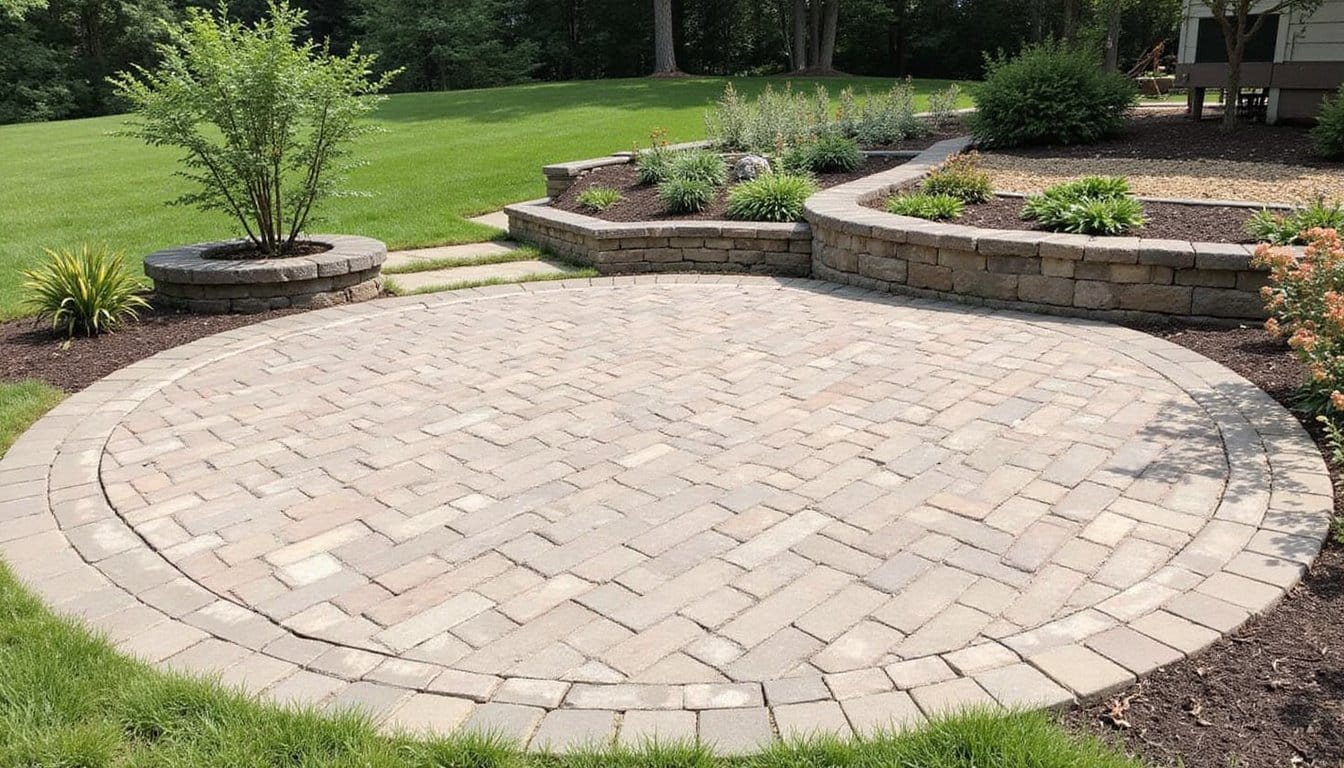
The best materials for building an outdoor kitchen in 2026 include marine-grade 316 stainless steel for rust-proof cabinets, HDPE polymer for waterproof frames, and sintered stone like Dekton for UV-resistant countertops. You’ll also want to ponder, examine, or reflect upon granite, quartzite, and soapstone for heat tolerance, plus powder-coated aluminum for lightweight durability. Your climate matters, coastal spots need marine-grade options, while freeze-thaw zones require engineered composites. Each material below breaks down exactly what it handles best.
What Makes an Outdoor Kitchen Material Last in 2026?
What Makes an Outdoor Kitchen Material Last in 2026?
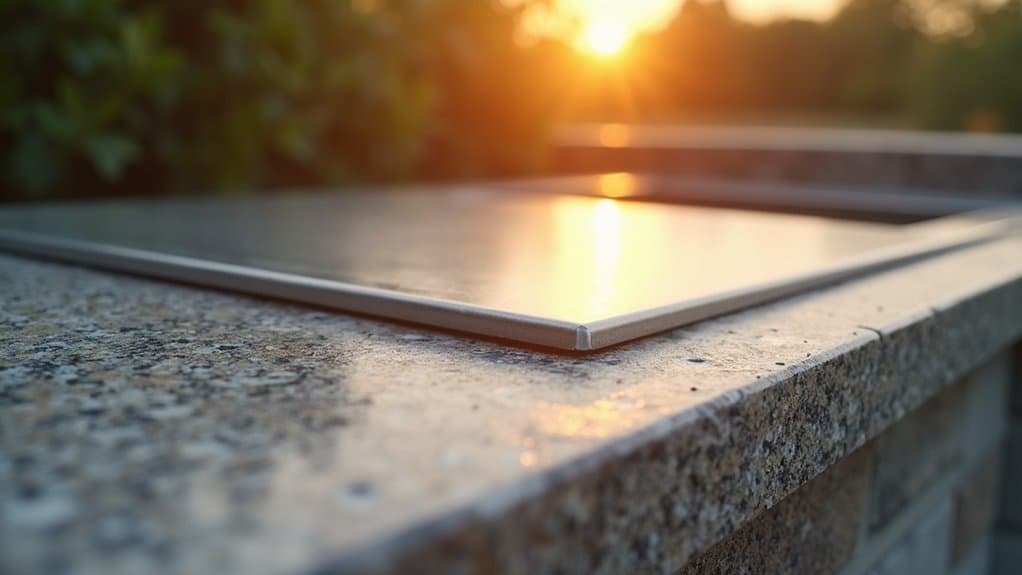
When you’re investing in an outdoor kitchen, material durability isn’t just about aesthetics, it’s about survival against relentless environmental assault. Your outdoor space faces UV radiation, moisture infiltration, temperature extremes, and coastal salt exposure simultaneously. Proper material selection is essential for your kitchen’s durability, efficiency, and aesthetics.
For long lasting cabinetry, marine-grade 316 stainless steel with molybdenum delivers superior corrosion resistance in high-salt environments. HDPE outperforms traditional materials by resisting rust, warping, fading, and rotting completely. Marine-grade polymer offers 100% waterproofing with minimal maintenance requirements. HDPE’s non-porous nature also means it requires minimal maintenance compared to traditional wood or metal cabinet options. Unlike PVC or painted foam resin alternatives, HDPE cabinets can withstand pressure washing for easy cleaning alongside your deck.
Your countertops need equal protection. Porcelain slabs excel in UV and heat resistance, outperforming granite for outdoor applications. High performance appliances demand materials that won’t degrade, powder-coated stainless steel withstands heat, chemicals, and scratches while minimizing corrosion. Quality marine-grade materials typically last 10-15+ years when properly selected.
How to Match Materials to Your Climate, Budget, and Style
Your outdoor kitchen’s longevity depends on selecting materials that can handle your specific climate conditions, from freeze-thaw cycles to intense humidity. Once you’ve identified weather-appropriate options, you’ll narrow choices further based on your budget range and the aesthetic style you want to achieve. Let’s break down how climate, cost, and design preferences work together to guide your material decisions. Investing in durable, weather-resistant materials upfront helps you avoid costly replacement expenses down the road. For countertops, consider stainless steel as a low-maintenance material that resists stains, scratches, and heat while standing up to outdoor elements. Masonry cabinets offer exceptional strength and fire resistance, making them an ideal choice for homeowners in hot climates.
Climate-Specific Material Selection
Selecting the right materials for your outdoor kitchen starts with understanding your local climate’s specific demands. Variable climate demands require materials that perform across multiple weather conditions, while excellent insulation performance keeps your kitchen functional year-round.
Climate-matched material recommendations:
- Coastal environments: Marine-grade 316 stainless steel and HDPE polymer cabinets resist salt spray corrosion and humidity damage
- Desert regions: Teak wood and light-colored natural stone reflect solar radiation while withstanding intense UV exposure
- Freeze-thaw zones: Engineered composites and sintered stone countertops handle temperature swings without cracking
- Temperate climates: Powder-coated aluminum with retractable canopies extends your 8-10 month outdoor season
You’ll maximize durability by matching each material to your region’s dominant weather patterns. In regions like Texas, materials must withstand intense sun, heat, humidity, and occasional freezing to maintain both appearance and functionality over time. Proper drainage and ventilation systems complete your climate-specific installation. HDPE polymer is particularly ideal for poolside kitchens because it’s resistant to mold and mildew, making it perfect for high-moisture areas where standing water and splashing are common concerns. When selecting materials, consider choosing locally sourced or recycled options such as composite decking or eco-stone to support both environmental responsibility and long-term value for your investment.
Budget-Friendly Material Options
Although climate-matched materials deliver ideal performance, budget constraints often require creative alternatives that still withstand your region’s weather patterns.
DIY concrete countertops reduce labor costs while delivering the durability you need, expect $60, $95 per square foot with full customization options. Concrete’s non-combustible properties resist moisture, snow, and temperature fluctuations across diverse climates.
Budget conscious prefab frames run $250, $475 per linear foot, considerably undercutting custom builds at $320, $670. Pair these with PVC or marine-grade HDPE cabinets that resist rust, rot, and corrosion without requiring structural footings. While metal frames remain popular for their lightweight construction and load-bearing capacity, be aware that moisture causes corrosion over time, so protective coatings are essential in humid or coastal environments.
Repurposed materials from salvage yards add rustic character while cutting expenses. Ceramic tile countertops at $6, $50 per square foot work well in basic setups. Stucco siding provides inexpensive, weather-resistant cladding that complements most regional aesthetics.
Consider a modular design approach that allows you to start with a basic setup and add features as your budget allows, spreading costs over time while eventually achieving your dream outdoor kitchen. Taking the DIY route can save 20% to 40% on overall costs compared to hiring professionals, making quality materials more accessible within tighter budgets.
Matching Your Design Style
Harmony between climate demands, budget realities, and personal aesthetics transforms a functional cooking space into an outdoor extension of your home. Crafting cohesive outdoor aesthetic requires blending climate & style considerations into every material choice.
Style-Driven Material Combinations:
- Modern: Pair sleek board-formed concrete with stainless steel appliances, matte black fixtures, and LED mood lighting for high-tech ambiance. Wi-Fi-enabled grills and refrigerators integrate seamlessly into this aesthetic while offering precision cooking and energy efficiency.
- Rustic: Combine reclaimed wood, natural stone, and terracotta tiles with weathered metal accents for Mediterranean-inspired warmth. Modular concrete kits with natural stone finishes provide affordable luxury while maintaining authentic rustic character.
- Sustainable: Select recycled concrete, locally sourced stone, and solar-powered lighting to minimize environmental impact while maintaining durability.
- Contemporary Dramatic: Mix bold deep greens or rich blues with polished quartz-look finishes and flush-mounted sinks for seamless indoor-outdoor flow.
Each combination addresses weather resistance while expressing your design vision authentically.
Stainless Steel Cabinets That Resist Rust, Mold, and Heat
When you’re building an outdoor kitchen that needs to withstand the elements, 304-grade stainless steel cabinets offer the rust, mold, and heat resistance essential for long-term performance. The high chromium content delivers corrosion resistant features that protect against marine and humid environments, while the non-porous surface provides sanitary construction that prevents moisture retention and mold growth.
For coastal locations, consider upgrading to 316-grade stainless steel. Its enhanced molybdenum content offers superior protection against salt exposure.
Weather-resistant rain gaskets seal doors and drawers against moisture infiltration, and UV-protected construction prevents sun-related degradation. The #4 brushed finish repels corrosion while double-wall drawer construction minimizes water entry. These cabinets handle heat from adjacent grills without warping, backed by a lifetime warranty on rust-proof performance. Drawer systems feature removable full extension soft close slides rated for 100 lb capacity, ensuring smooth operation and durability in demanding outdoor environments. For those seeking alternatives to stainless steel, powder coated outdoor kitchen cabinets offer weather resistance and a nearly maintenance-free finish that hinders rust while being easier to clean.
Concrete Frames and Countertops Built for Decades
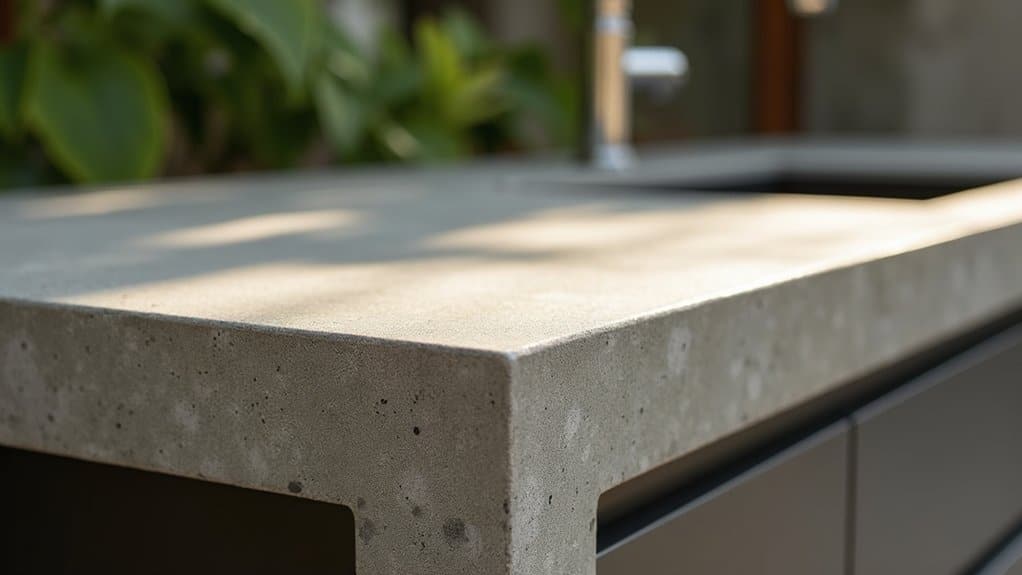
When you’re building an outdoor kitchen that needs to withstand decades of harsh weather, concrete frames and countertops deliver performance that other materials simply can’t match. You’ll find that properly installed concrete resists scorching heat, freezing temperatures, and moisture infiltration while offering endless customization options for your design vision. Best of all, concrete’s exceptional lifespan means your cost per year of ownership stays remarkably low despite the initial investment.
Unmatched Weather Resistance
Because outdoor kitchens face relentless exposure to sun, rain, snow, and temperature swings, your frame and countertop materials must withstand decades of punishment without failing. Climate ready concrete delivers freeze thaw resilience that wood and metal simply can’t match. You won’t deal with rot, warping, rust, or termite damage.
What concrete endures without failure:
- Hurricane-force winds battering your structure season after season
- Extreme temperature fluctuations from scorching summer heat to subzero winters
- Constant UV radiation that degrades lesser materials within years
- Moisture intrusion from rain, snow, and humidity in any climate
GFRC countertops handle ice bucket cold and grill heat equally well. With proper sealing every 2-3 years, your concrete surfaces resist stains, mold, and mildew indefinitely.
Customizable Design Options
How far can you push concrete’s creative boundaries in your outdoor kitchen? Further than you’d expect. You can choose mottled finishes in modern shades, board-formed textures capturing wood grain patterns, or polished surfaces paired with bold blues, greens, and matte black. Thin or thick profiles let you match your home’s architectural style precisely.
Reinforced concrete enables cantilever designs and impressive spans that appear to defy gravity. You’ll integrate fire pits directly into islands, embed lighting within structures, and create seamless benches for built-in seating. Modular marine-grade composite components offer adjustable shelving and smart storage solutions while maintaining weather resistance.
Pair your concrete with brushed brass hardware, vertical slats, or thin-set stone for heightened texture combinations that transform utilitarian surfaces into striking focal points.
Cost-Effective Durability
All that design flexibility means nothing if your outdoor kitchen falls apart in five years. Concrete frames and countertops deliver decades of performance when you invest in proper installation and consistent material care.
What you’re getting with concrete construction:
- Cinder block frames protected with veneer lasting up to 100 years
- GFRC countertops projecting 50-year lifespans against heat and wear
- Sealed surfaces resisting 70-90% humidity without degradation
- Foundations surviving freeze-thaw cycles with reinforced mix designs
Your long term material cost drops considerably compared to wood, which rots within 4-12 years. Concrete requires only soap-and-water cleaning plus resealing every few years. Adding roof or pergola protection extends lifespan by 30-50%, making your investment work harder across Oklahoma’s temperature extremes and heavy rain seasons.
Granite Countertops for Sun, Salt, and Heavy Use
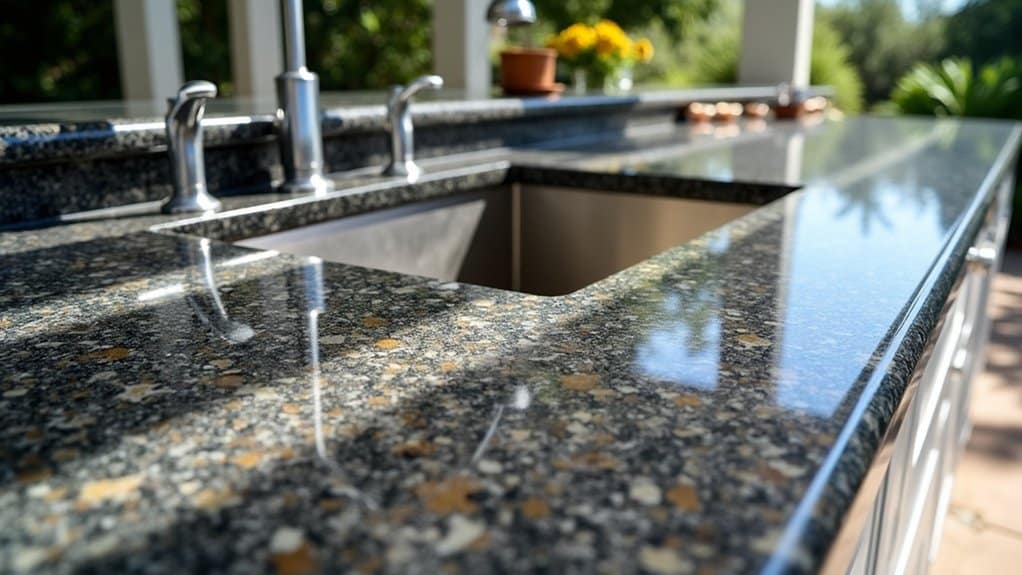
Granite ranks among the hardest natural stones available, making it an ideal choice for outdoor kitchen countertops that face constant sun exposure, salt-laden air, and heavy daily use. Its natural composition resists UV fading, keeping colors vibrant even under prolonged sunlight. Lighter granite varieties reflect heat, staying cooler to the touch during peak summer months.
You’ll appreciate granite’s long term durability against salt-laden coastal environments when properly sealed. Annual resealing with outdoor-grade products prevents moisture infiltration and protects against freeze-thaw cycles. The surface handles hot grills, heavy cookware, and temperature swings without cracking or chipping.
For low maintenance requirements, clean your countertops with pH-balanced soap and water. Avoid acidic cleaners that compromise the seal. With consistent care, granite maintains its structural integrity and visual appeal for decades.
Stone Veneer and Masonry for a Custom Built-In Look
When you’re ready to transform a basic outdoor kitchen frame into a stunning focal point, stone veneer and masonry deliver that custom built-in appearance without the expense of solid stone construction. Lightweight polyurethane panels offer an authentic natural look while resisting heat, moisture, and UV exposure. You’ll appreciate the weathered texture appeal that hand-painted molds create from granite, slate, or travertine varieties.
Key benefits for outdoor kitchens:
- Withstands temperature fluctuations, rain, and pests for decades
- Installs quickly without masonry experience or heavy equipment
- Cleans easily with soap and water, no harsh chemicals required
- Conceals plumbing and unsightly elements for seamless design
These panels coordinate with rustic or contemporary styles while improving energy efficiency through added insulation.
Marine-Grade Polymer for Low-Maintenance Outdoor Kitchen Islands
If you want an outdoor kitchen island that handles rain, humidity, and coastal conditions without warping or rotting, marine-grade polymer delivers zero-porosity construction that blocks water penetration completely. You’ll appreciate the low-maintenance reality, just hose off the non-porous surface to remove grease, stains, and debris without scrubbing or resealing. This material’s impact resistance and structural integrity mean your island withstands daily use and harsh weather while maintaining its appearance for years.
Watertight and Durable Design
Because outdoor kitchens face constant exposure to rain, humidity, and temperature swings, your choice of cabinet material directly impacts how long your investment lasts. Marine-grade polymer delivers waterproof construction techniques that eliminate moisture penetration entirely. Unlike wood or composite alternatives, these moisture proof materials won’t warp, rot, or crack when exposed to harsh conditions.
Here’s what makes this material perform in demanding environments:
- Non-porous surface prevents water absorption even during prolonged rain
- Salt air resistance protects coastal installations from corrosion damage
- Freeze-thaw stability handles extreme temperature fluctuations without splitting
- Chemical resistance withstands pool splashes and cleaning agents
You’ll find that marine-grade polymer outperforms stainless steel and powder-coated aluminum in wet climates while requiring virtually zero maintenance throughout its lifespan.
Easy Hose-Off Cleaning
After hosting a backyard barbecue, you shouldn’t spend hours scrubbing your outdoor kitchen, and with marine-grade polymer cabinets, you won’t. The non-porous HDPE surface repels water penetration, grease, and food stains completely. Simply grab your garden hose, spray down the cabinets, and watch residue rinse away without scrubbing.
This material’s zero porosity prevents mildew and mold buildup, while its smooth texture eliminates fingerprints and smudging after cleaning. You’ll appreciate the minimal cleaning steps required, no sealants, protective coatings, or harsh chemicals needed annually.
Marine-grade polymer handles high-pressure cleaning without surface damage, making no fuss maintenance a reality. The UV-stable colors won’t fade from water exposure, and the impact-resistant surface avoids scratches during wipe-downs. Your outdoor kitchen stays pristine with remarkably little effort.
Quartzite Countertops That Handle Extreme Heat and UV
Since quartzite forms under extreme heat and pressure deep within the earth, it ranks among the hardest natural stones you’ll find for outdoor kitchen countertops. You’ll handle hot pans, pizza stones, and grill grates without scorching the surface. Unlike engineered quartz, quartzite resists UV discoloration, maintaining its color in sun-drenched spaces.
Why quartzite works outdoors:
- Withstands direct flame exposure from barbecues and pizza ovens
- Holds natural beauty under intense summer sunlight without fading
- Resists scratches better than granite in heavy-use cooking zones
- Requires only annual sealing to combat rain and grease
When selecting slabs, prioritize quartzite quality control through an experienced fabricator, not all pieces share equal density. Consider quartzite sustainability as you’re choosing a durable material that won’t need frequent replacement.
Soapstone Countertops That Never Need Resealing
While quartzite demands annual sealing to protect against moisture and grease, soapstone eliminates this maintenance step entirely. You’ll appreciate its naturally non-porous composition that resists liquid absorption without any protective treatments. This translates to low maintenance upkeep and stain resistant surfaces that handle wine, vinegar, and acidic marinades without damage.
Soapstone thrives in outdoor conditions where other materials struggle. It withstands freezing-thawing cycles, absorbs heat evenly near grills, and resists UV exposure without fading. You won’t see cracking from temperature swings or warping from rain exposure.
The material’s gray-charcoal tones and subtle veining complement rustic, modern, or industrial outdoor kitchen designs. Over time, you’ll notice a rich patina developing that enhances its visual appeal while maintaining sanitary food preparation standards year-round.
Dekton Sintered Stone for Sleek Outdoor Kitchen Surfaces
Soapstone’s natural resilience sets a high bar, but Dekton sintered stone pushes outdoor countertop performance even further through advanced manufacturing. This ultracompact material fuses over 20 natural minerals under 25,000 tons of pressure, creating surfaces that resist heat, UV radiation, scratches, and stains without fading.
Dekton’s extreme pressure manufacturing creates surfaces that shrug off heat, UV rays, and scratches for years.
You’ll appreciate Dekton’s functional versatility across extreme weather conditions:
- Non-porous surface repels rain, spills, and moisture penetration
- Low thermal expansion handles sudden temperature shifts without cracking
- UV-stable composition maintains color integrity under direct sunlight
- Large 126 x 56.7-inch slabs minimize visible seams
The aesthetic appeal spans matte, gloss, and veined finishes mimicking stone, wood, or concrete. With thickness options from 4mm to 30mm, you can customize your outdoor kitchen’s look while ensuring durability that outperforms standard porcelain and quartz in harsh environments.
Frequently Asked Questions
Can I Mix Different Materials Like Granite Countertops With Polymer Cabinets?
Yes, you can mix granite countertops with polymer cabinets effectively. You’ll find this pairing works exceptionally well because their differing thermal expansion rates minimize stress points. When you’re building your setup, use aluminum or stainless steel appliances and frames for structural support. Apply weather resistant coatings and seal granite edges before attaching cabinets. This combination withstands temperatures from -20°F to 120°F and lasts over 20 years with minimal maintenance.
How Often Should I Professionally Inspect My Outdoor Kitchen Materials?
You should schedule a professional inspection frequency of at least once annually for complex features like built-in refrigeration and gas appliances. However, your material maintenance schedule varies by component, check gas connections every six months, inspect ductwork quarterly, and verify fire suppression systems seasonally. Weather exposure accelerates wear, so you’ll want thorough assessments before summer grilling season, especially after freeze-thaw cycles that cause micro-cracks in surfaces.
Which Materials Are Safest for Outdoor Kitchens Near Swimming Pools?
You’ll want stainless steel frames and marine-grade polymer cabinets since they’re naturally resistant to pool humidity and splashes. Choose composite decking or concrete pavers for non-slip flooring, and opt for granite or Dekton countertops that handle moisture without staining. Always select corrosion resistant hardware throughout your build, and apply weatherproof finishes to any sealed stone surfaces. Avoid standard metal and wood frames, they’ll deteriorate quickly in pool-adjacent environments.
Do Outdoor Kitchen Materials Affect My Home’s Resale Value?
Yes, your outdoor kitchen materials directly impact resale value. When you choose durable options like stainless steel appliances, granite countertops, and UV-stabilized HDPE cabinets, you’ll see increased property value ranging from 55% to 200% ROI. Weather-resistant materials demonstrate lower maintenance requirements to buyers, making your home more attractive. In warm climates, quality builds recover 100-200% of costs, while premium masonry and stone veneer signal permanence that appeals to discerning purchasers.
What Materials Work Best for Built-In Outdoor Pizza Ovens?
You’ll want firebricks set flat for your cooking floor and half-cut firebricks for the dome, bonded with high-heat mortar. Fire resistant insulation like ceramic fiber blanket or vermiculite/perlite mix keeps heat inside where it belongs. For the exterior, choose durable weatherproof cladding to protect your investment from rain and temperature swings. Don’t forget angle iron supports and a proper refractory flue liner to complete your build.