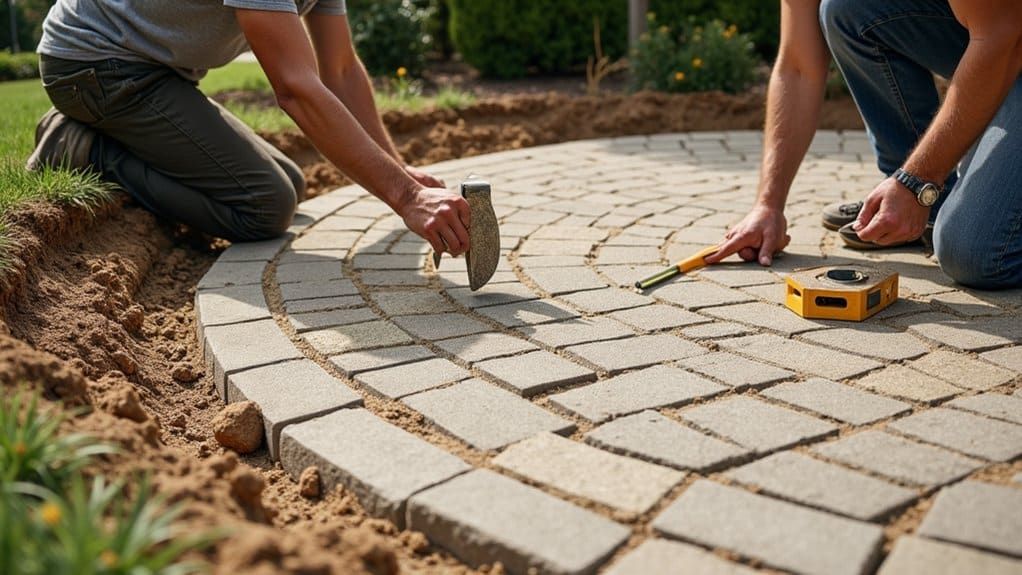
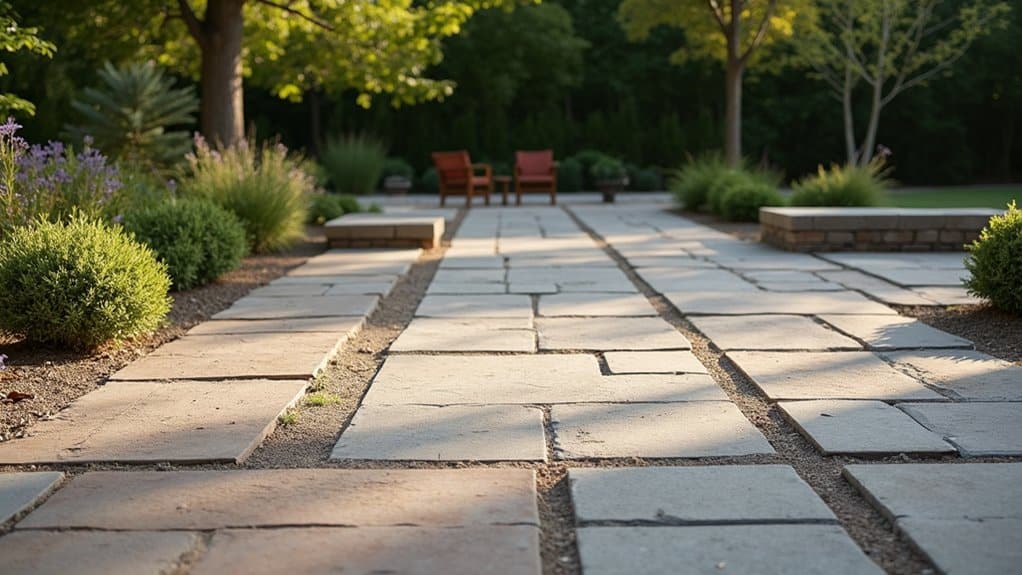
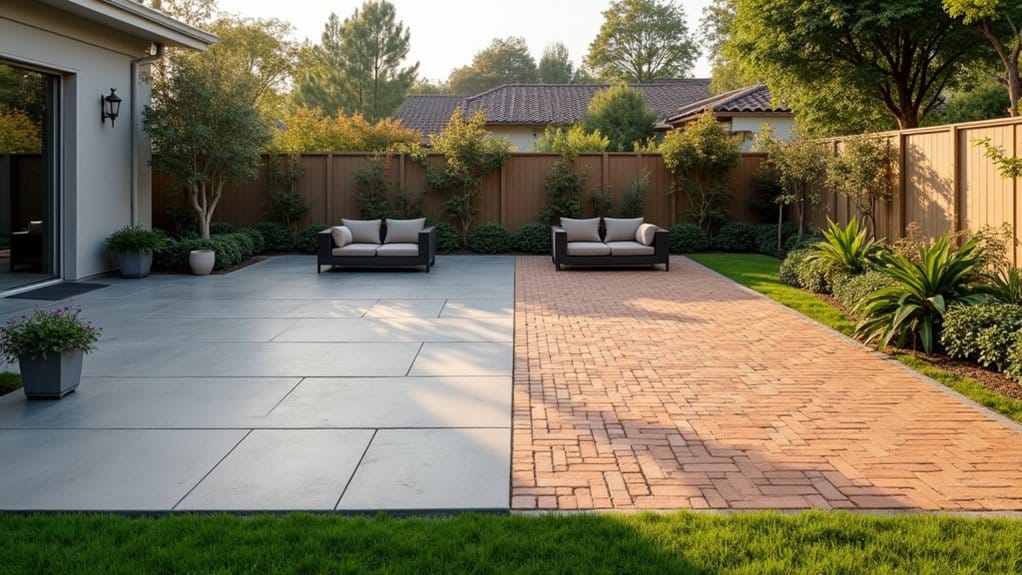
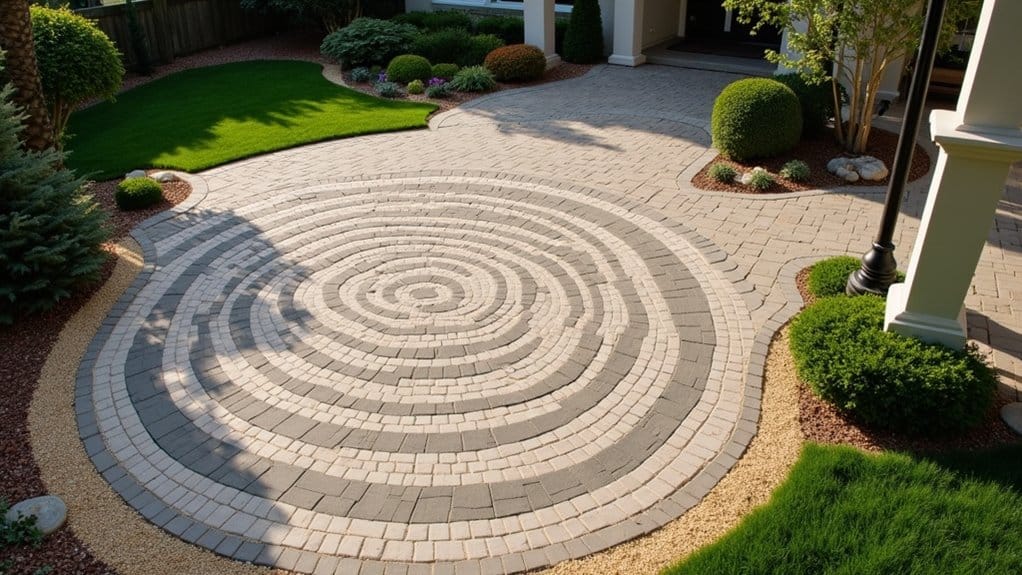
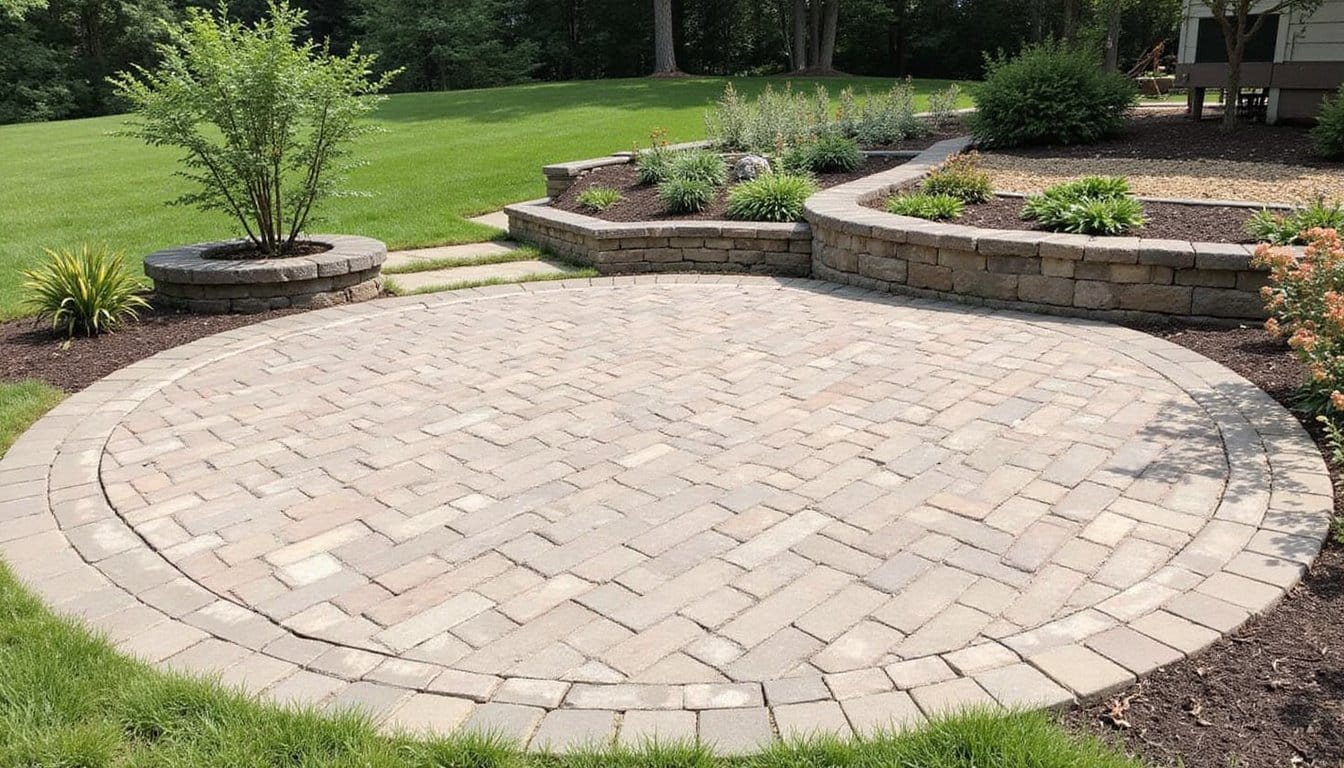
The five best pavers for your patio installation are concrete, porcelain, natural stone, brick, and rubber or recycled plastic. Concrete gives you budget-friendly versatility with 25, 50 years of service. Porcelain handles freeze-thaw cycles and stains with near-zero maintenance. Natural stone delivers 50, 100+ years of fade-resistant beauty. Brick brings timeless clay warmth, while rubber and recycled plastic offer eco-friendly durability for specialized spaces. Each material’s performance depends on site conditions, design goals, and installation details worth exploring below.
What Makes a Patio Paver Last Decades Outdoors?
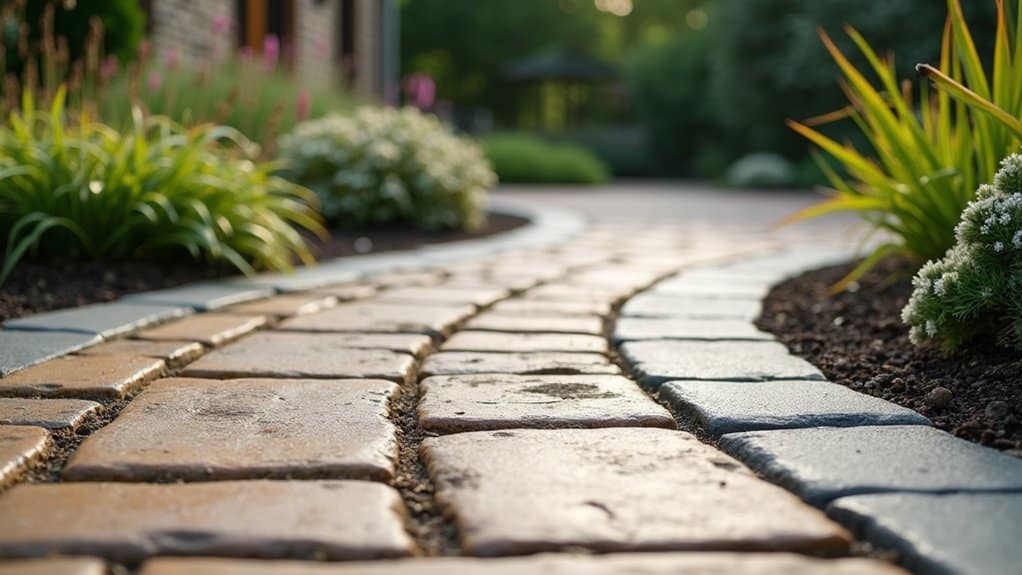
Your paver’s climate adaptation performance determines whether it survives freeze-thaw cycles, UV exposure, and moisture infiltration. Porcelain absorbs less than 0.5% water, while cobblestone and brick handle temperature extremes without cracking. Pair these materials with layered base preparation and proper compaction, and you’ve built a patio surface that won’t shift, crack, or deteriorate for decades. Natural stone pavers such as granite and travertine also offer exceptional durability and aging qualities that allow them to withstand harsh outdoor conditions over a lifetime.
Concrete Patio Pavers: The Best Pick on a Budget
Because concrete pavers mimic the texture and color depth of natural stone without the premium price tag, they’ve become the go-to choice for budget-conscious patio projects that still demand long-term performance. Their cost effectiveness compounds over time, you’ll replace individual units instead of tearing out entire slabs when damage occurs. That inherent repairability gives pavers a decisive edge over poured concrete, whose lower upfront cost is quickly negated by higher long-term repair expenses.
You’re getting versatility across shapes, finishes, and layout patterns that adapt to any outdoor design scheme. Properly installed on a compacted crushed stone base with polymeric sand joints, concrete pavers deliver 25, 50 years of reliable service. Their interlocking design flexes under freeze-thaw stress rather than cracking, and they’ll handle foot traffic without spalling. Seal them every two to five years, and you’ve protected your investment for decades.
Porcelain Patio Pavers: Tough With Almost Zero Upkeep
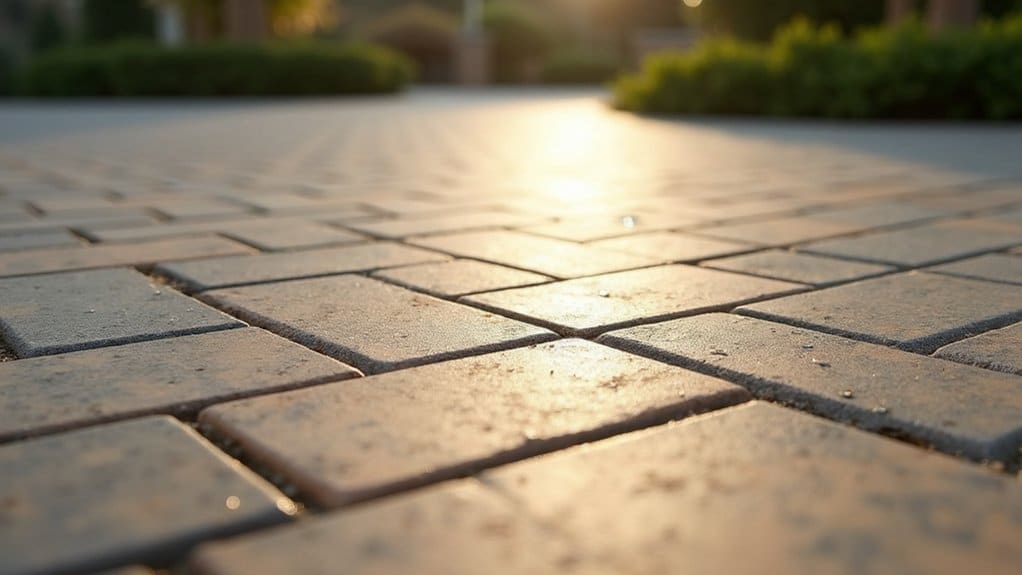
While concrete pavers deliver strong value at a lower price point, porcelain pavers occupy a different tier entirely, engineered for near-zero maintenance without sacrificing design flexibility. Their vitrified, non-porous composition handles freeze-thaw cycles, UV exposure, and heavy loads exceeding 2,200 pounds per slab without surface degradation. During the kiln firing process, fine mineral particles fuse into a compact, glass-like matrix, resulting in pavers that often exceed 10,000 PSI in compressive strength.
Porcelain pavers are engineered for near-zero maintenance, handling freeze-thaw cycles, UV exposure, and heavy loads without surface degradation.
Key performance advantages for patio installations:
- Stain resistance benefits, Oil, wine, and acidic spills won’t penetrate the ultra-dense surface, preventing permanent discoloration in dining or entertaining zones.
- Chemical protection features, Chlorinated water, pool salts, and mild acids cause zero corrosion, ideal for poolside or spa-adjacent patios.
- Mold and moss suppression, Non-absorptive properties eliminate organic growth in shaded or damp areas.
- Simplified upkeep, Mild detergent and water maintain pristine condition without frequent sealing.
Natural Stone Patio Pavers: Beauty That Ages Well
Natural stone pavers stand apart from every engineered option, including porcelain, by offering something no factory can replicate: geological character that deepens with age rather than diminishing. Granite, bluestone, travertine, and slate each carry distinct mineral compositions that produce an ageless patina under sun, rain, and foot traffic. UV exposure won’t fade them because their color runs through the entire stone body.
You’ll get 50, 100+ years of performance when you combine optimal installation practices, proper base preparation, grading, and drainage, with consistent annual maintenance routines like cleaning, resealing, and prompt crack repair. Dense stones like granite resist freeze-thaw cycling and abrasion exceptionally well. They settle more firmly over time, becoming increasingly stable. The premium upfront cost dissolves against decades of minimal upkeep and enduring curb appeal.
Brick, Rubber, and Recycled Patio Pavers: Solid Alternatives
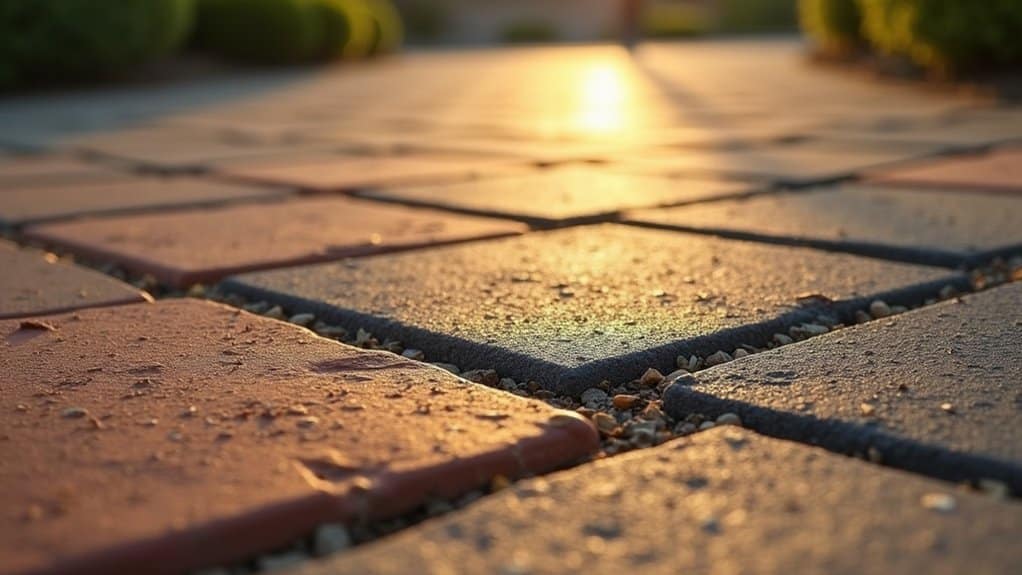
Not every patio calls for quarried stone or engineered porcelain, brick, rubber, and recycled plastic pavers deliver proven performance with distinct advantages that suit specific site conditions, design goals, and budgets.
Beyond stone and porcelain, brick, rubber, and recycled plastic pavers each solve specific patio challenges other materials simply cannot.
- Brick pavers bring natural clay warmth and timeless character, though they require skilled installation, periodic sealing, and joint maintenance to prevent moisture-related staining.
- Rubber pavers, made from recycled tires, offer slip-resistant, shock-absorbing surfaces ideal for poolsides and play areas, true low maintenance options with DIY-friendly interlocking formats.
- Recycled plastic pavers divert post-consumer waste from landfills, resist freeze-thaw cycles, and support permeable stormwater management for LEED-eligible projects.
- Eco friendly sustainability connects rubber and recycled types, both delivering 20+ years of durability without the resealing demands brick requires.
You’ll match each material’s strengths to your patio’s specific exposure and use patterns.
Frequently Asked Questions
Can Different Paver Types Be Mixed Together in One Patio Design?
Yes, you can mix different paver types in one patio design. By combining paver textures, like smooth concrete with rough-cut natural stone, you’ll create depth and tactile contrast that energizes your space. Mixing paver colors through complementary tones helps define zones, guide movement, or establish focal points. You’ll want to match thicknesses carefully at shifts and guarantee a well-compacted base to maintain structural integrity across materials for lasting performance.
How Do Pavers Compare to Poured Concrete for Patio Installation?
You’ll find pavers outperform poured concrete in several critical areas. Paver longevity compared to concrete is significant, pavers last 30, 50 years versus concrete’s 20, 30, thanks to their flexible interlocking system that resists cracking from ground shifts. However, paver installation complexity demands more labor, requiring precise individual placement over a well-packed foundation. You’ll invest more upfront, but you’ll gain easier targeted repairs, superior durability, and greater design versatility for your outdoor space.
Do Patio Pavers Increase the Resale Value of a Home?
Yes, patio pavers can boost your home’s resale value by up to 20%. You’ll see increased curb appeal the moment buyers pull into the driveway, and enhanced outdoor living spaces rank among their top three priorities. A thoughtfully designed paver patio, with intentional material choices, complementary patterns, and site-appropriate drainage, can recoup 50, 100% of your investment while helping your property sell faster and at a higher price.
What Base Materials Should Be Used Underneath Patio Pavers?
You’ll want to start with a compacted gravel base of 3/4″-0 crushed rock, laid 4, 6 inches deep and compressed in 2, 3 inch lifts for uniform stability. Over that, add a 1-inch stabilized sand base as your bedding layer, screeded smooth using pipes and a board. If you’re working with clay soil, lay geotextile fabric beneath the gravel to prevent shifting. Don’t skip edge restraints, they’re essential for long-term paver integrity.
Can Patio Pavers Be Installed Over an Existing Concrete Slab?
Yes, you can install patio pavers over an existing concrete slab, provided the surface is structurally sound and free from major cracks. Suitable subgrade preparation involves cleaning the concrete, drilling drain holes at low points, and ensuring a minimum 2% slope grade. You’ll choose from sand bed, mortar, or adhesive methods as proper installation techniques based on your paver thickness, traffic expectations, and height clearances at doors, thresholds, and adjoining structures.