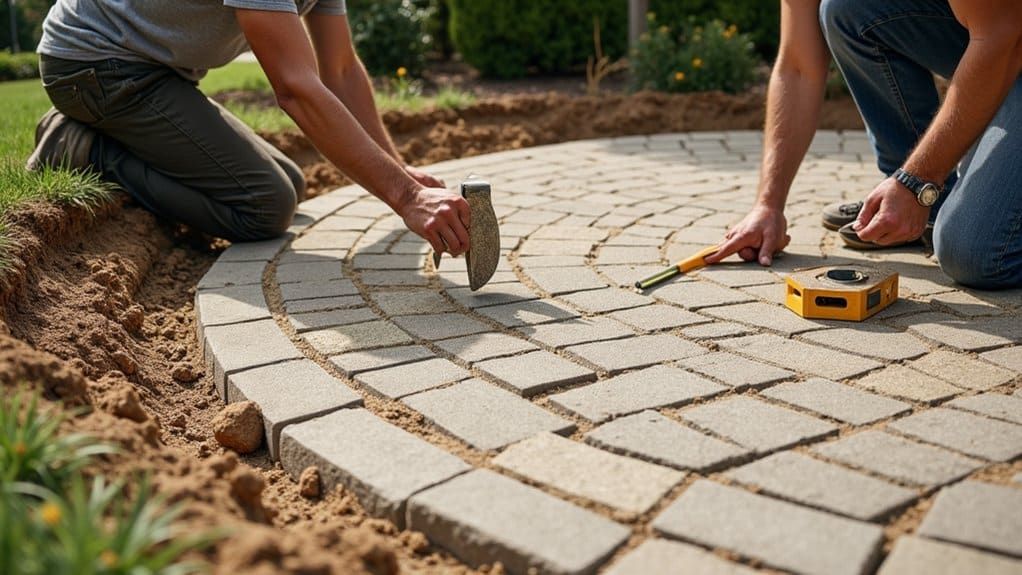
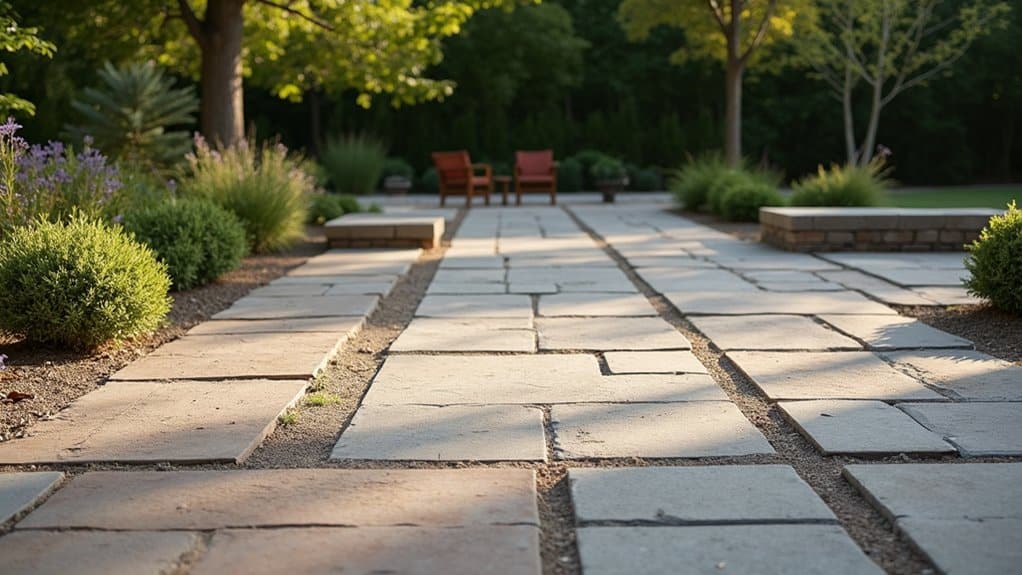
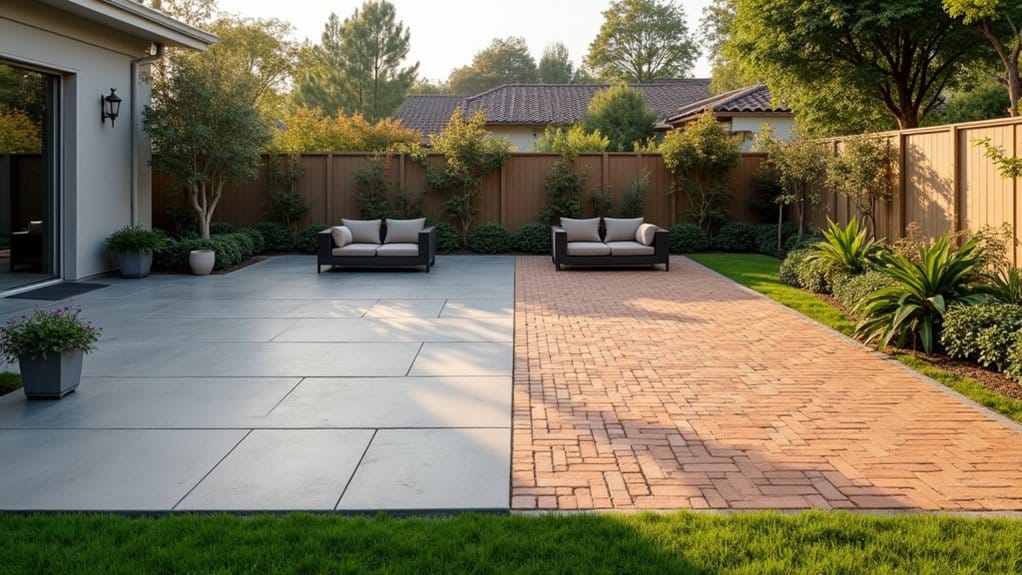
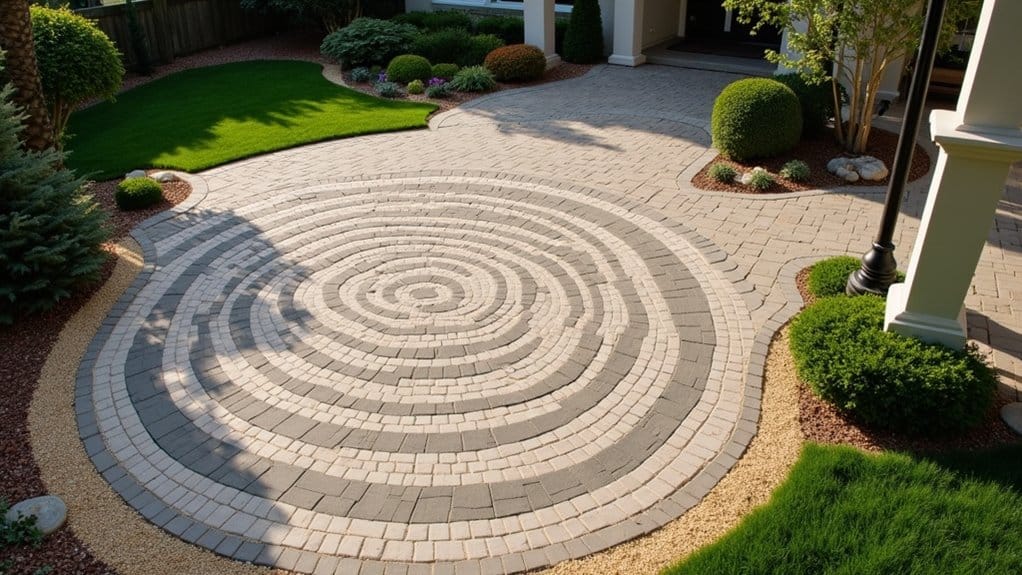
Design safe outdoor steps by strictly following local building codes, maintaining uniform rise and run measurements (max 7¾ inches rise, 11-inch tread depth), and selecting weather-resistant materials like aluminum or composite decking. You’ll need proper handrails (36-inch minimum height), non-slip surfaces, and adequate drainage systems. Don’t forget clear visual markers, secure foundations, and strategic lighting. These elements work together, but there’s much more to contemplate for ideal safety and durability.
Understanding Local Building Codes and Regulations
The pivotal initial step in designing outdoor steps is understanding your local building codes and regulations. You’ll need to familiarize yourself with specific requirements for tread depth and riser height, as these measurements directly impact safety and usability.
Before finalizing your design plans, thoroughly review all applicable codes to guarantee compliance. Your local building codes establish essential standards that address structural integrity and safety concerns. You’ll want to incorporate these requirements into your initial design phase to avoid costly modifications later.
During the planning process, pay particular attention to handrail specifications and other safety features mandated by your jurisdiction. By addressing code requirements early, you’ll streamline the construction process and prevent potential issues during inspections, eventually safeguarding your investment and ensuring long-term reliability.
Calculating the Perfect Rise and Run Measurements
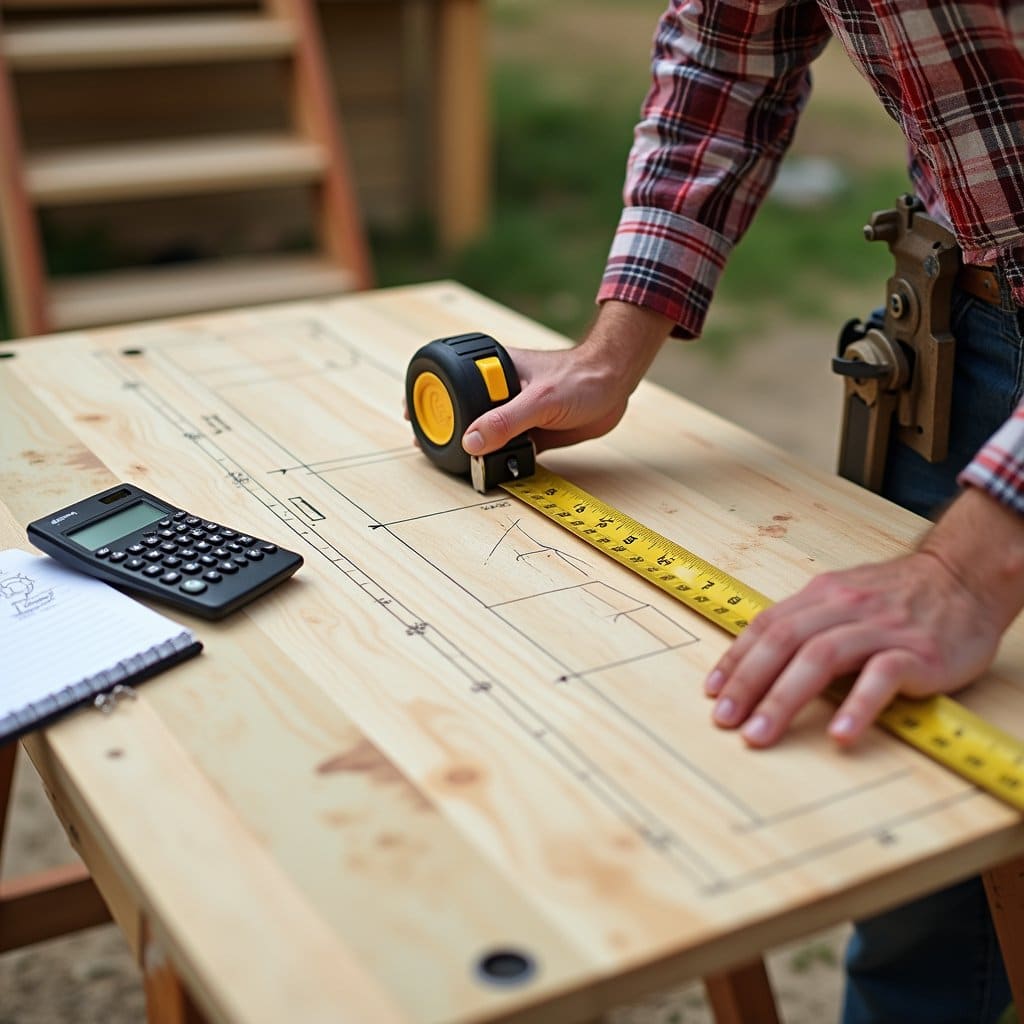
When you’re calculating your outdoor step measurements, you’ll need to uphold uniform riser heights no greater than 7¾ inches for residential settings, though keeping them at 7 inches or less will better accommodate aging residents. Your tread depth should extend at least 11 inches to create a comfortable stride distance, even though this choice will increase the broader stair footprint by 7-8 square feet. You must guarantee each step’s rise and run remains consistent throughout the entire staircase, as even minor variations can create tripping hazards and compromise safety.
Step Height Safety Standards
Safety standards for step height follow precise measurements that can greatly impact user comfort and accessibility. You’ll need to adhere to the International Residential Code 2015, which specifies a maximum stair rise of 7¾ inches for residential settings, while commercial applications require a stricter 7-inch limit.
For optimal safety and aging-in-place considerations, you should aim for a rise of 7 inches or less. When planning your stair tread, consider extending it from 9 to 11 inches. While this may require additional space of 7-8 square feet, the amplified safety benefits justify the adjustment. To determine your step configuration, calculate the total rise from ground to deck surface, then divide by your desired rise per step. This calculation guarantees you’ll achieve the proper number of steps while maintaining consistent measurements throughout.
Uniform Stair Measurements Matter
Maintaining uniform stair measurements throughout your outdoor steps creates a predictable, safe climbing experience for users. When calculating rise and run dimensions, you’ll need to balance safety and comfort with available space. Lower rises of 7 inches or less improve accessibility for all generations.
| Measurement Type | Residential vs Commercial |
|---|---|
| Maximum Rise | 7¾” IRC / 7″ Commercial |
| Preferred Run | 11″ for better safety |
| Code Compliance | Verify local standards |
You’ll want to consider extending your stair tread to 11 inches, despite requiring an additional 7-8 square feet of space. This extra depth prevents larger feet from hanging over the edge. While the IRC allows for steeper residential steps, opting for gentler rises enhances long-term accessibility and creates a more comfortable climbing experience.
Perfect Stride Distance
Building on proper stair uniformity, calculating the perfect stride distance requires a precise mathematical approach. You’ll need to determine your total rise first, then divide it by the optimal rise height of 6 to 7.5 inches per step for residential use.
To achieve the most comfortable climbing experience, pair your chosen rise with a tread depth between 10 and 12 inches. Recall that commercial stairs must use a maximum 7-inch rise, while residential stairs can extend to 7 3/4 inches. By increasing your tread depth to 11 inches, you’ll create a safer, more accessible staircase, though this will require supplemental square footage per floor.
Always maintain consistency within 1/4 inch across all measurements to prevent tripping hazards and ensure smooth shifts between steps.
Selecting Weather-Resistant Materials
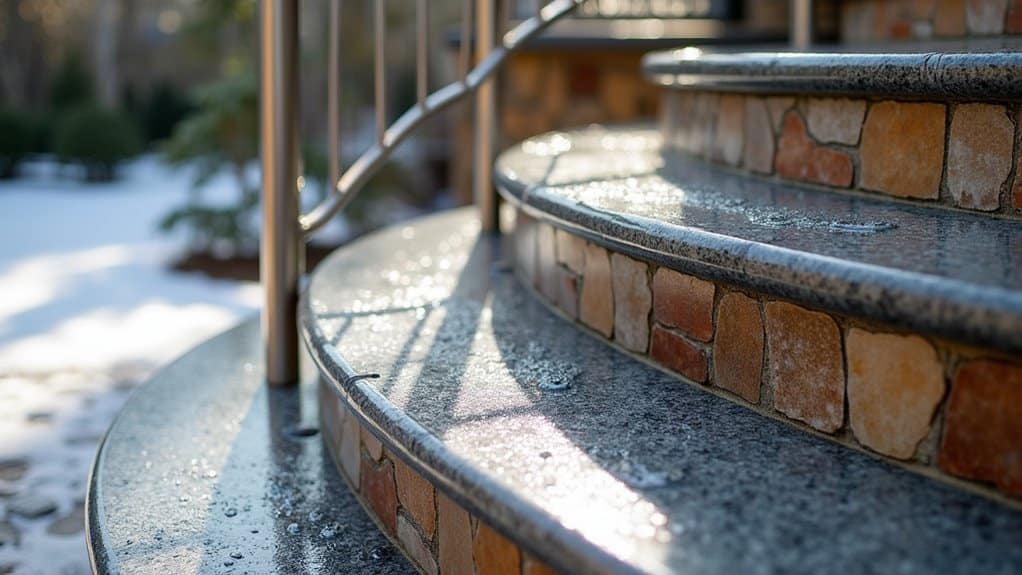
Your selection of weather-resistant materials directly impacts your outdoor steps’ longevity, with options like aluminium and composite decking offering superior performance against coastal elements. You’ll find that combining materials strategically, such as using granite treads with aluminium risers, can optimize both durability and aesthetic appeal in challenging maritime conditions. Your coastal environment requires materials that resist salt spray, moisture, and temperature fluctuations, making treated wood, concrete, or composite decking practical choices for long-term sustainability.
Materials Impact Lifespan
When designing outdoor steps that will endure harsh weather conditions, the selection of materials directly influences their longevity and performance. To withstand the elements effectively, you’ll need to evaluate several quality materials based on your specific needs and climate.
Pressure-treated wood provides a budget-friendly solution with decent durability, while composite materials and PVC offer superior weather resistance with minimal upkeep. If you’re seeking lightweight yet sturdy options, aluminum stairs deliver excellent rust resistance and long-term reliability. For a more permanent installation, concrete presents customizable finishes and proven durability. Although granite and slate create elegant outdoor stairs with lasting appeal, they require higher initial investment and professional expertise. Each material choice considerably affects your stairs’ lifespan, making it essential to consider both environmental factors and maintenance requirements when making your selection.
Combating Coastal Weather Elements
Selecting materials for outdoor stairs in coastal environments requires specific attention to weather-resistant properties. You’ll need to contemplate options that provide a stable foundation while maintaining durability against harsh marine conditions.
| Material | Weather Resistance | Maintenance Level |
|---|---|---|
| Aluminum | High | Low |
| Composite | High | Minimal |
| Treated Wood | Moderate | High |
| Granite | Very High | Low |
| Slate | Very High | Low |
To prevent slipping and guarantee longevity for outdoor use, incorporate proper drainage systems into your stair design. While aluminum offers excellent rust resistance, composite materials provide similar benefits with minimal upkeep. If you’re considering natural stone, both granite and slate deliver superior weather resistance and elegant aesthetics. Though pressure-treated wood remains cost-effective, it requires regular maintenance to maintain its protective qualities against coastal elements.
Smart Material Combinations
How you combine different weather-resistant materials can greatly improve both the functionality and longevity of your outdoor staircase. Pairing aluminum treads with composite risers guarantees your stairs remain structurally sound while maximizing weather resistance in coastal environments. This combination creates a lightweight yet powerful solution that’ll require less maintenance over time.
Consider integrating pressure-treated lumber supports with granite or slate treads to balance cost-effectiveness with aesthetic appeal. For heightened durability, you can combine concrete foundations with composite overlays, allowing you to achieve both structural integrity and design flexibility. When selecting materials, focus on compatibility aluminum works well with PVC components, while treated lumber pairs effectively with concrete elements. These strategic combinations help you create stairs that withstand harsh weather while maintaining their appearance and safety features.
Installing Proper Handrails and Guardrails
To guarantee the safety of outdoor steps, proper installation of handrails and guardrails serves as a critical defense against accidents and falls. When you ensure your stairs have handrails on both sides, you’re providing essential safety features that allow users to maintain balance and grip support. GRP handrails are particularly effective due to their low thermal conductivity, offering a comfortable grip regardless of weather conditions.
To prevent accidents effectively, your guardrails must meet the minimum height requirement of 36 inches. This standardized height helps protect users from falling off the sides of stairways. When installing these safety features, focus on secure mounting and proper placement both factors are paramount for maintaining long-term stability and protection. The combination of well-installed handrails and guardrails significantly enhances the overall safety of your outdoor staircase.
Implementing Non-Slip Surface Solutions
You’ll find that textured materials like sisal, rubber, and vinyl provide essential traction for outdoor stair safety, while permanent solutions like the COBAGRiP® Stair Tread offer extensive coverage with visibility-enhancing nosing. When selecting weather-resistant grip options, you must avoid temporary solutions like Velcro in favor of securely fastened carpet runners or professional-grade non-slip treatments. Surface applications can include painted or wallpapered risers to create visual contrast, working in conjunction with your chosen non-slip tread material to optimize safety.
Textured Material Options
When selecting materials for outdoor steps, implementing proper non-slip surfaces becomes essential for year-round safety. You’ll find several textured options that provide superior surface grip while remaining suitable for outdoor use.
| Material Type | Safety Feature |
|---|---|
| Vinyl/Rubber Tread | Augmented traction coverage |
| Aluminum Nosing | Abrasive-coated grip |
| Brushed Concrete | Natural skid resistance |
| FRP Grating | Interlocking slip protection |
| Anti-slip Tape | Strategic traction points |
Each material improves safety through distinct texturing methods. You can apply vinyl or rubber treads directly over existing steps, while aluminum nosings work best on step edges. For new construction, consider brushed concrete’s built-in grip properties. FRP grating offers a complete solution for maximum slip resistance, and anti-slip tape provides a cost-effective option for targeted traction bolstering in specific areas.
Weather-Resistant Grip Solutions
Implementing weather-resistant grip solutions requires careful selection of materials specifically engineered to maintain traction in challenging outdoor conditions. You’ll find that COBAGRiP® Stair Tread offers an extensive solution, featuring contrasting colored nosing that complies with DDA requirements while providing full stair coverage.
When selecting weather-resistant grip solutions, you’ll want to focus on textured or patterned tread coverings that boost traction in wet and icy conditions. The COBAGRiP® GRP Sheet stands out as a low-maintenance option that effectively combats numerous slip hazards. While sisal, rubber, and vinyl materials can improve grip, they’re not all uniformly suited for outdoor use. Don’t rely on temporary solutions like Velcro attachments, as they won’t provide adequate safety. Instead, opt for permanently installed, weather-resistant materials designed specifically for outdoor applications.
Surface Treatment Applications
Surface treatments for outdoor steps require precise application methods to guarantee ideal safety and durability. When installing GRP (Glass Reinforced Plastic) stair nosings, you’ll need to establish proper adhesion and positioning to optimize their slip-resistant properties and visual contrast effectiveness.
For comprehensive protection, you can opt for COBAGRiP® Stair Treads, which cover the entire step surface while featuring contrasting nosing that complies with DDA requirements. These treads don’t require extensive preparation and maintain their grip in wet conditions.
If you’re considering alternative solutions, textured or patterned tread coverings made from sisal, rubber, or vinyl provide reliable traction. You’ll want to select materials specifically designed for outdoor use to confirm they withstand weather exposure while maintaining their anti-slip properties throughout their service life.
Ensuring Adequate Lighting and Visibility
Proper illumination stands as a critical safety component for outdoor steps, serving as your initial line of defense against accidents and falls. You’ll drastically reduce the incidence of trips by implementing strategic lighting solutions at both the bottom and top of the stairs.
Consider these essential lighting strategies for your outdoor steps:
- Install motion-activated or dusk-to-dawn fixtures to guarantee automatic illumination during low-light conditions
- Integrate LED rope lighting or illuminated handrails to create consistent visibility along the entire stairway
- Optimize natural light through thoughtfully positioned windows, skylights, or solar tubes to supplement artificial lighting
- Mount targeted lighting fixtures to eliminate dark corners and shadows that could obscure step edges
These lighting solutions will transform your outdoor steps into a safer, more navigable space while enhancing their aesthetic appeal.
Creating Consistent Step Dimensions
The dimensions of outdoor steps play a pivotal role in preventing accidents and guaranteeing safe navigation. When you’re designing stairs, maintaining consistent step dimensions is essential without it, you’re creating an accident waiting to happen. To confirm your stairs are safe, stick to a tread depth of at least 10 inches and maintain riser heights between 6-7.5 inches.
| Setting Type | Maximum Riser Height | Recommended Tread Depth | Safety Impact |
|---|---|---|---|
| Residential | 7¾ inches | 10-11 inches | High comfort |
| Commercial | 7 inches | 11+ inches | Code compliant |
| Age-friendly | 6-6.5 inches | 11-12 inches | Heightened safety |
Consider extending your tread depth to 11 inches while this may require additional space, the improved safety and comfort are worth the investment, especially for maturing residents.
Incorporating Proper Drainage Systems
While consistent step dimensions form the foundation of safe stairs, water management demands equal attention in outdoor settings. You’ll need to implement effective drainage systems to prevent water accumulation and maintain slip-resistance in wet conditions.
Proper water management is crucial for outdoor stairs, requiring thoughtful drainage solutions to maintain safety in all weather conditions.
- Install sloped channels or drains adjacent to your stairs, ensuring water diverts away from the walking surface and prevents pooling that could create hazardous conditions.
- Space your stair treads sufficiently to allow water flow-through, reducing the risk of water accumulation on individual steps.
- Select materials with high traction properties, such as textured concrete or specialized non-slip coatings, to enhance safety during wet weather.
- Perform regular maintenance by clearing debris from drainage channels and inspecting surfaces for wear, ensuring your water management system continues functioning ideally throughout the year.
Establishing Secure Foundation and Support
Secure foundation and support systems serve as critical elements in outdoor stair construction, determining both the longevity and safety of your installation. You’ll need to establish a stable and level foundation by thoroughly preparing the site and selecting appropriate base materials before proceeding with construction.
Install sturdy stringers as your primary support structure, maintaining a maximum spacing of 36 inches between them. When attaching these stringers to your deck or landing, use corrosion-resistant fasteners to guarantee long-term structural integrity. For wider stairways, you’ll want to incorporate cross-bracing to prevent any potential sagging or movement.
Don’t forget to implement a regular inspection schedule to monitor your stair’s foundation and support components. This proactive approach allows you to identify and address wear issues before they compromise safety.
Maintaining Clear Visual Markers and Edges
Visual clarity plays a pivotal role in outdoor stair safety, requiring strategic implementation of markers and edge indicators. You’ll find that combining safety and style creates beautiful stairs while safeguarding user protection through enhanced visibility and proper visual guidance.
- Install high-contrast edge markings or reflective nosing along each tread’s front edge, making steps distinctly visible during both day and night conditions
- Incorporate texture patterns on tread surfaces that provide visual depth perception cues while maintaining visual appeal
- Maintain consistent material and color shifts between steps to prevent visual confusion and ensure smooth visual flow
- Position lighting fixtures strategically at the top, middle, and bottom of your staircase to illuminate potential hazards and amplify overall visibility
These visual elements work together to create a harmonious balance between safety features and aesthetic appeal, resulting in stairs that are both secure and visually striking.
Frequently Asked Questions
The 27 Rule for Stairs
You’ll find that the 27 rule creates ideal stair comfort by ensuring the sum of your tread depth and riser height equals 27 inches. For example, if you’re using a 7-inch rise, you’ll need a 20-inch tread depth. It’s essential that you maintain rise consistency throughout your staircase. Don’t forget to factor in proper handrail positioning, which should complement these measurements for maximum safety and ergonomic efficiency.
How to Make Outdoor Steps Safe?
To make your outdoor steps safe, you’ll need to start with level ground preparation to guarantee a stable foundation. Install slip-resistant materials like textured concrete or non-slip treads on each step surface. You should mount proper handrails on both sides at 34-38 inches height, confirming they’re firmly anchored. Don’t forget to maintain consistent riser heights and tread depths throughout. For improved safety, you’ll want to add lighting and keep the surfaces clean and well-maintained.
What Is the 25 Rule for Stairs?
The 25 rule states that when you add your stair rise and tread depth in inches, they should equal 25. For example, if your stair rise is 7 inches, your tread depth should be 18 inches (7 + 18 = 25). This formula creates comfortable, ergonomic steps that you’ll find easier to navigate. To complement this rule, you’ll need to install a handrail height between 34-38 inches for ideal safety and support.
What Is the Formula for Outdoor Steps?
To calculate outdoor steps, you’ll need to follow this formula: step riser height (6-7.5 inches) + tread depth measurement (minimum 10 inches) = 17-18 inches total. You can adjust these measurements within safe ranges, but don’t exceed 7¾ inches for residential risers or 7 inches for commercial settings. Remember to include stair handrail requirements in your calculations they’re mandatory for four or more risers and must be 34-38 inches above the tread nosing.