You’ll choose the right outdoor pergola by matching materials to your site’s specific climate demands and your tolerance for upkeep. Aluminum handles coastal salt air and intense UV, while treated wood suits drier regions. Consider how the structure integrates with your existing landscape and whether you need shade control or vine support. Your budget, local weather patterns, and design preferences all shape the ideal choice, and the sections below break down each factor in detail.
What Do You Need Your Outdoor Pergola to Do?
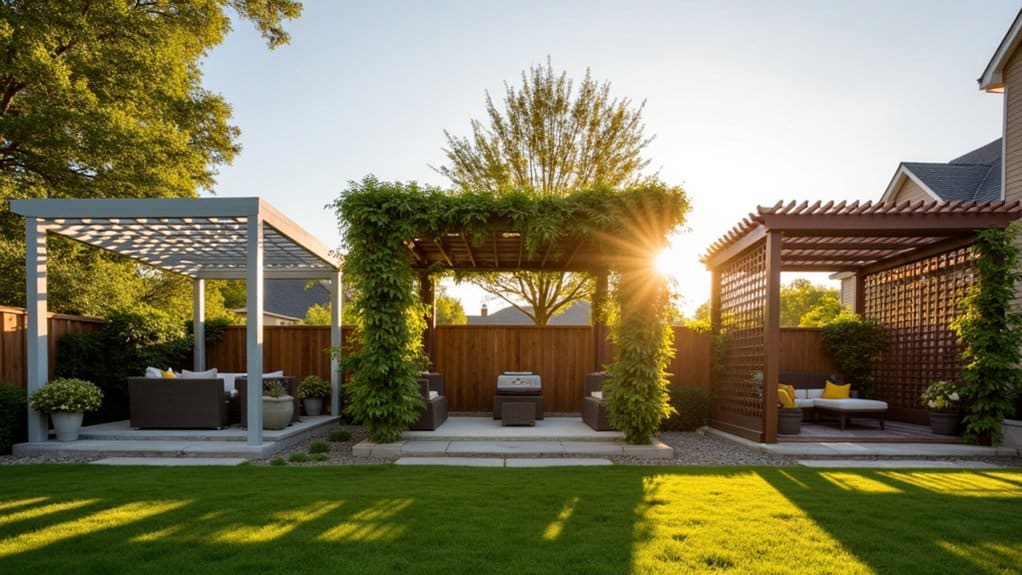
When you’re planning an outdoor pergola, the first step is determining exactly what you want it to accomplish in your space. Consider your desired functionality, do you need shade control for hot summers, a framework for climbing vines, or a defined entertaining zone? Each purpose shapes material choices and placement decisions.
Think about aesthetic integration with your existing landscape. A site-specific approach guarantees your pergola complements pathways, gardens, or pool areas while maximizing natural airflow and light. You’ll want sustainable materials that withstand local weather conditions year-round. Pergolas are available in wood, vinyl, aluminum, and fiberglass, each offering distinct visual appeal from rustic charm to modern elegance.
Evaluate how you’ll use the structure: hosting gatherings, creating quiet retreats, or supporting gardening projects. Adjustable features like louvers or retractable canopies offer flexibility. A covered pergola with metal roofing can provide protection from sun, rain, or snow for year-round enjoyment. Your pergola should serve multiple functions while blending seamlessly into your outdoor environment. A well-chosen pergola can also boost your property’s resale value by $3,500 to $12,000, making it both a lifestyle enhancement and a smart investment.
Match Pergola Materials to Your Local Climate
Your local climate determines which pergola material will perform best on your specific site. Aluminum stands up to coastal salt air, hurricane winds, and intense UV without corroding, while composite and fiberglass handle moderate weather with minimal upkeep. Fiberglass pergolas are corrosion-resistant and non-porous, making them ideal for areas with unpredictable climate conditions. Wood and vinyl work in milder regions, but you’ll face faster degradation where extreme heat, heavy snow, or humidity dominate the landscape. Vinyl pergolas often reach the end of their lifespan within 10, 15 years, while aluminum pergolas built with high-grade extruded aluminum can last for decades with periodic rinsing. Steel pergolas offer strength and longevity but require attention in humid climates where the painted exterior will eventually warp and crack, leading to rust.
Weather-Resistant Material Options
Because your pergola sits exposed to the elements year-round, selecting the right material for your specific climate determines whether you’ll enjoy decades of trouble-free use or face constant repairs.
| Material | Material Longevity | Fade Resistance |
|---|---|---|
| Aluminum | Lifetime guarantee | Excellent |
| Fiberglass | 25+ years | Superior |
| Wood (Cedar) | 10-15 years with maintenance | Poor |
Aluminum delivers exceptional performance across hot, humid, dry cold, and wet cold environments without warping or corroding. You’ll find it requires only occasional cleaning while supporting motorized louver systems. Its strength also makes it ideal for integrating technology into your outdoor living space, from lighting systems to automated shade controls. In areas prone to strong winds, aluminum’s durability prevents your structure from blowing over, making it the safest choice for exposed locations.
For coastal or moisture-heavy sites, fiberglass provides ultra-lightweight corrosion resistance, though you’ll pay double aluminum’s price. Fiberglass stands up well to everyday weathering and offers the added benefit of being paint-friendly for color updates whenever you want to refresh your outdoor space. Wood suits dry cold climates when properly treated, but demands regular sealing to prevent rot and insect damage.
Regional Climate Considerations
Matching your pergola to regional climate demands guarantees the structure integrates seamlessly with your property while delivering lasting performance.
In cold regions, you’ll need materials meeting strict thermal performance requirements, double-glazed glass retains heat while structures handle snow loads up to 100 lbs/sq. ft. Hot climates demand UV-resistant coatings and reflective surfaces that minimize heat buildup. In California specifically, pergola patio covers prove ideal because mild winters and extended summers enable enhanced outdoor living year-round.
Coastal properties require marine-grade aluminum that resists salt corrosion indefinitely. For windy areas, select reinforced framing rated for speeds up to 190 mph. Rainy regions call for effective moisture management strategies, including weathertight seals and multi-stage gaskets achieving zero infiltration.
Your site’s specific conditions dictate material choices. Combining mold-resistant features with proper drainage systems protects structures in humid environments, while powder-coated aluminum withstands both intense solar radiation and storm-force gusts across diverse climates. Extruded, heavy-duty aluminum offers the best combination of strength and weather resistance for long-lasting performance across challenging conditions. Taking time to evaluate temperature extremes, precipitation patterns, and sun exposure before purchasing ensures your pergola remains comfortable and functional throughout every season.
Pergola Material Costs From Cheapest to Premium

Your pergola material choice directly impacts both your initial investment and long-term maintenance costs, with options ranging from $10 per square foot for budget-friendly aluminum or vinyl to $60 or more for premium steel. Pressure-treated pine and cedar offer sustainable wood alternatives at $10, $35 per square foot, while redwood and teak command premium prices but deliver exceptional durability for site-specific applications. Fiberglass falls into the premium category at $30-$60 per square foot, offering a durable alternative to natural wood options. Beyond material costs, budget for professional installation which typically adds $1,500-$5,000 to your total project expense. Most homeowners find their total pergola projects fall between $4,000 and $7,000, though costs can range from $2,000 for simple DIY kits to over $15,000 for large custom builds. Understanding these cost tiers helps you balance your budget against the material performance your outdoor space demands.
Budget-Friendly Material Options
When planning your outdoor pergola, material costs vary vastly, from budget-friendly vinyl at $20-$40 per square foot to premium steel at $40-$70 per square foot. Your site-specific needs determine which sustainable materials work best for your space.
| Material | Cost Per Sq Ft | Best For |
|---|---|---|
| Pressure-Treated Wood | $10-$25 | DIY friendly builds |
| Vinyl | $20-$40 | Low maintenance |
| Aluminum | $15-$30 | Lightweight installs |
For cost comparison, pressure-treated wood delivers the lowest entry point, you’ll spend around $500 for a 10×10 DIY kit. Vinyl offers rot resistance without ongoing upkeep, making it ideal for humid climates. Aluminum splits the difference with rust-proof durability and easy spatial integration into existing landscapes. Each option balances affordability against your property’s environmental demands. If you’re considering natural wood options, cedar pergolas provide excellent weather resistance while remaining more affordable than premium redwood alternatives.
Premium Material Investments
Stepping up from budget-friendly options, premium pergola materials deliver enhanced longevity and visual impact that transform your outdoor space.
Redwood stands at $40, $70 per square foot, offering superior decay resistance and natural beauty that integrates seamlessly into landscape designs. You’ll appreciate its insect resistance without chemical treatments, making it ideal for sustainable outdoor living.
Steel and fiberglass represent the pinnacle of long term cost effectiveness. Steel’s exceptional strength supports large spans at $30, $70 per square foot, lasting 25+ years with proper coating. Fiberglass, ranging from $50, $70+, provides weather-resistant performance with minimal upkeep.
Composite materials at $50, $60 per square foot combine custom aesthetic finishes with rot and insect resistance. This wood-plastic blend suits site-specific applications where you want natural appearance without intensive maintenance demands.
How Much Pergola Maintenance Can You Handle?
How often you’re willing to climb a ladder and scrub surfaces determines which pergola material suits your property best.
Wooden pergolas demand re-staining every 3-5 years and twice-yearly inspections to prevent UV damage and cracking. If your site faces saltwater exposure, you’ll need quarterly cleaning sessions to combat corrosion. Aluminum structures require far less intervention, occasional wiping with water and microfiber cloths maintains their powder-coated finish.
Your proper maintenance schedule should include spring and autumn checkups for structural integrity, gutter debris removal, and fastener inspections. Seasonal weather preparedness means trimming climbing vegetation several times yearly to reduce frame stress and testing drainage systems before heavy rains arrive.
Motorized pergolas add another layer: monthly full-cycle operation keeps motors lubricated. Match your maintenance capacity to your material choice for sustainable, site-specific results.
Which Pergola Material Matches Your Style?

Your pergola material shapes more than durability, it defines your outdoor space’s entire visual character and environmental footprint.
Wood delivers timeless organic charm, cedar’s warm tones and natural decay resistance integrate seamlessly into garden landscapes. You’ll find extensive material customization options through stains and paints that complement existing architecture.
Aluminum offers sleek, modern profiles with powder-coated finishes spanning multiple colors. It’s ideal when aesthetic considerations demand clean lines and contemporary appeal.
Fiberglass provides paint-friendly surfaces for future color changes, while composite materials blend natural wood textures with modern performance, perfect for shifting or changing styles.
Vinyl suits budget-conscious projects but limits your design palette. Consider your site’s visual context: traditional gardens pair naturally with wood’s warmth, while minimalist spaces benefit from aluminum’s refined simplicity.
Does Pergola Size Affect Your Material Options?
Once you’ve selected a material that matches your aesthetic vision, your site dimensions will determine whether that choice remains viable. Size constraints vary dramatically across materials, vinyl kits typically max out at prefabricated dimensions like 10×16 feet, while aluminum and fiberglass support spans up to 22 feet with fewer columns.
Your vertical height requirements also narrow your options. Aluminum accommodates heights from 8 to 13 feet, whereas vinyl caps at 10 feet maximum. For attached installations, your roofline further limits possibilities.
Consider your site’s specific demands. Large courtyards and commercial spaces benefit from steel, fiberglass, or cPVC’s superior load capacity. Wood offers full customization but requires extended lead times. Match your material to your spatial reality, not the reverse, to guarantee structural integrity and long-term performance.
The Best Pergola Material for Every Buyer Type
Five distinct buyer profiles emerge when matching pergola materials to lifestyle priorities and site conditions. If you’re seeking low maintenance upgrades with maximum longevity, aluminum delivers lifetime durability without regular upkeep. Budget-conscious buyers benefit from pressure-treated pine’s affordability, though you’ll invest more time in maintenance.
For customizable designs with modern aesthetics, vinyl offers diverse color options and weather resistance suited to varied climates. If your site experiences harsh conditions, fiberglass provides corrosion-resistant strength that handles unpredictable weather patterns.
Steel works best when you need structural robustness for heavy installations or contemporary design statements. Cedar and redwood suit buyers prioritizing natural aesthetics and sustainable materials who don’t mind periodic staining. Match your choice to your maintenance tolerance and environmental demands.
Frequently Asked Questions
Can You Mix Different Pergola Materials in One Structure?
Yes, you can absolutely mix different pergola materials in one structure. When exploring material combinations, you’ll find wood pairs beautifully with aluminum frames, while fiberglass integrates with cedar for extended spans. Your design considerations should include site-specific factors like weather exposure and spatial integration with your landscape. You can combine pressure-treated lumber with concrete anchors or blend composite materials with sustainable materials like reclaimed wood for rot resistance and environmental responsibility.
How Long Does Each Pergola Material Typically Last Before Replacement?
Wood pergolas typically last 5, 15 years, though cedar or redwood maintains structural integrity for 10, 20 years with proper staining. Vinyl offers 10, 20 years depending on your climate’s weather resistance demands. Steel spans 5, 15 years but requires rust prevention in coastal site-specific conditions. Aluminum delivers the longest lifespan at 20, 30+ years, offering superior weather resistance and structural integrity while supporting sustainable materials choices through its recyclability and minimal maintenance requirements.
Are Certain Pergola Materials Safer for Homes in Wildfire-Prone Areas?
Yes, steel and aluminum stand out as the safest fire resistant pergola options for wildfire zones. You’ll want to prioritize safety considerations for high risk areas by selecting noncombustible metals that meet WUI and NFPA 1140 standards. These sustainable materials won’t ignite or fuel flames like wood can. When planning your site-specific installation, you’re integrating protection that complements your property’s defensible space without requiring ongoing fire-retardant treatments.
Do Pergola Materials Affect Property Resale Value Differently?
Yes, pergola material resale value varies considerably between options. Aluminum’s material impact on home aesthetics delivers 60-80% cost recovery, while wood typically recoups 40-60%. When you’re considering site-specific factors, aluminum’s sustainable materials require zero maintenance, making it ideal for spatial integration in any climate. In outdoor-living regions, you’ll see 10-20% increases in perceived home value, especially when you choose low-maintenance materials that buyers prefer.
Which Pergola Materials Work Best With Climbing Plants and Vines?
Vinyl pergolas offer the strongest support for heavy climbers like wisteria, handling hundreds of pounds without wood vulnerabilities. When considering climbing plant preferences, you’ll want to match your material choice to vine growth considerations specific to your site. Lightweight vines, jasmine, clematis, and honeysuckle, thrive on most materials, while sustainable wood options work well with proper training systems. You’ll need stick-on hooks or twine on vinyl since it lacks natural grip points.