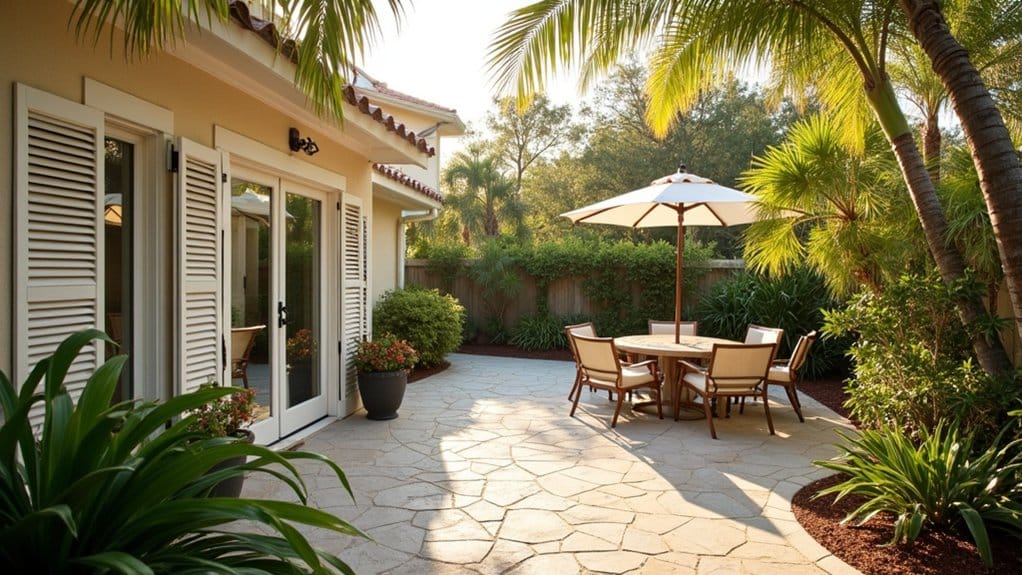
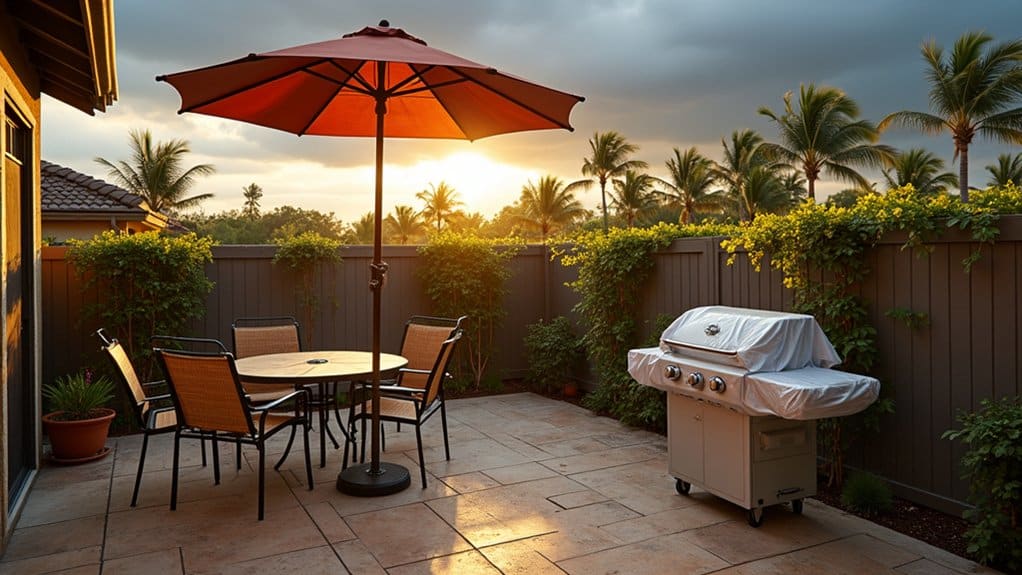
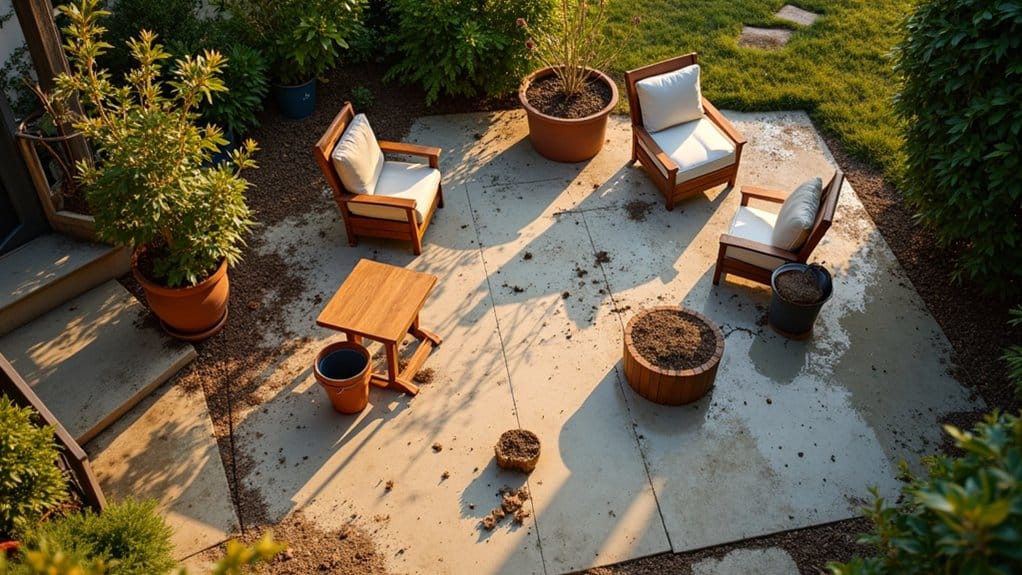
An outdoor kitchen goes beyond a standalone grill, it’s an integrated cooking and entertaining space with built-in appliances, weather-resistant storage, and durable countertops designed for year-round use. You’ll gain workflow efficiency, expanded menu options, and a gathering spot that keeps guests engaged. With 54% of buyers willing to pay a premium for homes with outdoor kitchens, the investment often pays off. The right layout, materials, and features determine whether it’s worth it for your space.
What Counts as an Outdoor Kitchen?
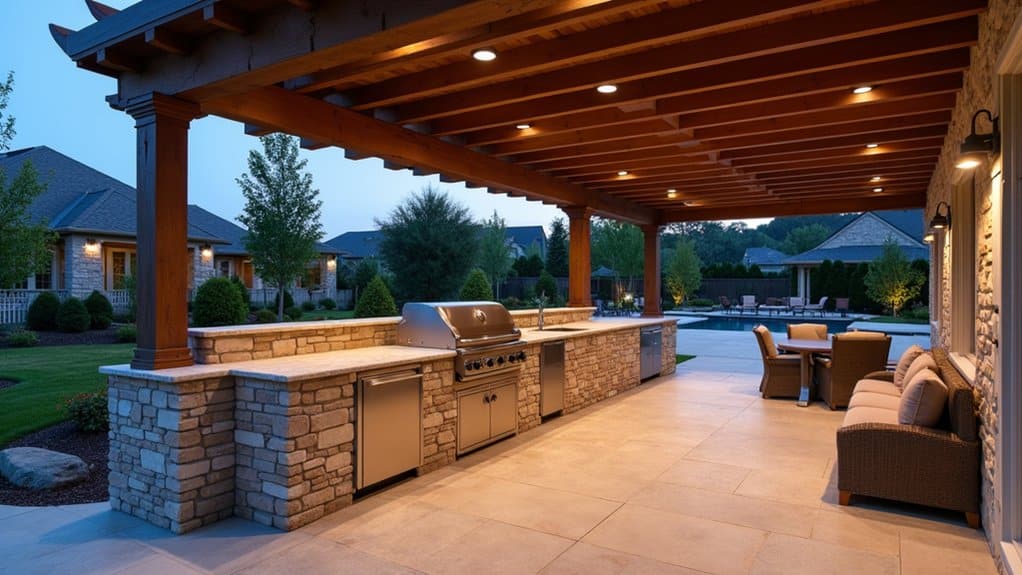
While a standalone grill and patio table might serve basic backyard cooking needs, an outdoor kitchen takes your culinary space to an entirely different level. You’re creating a dedicated cooking and dining area that replicates indoor conveniences, counter space, storage, and integrated appliances, all designed for open-air enjoyment.
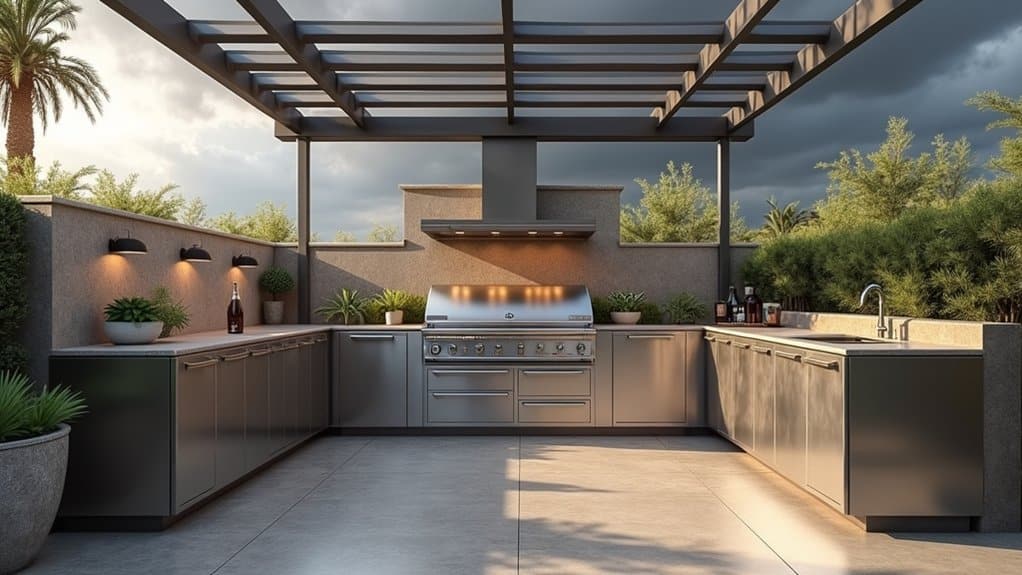
Your outdoor kitchen centers on a built-in grill surrounded by functional prep areas, serving zones, and seating options like bar stools or dining tables. Key design considerations include workflow efficiency, positioning near your indoor kitchen for easy ingredient access, and shade structures for year-round comfort. Proper lighting is also essential for both creating ambiance and ensuring safe food preparation after dark.
Weather resistance requirements demand durable materials: granite countertops, stainless steel fixtures, marine-grade polymers, and rust-resistant sinks. Frames typically feature concrete, aluminum, or wood construction clad in stone, brick veneer, or stucco. Many homeowners also incorporate a bar fridge or refrigerator nearby to keep beverages and ingredients cold, eliminating constant trips back to the indoor kitchen. Beyond convenience, this investment adds value to your home while maximizing your overall entertainment and living space.
Grill, Sink, Storage: What Every Outdoor Kitchen Needs
Now that you understand what qualifies as an outdoor kitchen, let’s break down the core components you’ll need to make yours fully functional.
Essential Components
| Component | Key Features |
|---|---|
| Built-in Grill | Gas-powered, smart home integration, remote control |
| Sink | Dedicated faucet, plumbing rough-in ready |
| Storage | Weather-resistant cabinets, stainless steel construction |
| Countertop | Granite (heat-resistant to 1,200°F), concrete options |
| Refrigeration | Outdoor-rated units, ice makers |
Your grill serves as the centerpiece, while integrated storage solutions like marine-grade cabinets withstand heat, moisture, and UV exposure. Powder-coated finishes give you wood aesthetics without sacrificing durability. The stainless steel cabinet segment is expected to witness significant growth as homeowners increasingly prioritize weather-resistant materials.
Don’t overlook customizable flooring options that complement your layout. Even compact 100-200 square foot spaces can accommodate sink capabilities, starting around $8,000-$15,000. Prioritize stainless steel for corrosion resistance and seamless appliance integration. For coastal locations, upgrading to AISI 316 stainless steel provides superior protection against salt air and harsh marine environments.
Best Outdoor Kitchen Materials for Sun, Rain, and Heavy Use
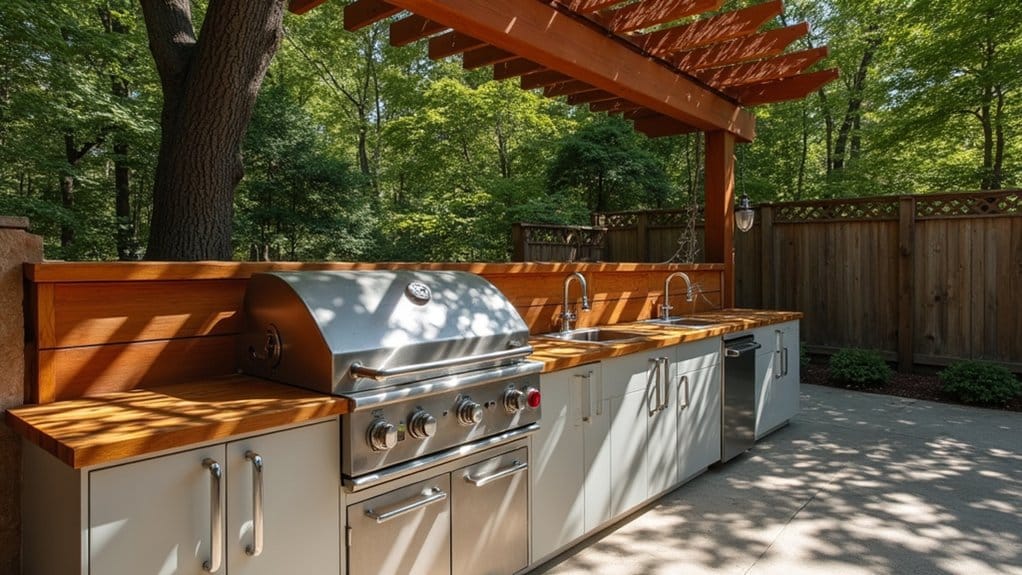
Because your outdoor kitchen faces constant exposure to UV rays, moisture, and temperature swings, selecting the right materials determines whether your investment lasts five years or twenty-five.
For frames and structural components, 316 marine-grade stainless steel delivers superior performance as one of the most corrosion resistant materials available, especially in coastal environments. The molybdenum content in 316 stainless steel is what gives it enhanced resilience against salt-air corrosion. Pair this with weatherproof cabinetry made from HDPE, it’s 100% waterproof and won’t warp, rot, or attract insects. Unlike PVC or painted foam resin alternatives, HDPE cabinets can withstand pressure washing, making deck cleaning worry-free.
Marine-grade stainless steel and HDPE cabinetry form the ultimate weatherproof foundation for outdoor kitchens that last decades.
Your countertop selection matters equally. Porcelain slabs resist scratches, heat, and UV damage without requiring sealing. Granite offers timeless appeal but needs periodic maintenance. Concrete provides customization options yet demands proper reinforcement and sealing. For a premium wood cabinet option, teak contains natural protective oils that resist moisture and insects, though it requires periodic oiling to maintain its appearance.
Choose materials based on your climate, budget, and maintenance tolerance to maximize longevity.
Outdoor Kitchen Layouts From Simple Islands to U-Shapes
Whether you’re working with a compact deck or an expansive backyard, your layout choice shapes how efficiently you’ll cook, serve, and entertain outdoors.
Simple Islands deliver layout versatility for tight spaces. Position your grill centrally with counter space on both sides, and you’ve got all four work zones in one streamlined run.
L-Shaped Layouts create natural work triangles between your fridge, sink, and grill while separating cooking from prep areas. This popular configuration supports ideal workspace distribution across two connected legs. Locating your refrigerator next to the sink optimizes workflow and keeps food prep seamless.
Galley Layouts use parallel islands to maximize narrow areas, letting multiple cooks work simultaneously without bottlenecks. This configuration works especially well when you integrate specialized zones like a beverage area or dessert station between the parallel counters.
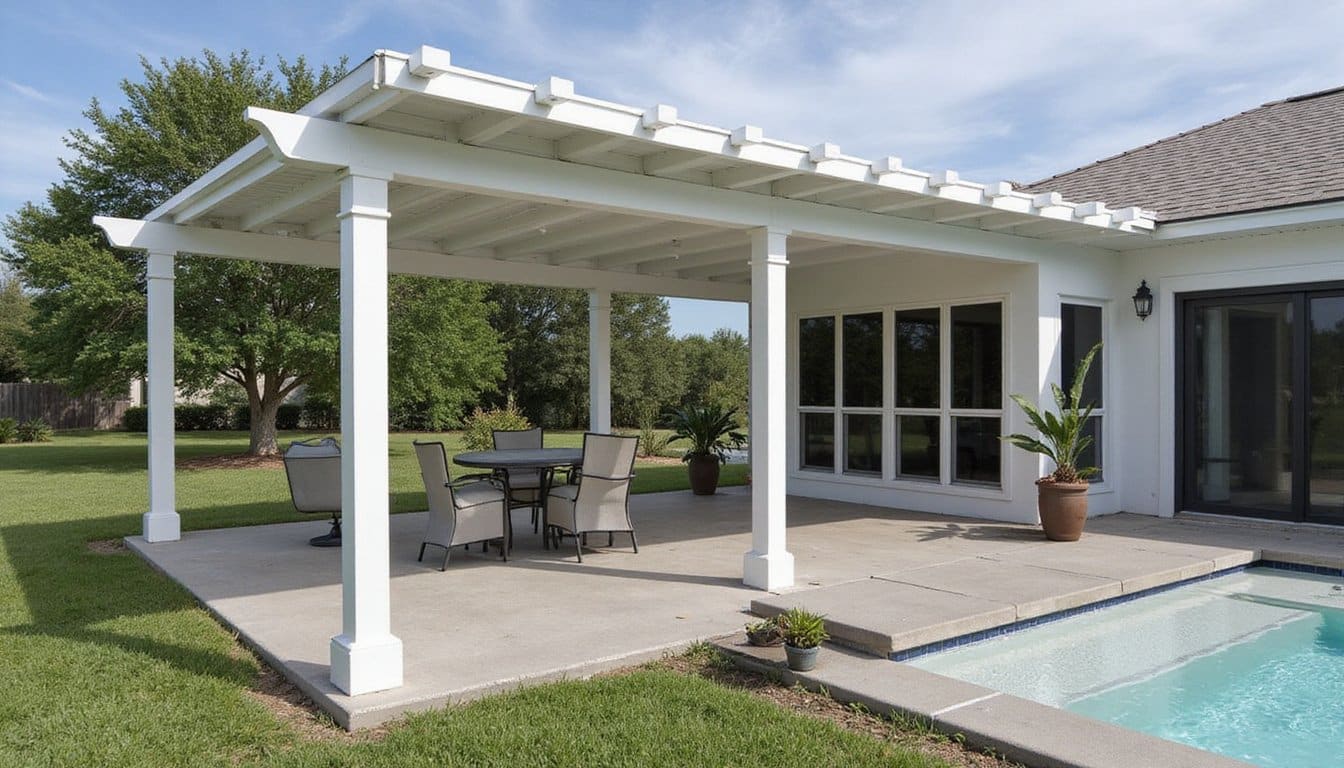
U-Shaped and G-Shaped Layouts offer maximum counter space for serious entertainers. You’ll gain enclosed gathering areas perfect for bar seating, though these configurations require larger footprints and bigger budgets to execute properly. For roof coverage over these larger layouts, consider options like a pavilion, pool house, or pergola to protect your investment from the elements.
Who Gets the Most Value From an Outdoor Kitchen?
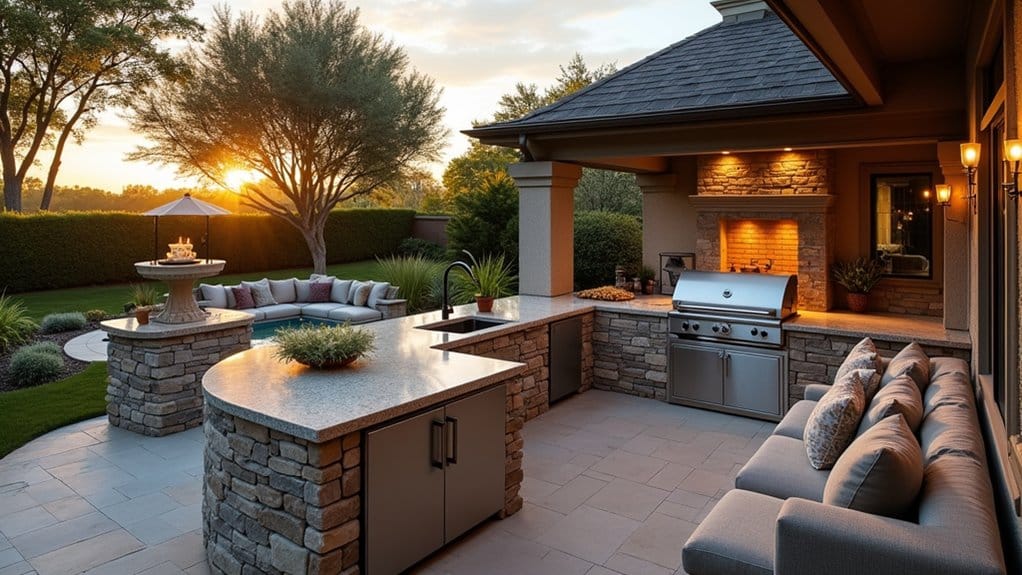
If you love hosting weekend cookouts or neighborhood gatherings, an outdoor kitchen transforms your backyard into a functional entertainment hub that keeps guests comfortable and conversation flowing. You’ll maximize your investment when the space serves double duty, accommodating both intimate family dinners and larger social events throughout the year. For homeowners focused on resale value, a well-designed outdoor kitchen appeals to today’s buyers who prioritize lifestyle upgrades and seamless indoor-outdoor living. The growing demand for outdoor living spaces has made these investments increasingly attractive to prospective buyers searching for homes with enhanced entertainment capabilities. With the outdoor kitchen market expected to reach $48,095.05 Million by 2032, this trend shows no signs of slowing down. Homeowners typically spend an average of $13,000 on outdoor kitchens, though those seeking premium features can invest significantly more for high-end designs.
Frequent Entertainers and Hosts
For homeowners who regularly host gatherings, an outdoor kitchen delivers exceptional value by transforming your backyard into a dedicated entertainment zone. You’ll find yourself lowering hosting workload with built-in refrigeration, sinks, and storage that eliminate constant trips indoors. Enhancing entertainment experience becomes effortless when guests mingle around bar seating while you cook.
What makes outdoor kitchens ideal for frequent hosts:
- Communal cooking areas let guests participate in meal prep, creating deeper connections
- Bar seating and fire pits keep everyone engaged throughout the evening
- Grills, pizza ovens, and smokers expand your menu options dramatically
- Pass-through windows create seamless indoor-outdoor flow for large get-togethers
With 37% of renovators prioritizing entertainment space improvements, you’re investing in a feature that maximizes every square foot of your backyard. Guests can socialize indoors or outdoors, giving you flexibility to accommodate any group size or weather condition. Research shows that 54% of buyers would pay a premium for a home with an outdoor kitchen, making this investment particularly smart for hosts who may eventually sell.
Home Resale Investors
When you’re purchasing property with resale in mind, an outdoor kitchen stands out as one of the smartest value-add investments you can make. The value proposition becomes clear when you consider that 83% of Realtors rank outdoor kitchens as a top resale feature, outperforming in-ground pools, which return just 7%.
| Investment Tier | Cost Range | Expected ROI |
|---|---|---|
| Basic | $5,000-$10,000 | 50% |
| Mid-Range | $10,000-$20,000 | 50%-75% |
| High-End | $30,000+ | 70%-100% |
Your cost benefit analysis should factor in location. In temperate climates like coastal California or the Southwest, ROI can reach 200%. You’ll maximize returns by choosing professional installation and corrosion-resistant materials that signal quality craftsmanship to future buyers.
How Much Does an Outdoor Kitchen Actually Cost?
Everyone planning an outdoor kitchen wants a clear budget picture before breaking ground. When budgeting for outdoor kitchen projects, you’ll find average installation costs vary dramatically based on your vision and location. The national average sits around $16,145, while Texas homeowners typically spend $5,000, $25,000.
Here’s what you can expect at each level:
- Basic island kits: $2,000, $10,000 for core builds
- Entry-level complete setups: $12,000, $20,000 with essential appliances
- Mid-range custom kitchens: $10,000, $35,000 for personalized designs
- Luxury builds: $40,000, $100,000+ with premium materials
Your per-linear-foot costs range $1,000, $1,800 depending on appliances and finishes. Installing on an existing patio with accessible utilities considerably reduces your total investment compared to full ground-up construction.
Do Outdoor Kitchens Increase Home Value?
You’ll find that outdoor kitchens deliver impressive returns, with ROI ranging from 55% to 200% depending on your location and the quality of materials you choose. High-end installations in warm climates consistently outperform traditional interior renovations, including minor kitchen remodels at 70% and bathroom updates at 60%. When you consider that 67% of male buyers and 54% of female buyers rank backyard retreats as a top desired feature, your outdoor kitchen becomes a powerful selling point that can push your property to market highs.
ROI on Outdoor Kitchens
Most outdoor kitchen investments recover between 55% and 200% of their cost at resale, making them one of the stronger performing exterior upgrades you can add to your property. Your lifecycle cost analysis should factor in regional climate, material quality, and long term maintenance considerations to maximize returns.
Here’s what drives your ROI potential:
- Warmer climates deliver 100-200% returns due to year-round usability
- Mid-range projects ($15,000-$40,000) recoup approximately two-thirds of your investment
- Premium materials like granite and stainless steel strengthen buyer appeal and value retention
- Outdoor kitchens outperform pools (7% ROI) and rival high-value interior renovations
You’ll see the strongest returns when you match material choices to your local climate and target buyer expectations in your market.
Buyer Appeal Factor
Buyer interest in outdoor kitchens has surged as homeowners prioritize functional entertainment spaces that extend their living areas beyond interior walls. You’ll find that residential market trends consistently show properties with outdoor kitchens commanding premium prices, with Zillow data revealing homes featuring upgraded outdoor spaces sell for 24.5% more than comparable properties.
Your location dramatically influences buyer appeal. Warmer climates like Texas, California, and the Southwest generate stronger demand due to year-round usability, while seasonal buyer considerations in cooler regions require heating elements to maximize appeal.
Quality matters to prospective purchasers. High-end materials like stainless steel and granite, combined with professional installation, transform your backyard into a multifunctional entertainment destination. Well-maintained outdoor kitchens with seamless indoor-outdoor shifts position your property as a lifestyle upgrade that stands out in competitive markets.
Outdoor Kitchen Mistakes That Waste Money and Space
Everyone who’s dreamed of an outdoor kitchen has also made at least one costly mistake along the way, and the most damaging one happens before you buy a single appliance. A lack of planning leads to mismatched elements, wasted square footage, and expensive renovations you’ll regret.
The most costly outdoor kitchen mistake happens before you buy a single appliance, poor planning destroys budgets fast.
Here are four budget-draining errors to avoid:
- Skipping the layout design, you’ll end up with appliances that don’t fit your space or lifestyle.
- Underestimating counter and traffic space, cramped prep areas and blocked walkways frustrate every cookout.
- Forgetting utility lines, last-minute gas, electric, or water installations blow budgets fast.
- Choosing indoor-grade materials, sun, rain, and humidity destroy cabinets and countertops not built for outdoor exposure.
You can sidestep these pitfalls by designing your layout first and selecting weather-resistant materials from the start.
How to Decide If an Outdoor Kitchen Is Right for You
How do you know if an outdoor kitchen makes sense for your home and lifestyle? Start by evaluating how often you entertain and whether you’d use the space year-round. If you host frequent gatherings, an outdoor kitchen keeps you connected to guests while cooking and expands your entertaining capacity.
Consider your backyard’s potential. Underused outdoor areas transform into functional extensions of your living space with the right design elements. You’ll gain dedicated cooking, storage, and dining zones that eliminate constant indoor-outdoor trips.
Factor in maintenance requirements and your local climate. Weatherproof features, heaters, and covers extend usability across seasons but add upfront costs. Finally, weigh the ROI, homes with outdoor kitchens sell faster and command premium prices. If these benefits align with your lifestyle, the investment likely pays off.
Frequently Asked Questions
Can I Use My Outdoor Kitchen During Winter Months?
Yes, you can use your outdoor kitchen during winter months with proper preparation. You’ll want to explore heating options like patio heaters or fire features to stay comfortable while cooking. Weatherproofing considerations include protecting appliances, winterizing water systems, and covering surfaces with durable, weather-resistant covers. By maximizing your space’s functionality year-round, you’re getting more value from your investment while enjoying outdoor cooking even in colder temperatures.
Do Outdoor Kitchens Require Special Permits or Building Codes Approval?
You’ll likely need building permits for your outdoor kitchen, especially if it involves electrical, plumbing, or gas connections. Local zoning regulations vary considerably, your HOA may also require approval before construction begins. Minor work like cabinet installation often skips the permit process, but major utility connections trigger inspections. Check your local government website for specific requirements, and always call 811 before digging to mark utility lines. This guarantees your space-maximizing design meets all safety codes.
How Often Should Outdoor Kitchen Appliances Be Professionally Serviced?
You should schedule professional servicing for your outdoor kitchen appliances every six months for grills and annually for gas lines and built-in units. Annual maintenance extends appliance life by up to 50%, maximizing your investment. Periodic inspections catch leaks, wear, and potential hazards before they become costly repairs. If you use your outdoor kitchen heavily during summer or live in coastal climates, you’ll benefit from more frequent professional attention.
Can Outdoor Kitchens Be Covered by Homeowners Insurance Policies?
Yes, your outdoor kitchen can be covered under homeowners insurance coverage, typically falling under Coverage B: Other Structures. You’ll receive up to 10% of your dwelling coverage limit automatically. However, you should review your insurance policy provisions carefully, standard policies often exclude full replacement value. Contact your insurer before installation to adjust limits appropriately and consider an Outdoor Property Coverage Endorsement for enhanced protection against perils like hail damage to custom features.
What Lighting Options Work Best for Nighttime Outdoor Cooking?
You’ll want to layer your lighting for ideal nighttime cooking. Install bright task lights 10-15 feet above your grill and under-cabinet LED strips for prep areas. Add string lights overhead for warm ambiance while dining, and incorporate path lighting around your space for safety and visual flow. Dimmable controls let you adjust brightness based on your needs, creating both functional workspace and inviting atmosphere throughout your outdoor kitchen.