
You can patch a concrete patio without tearing it out. First, chisel away loose, crumbling concrete until you reach solid material beneath. Clean the area thoroughly, then vacuum or blow out dust for proper bonding. Widen cracks slightly to improve grip. For hairline cracks, apply flexible sealant; for openings over 1/8 inch, press in sanded patch compound and use backer rod on deeper voids. Cure and seal properly. The right approach depends on your damage.
Key Takeaways
- Patch without demolition by chiseling out damaged areas and applying fresh material to solid concrete beneath the surface.
- Confirm damage is repairable: localized cracks and shallow spalls patch well, but severe settlement or shifting requires full replacement.
- Prepare the surface by removing loose concrete, crumbling edges, and dirt, then vacuum or blow out dust for proper bonding.
- Match material to damage: flexible sealant for hairline cracks, sanded patching compound for openings wider than 1/8 inch.
- Cure the patch properly and seal after full cure to prevent shrinkage cracking and protect against water and weathering.
How do you patch concrete without removing the old patio
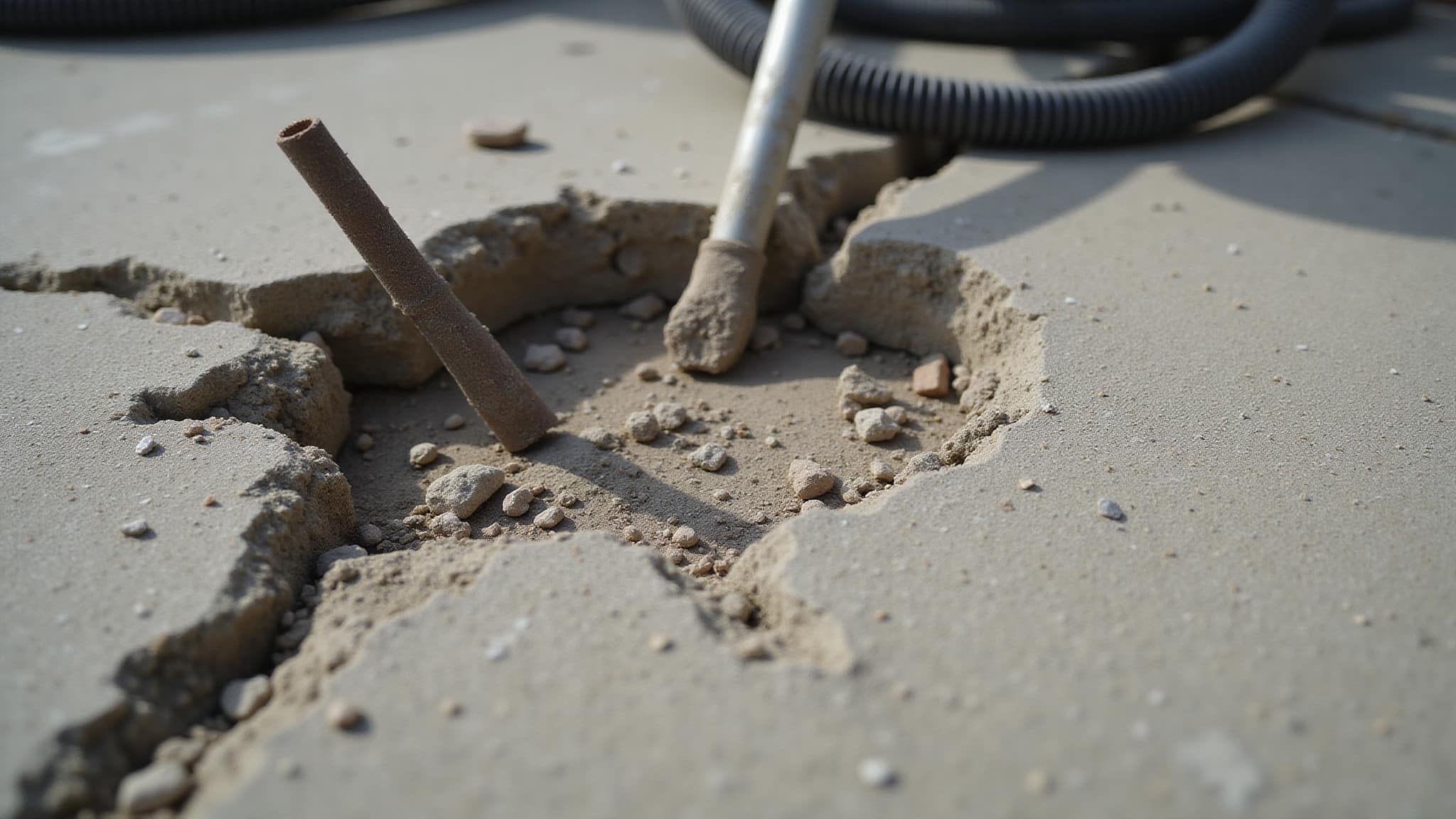
You can patch concrete without removing the old patio by chiseling out the damaged areas and applying fresh patch material that bonds to the solid concrete beneath. First, confirm that your patio’s damage is actually repairable. Localized cracks and shallow spalls patch well, but severe settlement, widespread heaving, or a slab that’s shifting points to replacement instead. After you’ve confirmed the slab’s sound, everything hinges on surface preparation. Chisel out loose concrete, crumbling edges, and dirt, then vacuum or blow out the dust so your patch bonds to solid material. Widening a crack slightly at the surface improves the mechanical bond. For hairline cracks, use flexible sealant. For openings over 1/8 inch, press in patching compound, adding backer rod on deeper voids. If cracks, pits, or wear cover the whole patio, apply a bonded overlay to a dampened slab. Trowel, feather, and cure each repair properly.
When can you resurface instead of replacing old concrete
You can resurface instead of replacing when the damage is cosmetic and the slab underneath stays structurally sound. Resurfacing works when many pits, shallow spalls, or surface defects affect the patio, but the concrete isn’t shifting, heaving, or settling. If you’re only fighting worn texture and minor flaws, an overlay covers the whole surface without slab removal. But if you spot active structural cracks, movement, or deep deterioration, patching and resurfacing won’t hold.
Choose resurfacing when:
- You’re tired of staring at a pitted, faded slab that still sits solid and level.
- You want a fresh finish without the cost and mess of demolition.
- You’d rather protect a sound slab than gamble on failing, unstable concrete.
What materials and tools do you need to patch over concrete
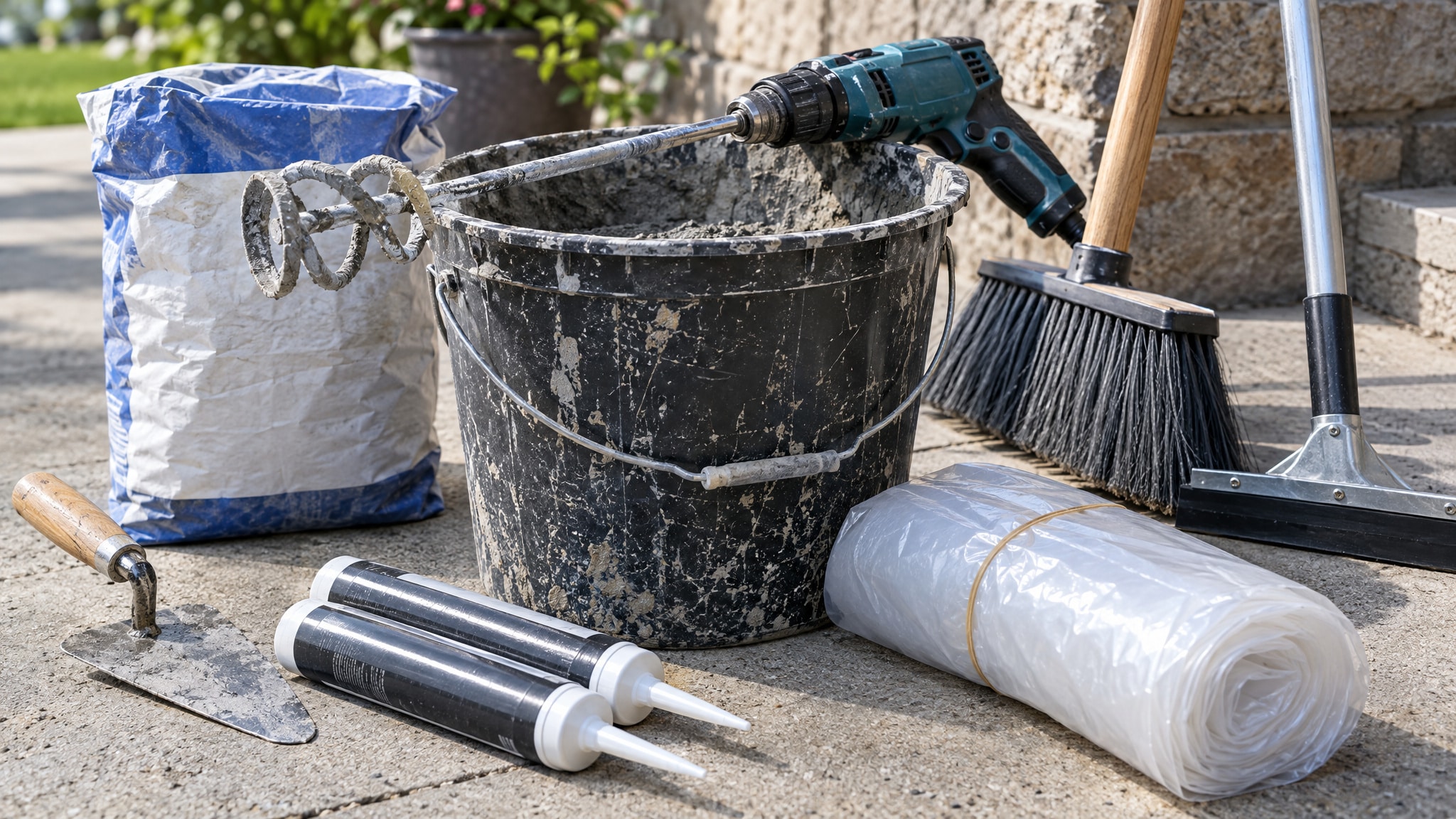
To patch over concrete, you need cleaning gear: a hammer, cold chisel, wire brush, and a vacuum or blower to clear dust from the crack. For the repair itself, match the material to the damage, polyurethane or silicone sealant for hairline cracks, sanded concrete patch compound for wider openings, and backer rod for deep gaps. Keep a bucket, drill with a mixing paddle, trowel, and squeegee ready. For broad damage across the patio, add a resurfacer and a broom for texture. Round out the kit with water, plastic sheeting for curing, and sealer for later.
How do you prepare the old patio surface for patching
Prepare the old patio surface by chiseling out any loose or crumbling concrete until you hit firm material. Use a hammer, chisel, or wire brush to strip away dirt and flaking edges, then vacuum or blow out the dust so your patch bonds to solid concrete. Pressure washing lifts embedded grime, but let the slab dry completely before you apply anything. For better mechanical grip, widen each crack slightly at the surface.
- Don’t rush this step, skipping cleanup guarantees a patch that pops loose within weeks.
- Feel the satisfaction of a roughened, dust-free surface that grabs new material tight.
- Protect your investment by exposing sound concrete instead of patching over weak, failing edges.
Clean, sound, roughened wins.
What are the steps to patch concrete over an existing patio
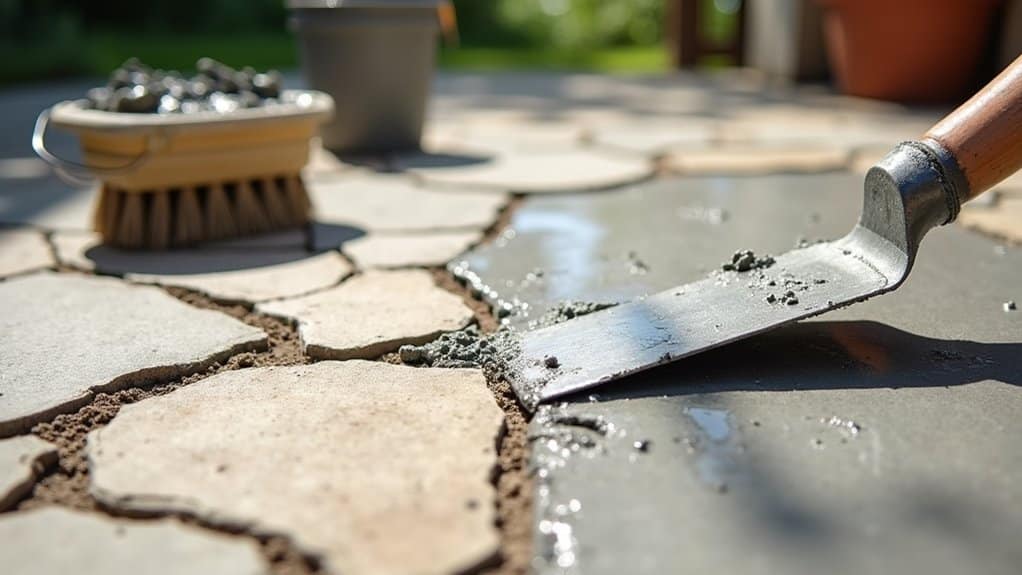
Match the repair method to the damage you’re facing. For hairline cracks, apply a polyurethane or silicone-based sealant directly into the opening. For cracks over 1/8 inch, press a concrete patching compound firmly into the gap, using backer rod first on deeper or wider openings to reduce filler depth. Rebuild small spalls and chipped edges with cement-based patch mix, working it flush with the surrounding surface. For broad cosmetic damage, dampen the slab and spread a bonded overlay or resurfacer across the area. Mix each product per package directions, place it immediately, and trowel or squeegee it into position. Feather the edges so the repair blends smoothly into the existing patio.
How do overlay and patch products compare on cost
Patch products cost less than overlays for localized damage because you treat small areas, while overlays cost more upfront since you cover the entire slab. Coverage area dictates your product choice. Patch compounds and sealants target isolated cracks and spalls, so you buy small quantities. Overlays and resurfacers cover the entire slab, so you scale material to square footage. Match the product to the damage extent, and you won’t overspend.
| Product Type | Best Use | Cost Driver |
|---|---|---|
| Crack sealant | Hairline cracks | Linear feet |
| Patching compound | 1/8″–1″ cracks, spalls | Volume filled |
| Overlay/resurfacer | Whole-patio defects | Square footage |
For localized damage, patch products cost less since you treat small areas. Overlays cost more upfront because you’re covering everything, but they’ll restore broad cosmetic wear that patching can’t address efficiently across a large surface.
How do you make the patched concrete last
Making patched concrete last depends on how you cure it, not just how you place it. Fresh patches need protection from drying too fast, which otherwise causes shrinkage cracking that undoes your work. Control the cure, then seal for long-term durability against water and weather.
- Slow the cure. Apply light moisture, plastic sheeting, or shade so the patch doesn’t flash-dry and crack right before your eyes.
- Wait before walking. Give many repairs at least 24 hours before foot traffic, since early loading fractures material that isn’t fully set.
- Seal after full cure. Lock out water intrusion and weathering so your repair survives seasons instead of failing months later.
Match texture during finishing, then let the product reach full strength undisturbed.
Conclusion
Patching a concrete patio is worth doing when the slab is still sound and the damage is cosmetic, like localized cracks, shallow spalls, or worn texture. Prep is what makes it hold: chisel out loose material, clean and roughen the surface, match the product to the crack width, then cure and seal before use. For broad surface wear, a bonded overlay restores the whole patio at once. But when the slab is shifting, heaving, or cracking again after repairs, patching won’t last, and replacing the patio becomes the smarter investment.
Is Your Patio Past Patching?
Patching buys time, but a concrete patio that keeps cracking from slab movement eventually needs more than a surface fix. At Innovative Outdoor Living, we replace worn, failing concrete patios with durable paver patios set over a properly prepared base. See our paver patios built to handle Florida weather. Contact us or call (561) 594-1495 to talk through replacing your patio.
Frequently Asked Questions
Can You Patch Concrete in Cold or Freezing Weather?
You shouldn’t patch concrete in freezing weather because fresh repairs need protection from drying and setting problems. Cold temperatures slow curing and weaken the bond, while freezing can damage the material before it gains strength. Wait for milder conditions, ideally above 50°F, so your patch cures properly. If you must repair now, use cold-weather products, shield the area, and keep it from freezing until it’s fully cured for reliable, lasting results.
Will a Patched Patio Match the Original Concrete Color?
You won’t get a perfect color match, since fresh patch material almost always cures lighter or slightly different than aged concrete. To blend it, you can match the surrounding texture with a broom or trowel finish, feather the edges, and sand lightly after curing. Applying a sealer over the whole patio helps even out the appearance. For decorative slabs, a stampable overlay restores color and finish more reliably than spot patching.
How Long Does a Concrete Patch Typically Last?
You’ll typically get several years to a decade or more from a well-executed patch, depending on how you prep and cure it. If you clean the surface thoroughly, press the compound firmly into sound material, and protect it during curing, you’ll extend its life. Sealing afterward helps resist water and weathering. But remember, patches won’t hold up over active movement or structural failure, those conditions demand full slab replacement instead.
Can You Paint or Stain Over Patched Concrete?
Yes, you can paint or stain over patched concrete, but you’ll need to wait for a full cure first, many products require at least 24 hours before foot traffic, and coatings often demand longer. Make sure the patch is clean, dry, and sound so the finish bonds well. Feather and texture-match the patch beforehand, since color coatings can highlight uneven repairs. Seal afterward to protect against water intrusion and weathering.
Do You Need a Permit to Resurface a Patio?
You typically don’t need a permit to resurface a patio, since you’re applying an overlay to an existing slab without altering its structure or footprint. Cosmetic work like patching, resurfacing, or sealing usually falls outside permit requirements. However, if you’re expanding the slab, changing drainage, or addressing structural failure that requires replacement, you’ll likely need one. Check your local building department first, because code requirements vary by jurisdiction.