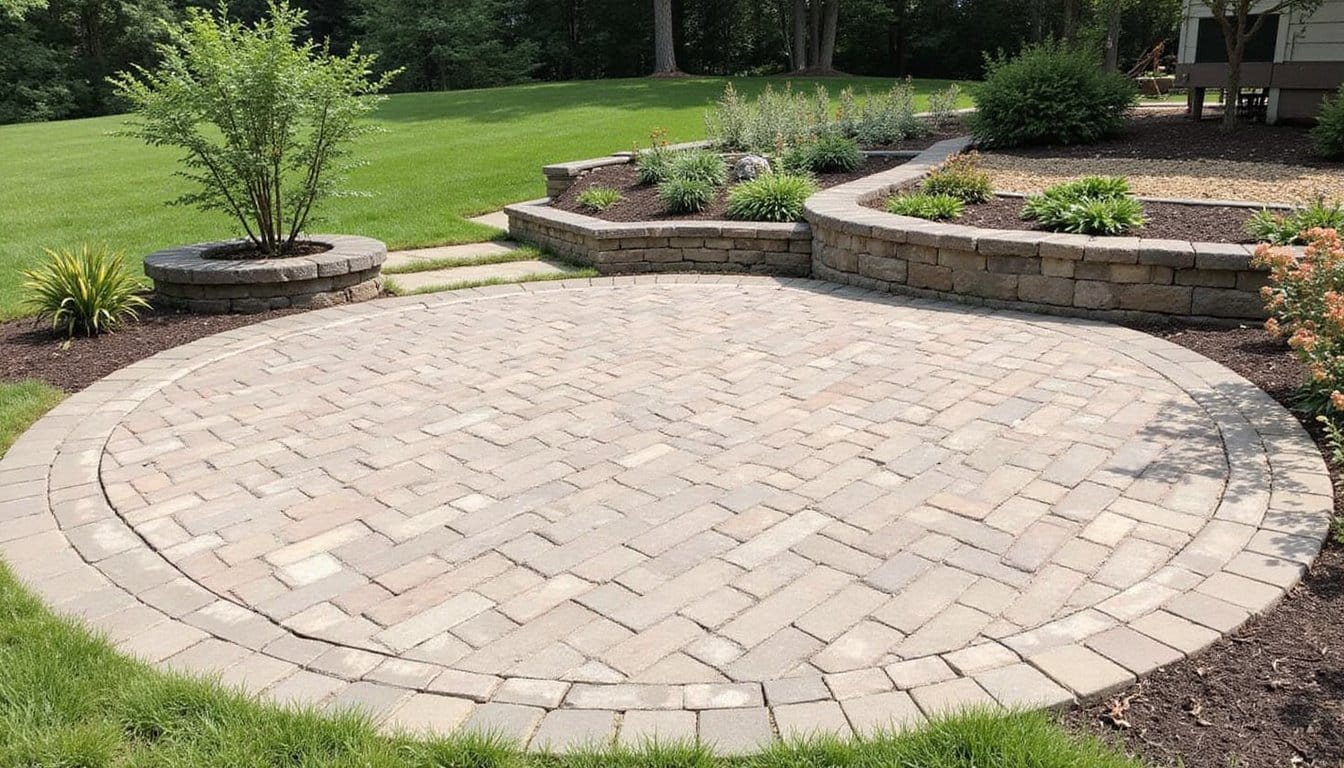
Your paver pattern sets the entire tone of your backyard, from the interlocking zigzag of herringbone to the rustic charm of cobblestone borders. You’ll find clean symmetry in basketweave layouts, easy DIY appeal with running bond, and eye-catching rotational detail in pinwheel designs. Radial patterns frame fire pits beautifully, while material choices like natural stone, concrete, or porcelain shape both aesthetics and budget. Each idea below breaks down style, cost, and the best fit for your space.
Herringbone Paver Pattern for High-Traffic Patios
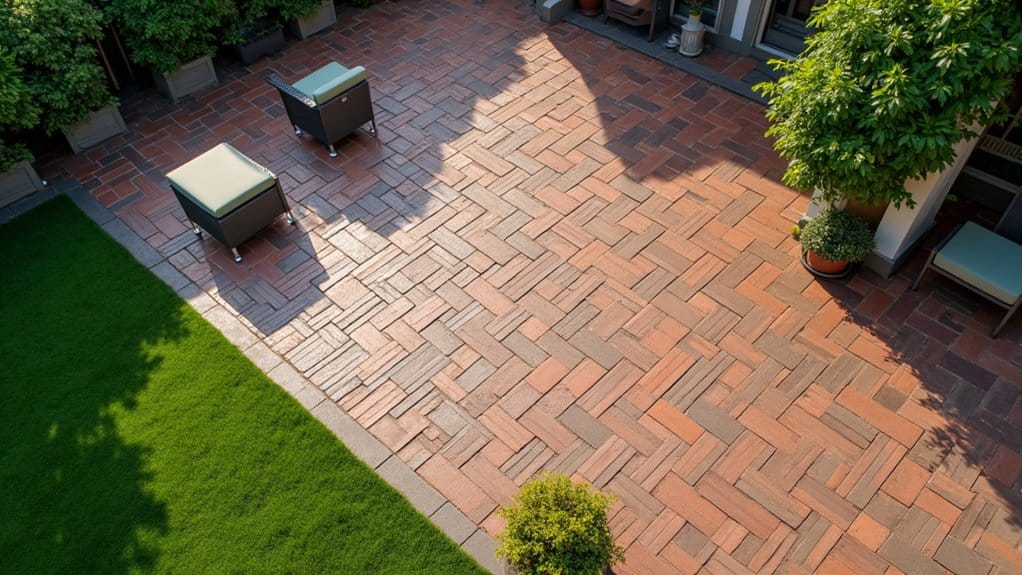
You’ll achieve a striking linear gradient effect by blending complementary tones across the layout. Use standard 200x100mm brick or concrete pavers for precise interlocking fit. Frame your design with a solid border to prevent lateral drift, and you’ve got a slip-resistant, durable surface with unmistakable geometric character. The interlocking design distributes weight evenly, making this pattern ideal for high-traffic patios that need to withstand heavy foot traffic and outdoor furniture loads.
Basketweave Patio Pavers for a Clean, Woven Look
When you pair symmetrical woven paver pairs in a classic basketweave layout, you’ll create a rhythmic, interlocking surface that draws the eye across your patio with effortless movement. Opting for a modern grout line depth, slightly recessed rather than flush, adds crisp shadow lines that sharpen each perpendicular shift and emphasize the pattern’s geometric structure. This combination gives you a clean, textile-inspired finish that works equally well with tumbled brick, smooth concrete, or natural stone pavers. Beyond its visual appeal, the basketweave’s interlocking design distributes weight evenly, making it a durable choice for patios that support heavy foot traffic or outdoor furniture.
Modern Grout Line Depth
Although basketweave pavers already create a striking woven texture through their alternating horizontal and vertical orientation, the grout line depth you choose determines whether that pattern reads as rustic or unmistakably modern. Achieving grout line proportionality means matching joint depth to your paver size ratio, typically 1:2 or 2:3, while maintaining proper paver elevation across the entire surface. This eye-catching pattern adds a visual flair to a patio, and refining the grout depth only enhances that appeal further.
- Opt for 1/4 to 1/2 inch depth for sleek, contemporary definition between interlocking units.
- Use 1/8 inch shallow lines to produce a near-seamless woven effect.
- Fill joints with polymeric sand to lock pavers and resist shifting under foot traffic.
- Choose color-matched sand to amplify the basketweave’s dimensional texture.
- Compact your sand base to 95% density before laying, ensuring consistent depth throughout the pattern.
Symmetrical Woven Paver Pairs
The pattern’s strength lies in its visual intrigue without complexity. You won’t need a single cut paver, yet the alternating pairs produce dimensional texture that breaks up large expanses effectively. For enhanced depth, rotate the entire layout 45 degrees. The interlocking design also distributes weight efficiently, supporting heavy foot traffic and outdoor furniture. It’s a clean, structured look that pairs naturally with rustic or vintage aesthetics.
Running Bond Paver Pattern for Easy DIY Installation
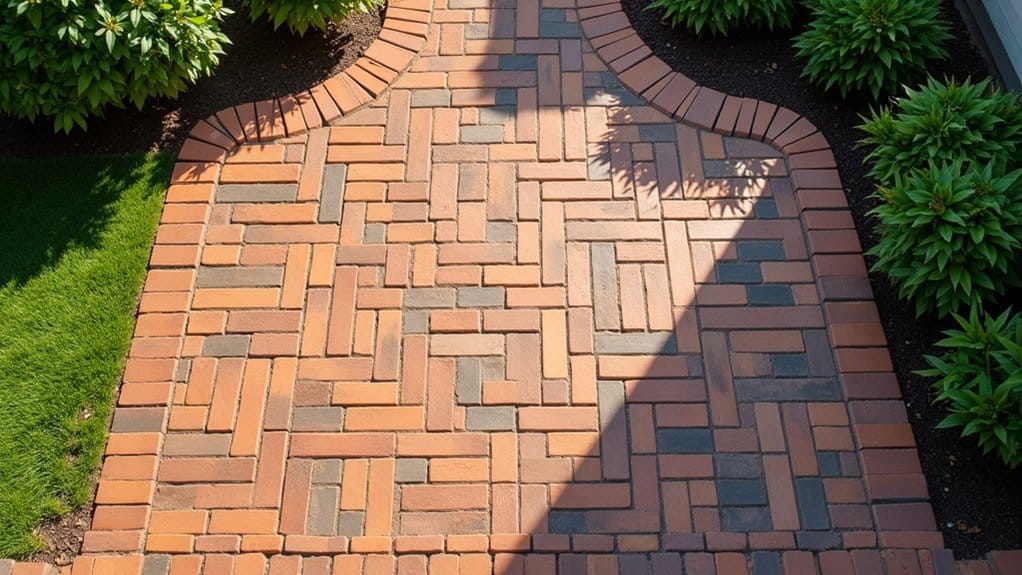
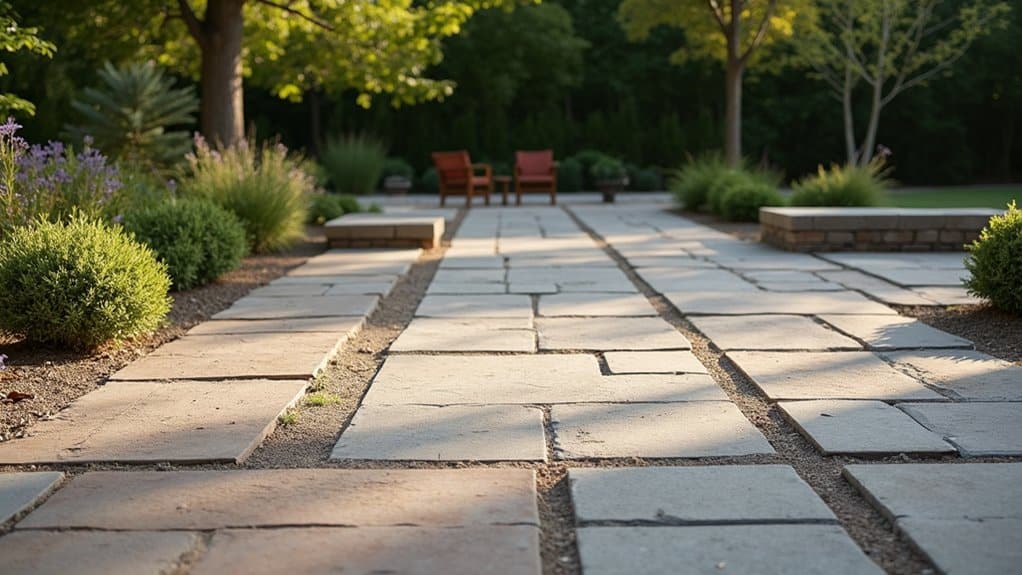
Among the most approachable paver layouts for first-time installers, the running bond pattern arranges rectangular pavers in staggered rows, each offset by half a paver length, to produce a clean, rhythmic surface that echoes the classic subway tile look.
- Minimal cutting required: Pair complementary stones like Half Hollands with Holland Stone to eliminate cuts entirely.
- Strong load-bearing design: The I-shaped joint lines deliver superior structural integrity for driveways and high-traffic walkways.
- Versatile material options: You can explore paver thickness variations and unique paver shapes, combining rectangles, squares, or mixed sizes.
- Optimal orientation: Install pavers width-wise on driveways for maximum stability.
- Alignment control: Pull string lines every couple of feet over joints to keep your rows crisp and consistent.
Cobblestone Paver Design for Rustic Backyard Charm
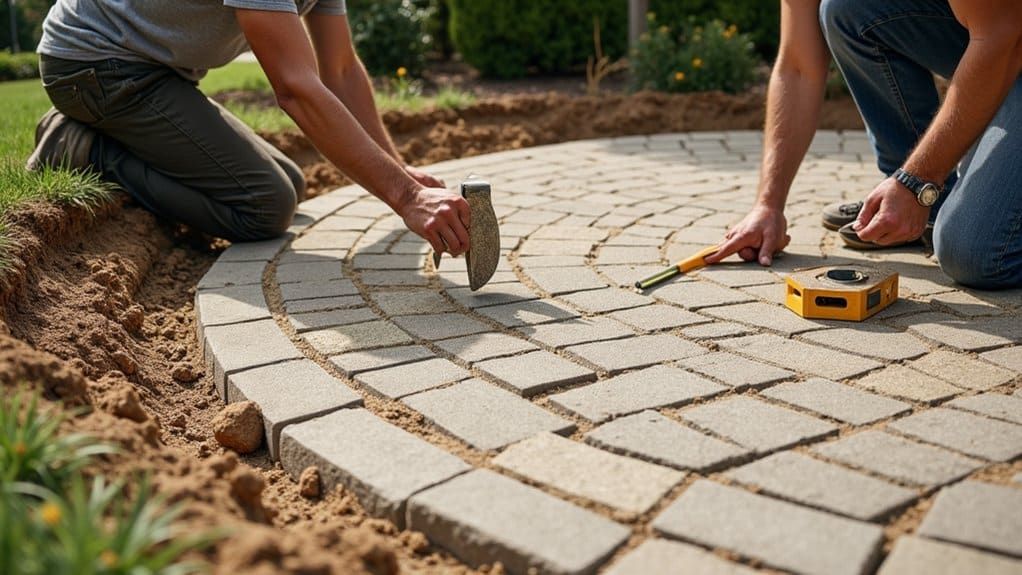
Few paver styles evoke old-world character quite like cobblestone, and it’s a design choice that instantly transforms a plain backyard into a textured, European-inspired retreat. You’ll want to pour a concrete foundation for your cobblestone borders first, then infill the interior with pavers and decorative pebbles for visual depth.
Consider pairing with natural stone accents to amplify that rustic aesthetic. Using contrasting border materials, like smooth-cut pavers against rough cobblestone, creates striking definition. Fill joints with pea gravel or angular limestone to maintain the aged, organic look.
After placement, check each section for level and tap stones into position with a rubber mallet. Cut custom shapes with a concrete saw to achieve curved pathways or medallion patterns that feel authentically weathered.
Pinwheel Patio Pavers for a Striking Focal Point
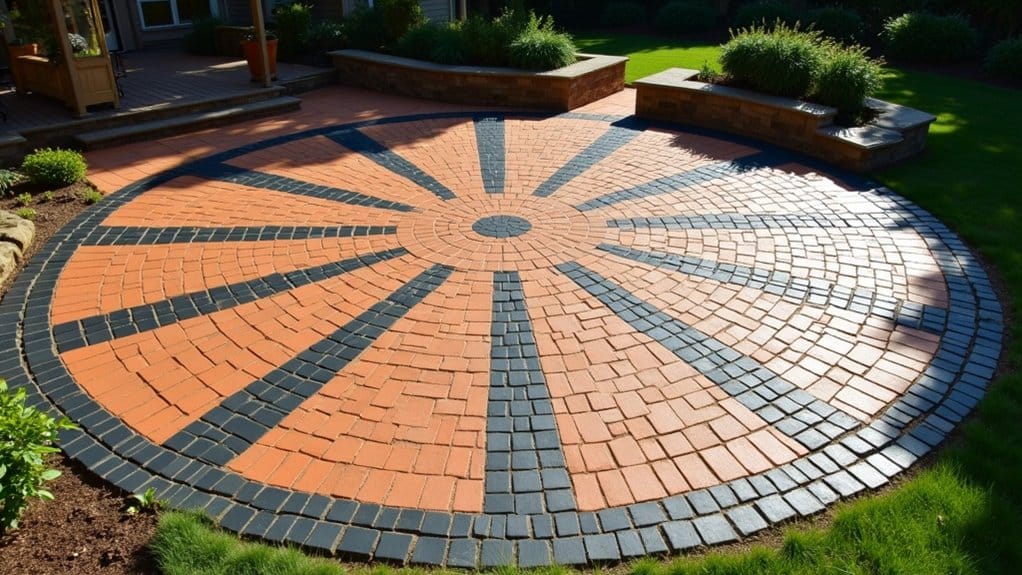
When you’re looking to elevate a patio beyond standard grid layouts, the pinwheel pattern delivers immediate visual impact through its rotational geometry. A central square paver anchored by surrounding rectangular pavers creates a rotor-like effect that draws the eye. This design offers intricate visual appeal through its symmetry and dynamic movement, making smaller spaces feel balanced and expansive.
The pinwheel pattern transforms ordinary patios with rotational geometry, turning simple pavers into a dynamic, eye-catching focal point.
- Combines small and large stone or brick pavers for layered texture
- Functions as a decorative focal point in intimate, low-traffic areas
- Pairs earth-toned concrete or natural stone with rotational symmetry
- Complements both modern and traditional backyard aesthetics
- Requires brick-cutting precision for half-brick centers in every two pinwheels
Be aware of diy installation challenges, this pattern demands exact measurements and professional-level cutting skills to achieve its signature interlocking design.
Radial Paver Patterns for Fire Pits and Curved Spaces
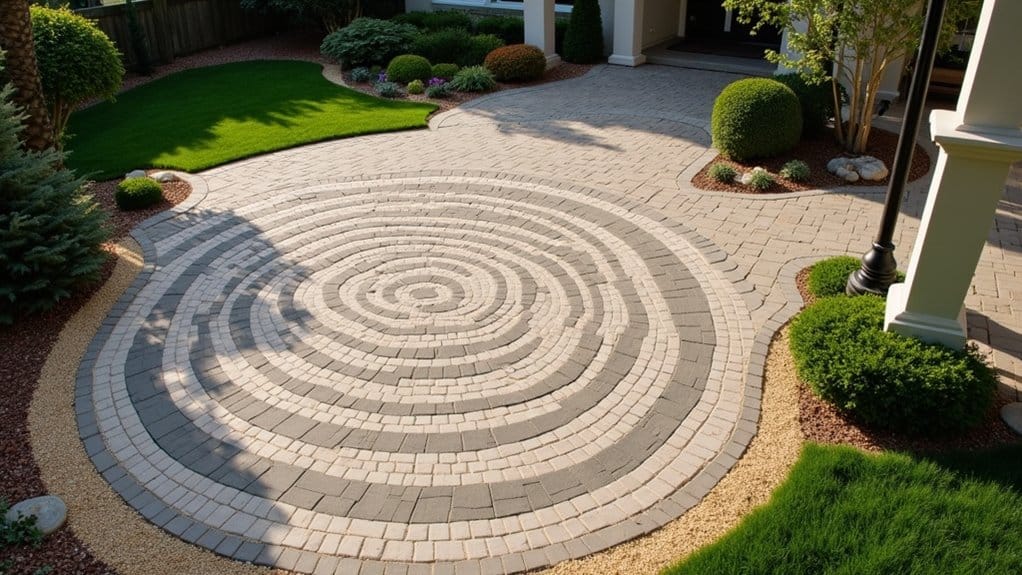
How do you transform a circular fire pit area into a cohesive design statement? Start by anchoring your layout with a center paver, then radiate outward using irregularly textured blocks in varied sizes. Position a 50-inch fire pit within a 12.5-foot circle, adding a 6-8 inch contrasting border ring for depth. This approach naturally supports curved seating arrangements and a flowing backyard layout.
| Design Element | Specification |
|---|---|
| Fire pit height | 16 inches (stacked, glued courses) |
| Total patio diameter | 14 feet with border ring |
| Drainage slope | 2.75 inches over 14-foot run |
| Safety clearance | 10-20 feet from structures |
Use heat-resistant pavers, compact a gravel base, and lock joints with polymeric sand.
Matching Paver Patterns to Your Space, Style, and Budget
Your patio’s dimensions should guide your pattern choice, smaller spaces benefit from classic rectangular layouts like Running Bond or Basketweave that create visual order without overwhelming the area, while larger patios can handle the geometric complexity of Herringbone or Ashlar Modular designs. Aligning your pattern with your home’s architectural style, whether that’s a Colonial Revival calling for brick in Running Bond or a Modern Farmhouse suited to sleek porcelain in Herringbone, guarantees your outdoor space feels like a natural extension of your home. Simpler patterns like Stack Bond minimize cutting and labor costs, making them ideal for budget-conscious projects, while intricate layouts demand more material, time, and precision, so you’ll want to weigh visual impact against installation investment.
Space Size Considerations
Every patio tells a different story depending on its footprint, and choosing the right paver size is the first step toward making that story feel intentional. Proper paver sizing transforms awkward dimensions into cohesive designs, while material durability secures your layout withstands daily use and seasonal shifts.
- Small yards (under 100 sq ft): Use 4″ x 8″ or 6″ x 6″ pavers to create an illusion of spaciousness with intricate herringbone patterns.
- Medium patios (100, 200 sq ft): Choose 6″ x 9″ or 8″ x 8″ formats that balance versatility across rectangular or circular layouts.
- Large spaces (300+ sq ft): Install 12″ x 12″ or 18″ x 18″ pavers for a sleek, modern aesthetic with fewer units and faster installation.
- Walkways: Maintain 3’, 4′ width for high-traffic flow.
- Circular areas: Calculate using πr² for accurate coverage.
Style Meets Budget
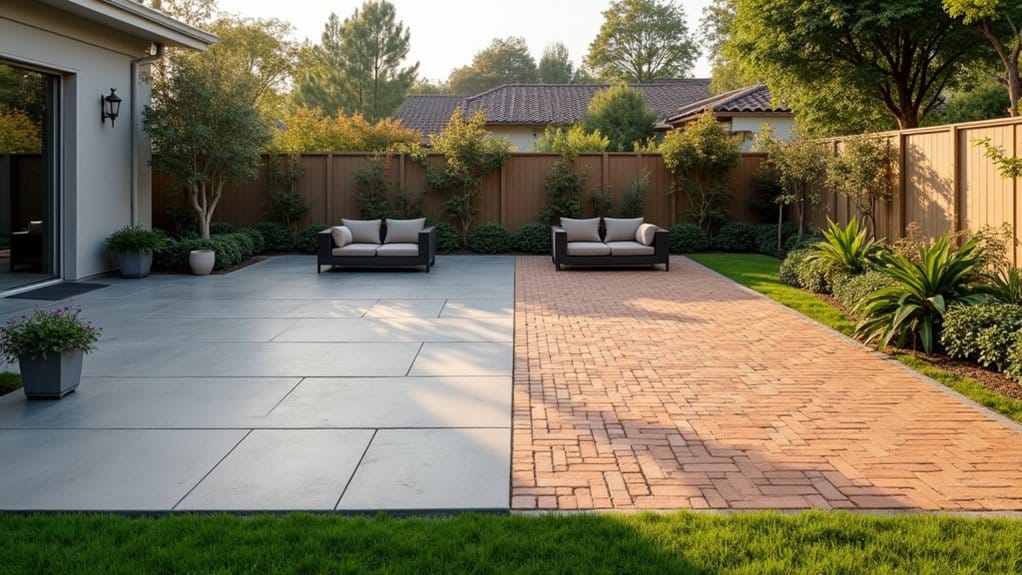
Balancing aesthetics with cost often determines whether a patio project stays on track or spirals into compromise. Your material selection directly shapes both the visual impact and the final invoice. Concrete pavers at $8, $16 per square foot deliver versatile texture finishes, from smooth contemporary slabs to tumbled old-world surfaces, without straining your budget.
If you’re drawn to richer character, natural stone‘s irregular edges and organic grain create undeniable depth, though you’ll invest $12, $30 per square foot. Porcelain offers a middle path, mimicking wood or stone aesthetics with slip-resistant practicality at $10, $22 per square foot.
Stick with straight-lay patterns to reduce labor costs, and reserve intricate designs for focal areas. This targeted approach lets you prioritize style where it matters most while controlling overall spend.
Pattern Complexity Costs
- Linear patterns eliminate excess waste and install fastest at $1,600, $4,800 for 200 square feet
- Herringbone and circular designs double labor costs, reaching $10,000 for equivalent spaces
- Paver cutting complexities with curves add up to 20% more in labor charges
- Multi-color borders and artistic flourishes increase time without expanding your patio’s footprint
- Interlocking pavers at $3, $6 per square foot suit repeatable geometric patterns beautifully
Match your vision to your budget by weighing pattern intricacy against material selection.
Frequently Asked Questions
How Often Should Patio Pavers Be Sealed to Maintain Their Appearance?
You’ll want to follow a proper maintenance schedule of resealing your patio pavers every 3-5 years to preserve their rich, vibrant tones. Periodic resealing keeps natural stone’s textured elegance and concrete’s crisp, clean lines looking freshly installed. If your pavers lose their luster, absorb water instead of beading it, or show fading color, it’s time to reseal. High-traffic areas and porous materials like travertine may need attention every 2-3 years.
What Type of Base Material Works Best Underneath Patio Pavers?
You’ll want to start with a compacted gravel base, those angular, crushed stone edges lock together beautifully, creating a rock-solid foundation that handles heavy foot traffic and drains flawlessly. Layer it 4, 6 inches deep, then top it with a stabilized sand base of coarse concrete sand for a smooth, level bedding that keeps your pavers perfectly aligned. This combination delivers lasting structural integrity while complementing any sophisticated design you’re envisioning.
Can Patio Pavers Be Installed Over an Existing Concrete Slab?
You can install patio pavers over an existing concrete slab, provided the surface is structurally sound and properly sloped for drainage. You’ll need a 1-inch bedding sand layer and secure perimeter borders to maintain stability. However, this method limits your pavers’ ability to accommodate uneven surfaces, since rigid concrete doesn’t flex like compacted gravel bases. There’s also potential for cracking over time as underlying slabs shift with temperature changes.
How Do You Prevent Weed Growth Between Patio Paver Joints?
You’ll prevent weed growth by choosing polymeric sand as your filler material between joints, it hardens when misted, creating a sleek, seamless finish that blocks seeds from taking root. Guarantee proper joint sand compaction by sweeping thoroughly into every gap before activating with water. Layer landscape fabric beneath your pavers during installation, and apply a penetrating sealer that enhances your paver’s rich tones while starving weeds of the moisture they need.
What Is the Average Lifespan of Different Patio Paver Materials?
Your pavers’ lifespan depends heavily on paver material composition. Natural stone lasts 50, 100+ years, with granite and bluestone exceeding a century. Clay brick pavers endure 40, 100+ years, their kiln-fired density preserving rich color indefinitely. Concrete pavers offer 25, 50 years, while porcelain’s ultra-dense body delivers 30, 50+ years with exceptional stain resistance. Each material’s unique paver surface texture also influences wear patterns, so you’ll want to match durability with your desired aesthetic.