

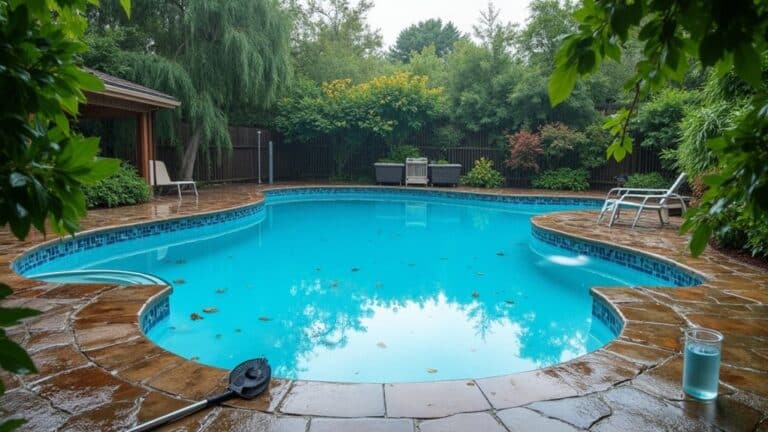


The best pool deck drain matches your deck’s slope, runoff volume, and layout, not just your budget. For broad surface runoff, you’ll want trench or channel drains; they offer high-capacity, continuous capture. If you’re after a clean look, slot drains hide the grate. Got localized low spots? Point drains handle those cheaply. Need subsurface redirection? French drains move water below grade. Keep drains within 25 feet, capping tributary area at 400 square feet.
Key Takeaways
- Trench/channel drains suit large decks with broad runoff, offering high-capacity, continuous capture but higher material and installation costs.
- Slot drains provide a discreet, grate-free finish for a cleaner look, though they cost more than standard channel systems.
- Point/area drains are the cheapest and simplest option, best for localized low spots with lower water flow.
- French drains handle subsurface water movement below grade, not surface runoff, making them a specialized rather than general choice.
- Choose based on runoff volume, slope, and location; space drains within 25 feet and cap tributary area at 400 square feet per drain.
What are the main types of pool deck drains
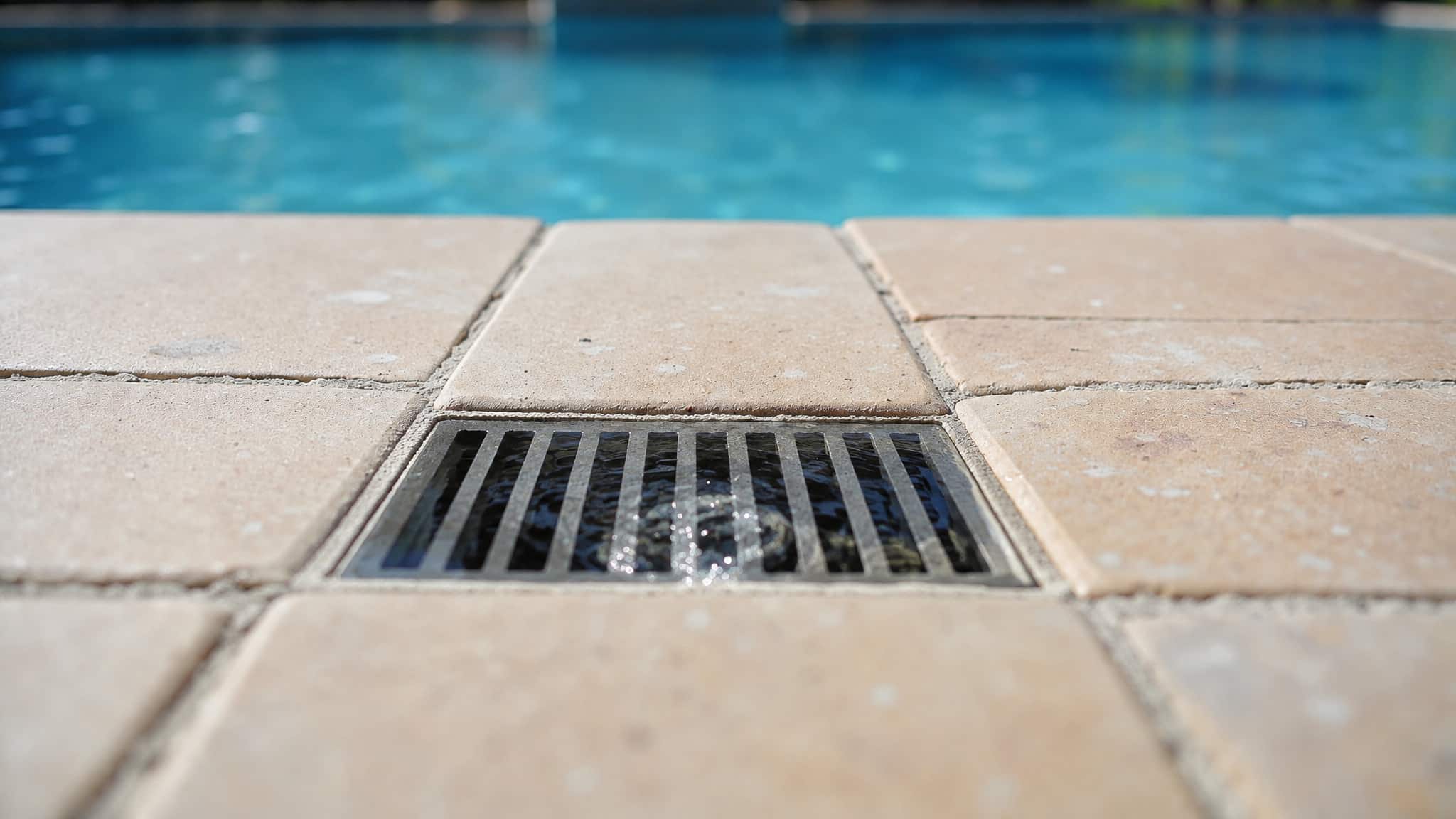
The main pool deck drain types are trench drains, slot drains, point drains, French drains, and area drains. Trench drains, also called channel drains, are long linear units set flush with your deck to collect surface water across broad areas, the most common solution you’ll find. Slot drains offer a similar linear capture but use a narrow opening with no visible grate, giving you a cleaner look. Point or spot drains sit at individual low spots, handling lower flow than linear systems. French drains use subsurface perforated pipe wrapped in gravel to redirect runoff away from your pool rather than capture surface water. Area drains target localized standing water at specific low points instead of across long deck runs.
How does a pool deck drainage system work
A pool deck drainage system works by using slope to direct water away from the pool and into drains that carry it safely away. Your deck needs to pitch away from the water, typically at least 1/4 inch per foot, so surface runoff flows toward the drains instead of into the pool. Effective water management depends on capacity and placement. Linear systems like trench drains capture runoff across long deck runs, channeling it into an underground pipe network that carries it safely away.
Slope your deck away from the pool, and let trench drains carry runoff safely away.
- Slope directs surface water toward drains, preventing standing puddles deeper than 1/8 inch after 20 minutes.
- Trench drains collect broad runoff, with tributary areas limited to 400 square feet per drain.
- Deck drainage never connects directly to pool gutters or recirculation systems.
Proper design ensures reliable, code-compliant performance.
What is a strip or channel deck drain

A strip or channel deck drain is a long, linear drain set flush with your pool deck to collect surface water across broad areas. You’ll find these deck drains excel at continuous capture along extended deck runs, outperforming single-point systems when runoff volume climbs. A channel drain typically uses a grated opening, keeping debris out while letting surface water flow through. You can choose construction materials like polypropylene, concrete, or stainless steel, each offering different chemical resistance and load-bearing capacity for pool-adjacent conditions.
Remember code factors when you install one: slope your deck at least 1/4 inch per foot toward the channel, and don’t connect it directly to pool gutters. Plan for grate cleaning too, since debris buildup restricts flow and reduces drainage efficiency.
What is a deck drain versus a trench or French drain
A deck drain captures surface water at specific low spots, while a trench or French drain handles water differently based on where it moves. Each type solves a different problem, so you’ll want to match the drain to where and how water moves around your deck.
- Deck (point/area) drains: individual drains set at low spots, capturing localized standing water. Smaller capacity, less visible, best for isolated puddling.
- Trench/channel drains: linear systems that collect broad surface runoff across long deck runs. Higher capacity, grated, and the versatile default.
- French drains: subsurface perforated pipe wrapped in gravel, redirecting groundwater and perimeter runoff below grade rather than capturing surface water.
Choose based on runoff volume, location, and whether water sits above or below grade.
How do the pool deck drain types compare on cost and use
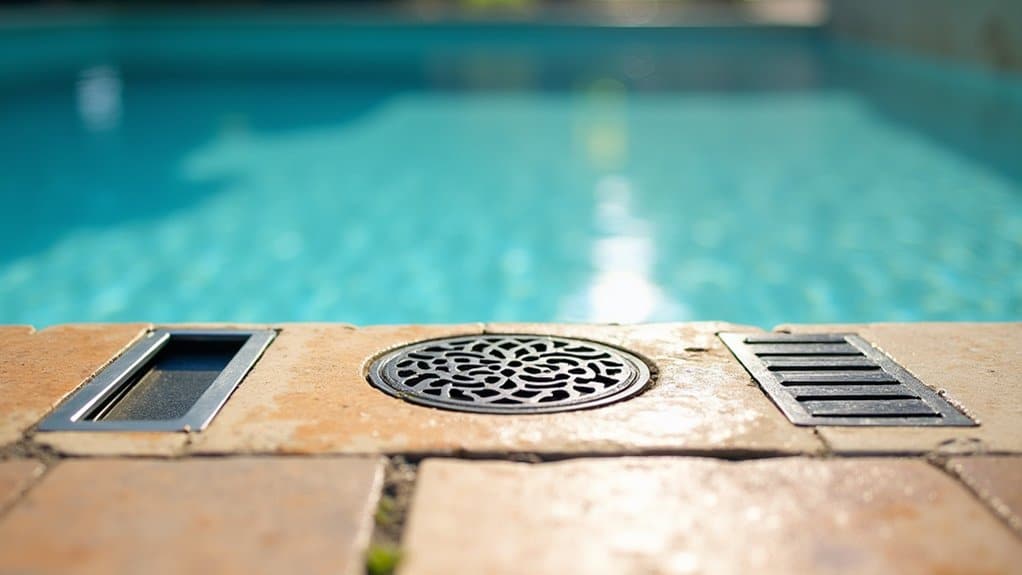
Pool deck drain types compare on cost and use with trench, slot, point, and French each balancing flow capacity, visibility, and installation effort differently, so matching the drain to your deck’s runoff volume matters more than chasing the lowest price.
| Drain Type | Best Use |
|---|---|
| Trench/channel | Broad surface runoff across large, high-use decks |
| Slot | Aesthetic-focused projects needing a discreet finish |
| Point | Localized low spots with limited flow |
| French | Subsurface perimeter runoff, not deck surface capture |
Trench drains carry higher material and install costs but handle continuous capture reliably. Slot drains often cost more for their clean look. Point drains stay cheapest and simplest, yet they can’t match linear flow. French drains solve subsurface problems, not surface puddling.
What materials and finishes are available for deck drains
Deck drains come in three main materials: polypropylene, concrete, and stainless steel. Material choice drives durability, and each handles weather exposure, chemical resistance, and load differently, so match the material to your deck’s traffic and climate.
- Polypropylene: lightweight and chemical-resistant, it shrugs off pool chlorine and installs quickly, making it a practical pick for most residential decks.
- Concrete: heavy-duty and load-bearing, it suits high-traffic commercial decks but demands more labor to set.
- Stainless steel: corrosion-resistant and sleek, it delivers premium durability where appearance and longevity both matter.
For finishes, you’ll choose grated trench drains to block debris while capturing runoff, or slot systems with a narrow opening that skip the visible grate for a cleaner, discreet look.
How do you choose the right deck drain for your pool
Choose the right deck drain based on four factors: deck slope, runoff volume, visual goals, and local code. Start with slope: your deck should pitch at least 1/4 inch per foot toward drains, keeping standing water under 1/8 inch after 20 minutes. For runoff volume, size your system to code, cap tributary area at 400 square feet per drain and keep spacing within 25 feet. On large, high-use decks, trench or channel drains handle broad surface flow best. If appearance matters most, pick slot drains for their grateless, low-profile finish. For isolated low spots, point drains in 2-, 3-, or 4-inch formats work well. Just remember: don’t connect deck drains directly to pool gutters or recirculation systems, whatever type you choose.
Conclusion
A solar pergola gives you shade and on-site power in one structure, but in Florida the planning is what makes it pay off. Decide what you want it to power, budget without the expired federal 25D credit, and make sure the frame is engineered for your wind zone. Line up the structure, the solar equipment and FPL approval together so the project runs smoothly. Get the pergola itself built right, and everything the panels depend on has a solid base to sit on.
Ready to Build a Pergola Designed for Florida Weather?
The right pool deck drain only works if the deck itself is sloped and graded to feed it, and that’s exactly how we build them at Innovative Outdoor Living. We design pool decks with proper slope and drainage from the start, so runoff moves off the surface instead of pooling around your pool. Our pool deck services cover the grading and drainage that keep a deck dry and code-compliant. Contact us or call (561) 594-1495 to plan a deck that drains the way it should.
Frequently Asked Questions
How Often Should Pool Deck Drains Be Cleaned and Maintained?
You should clean your pool deck drains regularly, ideally checking them weekly during heavy-use seasons and clearing debris from grates as it accumulates. For trench and channel drains, you’ll want to remove leaves, dirt, and buildup that block surface water entry. Inspect for chemical wear, load damage, and clogs every few months. Don’t let standing water linger, if it’s draining slowly, you’ve got debris restricting flow that needs immediate attention.
Can I Install a Pool Deck Drain Myself?
You can install a pool deck drain yourself, but you’ll need to nail the technical details. Slope your deck at least 1/4 inch per foot toward the drain, keep tributary areas under 400 square feet, and space drains no more than 25 feet apart. Choose durable materials like polypropylene, concrete, or stainless steel. Don’t connect drains directly to pool gutters. If you’re unsure about grading or code compliance, hire a pro.
Do Pool Deck Drains Require Permits Before Installation?
You’ll often need a permit, since deck drains must meet local code requirements. Many jurisdictions regulate deck slope (typically at least 1/4 inch per foot toward drains), drain spacing (no more than 25 feet apart, 400 square feet per drain), and prohibit connecting drains directly to pool gutters or recirculation systems. Check with your local building department before you start, because requirements vary by area and project scope.
How Long Do Pool Deck Drains Typically Last?
Your pool deck drain’s lifespan depends heavily on the material you choose. Stainless steel and concrete channel drains can last decades under proper maintenance, while polypropylene systems hold up well against pool chemicals and weather exposure. You’ll get the most longevity by keeping grates clear of debris and addressing standing water issues promptly. Chemical resistance, load resistance, and consistent cleaning all determine how long your drainage system stays reliable.
Where Does Water From Pool Deck Drains Ultimately Go?
Your deck drains route water away from the pool, never directly into the pool’s gutters or recirculation system. You’ll typically channel runoff toward stormwater systems, drywells, or graded areas that redirect it below grade. If you’re using French drains, you’re moving perimeter and subsurface water away through perforated pipe and gravel. Just make sure you’re following local code so you don’t dump water back into your pool.