
Pavers outperform concrete pool decks in most categories, they handle up to 8,000 PSI, resist chemical erosion, and last 30, 50 years versus concrete’s 15, 25. You’ll pay more upfront ($20, $50/sq. ft. vs. $13, $30), but you’ll save on repairs and resealing over time. Pavers also deliver superior slip resistance, permeable drainage, and design flexibility that concrete can’t match without recurring refinishing. Each factor below breaks down exactly where your investment goes furthest.
How to Choose Between Pavers and Concrete Pool Decks
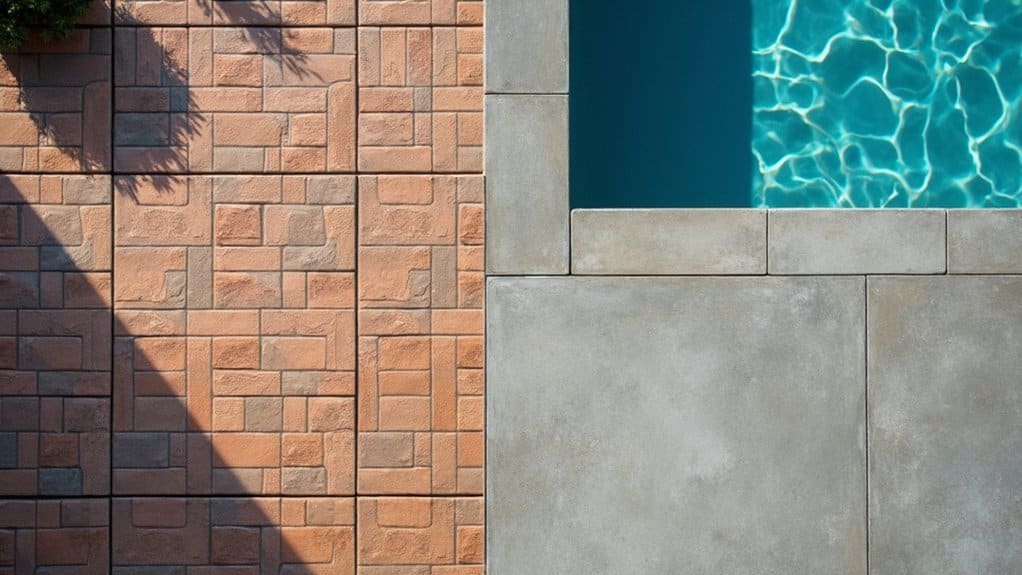
When you’re designing a pool deck, the choice between pavers and concrete shapes everything from safety performance to long-term environmental impact. Pavers deliver superior frost resistance, flexing with temperature shifts instead of cracking like rigid concrete slabs. Their permeable joints promote natural water drainage, reducing runoff and supporting sustainable site hydrology.
You’ll also want to evaluate maintenance cycles, thermal comfort, and design adaptability. Pavers stay cooler underfoot and allow targeted repairs, swapping single units rather than replacing entire sections. Concrete offers faster installation but demands periodic resealing to prevent surface degradation.
Consider longevity as a sustainability metric: natural stone pavers can last a generation, minimizing material waste. Popular natural stone options include flagstone, travertine, and concrete pavers, each offering distinct textures and aesthetic profiles for your poolside design. Your decision should balance technical performance, aesthetic goals, and environmental responsibility.
Upfront Cost: Pavers vs Concrete Pool Decks
Two cost tiers define the paver-versus-concrete decision before a single unit ships to your site. Concrete decks run $13, $30 per square foot installed, while pavers demand $20, $50 per square foot depending on material origin and pattern complexity. For a 400-square-foot deck, you’re looking at $5,200, $9,200 in concrete versus $12,000, $20,000 in pavers. That price difference increases even further when scaling up to larger pool deck footprints.
The upfront cost differences trace directly to installation time comparisons. Concrete pours complete in 2, 4 days; pavers require 5, 10 days of labor-intensive, individual placement. That extended timeline increases crew hours considerably. Stamped concrete narrows the aesthetic gap at $14, $20 per square foot, delivering decorative versatility without paver-level pricing. If you’re designing within a fixed budget, concrete consistently delivers more usable surface area per dollar invested.
Lifetime Savings: Pavers Vs Concrete Over 20 Years
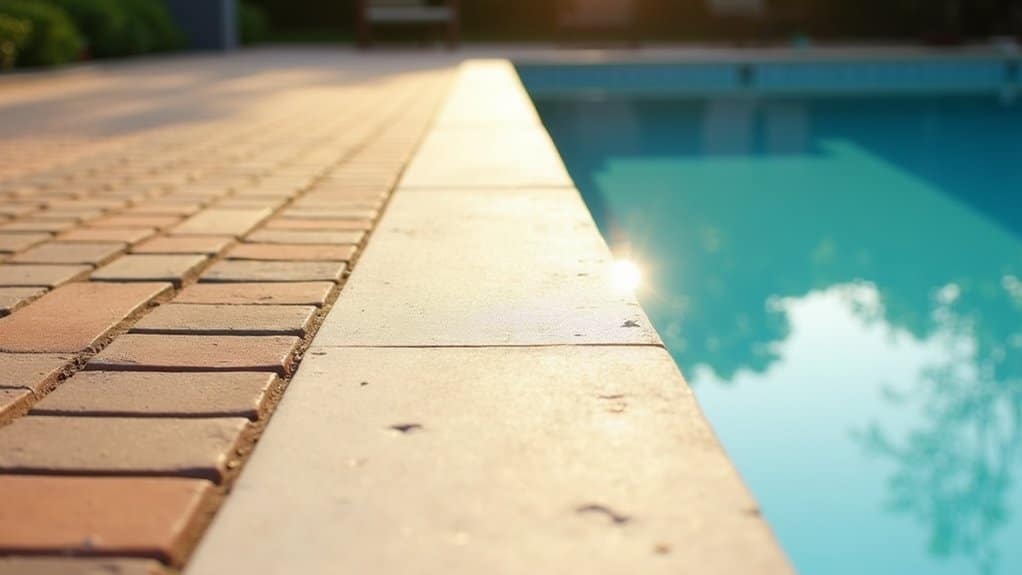
How dramatically does the cost equation shift once you extend your analysis beyond installation day? Pavers deliver superior lifetime value through three measurable advantages:
- Durability span: Pavers last 30+ years versus concrete’s 15, 25, meaning you’ll likely replace concrete before pavers need intervention.
- Reduced maintenance costs: You’ll reseal concrete every 2, 3 years, while pavers require only occasional joint sand reapplication, a simpler, cheaper process.
- Localized repairs: You’ll swap individual damaged pavers instead of resurfacing entire concrete slabs, cutting both material waste and labor expenses.
Over 20 years, concrete’s cumulative resealing, crack remediation, and potential replacement erode its initial price advantage. Pavers offset their higher upfront investment through fewer interventions and longer service cycles, a more sustainable, resource-efficient allocation of your project budget. Additionally, because pavers are made of individual units that flex with ground shifts, they resist the structural cracking that drives up concrete’s long-term repair costs.
Which Pool Deck Is Easier to Install?
Beyond lifetime cost considerations, installation complexity itself shapes your project timeline, budget allocation, and environmental footprint. Concrete’s streamlined pour-and-finish process eliminates individual unit handling, drastically compressing your installation timeline. Pavers demand meticulous piece-by-piece positioning, pattern coordination, and joint sand application, extending duration considerably.
| Factor | Concrete | Pavers |
|---|---|---|
| Labor Requirements | Lower, single pour application | Higher, individual unit placement |
| Material Sourcing | Mixed on-site, no quarrying | Quarried, transported, staged |
| Post-Install Finishing | Sealant application | Spacing alignment + joint filling |
Your labor requirements directly impact both cost and resource consumption. Concrete’s reduced workforce needs translate to fewer emissions from extended crew operations, while pavers’ intensive placement process demands greater skilled labor investment.
Durability Around the Pool: Cracking, Erosion, and Wear
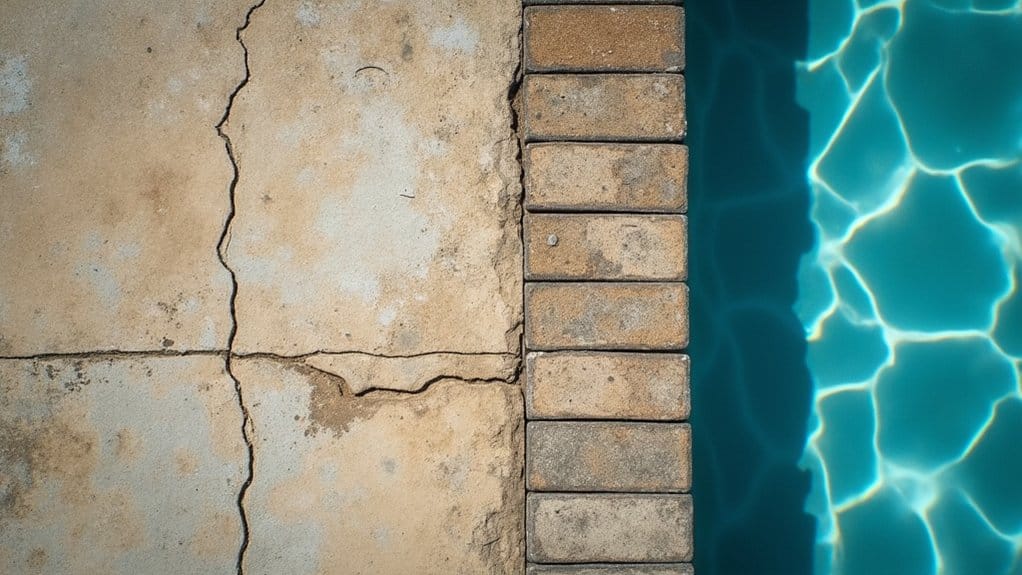
Your pool deck takes a relentless beating, thermal cycling, chemical splash, UV bombardment, and constant foot traffic all break down surfaces over time. Here’s how each material performs under stress:
- Cracking resistance: Pavers handle up to 8,000 PSI and flex independently with ground shifts. Concrete’s thermal expansion tolerance is limited, slabs crack under freeze-thaw cycles and soil movement, demanding costly full replacements.
- Erosion control: Interlocking pavers with joint sand resist water flow erosion. Permeable designs drain poolside runoff, while unsealed concrete erodes from persistent moisture exposure.
- Chemical resistance performance: Pavers won’t absorb chlorine or salt, maintaining structural integrity for decades. Concrete absorbs pool chemicals, accelerating surface breakdown unless you reseal every 2, 3 years.
Pavers deliver longer-lasting, lower-maintenance durability with localized repairability, a sustainably efficient choice.
How Safe Are Pavers vs Concrete When Wet?
When you’re evaluating poolside surfaces for wet conditions, slip resistance becomes a critical safety metric, pavers’ textured profiles deliver inherent traction, while bare concrete’s smooth finish turns dangerously slick under water exposure. Your drainage strategy matters equally: pavers channel water through permeable joints, preventing the standing water that creates hazardous slick films on solid concrete slabs. These material differences directly shape your poolside safety profile, influencing fall risk, long-term surface integrity, and whether you’ll need supplemental coatings to meet basic wet-traction standards.
Slip Resistance Comparison
Because poolside surfaces stay wet for extended periods, slip resistance becomes the single most critical safety factor in your deck material choice. Pavers deliver superior wet weather performance through inherent texture and joint drainage, while concrete demands traction enhancements like broom finishing or anti-slip additives to achieve comparable safety.
Here’s how the two materials compare:
- Surface grip, Tumbled pavers provide natural friction without coatings; untreated concrete turns slick when wet.
- Water management, Paver joints channel standing water away, preventing puddles that create slip hazards on flat concrete.
- Long-term reliability, Paver textures maintain resistance indefinitely, whereas concrete sealers accumulate and reduce traction over time.
You’ll find textured pavers consistently outperform stamped concrete in wet conditions, making them the safer, lower-maintenance poolside choice.
Water Drainage Differences
Standing water turns any pool deck into a liability, yet the way each surface handles drainage determines just how dangerous it actually becomes. Pavers channel water through interlocking joints and permeable materials, achieving superior infiltration rates that eliminate pooling. Concrete’s continuous slab traps moisture on the surface, creating slip-prone conditions even with texturing.
You’ll also notice pavers flex with ground shifting, preserving drainage pathways that concrete simply can’t maintain. Cracks in concrete worsen water infiltration into the substrate, accelerating structural decay. Permeable pavers, by contrast, direct stormwater downward intentionally, reducing runoff and supporting sustainable site hydrology.
When joints need sand replenishment, you’re handling targeted maintenance. Concrete demands full resealing or slab replacement, making pavers the more resource-efficient, drainage-resilient choice long-term.
Poolside Safety Features
Effective drainage keeps water moving off your deck, but what happens underfoot during those inevitable wet moments matters just as much. Pavers deliver superior wet-surface traction through their naturally textured composition, while concrete becomes slippery unless you apply specialized non-slip coatings that degrade over time.
Three critical safety advantages pavers offer poolside:
- Slip resistance, Interlocking joints and dense molecular structure provide inherent grip without chemical treatments.
- Lower heat absorption, Pavers stay cooler in direct sunlight, improving foot comfort during Texas summers when concrete surfaces can scorch bare skin.
- Crack-free longevity, At 8,000 PSI versus concrete’s 3,500 PSI, pavers resist temperature-induced cracking that creates tripping hazards.
You’ll maintain a safer, more sustainable deck surface without ongoing coating reapplications or section replacements.
Maintenance Each Pool Deck Surface Demands
Your sealant reapplication schedule falls every two to three years, using breathable, textured formulas matched to your material. When water stops beading, you’re overdue. Between reseals, rinse chlorine and salt residue promptly to prevent erosion. Refill joints with polymeric sand after each pressure wash to maintain structural stability. Replace cracked pavers immediately, addressing small failures early reduces resource-intensive repairs and extends your deck’s functional lifespan.
Design and Aesthetics for Your Poolside
When designing your poolside surface, pavers give you access to interlocking patterns, varied textures, and an extensive palette of shapes that let you craft intricate, site-specific layouts blending seamlessly with your landscaping. Concrete, while offering stamping and staining options, limits your long-term color integrity since dyes fade under UV exposure, reducing the surface’s aesthetic lifespan and increasing maintenance inputs over time. Choosing pavers means investing in durable visual customization that sustains its character without the recurring refinishing concrete demands.
Paver Pattern Versatility
Because pavers come in such a wide range of shapes, sizes, and materials, they offer unmatched design flexibility for pool deck surfaces. You’ll find custom pattern options that elevate architectural visual appeal while supporting sustainable design through modular, replaceable installations.
- Classic geometric layouts, Herringbone, basketweave, and Versailles patterns create sophisticated arrangements that transform your pool deck into a structured, elegant space with bold visual movement.
- Organic and curved designs, Random ashlar and freeform layouts mimic natural stone, integrating seamlessly with landscaping and curved pool lines for resort-quality aesthetics.
- Contemporary minimalist systems, Large-format pavers in neutral tones with minimal grout lines deliver clean, uncluttered surfaces that maintain refined modern sensibilities.
Each approach lets you tailor your deck’s character precisely to your vision.
Concrete Color Limitations
You’ll also face local customization limitations tied to regional climate and building conditions. Darker hues absorb up to 20 degrees more heat than lighter tones, restricting bold palettes around pools. Repairs compound these challenges, patched sections rarely match existing surfaces. While UV-resistant pigments and performance coatings extend vibrancy, they can’t eliminate the fundamental unpredictability of integral coloring compared to modular material systems.
Repair and Replacement: Pavers vs Concrete
Even the most meticulously installed poolside surface will eventually need repair, and this is where pavers and concrete diverge sharply in both practicality and long-term sustainability. Pavers offer unmatched repair flexibility, you’ll swap individual units without disturbing the surrounding deck. Concrete, despite lower installation complexity, demands costly slab replacement or visible patching for extensive damage.
Consider these critical distinctions:
- Longevity: Pavers endure 30, 50 years; concrete typically requires major refinishing within two decades.
- Crack resistance: Flexible paver joints absorb soil shifts and temperature fluctuations, while rigid concrete cracks under ground movement and chlorinated water exposure.
- Cost efficiency: Targeted paver replacement keeps long-term expenses low, whereas concrete patching and resurfacing costs accumulate considerably over time.
Which Pool Deck Surface Should You Choose?
Now that you understand how each material holds up over time, the real question comes down to matching your priorities, budget, aesthetics, safety, and environmental impact, with the right surface. Pavers deliver superior slip resistance, longevity, and a customized appearance through diverse patterns and colors. Concrete suits tighter budgets with faster installation but demands more upkeep.
| Feature | Pavers | Concrete |
|---|---|---|
| Slip Resistance | Naturally textured with joint drainage | Requires treated finishes |
| Longevity | Outlasts concrete; individual replacement | Decades; prone to cracking |
| Design Flexibility | Versatile shapes, colors, patterns | Staining and stamping options |
If you’re prioritizing sustainable, low-maintenance design, pavers offer better lifecycle value. For cost-driven projects, properly finished concrete remains a viable, functional choice.
Frequently Asked Questions
Can You Install Pavers Over an Existing Concrete Pool Deck?
Yes, you can install pavers directly over your existing concrete pool deck. Existing concrete preparation involves verifying your slab’s structural integrity, no cracks or deterioration, before adding a one-inch coarse sand bedding layer. Key paver installation considerations include selecting thin overlay pavers to minimize height changes at thresholds and using polymeric sand for joint stability. This approach eliminates demolition waste, saves up to 40% on costs, and you’ll complete the sustainable transformation in just two days.
Do Pool Deck Pavers Increase Your Home’s Resale Value?
Yes, pool deck pavers increase your home’s resale value greatly. You’ll recover 40-60% of your investment at resale, and upgraded pool decks can boost home value by 7-15%. Pavers deliver increased home appeal through slip-resistant, cooler surfaces that extend your usable living space. Their design versatility and improved curb appeal differentiate your property, attracting buyers faster. You’re also choosing a sustainable option since pavers allow permeable installation and individual replacement, reducing long-term waste.
How Long Does It Take for New Concrete Pool Decks to Cure?
Your new concrete pool deck requires a proper curing time of approximately 30 days to reach 99% strength. You’ll need to water the surface two to three times daily, starting 24 hours after pouring. During this period, you should consider the impact on pool chemistry, as runoff from uncured concrete can alter water pH levels. This sustainable curing approach guarantees long-term durability while safeguarding your pool’s ecosystem.
Are Pavers or Concrete Better for Saltwater Pool Environments?
Pavers outperform concrete in saltwater pool environments. Saltwater pool chemistry won’t degrade quality oxide pigments or compromise pavers meeting ASTM standards, while concrete demands frequent resealing every 2, 3 years to resist erosion. Your paver maintenance requirements stay minimal, salt buildup rinses off easily without structural impact, and you’ll swap individual units instead of tearing out entire sections. Pavers also flex through freeze-thaw cycles, offering a durable, sustainable surface that reduces long-term material waste.
What Base Material Is Needed Underneath Pool Deck Pavers?
You’ll need a layered foundation starting with a compacted sand base or native subgrade, followed by a gravel base of 3/4-inch crushed stone installed in compacted 3-inch lifts. Top this with a 1-inch screeded bedding layer of fine aggregate. For sustainable drainage, you should use clear stone gravel to prevent hydrostatic pressure buildup. Guarantee you’ve compacted each layer thoroughly and maintain a 1-2% slope away from your pool’s edge.