
To modernize your pool deck, start with geometric paver layouts paired with artificial turf strips for a mosaic-like effect. You’ll elevate the mood by coordinating slate gray stone pavers with dark blue coping and softening edges with ornamental grasses or black mondo grass. Multi-level decking carves out distinct zones for dining, lounging, and fire features, while textured finishes like PebbleSheen add grip and visual depth. Each pool deck renovation idea below breaks down how to bring these designs to life.
Go Geometric With Your Pool Deck Shape
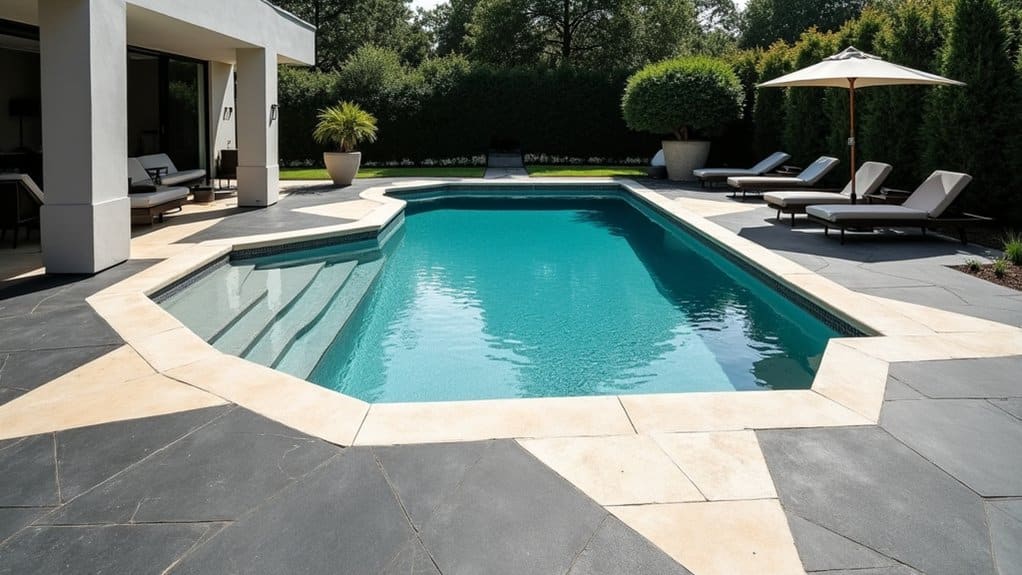
Pair paver designs with artificial turf strips to form mosaic-like patterns that soften hard edges without sacrificing geometry. Refined geometric pool coping details, smooth concrete or sleek tile, reinforce that structured vibe while defining precise borders between water and deck. You’ll find symmetrical shapes naturally accommodate tanning ledges, raised spas, and automatic covers with minimal custom fitting. L-shaped layouts work especially well here, offering distinct zones for lounging and swimming that make the most of angular deck configurations.
Plant ornamental grasses along straight edges to add organic texture, letting structured hardscape and living greenery elevate each other beautifully.
Match Your Pool Deck to Dark, Moody Pool Finishes
If you’ve chosen a dark, moody interior finish for your pool, you’ll want your surrounding deck to echo that dramatic intensity rather than fight against it. Coordinate your hardscape color tones by selecting slate gray stone pavers or charcoal-hued flagstone that create a seamless visual flow from deck to waterline, using darker coping to frame the pool’s edge with intention. This tonal harmony amplifies the contrast between your subdued surroundings and the vivid pool water, producing a layered, sophisticated atmosphere you can soften with dark-leafed plantings like black mondo grass or burgundy loropetalum. For added evening ambiance, consider laying rectangular pavers at an angle to form a diamond-shaped pattern that draws the eye toward the pool while providing a natural spot to incorporate a cozy fire feature nearby.
Complement Dark Interior Finishes
| Material | Best Pairing | Visual Effect |
|---|---|---|
| Slate gray pavers | Dark blue coping | Dramatic contrast |
| Black concrete | Dark aggregate finish | Monochromatic elegance |
| Epay wood decking | Wet Edge stone interior | Warm-cool balance |
Frame your dark pool with lush shrubs and strategic boulder placement to create resort-style depth. Add fire bowls surrounded by natural stone, they’ll amplify the moody atmosphere while anchoring your deck’s aesthetic identity. For inspiration, consider how a negative edge spa paired with rain curtain features can elevate dark finishes into a truly serene, modern retreat.
Coordinate Hardscape Color Tones
When you pull color tones directly from your house’s exterior palette, your pool deck instantly reads as intentional rather than disconnected. A professional painter’s palette gives you multiple coordinating shades, think warm beige or soft gray, that complement without requiring an exact match.
For dark, moody pool finishes, lighter deck tones create visual balance while reducing heat absorption underfoot. A stamped concrete application in terra cotta or weathered slate mimics natural stone, pairing beautifully with surrounding ornamental grasses and creeping thyme planted between expansion joints.
Layer charcoal accents through subtle mosaic patterns along border edges to echo your pool’s depth. Earth tones in exposed aggregate finishes ground the space, while broom-finished gray surfaces diffuse light naturally. You’re building cohesion between hardscape, water, and landscape, not competing elements.
Enhance Moody Visual Contrast
To enhance moody ambiance, combine neutral gray stone with darker composite materials and border plantings of deep-toned ornamental grasses. Stormy stone tiles accent built-in wood benches, grounding the space with warmth. Mix light and dark grey coping to create day-to-night visual shifts, and add pebble borders for subtle textural interest. This layered approach transforms your pool deck into an immersive, atmosphere-rich retreat.
Add Multi-Level Pool Decking for Sloped Yards
A sloped yard might seem like a design obstacle, but it’s actually one of the best opportunities to create a dynamic, visually layered pool deck that flat lots simply can’t replicate. Add a split-level approach to carve distinct zones, an upper entertaining deck, a mid-level dining area surrounded by built-in planters, and a lower hot tub nook framed by cascading flower beds.
Incorporate floating platforms in wooded or rocky sections to preserve natural character while extending usable space. Mix composite decking with natural stone accents, and use cable railings along slopes to maintain unobstructed sightlines. Each tier becomes its own destination: grilling stations up top, conversation areas mid-level, reading nooks below, all connected by wide stairs softened with trailing greenery.
Upgrade Your Pool Deck With Textured Hardscape
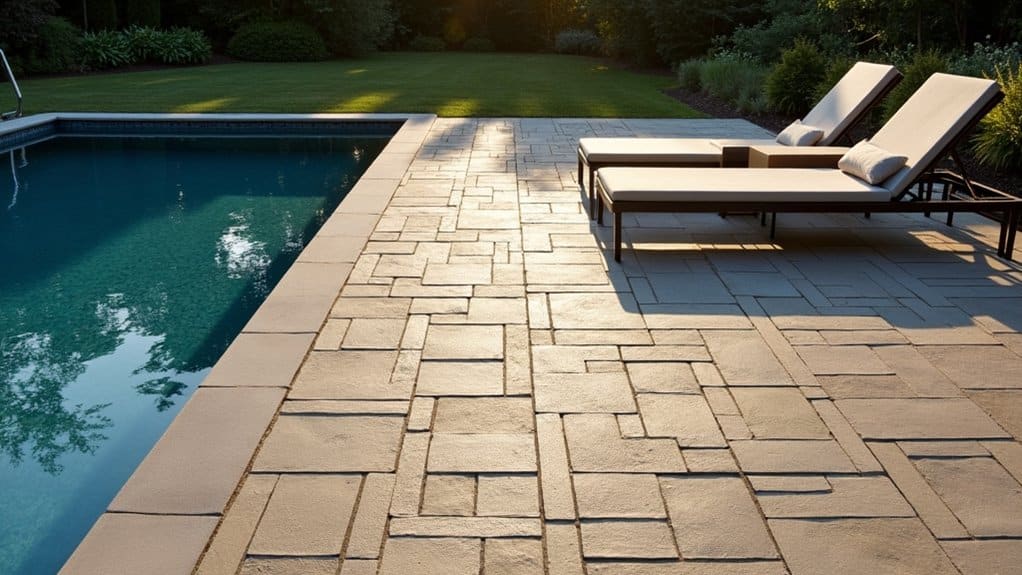
Textured hardscape transforms your pool deck into a tactile experience, think pebble and glass finishes that catch light while providing sure-footed grip among creeping thyme and ornamental grasses. Large-format pavers create clean, expansive lines that make smaller pool areas feel generous, especially when bordered by low-growing sedums or mondo grass. You can also layer mixed material combinations, such as smooth concrete against rough-cut stone, to build visual depth that echoes the organic contrasts found in your surrounding landscape.
Pebble And Glass Finishes
When you’re ready to elevate your pool deck beyond standard concrete or plaster, pebble and glass finishes offer a textured hardscape solution that’s both visually striking and exceptionally durable. Options like PebbleSheen and PebbleBrilliance blend natural stone aggregate with vibrant glass beads, creating water colors that complement surrounding landscape plantings and garden borders beautifully.
The long term installation benefits are significant, pebble finishes last 15-20 years, outperforming plaster and colored quartz considerably. They’ll resist UV fading, etching, and staining without requiring chemicals to maintain color vibrancy. Pair them with twice-fired Lightstreams glass tiles for iridescent accents that echo your garden’s natural palette. While comprehensive upkeep requirements remain minimal, you’ll invest 45-60 percent more than marcite finishes, a premium that delivers superior slip resistance and authentic textural depth.
Large-Format Paver Options
Large-format pavers push your pool deck’s visual scale in a direction that pebble and glass finishes simply can’t, toward bold, architectural planes that ground surrounding plantings with clean geometric weight. You’ll find sizes reaching 3′ x 3′, letting you establish sweeping sightlines that make ornamental grasses and low hedges read as deliberate design counterpoints rather than afterthoughts.
A modular paver design approach pairs multiple sizes, square and rectangular, in random or herringbone arrangements that break monotony without sacrificing cohesion. Textured porcelain or sandblasted limestone delivers slip resistance while maintaining a refined surface. Consider creative paver patterns like enclosed alternating borders that frame planting beds directly at the deck’s edge, fusing hardscape geometry with softscape rhythm. Pedestal systems accommodate slopes up to 4%, keeping drainage invisible beneath those clean, uninterrupted planes.
Mixed Material Combinations
Consider concrete coping against weathered mahogany planks, geometric precision meeting forest-inspired warmth. Muted brick pavers alongside smooth gray concrete deliver modern character without sacrificing organic texture. For drainage-smart designs, border grand-format pavers with decorative gravel planting beds where ornamental grasses soften hardscape edges.
The key is selecting unified hardscape materials that share tonal relationships while contrasting in texture. Cement tiles‘ bold pigments can anchor ceramic’s versatile shapes, and cumaru decking flows seamlessly into stone hot tub surrounds, each material elevating the next.
Use Large-Format Pavers for a Modern Look
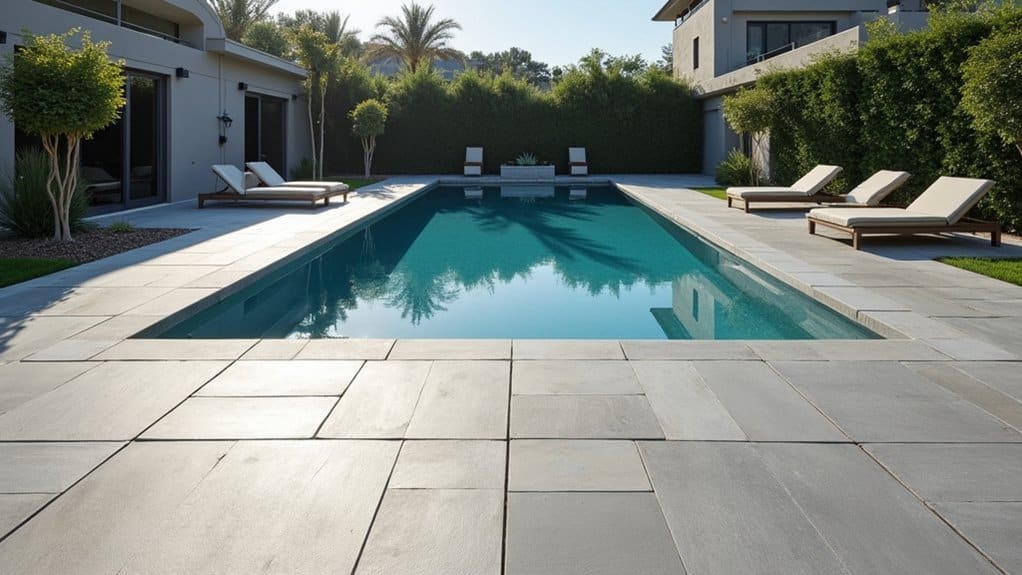
Beyond aesthetics, large-format pavers offer practical advantages:
- Superior drainage through wider joints reduces puddles and slip hazards
- Heat-reflective lighter tones keep surfaces cool under bare feet
- Fewer joints mean less weed intrusion and easier maintenance
- Individual replaceability lets you swap damaged units without disturbing surrounding landscaping
- 50+ year lifespan outlasts poured concrete, protecting your investment
Extend Your Pool Deck With a Tanning Ledge or Baja Shelf
A tanning ledge or Baja shelf extends your pool deck’s living surface directly into the water, creating a shallow lounge area, typically 6 to 12 inches deep, where you can stretch out on in-water chaise lounges surrounded by textured tile and lush poolside plantings. You’ll gain a family-friendly cooling zone that gives young children, pets, and mobility-limited users a secure space to enjoy the water while adults supervise from the same sun-warmed shelf. Pair your ledge with bubblers, built-in umbrella holders, and LED lighting to craft a resort-style vignette that blends seamlessly with your renovated deck, outdoor kitchen, and garden borders.
Shallow Water Lounge Areas
- Bluestone or travertine coping that merges flush into the ledge surface
- Tiered slopes mimicking a natural beach entry with ornamental grasses nearby
- Low-profile lounge chairs paired with potted tropical plantings at the ledge perimeter
- Glass tile accents along the shelf edge for visual depth
- Limestone pathways guiding foot traffic from the deck into shallow water
Family-Friendly Cooling Zones
| Feature | Design Detail | Aesthetic Pairing |
|---|---|---|
| Built-in umbrella holders | Shade coverage over 5-ft-wide ledge | Ornamental grasses in adjacent planters |
| LED lighting strips | Recessed along ledge perimeter | Trailing jasmine on nearby pergola |
| Textured non-slip surface | Natural stone or pebble finish | Potted bird of paradise groupings |
Add bubblers or jets to transform this shelf into a sensory-rich gathering nook framed by lush poolside landscaping.
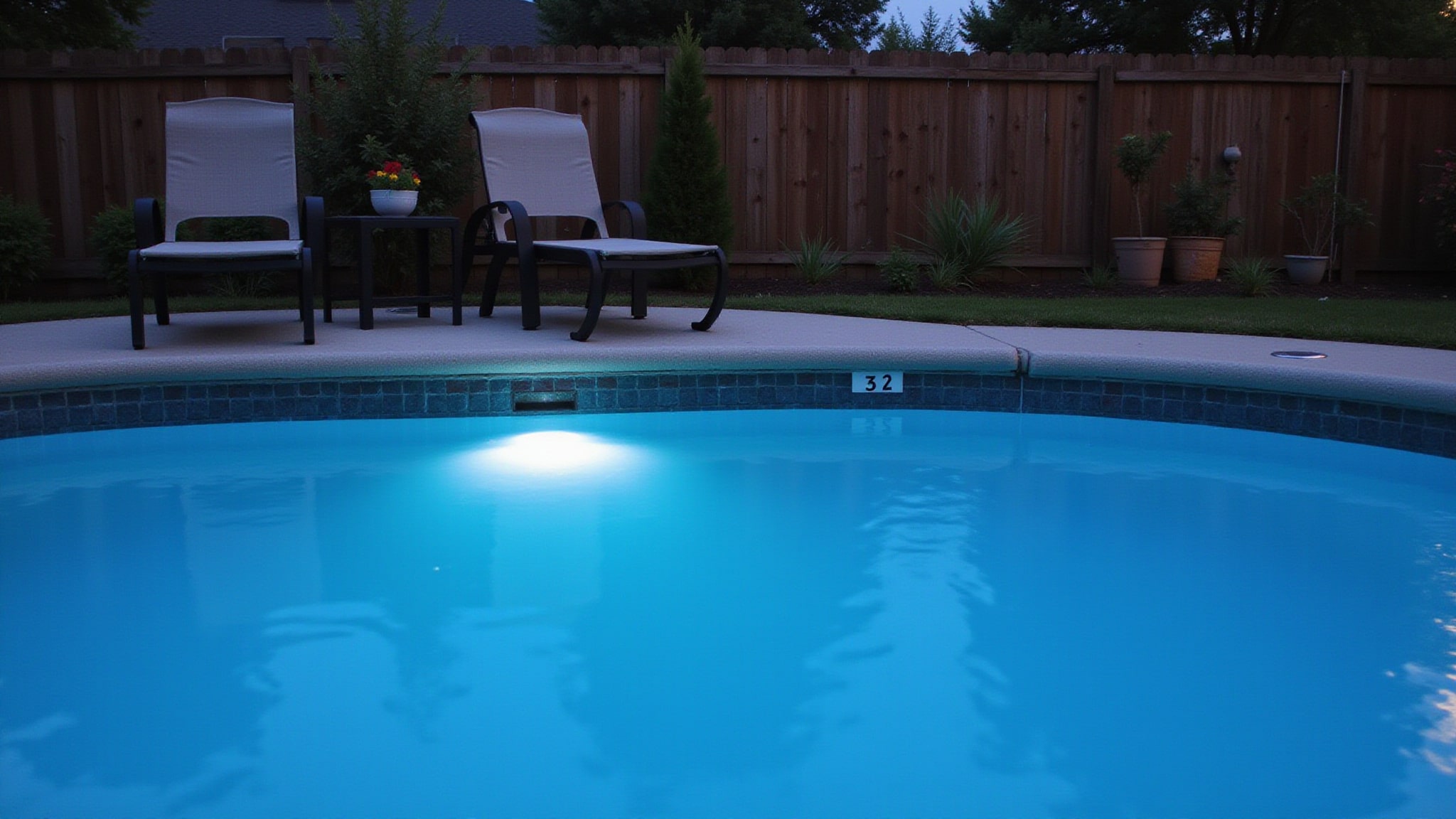
Install Color-Changing LED Pool Deck Lighting
Before you pick up a single light fixture, take time to assess your deck’s layout and identify where illumination will have the most visual impact, along edges, near planters, or beside water features where light can interact with foliage and reflective surfaces. Mark placement points with chalk to visualize symmetry and prevent clustering near botanical arrangements.
- Use weather-resistant stainless steel or polycarbonate connectors for lasting durability against poolside moisture.
- Run low-voltage cables beneath deck boards to maintain clean sightlines among planted borders.
- Seal all joints and cable entries with waterproof sealant to protect connections.
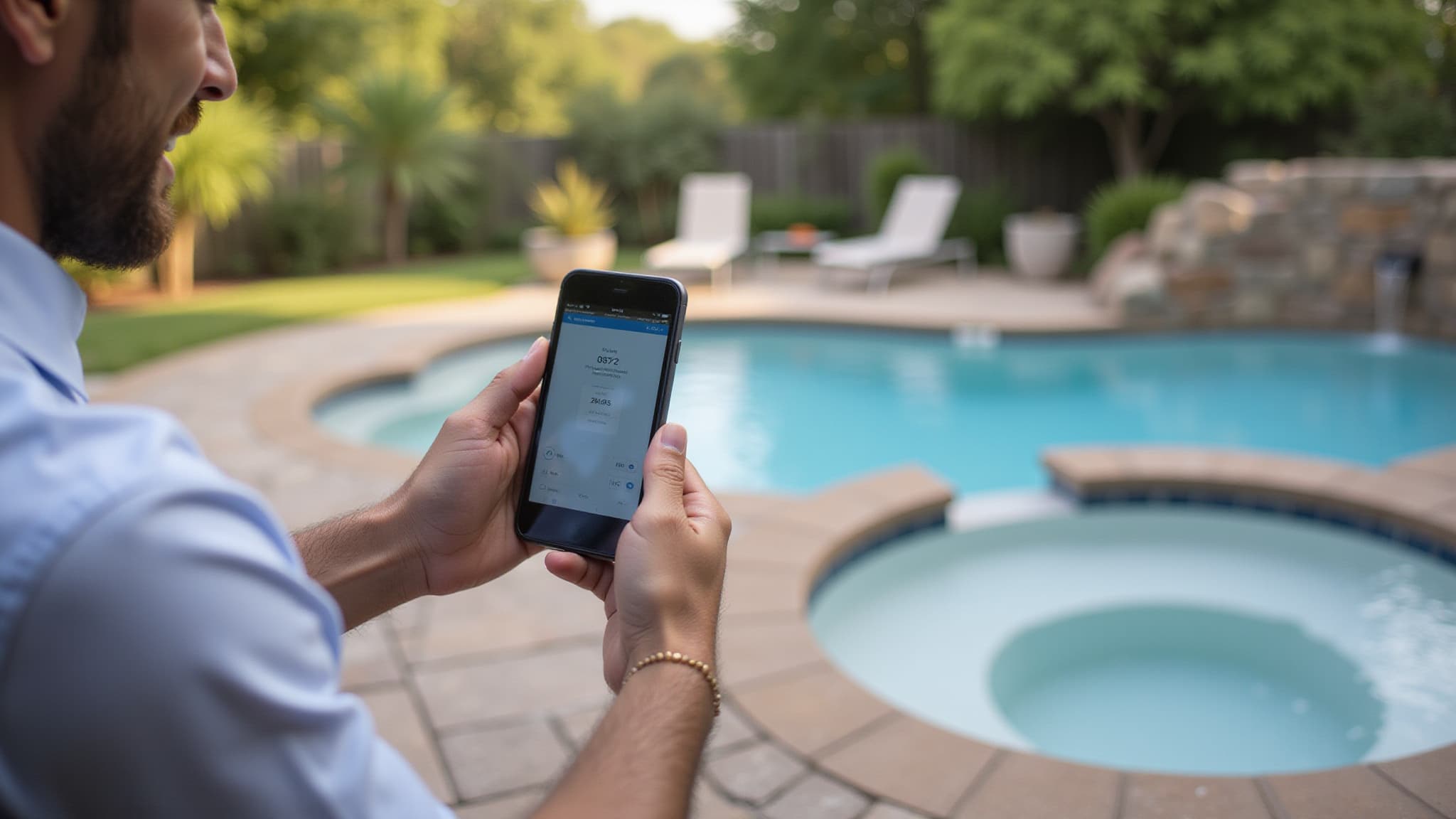
- Integrate smart home technology through Alexa or Google Assistant hubs for hands-free color cycling.
- Explore automated lighting controls via Bluetooth mesh apps to adjust brightness, hues, and patterns that complement surrounding greenery.
Pair Water Features With Fire Elements
When fire and water meet on a pool deck, they create a sensory contrast that transforms an ordinary backyard into a resort-caliber retreat. Position bio-ethanol fire bowls on hidden supports so flames appear to hover above the water’s surface, or install linear fire features along raised walls where scuppers cascade sheet water through the glow into your pool.
For dramatic effect, frame your infinity edge water features with flanking fire bowls that accent the vanishing horizon at dusk. Synchronized underwater fire water interaction comes alive when LED lighting mirrors flame tones beneath the surface. Use copper or stainless steel bowls paired with rough-cut stone surrounds and trailing ornamental grasses to soften edges, creating a layered composition that’s visually striking yet functionally safe.
Zone Your Pool Deck for Dining, Lounging, and Fire Pits
- Use rectangular pavers in varying sizes to anchor modern dining focal points near the pool.
- Pair circular pool shapes with wave-like decking for whimsical, soft-edged lounging areas.
- Frame fire pits with large boulders and natural stone slabs for a resort-caliber atmosphere.
- Connect zones with diamond-shaped paver paths or offset stepping stones for seamless connections.
- Stain wood decking in lighter tones to complement surrounding plantings across all three zones.
Design for Easy Access at Every Age
You’ll want 36-inch-minimum pathways lined with ornamental grasses or low-profile planters that guide movement without crowding. Slip-resistant decking, grab bars wrapped in brushed finishes, and level transfer spaces blend into your design rather than disrupting it. When you treat integrated accessibility elements as intentional design features, not afterthoughts, your renovation stays beautiful, functional, and welcoming across generations.
Frequently Asked Questions
How Much Does a Typical Pool Deck Renovation Cost in 2025?
You’ll typically spend between $3,000 and $20,000+ on a pool deck renovation in 2025, depending on your aesthetic vision. Your material costs make up about 55% of the budget, while labor requirements account for the remaining 45%. If you’re envisioning lush planter-integrated borders with decorative concrete or elegant pavers, expect to invest $12,000 to $20,000+ for premium finishes that beautifully blend hardscape textures with surrounding greenery.
Do I Need a Permit to Renovate My Pool Deck?
Yes, you’ll likely need a permit to renovate your pool deck. Permit requirements vary, but most jurisdictions mandate building permits for deck installation or significant structural changes. Minor repairs, like replacing a few boards, are typically exempt. You’ll want to check your local regulations, as they’ll dictate design specifications, footing depths, and guardrail heights. Understanding these rules early lets you focus on creating a lush, plant-integrated oasis with beautifully cohesive aesthetics.
How Long Does a Full Pool Deck Renovation Usually Take?
You can expect a full pool deck renovation to take 1, 3 weeks, though your construction timeline depends on design complexity and scope. If you’re incorporating intricate patterns, planter beds, or lush greenery borders, allow extra time for seamless integration. Your material selection, whether travertine, pavers, or textured overlays, also influences lead times. Weather and permits can add 1, 2 weeks, so plan ahead to achieve that beautifully curated, garden-framed outdoor oasis.
What Time of Year Is Best to Start a Pool Deck Renovation?
You’ll want to start your pool deck renovation in fall or winter when ideal weather conditions allow materials to cure beautifully and contractors offer more attentive service. Scheduling project timeline completion before summer means you’re ready to enjoy your redesigned outdoor oasis, think lush tropical plantings framing freshly finished pavers and seamless stone textures catching golden light. You’ll also negotiate better pricing during off-peak months while ensuring every aesthetic detail gets the care it deserves.
Can I Renovate My Pool Deck Without Draining the Pool?
Yes, you can renovate your pool deck without any need for pool drainage, since resurfacing focuses entirely on the deck surface itself. There’s no impact on pool structural integrity when you apply overlays, stamped concrete, or decorative pavers around your pool’s edge. You’ll maintain your backyard’s aesthetic flow by integrating lush plantings alongside fresh textures, think trailing grasses softening stamped stone borders, while your pool stays filled, beautiful, and completely undisturbed throughout the process.