
A wet pool deck is one of the most common, and preventable, causes of backyard injuries. You’ve got three solid options to fix that. Composite decking gives you textured, rot-resistant traction that holds up when soaked. Stone and pavers like travertine stay cooler and provide natural grip without sacrificing style. Rubber coatings exceed slip-resistance standards, reflect heat, and cushion falls. These slip-resistant pool deck options bring unique advantages worth exploring below.
Composite Decking for a Slip-Resistant Pool Deck
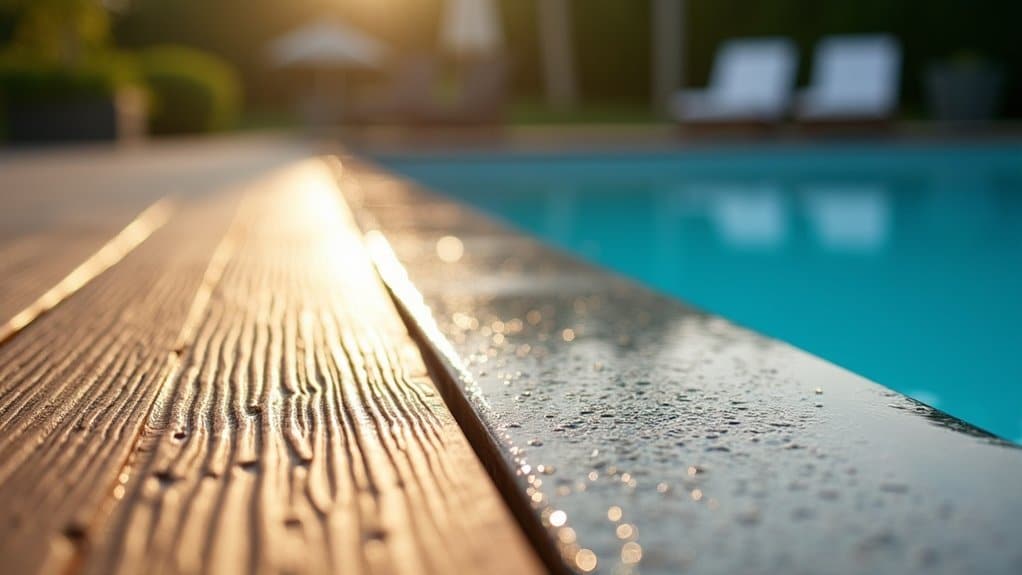
When you’re designing a pool deck, the surface material you choose directly impacts how safe the area is for bare, wet feet. Composite decking delivers reliable traction through textured, embossed surfaces that maintain grip even when soaked. Unlike traditional wood, it won’t rot, warp, or develop algae-induced slickness over time.
Today’s moisture wicking composite materials feature high-density cores and fully capped shells that resist water absorption at every level. This means less surface moisture and fewer slip hazards. Many boards also include integrated grip enhancements, brushed or embossed finishes engineered directly into the surface layer for lasting performance. You’ll get a natural wood-like appearance without the constant sealing and staining demands, while keeping your pool area safer for everyone who walks on it. Made from recycled materials, composite decking is also an environmentally friendly choice that combines sustainability with long-lasting safety around your pool.
Stone and Pavers That Keep Pool Decks Cool and Safe
Because stone and pavers naturally resist heat absorption and provide textured grip, they’ve become go-to choices for pool decks where safety and comfort matter most. Travertine, for example, stays 20% cooler than concrete thanks to its light color and porous structure, which also drains water to prevent puddles.
You’ll find that smooth textured stone finishes deliver reliable traction without sacrificing aesthetics. Porcelain pavers offer tight dimensional accuracy that reduces trip hazards, while maintaining a DCOF of 0.42 or higher for slip resistance.
Interlocking paver pattern benefits include enhanced wet traction and flexible jointing sand that accommodates ground shifts, preventing the cracks you’d see in poured concrete. Pavers also withstand 8,000 PSI, more than double concrete’s capacity.
Rubber Coatings for Non-Slip Pool Deck Protection
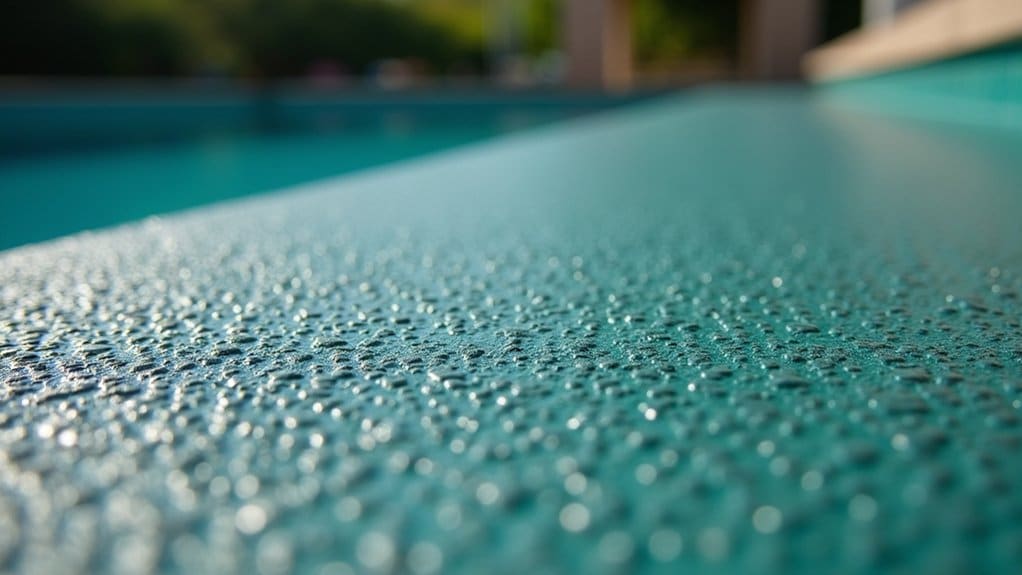
Although stone and pavers deliver excellent performance, rubber coatings offer a compelling alternative that addresses safety, comfort, and durability in a single application. You’ll get a textured, porous surface that exceeds ASTM F1677 slip-resistance standards without abrasive additives. The heat-reflective pigments keep surfaces up to 40°F cooler than concrete, while built-in cushioning absorbs shock from falls.
For DIY installation tips, note that rubber coatings resurface existing decks without demolition, typically completing in one to two days. They’re stain-proof against chlorine and sunscreen, require no sealing, and last 20+ years. Many products qualify as eco friendly alternatives since they’re made from recycled materials. You’ll also benefit from ADA-compliant, antimicrobial protection that resists mold and fungus long-term. Unlike tile, which can crack under temperature fluctuations, rubber coatings resist UV rays, freeze-thaw cycles, and heavy foot traffic for decades of reliable performance.
Frequently Asked Questions
How Often Should Natural Wood Pool Decks Be Sealed for Safety?
You should seal your natural wood pool deck every one to two years, though pool-adjacent moisture exposure often demands an annual sealing schedule to maintain slip resistance and structural integrity. Test your deck by sprinkling water, if it absorbs rather than beads, you’re overdue. Consider professional application methods to guarantee even coverage and proper curing. Always seal during moderate temperatures, keeping the surface dry 48 hours before and after application for maximum protection.
Can Concrete Pool Decks Be Customized to Match Backyard Aesthetics?
Absolutely, you can transform your concrete pool deck with customizable concrete finishes that complement your backyard’s style. You’ll find a variety of color options, from integral pigments and antiquing stains to 40+ premixed coating hues that match your landscape. Stamped patterns can mimic tile, brick, or natural stone, while textured overlays add slip resistance and visual appeal. You’re not sacrificing safety for aesthetics, you’re getting both in one durable, personalized surface.
Are Unglazed Travertine Tiles Durable Enough for High-Traffic Pool Areas?
Yes, unglazed travertine tiles are durable enough for high-traffic pool areas. They’ll withstand heavy foot traffic, furniture movement, and pool chemicals while staying cooler and slip-resistant underfoot. You’ll need to follow outdoor maintenance requirements like sealing every two to three years and regular cleaning to prevent staining and algae. For long term appearance considerations, proper installation with a mortar bed and consistent upkeep guarantees your travertine deck lasts 50 to 100 years.
What Anti-Slip Additives Work Best in Polyurethane Pool Deck Coatings?
You’ll get the best results from anti slip particulate additives like SSR-20 Polybead and Gator Grip, which use micronized polypropylene spheres to create durable slip resistant surface textures without a harsh gritty feel. Their rounded shape resists abrasion, won’t settle in your coating, and cleans easily. For maximum traction, Tru AlumX’s aluminum oxide reinforces against cracking while adding UV protection, keeping your pool deck safer and cooler underfoot.
Does Porcelain Tile Resist Staining Better Than Natural Stone Pool Decking?
Yes, porcelain tile resists staining vastly better than natural stone. Its nonporous surface repels pool chemicals, spills, and discoloration without requiring sealant. Natural stone’s moisture absorption properties make it vulnerable to deep-set stains and etching over time. You’ll also find porcelain delivers reliable slip resistance performance when textured finishes are selected, keeping your deck safer. You won’t need frequent sealing either, just simple cleaning maintains porcelain’s protective, stain-free surface for years.