


An outdoor kitchen design idea can be shaped around your site’s specific conditions, with three common layouts offering distinct advantages. Linear designs align grills and prep surfaces along existing walls for compact functionality. U-shaped configurations wrap cooking zones around three sides, maximizing small yards while maintaining efficient work triangles. Island setups anchor the entertaining space by clustering cooking and social areas into one central unit. Each layout responds differently to yard dimensions and traffic flow.
Linear Outdoor Kitchens Work Best Along Existing Walls
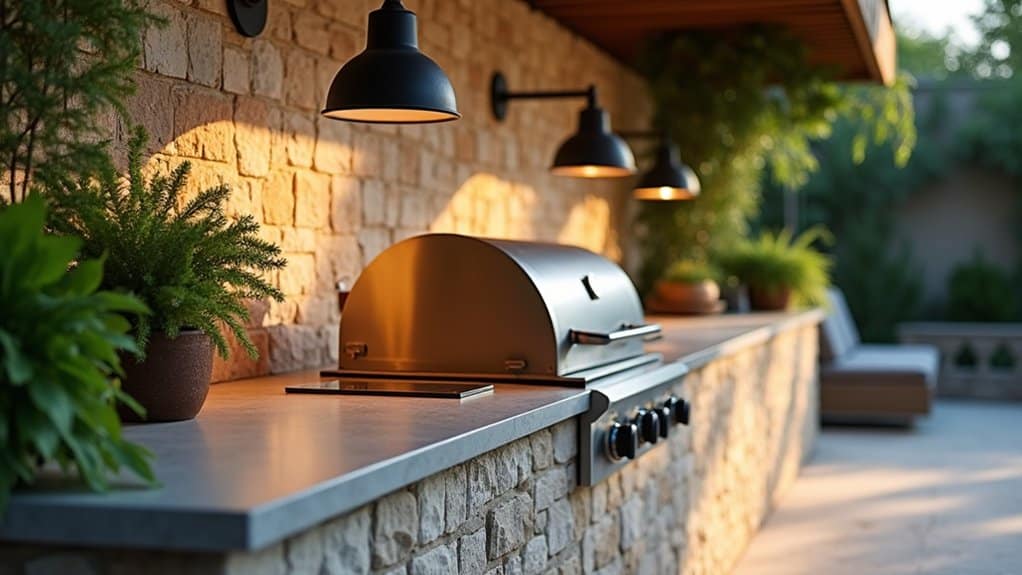
When you’re working with a narrow patio or a tight stretch along your home’s exterior, a linear outdoor kitchen makes the most practical sense. This layout aligns your grill, prep surfaces, and storage in a single streamlined row, achieving compact space utilization without sacrificing functionality.
You’ll position your grill at the center with prep areas flanking each side. Seamless wall integration allows the kitchen to run alongside your home’s exterior, whether freestanding or attached. This preserves clear pathways to other outdoor zones while maintaining your backyard’s open flow. This streamlined design also adds value to your home by extending your functional living space outdoors.
Modular configurations let you adapt piece by piece, adding one or two cabinets as your space allows. Each module takes only 30-45 minutes to assemble, making the installation process straightforward even for DIY enthusiasts. You’re building with your site’s dimensions, not against them, a truly responsive approach to outdoor living. For those with limited patio space, placing your island near a perimeter wall maximizes your available area while still accommodating essential cooking appliances.
U-Shaped Outdoor Kitchens Maximize Small Yard Space
A U-shaped outdoor kitchen wraps functionality around you on three sides, turning compact yards into high-performance cooking zones. You’ll maximize every square foot while maintaining efficient work triangles that let multiple cooks operate without collision. The enclosed design creates a defined outdoor room that responds directly to your site’s constraints.
Select modular components that adapt to your yard’s specific dimensions and budget. You can integrate grills, sinks, side burners, and storage across three connected surfaces built from weatherized materials that withstand seasonal exposure. The configuration naturally encourages guest interaction, with bar seating positioned where visitors can engage without disrupting workflow. Be mindful of appliance placement to avoid door and drawer interference when mapping out your layout.
For yards under 13 linear feet, focus on essentials. Larger footprints accommodate expansive entertaining needs. Expect costs to range from $8,000 to $50,000 depending on size, materials, and appliance selections. The layout creates smooth transitions between cooking, preparing, and serving areas that streamline your workflow. Either way, you’re creating a spatially intelligent setup that elevates outdoor living sustainably.
Island Outdoor Kitchens Anchor Full Entertaining Zones
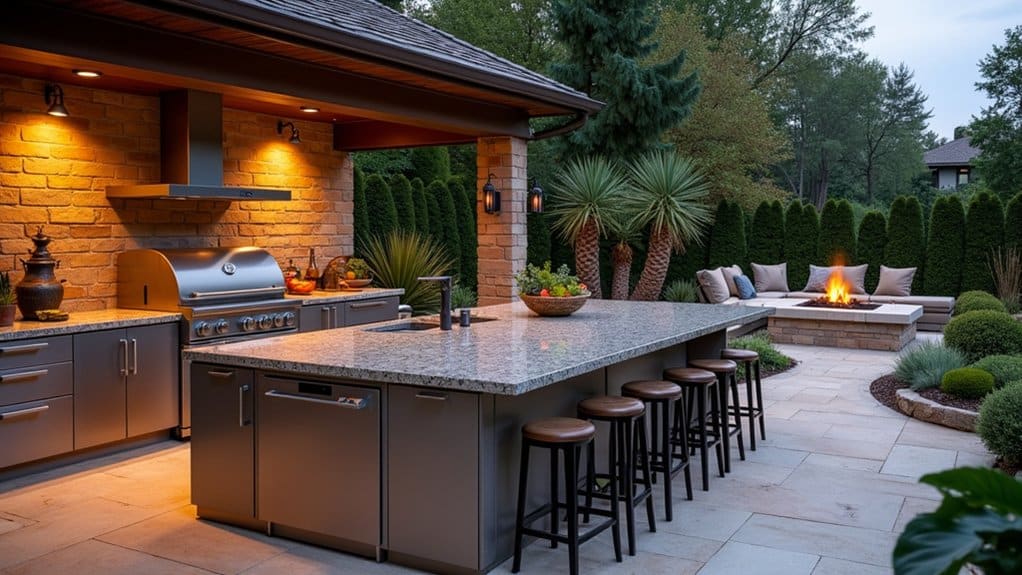
Island outdoor kitchens command your yard’s center, clustering cooking, prep, and social zones into one anchoring unit that defines how guests move through your space. You’ll find modular built in options let you configure grills, sinks, and refrigeration exactly where your site conditions demand. Versatile bar height setups with raised piers create natural gathering points while maintaining sightlines across your landscape. With cabinetry available in hundreds of sizes in 3″ increments, you can achieve precise configurations that fit your exact space requirements. Some homeowners opt for three separate linear islands dedicated to cooking, pizza oven, and refrigeration for maximum functionality. For streamlined installation, Unilock’s U-Cara modular panels provide a contemporary framing solution that simplifies island construction while delivering a polished aesthetic.
| Feature | Function | Benefit |
|---|---|---|
| Central placement | Defines traffic flow | Separates cooking from lounging |
| 316 stainless steel | Weather resistance | Long-term durability |
| Concrete countertops | Prep surface | Heat and stain resistance |
| Storage cabinets | Organization | Reduces indoor trips |
| Modular components | Customization | Adapts to changing needs |
Position your island to respond to prevailing winds and sun patterns for year-round functionality.
Frequently Asked Questions
What Fire Features Work Best for Year-Round Outdoor Cooking?
You’ll find wood burning fireplaces and propane fire pits deliver the most versatile year-round performance when thoughtfully positioned within your outdoor kitchen layout. Place fire features 10-12 feet from cooking zones, considering wind patterns to prevent smoke interference. Pair propane fire pits with patio heaters for instant warmth, while wood burning fireplaces create dramatic focal points. Add pergolas with retractable canopies, and you’ve created a site-responsive space that functions beautifully across all seasons.
Which Luxury Finishes Are Most Durable for Outdoor Kitchen Surfaces?
For maximum durability, you’ll want to examine weather resistant granite, quartzite, or Dekton surfaces that withstand UV exposure and temperature extremes. Stainless steel countertops offer exceptional longevity and complement site-responsive designs seamlessly. When planning your outdoor kitchen’s spatial layout, position lighter-colored stones in sun-intense zones to minimize heat absorption. Quartzite and Dekton require minimal maintenance, making them sustainable choices that’ll endure seasonal changes while maintaining their refined appearance for years.
How Can Modular Components Create Flexible Multi-Functional Outdoor Spaces?
You can transform your backyard through modular design elements that adapt to your evolving lifestyle. By configuring independent units with adjustable feet and hinges, you’ll create site-responsive layouts that maximize every square foot. Start with essential components like grills and fridges, then expand with pizza ovens or bar stations as needs change. Seamless storage integration guarantees spatial planning efficiency, while freestanding pieces combine into versatile entertaining zones without permanent construction commitments.
What Bold Color Trends Are Popular for Outdoor Kitchens Right Now?
You’ll find deep forest greens, terracotta tones, and slate blues dominating outdoor kitchens right now. These site-responsive hues connect your cooking space to the natural landscape while delivering bold impact. Consider vibrant accent tiles in mustard or ocean blue to energize backsplashes, or embrace monochromatic palette choices using varying shades of sage green for cohesive flow. These earthy, moody colors work sustainably with your existing hardscape and surrounding vegetation.
How Do I Incorporate Bar Stations and Lounge Seating Into My Design?
You’ll want to position your bar station where it naturally connects cooking and socializing zones. Choose customizable bar layouts like L-shaped or U-shaped configurations that respond to your yard’s dimensions and traffic flow. Integrate built-in refrigerators, sinks, and storage to minimize trips indoors. Pair raised countertops with comfortable seating options using durable, weather-resistant stools that match your bar height. Add a pergola overhead for shade and string lighting to extend evening usability.