

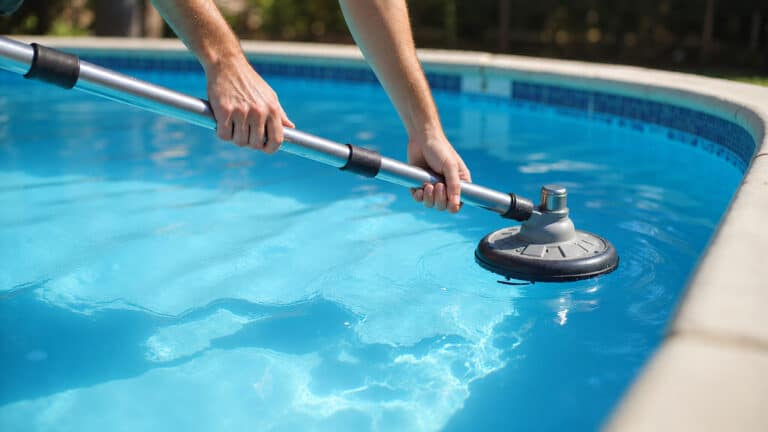

Vacuuming an above ground pool manually keeps the floor clean and the water clear without a robotic cleaner. Start by skimming debris and confirming your water level. Verify your pump and filter work, then empty the skimmer and pump baskets. Attach the vacuum head to your pole, connect the hose, and inspect it for damage. Submerge the hose fully to purge trapped air and prime it, keeping the vacuum head underwater. Once primed, seal the suction connection, then guide slow, overlapping strokes across the floor. Below, you’ll find each step explained.
Key Takeaways
- Skim floating debris, confirm water level, and verify pump and filter operation before you begin vacuuming.
- Attach the vacuum head to the telescopic pole and connect the hose securely, inspecting it for cracks or damage.
- Submerge the hose fully to purge trapped air, then attach the suction connection to the skimmer port or vacuum plate.
- Start in the shallow end and guide the vacuum head slowly using long, smooth, overlapping strokes across the floor.
- Use the Filter setting for light debris, switch to Waste for heavy sediment or algae, and vacuum slowly to avoid stirring spores.
How do you vacuum an above ground pool manually
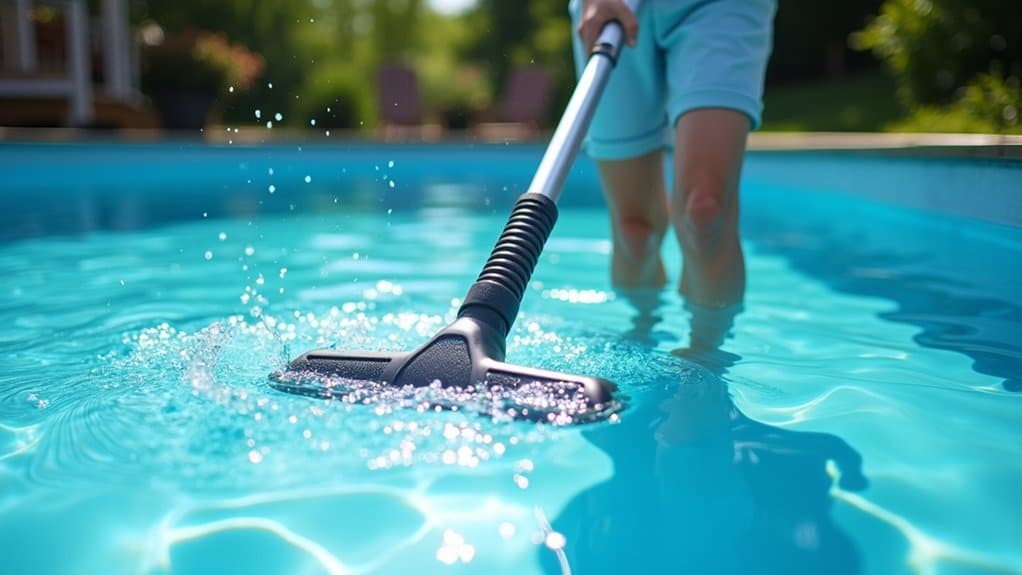
Manually vacuuming an above ground pool comes down to three coordinated stages: preparing the water and equipment, priming the hose to establish suction, and moving methodically across the floor. First, skim floating debris, confirm the water level, and verify the pump and filter run properly. Empty the skimmer and pump baskets. Attach the vacuum head to the pole, then connect the vacuum hose securely, checking for cracks. Submerge the hose to purge trapped air, keeping the head underwater to maintain prime. Make the skimmer connection using a vacuum plate where required. With suction established, move slowly in long, overlapping strokes, starting shallow and working across the floor while watching for air-induced suction loss.
What equipment do you need to vacuum the pool by hand
To vacuum the pool by hand, you need three core components: a vacuum head, a telescopic pole, and a vacuum hose rated for your pool. Attach the vacuum head to the telescopic pole before lowering the assembly into the water, so you keep full control and avoid dropping components. Connect the vacuum hose securely to the vacuum head, then inspect its length for cracks, splits, or internal blockages that would weaken suction. Keep a vacuum plate or skimmer adapter ready, since many above-ground systems require it to link the hose to the skimmer suction port. Check every fitting for a tight seal; loose connections let air enter the line and cut suction. Verify each piece functions correctly before you begin, preventing interruptions once vacuuming starts.
How do you set up and prime the manual vacuum
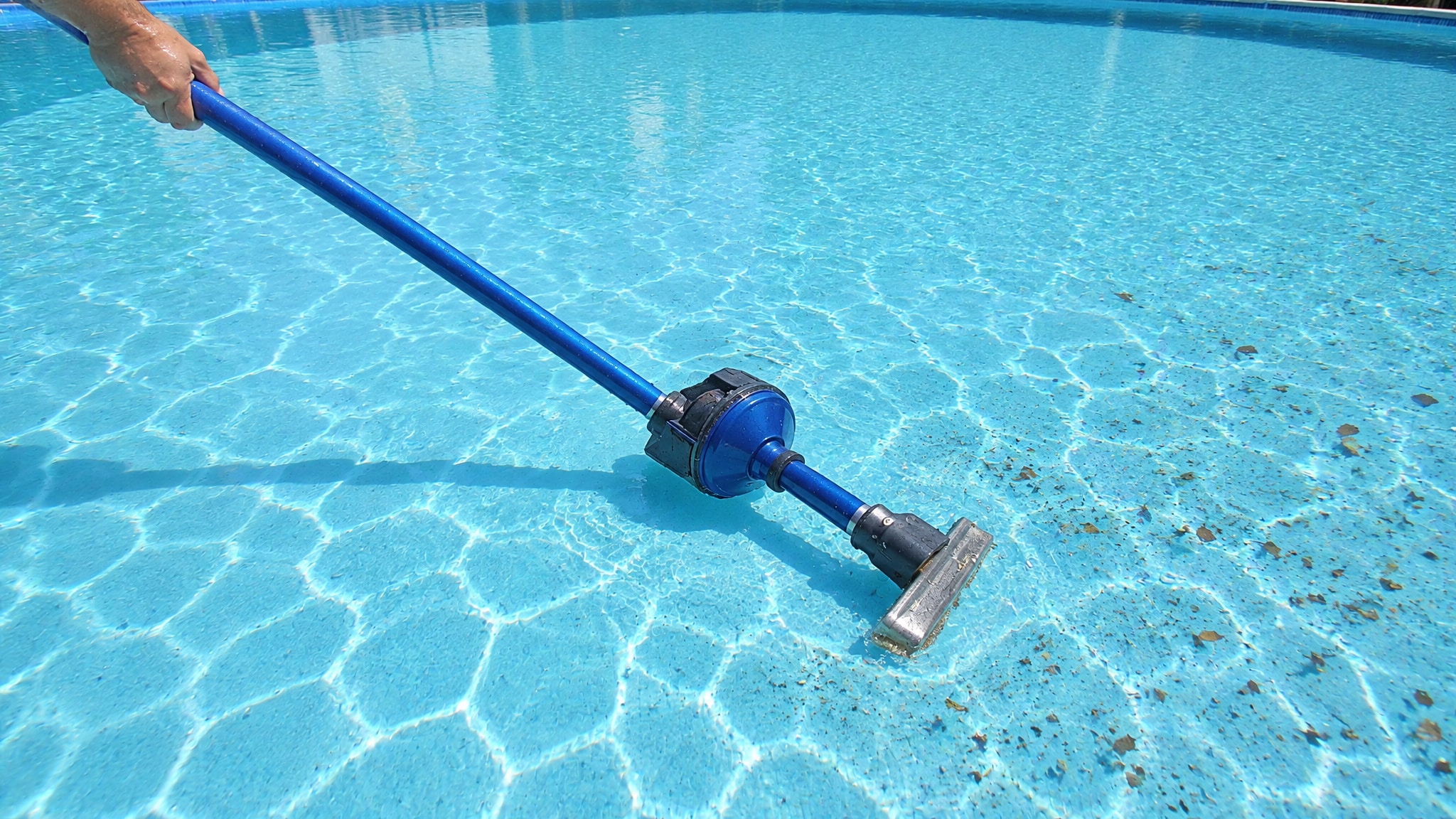
Set up and prime the manual vacuum by attaching the head to the pole and confirming the hose connects securely to the head. Now, focus on vacuum hose priming: submerge the hose fully to fill it with water and push trapped air out. For faster priming, hold the hose over a return jet until you see steady flow. Keep the vacuum head underwater throughout so the hose stays primed and suction holds. Once air’s gone, make the suction connection by attaching the hose to the skimmer suction port or vacuum plate. Switch the pump off at the right moment to avoid drawing air into the system.
What are the steps to vacuum an above ground pool manually
Clean the pool floor systematically by starting in the shallow end and guiding the vacuum head slowly across the bottom, letting it draw settled dirt without stirring sediment back into the water. Use long, smooth, overlapping strokes to cover the entire floor, following a consistent pattern to reduce missed spots. Move deliberately; rushing weakens debris cleanup and clouds the water.
Pay extra attention to corners, edges, and low points where sediment collects. Monitor suction throughout. If it weakens, check for basket or hose problems and correct them before continuing. Should the vacuum head float or draw air, shut off the pump immediately to protect the system. Maintain steady coverage until the floor’s clean.
How do you vacuum different types of debris and algae
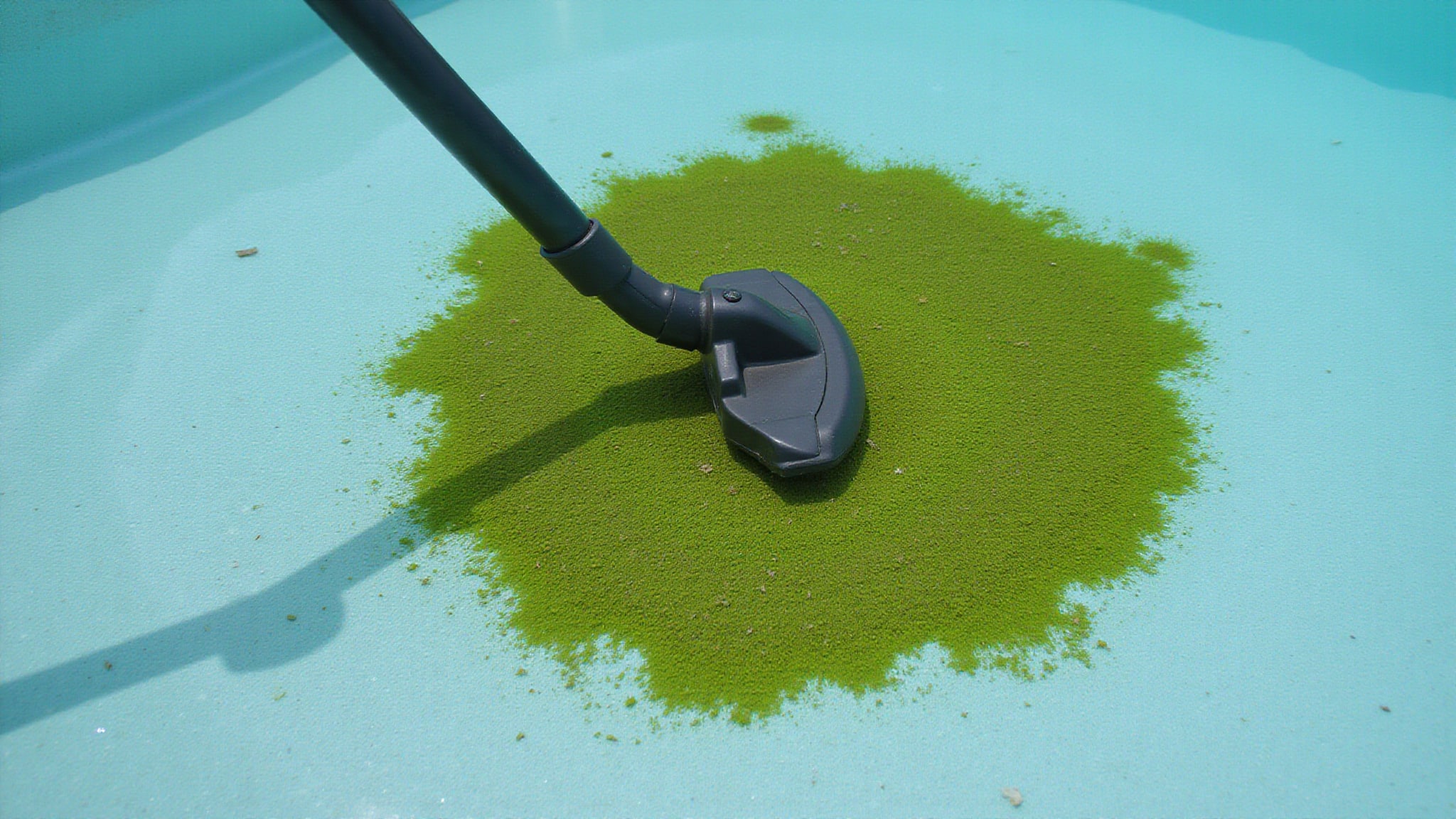
Vacuum different types of debris and algae by matching your filter setting to the job. For routine light debris such as leaves, dust, and small particles, leave the filter on “Filter” and vacuum normally. When you face heavy sediment or algae, switch to “Waste” so you don’t overload or contaminate the filter media.
For algae, move the vacuum head slowly across affected areas to avoid stirring spores back into the water. Use long, overlapping strokes and pause over dense patches to lift settled growth completely. Never rush; fast passes push algae and fine debris into suspension, clouding the water.
Monitor suction throughout. If flow weakens, check baskets and hose immediately. After clearing algae on “Waste,” recheck your water level to maintain circulation.
How often should you manually vacuum your above ground pool
Vacuum your above ground pool once weekly for routine maintenance, then adjust based on measurable conditions. How often you vacuum depends on your pool’s usage, surrounding environment, and current water condition. Heavy bather loads, nearby trees, or post-storm debris demand more frequent debris removal to protect circulation and filtration.
| Condition | Vacuuming Frequency | Priority |
|---|---|---|
| Normal use | Weekly | Routine |
| Heavy use | 2–3 times weekly | Elevated |
| Near trees | Twice weekly | Elevated |
| Post-storm | Immediately | Critical |
| Algae present | Daily until clear | Critical |
Monitor water clarity and floor sediment between cycles. When debris accumulates faster than your schedule handles, increase frequency. Consistent, condition-driven vacuuming prevents clogged baskets, sustains suction, and keeps your water safe and balanced.
What common mistakes should you avoid while vacuuming
Common vacuuming mistakes to avoid include skipping priming your vacuum hose, since trapped air causes air leaks that weaken suction and let the vacuum head float. Never leave the pump running when the hose draws air, since you’ll risk losing prime and stressing the motor. Avoid moving the vacuum head too fast, because you’ll stir settled debris back into the water. Don’t ignore full skimmer or pump baskets; clogged baskets reduce flow and suction. Skip inspecting the hose for cracks, and you’ll invite persistent air leaks. Don’t forget to tighten every fitting before starting. Finally, avoid vacuuming randomly, missing corners and edges where sediment collects, and don’t leave equipment submerged after finishing your work.
Conclusion
Vacuuming an above ground pool manually comes down to priming the hose properly and moving at a steady, unhurried pace. Prep the water and baskets, purge the air to lock in suction, then work the floor in long overlapping strokes, switching to the Waste setting for heavy sediment or algae. Keep to a weekly rhythm, step it up for trees, heavy use or storms, and your water stays clear and your equipment protected.
Want a Pool That’s Easier to Keep Clean?
The right equipment and a well-built pool make routine cleaning far less work. Innovative Outdoor Living builds, renovates and services pools in Palm Beach Gardens, FL and across the Treasure Coast, built for Florida conditions. To keep yours in top shape, explore our pool maintenance and repair services or contact our team. You can also call (561) 594-1495.
Frequently Asked Questions
Can You Vacuum an Above Ground Pool Without a Pump?
No, you can’t vacuum effectively without a working pump. The pump generates the suction that draws debris through the vacuum head, hose, and skimmer port into the filter. Before you start, confirm the pump and filter are running properly. Without that suction, you’ll only stir up settled dirt, not remove it. Keep the system primed throughout, and shut off the pump immediately if the hose starts drawing air.
How Long Does It Take to Manually Vacuum a Pool?
You’ll typically spend 30 to 60 minutes, depending on pool size, debris load, and suction strength. Work slowly with long, overlapping strokes, so rushing won’t stir settled dirt back into the water. Heavier debris or larger floors take longer. Keep the system primed throughout, and monitor suction, weak flow means you’ll need to check baskets or the hose. Vacuuming methodically across the floor ensures full coverage without missing sediment-prone corners and edges.
Should You Add Chemicals Before or After Vacuuming?
You should check and balance your water before vacuuming, but add most chemicals after. Inspect the water balance and general pool condition first, since that guides your cleaning. Vacuum to remove settled dirt, then dose chemicals afterward so they distribute evenly through clean, well-circulated water. Don’t add treatments right before vacuuming to waste, especially if you’re using the “Waste” setting, since you’ll pump treated water straight out.
Can Vacuuming Damage a Vinyl-Lined Above Ground Pool?
Yes, vacuuming can damage a vinyl liner if you’re careless. Move the vacuum head slowly to avoid dragging grit that scratches or tears the surface. Don’t force the head over wrinkles or seams, and check it for sharp edges or debris beforehand. Keep fittings tight to maintain steady suction, since weak suction tempts aggressive scrubbing. Use smooth, overlapping strokes, and lower equipment gently so you don’t puncture or stress the vinyl.
Why Does My Pool Look Cloudy After Vacuuming?
You’ve likely stirred settled debris back into the water by moving the vacuum head too fast. Slow down and use long, smooth, overlapping strokes to avoid disturbing sediment. If your filter’s set to “Filter,” fine particles can pass through and recirculate, so switch to “Waste” for heavier loads where supported. Also check for weak suction from a clogged basket or air leak. Recheck your water balance and filter condition afterward.