To hurricane-proof your South Florida backyard, you’ll need every structure built to Florida Building Code standards, that means 175 mph wind ratings in coastal zones and engineered plans for pergolas and outdoor kitchens. Secure loose furniture 72 hours before a storm, install impact-resistant glass meeting Miami-Dade TAS standards, and plant wind-resistant trees like live oaks and sabal palms. From drainage solutions to quick-release fasteners, each detail below breaks down exactly how to protect your outdoor space.
What Hurricane-Rated Actually Means for Patios
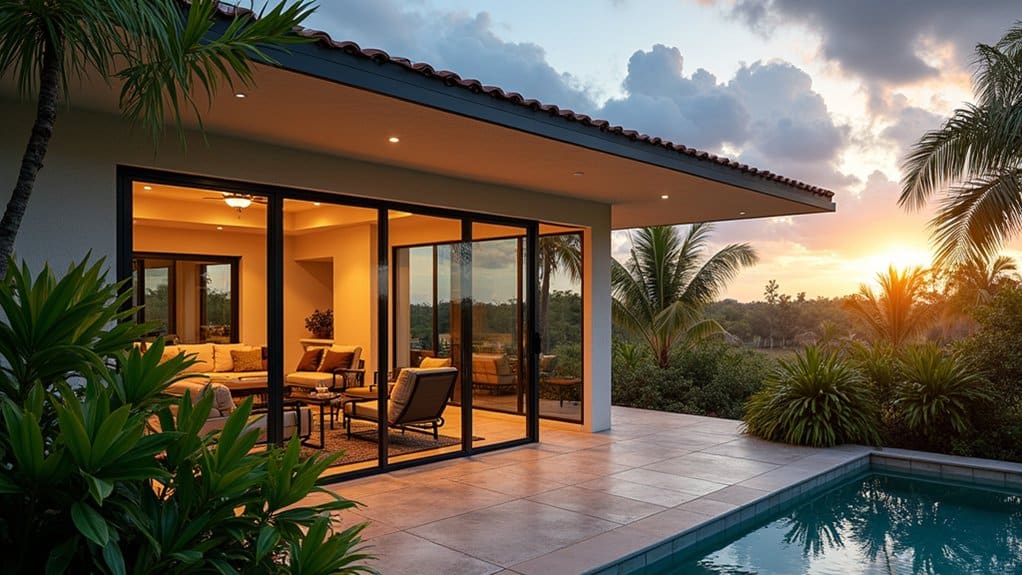
When a patio product carries a “hurricane-rated” label, it doesn’t mean it’s indestructible, it means it’s engineered to reduce failure risk under high-wind forces. Design pressure ratings, anchoring systems, and impact-resistant materials work together to create hurricane resistant outdoor structures, but no single label guarantees survival in every storm.
In South Florida, you’re dealing with High-Velocity Hurricane Zone standards requiring wind performance at 175 mph or higher. Inland Florida codes drop to around 130 mph. Your patio doors, covers, and structural components must meet local code requirements, not just marketing claims. Verify Florida Building Code compliance before purchasing. “Hurricane-rated” without impact resistance won’t protect against flying debris. You need both wind performance and impact resistance to genuinely reduce storm damage risk. Hurricanes cause rapid changes in pressure and wind direction, which is why patio covers designed only for mild weather often fail at their weakest connection points during severe storms.
Build Your Pergola and Outdoor Kitchen to Code
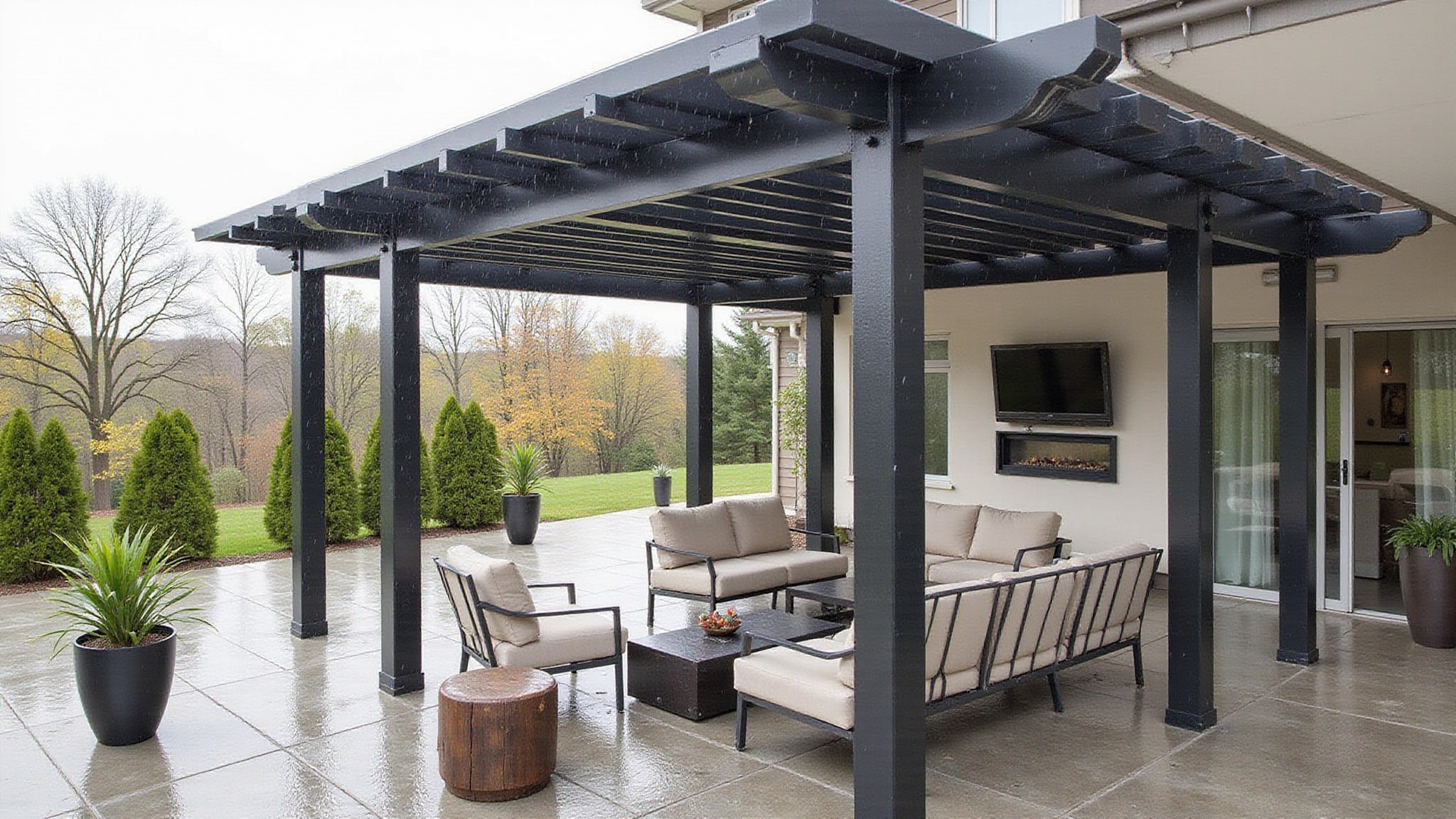
If you’re building a pergola or outdoor kitchen in South Florida, you’ll need engineered plans that meet Florida Building Code wind-load requirements, and in Miami-Dade and Broward, that means permits, structural inspections, and approved anchoring systems before you break ground. Your design should also account for impact-resistant glass protection on any enclosed or semi-enclosed sections and motorized awning systems that retract or secure ahead of hurricane-force winds. Given South Florida’s intense humidity and storm exposure, using pressure-treated wood or corrosion-resistant metals significantly enhances the longevity of your outdoor structures. Getting these elements right from the permit stage keeps you code-compliant and greatly reduces your storm-damage risk.
Hurricane-Rated Pergola Engineering
Because South Florida’s coastal wind speeds can exceed 170 mph under current Florida Building Code and ASCE 7 requirements, your pergola isn’t just a backyard upgrade, it’s a structural commitment. A true hurricane proof patio starts with engineered wind-load calculations specific to your site’s exposure category, risk classification, and coastal proximity.
Material selection matters, but it’s not everything. Reinforced marine-grade aluminum resists salt corrosion while delivering superior storm performance, yet structural integrity depends on joints, connectors, and internal engineering. Deep concrete footers and heavy-duty post brackets must counter both uplift and lateral forces during hurricane events. Dual-walled gapless louvers further enhance structural performance while managing weather exposure across the system.
Don’t confuse “hurricane-rated” with indestructible. It means your pergola meets defined wind-load standards through proper engineering, anchoring, and code-path documentation, not that it’s immune to every storm scenario.
Impact-Resistant Glass Protection
Engineering your pergola to withstand hurricane-force winds solves one problem, but every glazed opening in your outdoor kitchen or enclosed patio creates another. In Miami-Dade and Broward’s High-Velocity Hurricane Zone, you’ll need impact-resistant glass protection tested to Miami-Dade TAS 201, 202, and 203, not just statewide approvals.
Your compliance hinges on elevation. Openings below 30 feet require large-missile impact testing using a 9-pound 2×4, while higher openings need small-missile ratings. Both must pass pressure-cycle performance after impact.
You’ve got two paths: install code-approved impact-resistant glazing or use tested shutters and storm panels. Either way, every exterior glazed assembly needs both impact resistance and design-pressure ratings matching your site’s wind load. Pull permits, keep NOAs accessible, and guarantee professional installation, inspectors verify both product and assembly.
Motorized Awning Storm Prep
While your pergola and outdoor kitchen may stand engineered for 170, 180 mph winds, a single motorized awning left extended during a tropical system can rip free, damage mounting hardware, and compromise the structure it’s bolted to. Motorized awning storm prep starts 48, 72 hours before projected landfall.
Retract all motorized shades fully. Disable smart schedules and lock out remotes so automated triggers don’t redeploy fabric during shifting conditions. Wind sensors offer backup, but don’t rely on them, verify retraction manually. Inspect mounting bolts, track alignment, and fabric condition for wear that could worsen under storm stress.
After the storm passes, check electrical connections for water intrusion before powering anything back on. Document pre- and post-storm conditions with photos to support insurance claims if damage occurs.
Protect Outdoor Spaces With Shutters and Impact Glass
When hurricane-force winds send debris hurtling toward your patio doors and windows, impact glass and shutters serve as your outdoor living space’s last line of defense. Laminated glass with PVB or EVA interlayers holds together after impact, preventing dangerous breaches that cause internal pressurization.
For hurricane proof outdoor living in South Florida, you’ll want sliding impact glass doors for patio access and fixed picture windows for unobstructed views. Pair them with exterior shutter systems for layered protection against wind-borne debris.
Beyond storm resistance, impact glass delivers year-round benefits. Low-E coatings reflect infrared radiation, reducing heat gain during brutal South Florida summers. Multi-layer construction improves insulation, cutting cooling costs while maintaining visibility. You’re not just preparing for hurricanes, you’re upgrading comfort and efficiency across every season.
Secure Loose Furniture and Gear Before a Storm
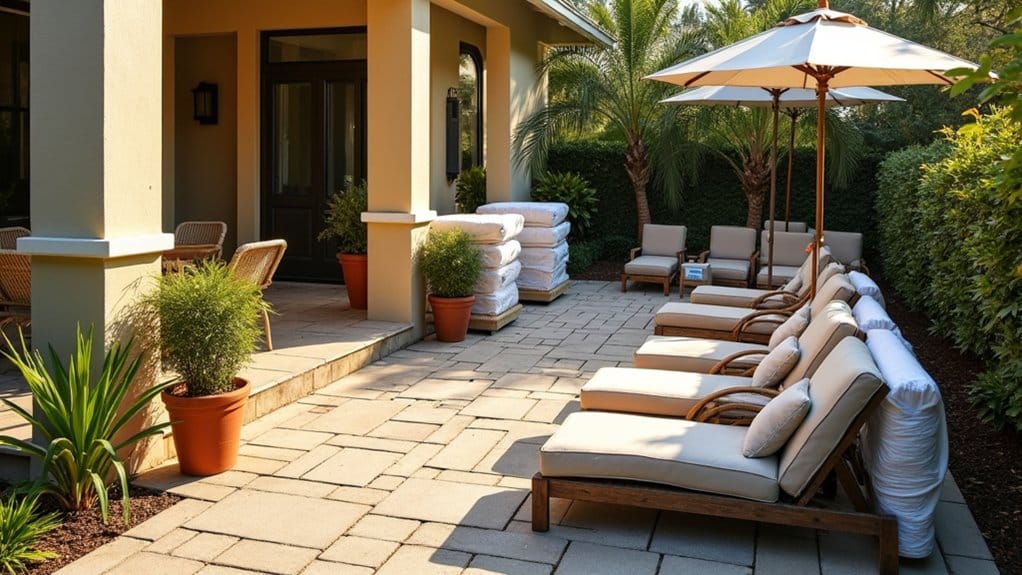
Impact glass and shutters protect your home’s envelope, but everything sitting on your patio becomes a missile once winds hit 45 mph. To secure loose furniture and gear before a storm, start 48, 72 hours out. Move cushions, umbrellas, and lightweight chairs indoors first. Relocate heavy teak tables and sectionals next, don’t move them alone.
| Priority | Action | Deadline |
|---|---|---|
| Cushions, pillows, décor | Move indoors immediately | 72 hours out |
| Lightweight chairs, side tables | Store in garage or shed | 48 hours out |
| Heavy furniture | Relocate or strap with ratchet ties | 48 hours out |
| Document all items | Photograph for insurance | Before relocation |
| Clear storage space | Empty garage, spare rooms | 72 hours out |
When you prepare backyard for hurricane conditions, photograph everything before moving it. Wrap pieces in moving blankets to prevent strap abrasion, and disassemble what you can.
Use Anchor Points and Built-In Storage to Prep Fast
When hurricane season hits South Florida, you need anchor points with quick-release fasteners that let you detach shade sails, pergolas, and lightweight structures in minutes rather than hours. Turnbuckles and snap-hook connectors give you tool-free disconnection while maintaining proper tension during everyday use, so you’re not scrambling with wrenches as a storm approaches. Pair that speed with built-in storage benches, weatherproof deck boxes, and integrated cabinetry that let you stow cushions, electronics, and loose gear on-site without hauling everything indoors.
Quick-Release Fastener Benefits
Because hurricane warnings often leave South Florida homeowners with just hours to secure their outdoor spaces, quick-release fasteners offer a critical advantage, they allow tool-free removal and reattachment of shade panels, outdoor kitchen components, and patio accessories with a simple quarter-turn or single-button release.
Spring-loaded ball mechanisms lock into pre-set anchor points, delivering consistent holding force across repeated storm prep cycles. Key benefits include:
- Faster teardown: Single-action release eliminates multi-step unfastening, cutting prep time when tropical storms approach.
- Fewer handling errors: Simplified operation reduces mistakes during rushed securing routines before high winds arrive.
- Durable repeatability: Built for frequent access, these fasteners maintain reliable performance season after season without replacement.
For South Florida’s hurricane-prone coast, quick-release fasteners transform storm readiness from a scramble into a streamlined routine.
Built-In Storage Solutions
You’ll want corrosion-resistant materials rated for South Florida’s salt air and humidity. Store emergency kits, tarps, and repair tools in labeled zones so you’re not searching under pressure. Elevate irreplaceable items above bulk supplies. Keep generators and fuel in dedicated, protected compartments ready for immediate deployment.
Built-in storage consolidates your prep into one location, eliminates scattered inventory, and cuts the time between a hurricane watch and a locked-down backyard.
Plant Wind-Resistant Trees for Hurricane Season
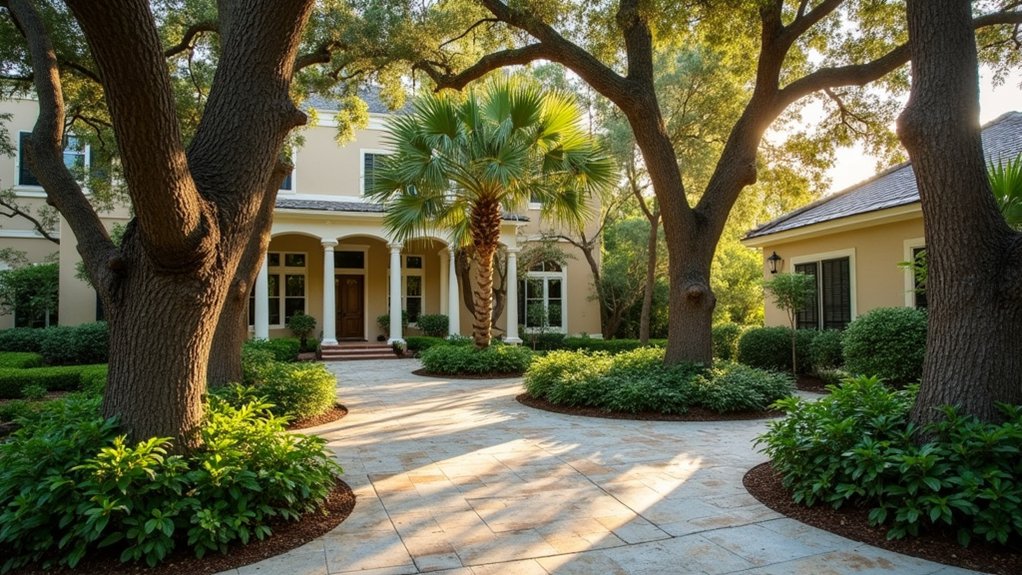
The trees surrounding your outdoor living space can either shield your property or destroy it during a hurricane, and species selection is the single biggest factor determining which outcome you’ll face.
When you plant wind-resistant trees, prioritize these proven South Florida performers:
- Live oak, exceptional wind resistance with strong trunk structure and wide root systems that anchor firmly during hurricane-force gusts.
- Sabal palm, sheds leaves to reduce wind drag without losing its terminal growing point, making it nearly hurricane-proof.
- Gumbo limbo, flexible branches bend rather than snap under extreme pressure.
Avoid water oak, laurel oak, and sand pine, they’ll fail catastrophically. Plant trees in staggered clusters of five or more, spaced ten feet apart, positioned 1, 1.5 times mature height away from structures.
Shape Your Landscape to Reduce Storm Damage
Even after you’ve selected the right tree species, your landscape can still cause serious damage during a hurricane if you haven’t shaped it to handle extreme wind and rain. Shape tree canopies for open airflow by thinning dense growth so wind passes through rather than catching like a sail. Remove dead, crossing, and weak branches before June 1 to eliminate failure points.
Position large trees far enough from structures to prevent roof and window damage during Category 3+ winds. Use groundcovers to anchor soil on slopes where heavy rain triggers erosion. Plant salt-tolerant hedges along coastal property borders as wind buffers. Anchor pergolas to concrete footings, swap lightweight shade coverings for removable options, and eliminate loose gravel that becomes projectile debris in South Florida’s most violent storms.
Drain Stormwater Away From Your Outdoor Living Area
Every inch of rain that hits your roof generates hundreds of gallons of runoff, and without a clear path away from your outdoor living area, that water pools on patios, floods seating zones, and erodes the landscape you’ve worked to protect.
To drain stormwater away from your outdoor living area, prioritize these three systems:
Protecting your outdoor living area starts with directing stormwater away through the right drainage systems.
- Downspout extensions with underground piping, redirect roof runoff 4 to 6 feet from your foundation and connect it to a dry well, swale, or storm sewer.
- Channel drains at patio edges, intercept surface water where it converges and move it to a proper discharge point before backup occurs.
- French drains for subsurface water, collect persistent groundwater with perforated pipe in gravel-filled trenches when surface drainage alone can’t keep up.
Pick Hardscapes and Fences That Handle High Winds
Because solid fences act like sails in hurricane-force winds, your hardscape and fencing choices directly determine whether your outdoor structures survive a Category 4 storm or become airborne debris. Aluminum and reinforced steel fencing rank among the top hurricane-resistant options because they combine corrosion resistance with wind-permeable designs that let gusts pass through rather than building pressure against solid surfaces.
Steel-framed fencing with wood privacy pickets offers the closest thing to hurricane-proof privacy. Set posts deeper than standard depth in firm, undisturbed soil, saturated ground loses anchoring strength fast. Trim heavy vines before storm season since they turn fences into drag surfaces. South Florida’s salt air accelerates deterioration, so prioritize rot-proof, corrosion-resistant materials that maintain structural integrity through repeated hurricane seasons reaching 155 mph winds.
Your Pre-Hurricane Season Yard Checklist
Strong fences and hardscapes give your yard a fighting chance during a hurricane, but they won’t save you from a potted plant that flies through your sliding glass door at 130 mph. Your pre-hurricane season yard checklist should be complete before June 1.
- Trim and thin trees. Remove deadwood, weak branch unions, and fronds near power lines, roofs, and windows to reduce wind resistance and debris risk.
- Clear and secure loose items. Bring in patio furniture, grills, trash bins, garden tools, and potted plants. Treat anything unsecured as a projectile.
- Inspect drainage systems. Check French drains, swales, gutters, and downspouts for blockages. Confirm water flows away from your foundation before South Florida’s heavy rains arrive.
Restore Your Outdoor Living After the Storm
After a hurricane, getting your outdoor space back to life takes the right team and a thoughtful restoration plan. At Innovative Outdoor Living, our experienced team provides trusted Backyard Makeovers with expert craftsmanship and a personalized recovery approach. Call +1 (561) 594-1495 today and start rebuilding your outdoor retreat.
Frequently Asked Questions
How Soon After a Hurricane Can You Safely Use Your Outdoor Kitchen Again?
You can’t safely use your outdoor kitchen until you’ve fully inspected it, there’s no fixed waiting period. Before firing anything up, shut off gas lines and check for leaks, verify electrical components are dry and intact, and confirm counters, cabinets, and anchors haven’t shifted. If floodwater reached your equipment, don’t operate it until a professional clears it. In South Florida’s salt-air environment, hidden corrosion makes post-storm inspection non-negotiable.
Does Homeowners Insurance Cover Hurricane Damage to Outdoor Living Structures?
Your Florida homeowners policy typically covers hurricane wind damage to outdoor structures, but coverage depends on classification. Attached features fall under Coverage A (dwelling), while detached pergolas, fences, and sheds fall under Coverage B (other structures) with lower limits. Flooding requires separate insurance, it’s excluded from standard policies. Hurricane deductibles of 2%, 5%, or 10% apply during named storms. Review your policy language now before hurricane season hits.
How Much Does It Cost to Hurricane-Proof an Existing Backyard?
You’ll typically spend $15,000, $45,000 to hurricane-proof an existing South Florida backyard, though older pre-1992 homes can exceed $60,000 when structural tear-outs are necessary. Storm-resistant upgrades generally add 10%, 20% over standard construction costs. Your biggest cost drivers include impact-rated materials, reinforced anchoring systems, and local code compliance. Don’t overlook insurance offsets, hurricane-resistant features can reduce your premiums by 25%, 45%, recovering significant costs over time.
Should You Hire a Contractor or DIY Your Outdoor Storm Preparations?
You should hire a contractor for structural work and handle simpler tasks yourself. Hire licensed pros for reinforced pergolas, engineered anchoring, electrical tie-ins, and any project requiring Florida building code compliance or wind-load calculations. You’ll want DIY for moving loose furniture indoors, securing cushions and grills, photographing assets for insurance, and clearing drainage paths. Start DIY prep 48, 72 hours before a hurricane watch; schedule contractor work well before storm season begins.
How Do You File an Insurance Claim for Damaged Outdoor Structures?
Contact your insurer as soon as it’s safe to assess the damage. Document everything, take high-resolution photos, videos, and note the date and storm conditions. File your claim by phone or online, providing all evidence along with receipts and maintenance records. Log every interaction with your insurer. Prevent further damage with temporary covers when possible. If disputes arise, consider hiring a public adjuster or licensed attorney to protect your claim.