
To hurricane-proof your Florida outdoor kitchen, you’ll need marine-grade 316 stainless steel, HDPE polymer cabinets, and a reinforced concrete slab with epoxy-anchored base plates. Bolt down all appliances using hurricane-rated fasteners and grade your hardscape to direct stormwater away from critical components. Don’t skip permits, structural additions require wind-load engineering approval, and gas, electrical, and plumbing work each trigger separate permits. Below, you’ll find the specific techniques and checklists to get every detail right.
Hurricane Risks Every Florida Outdoor Kitchen Faces
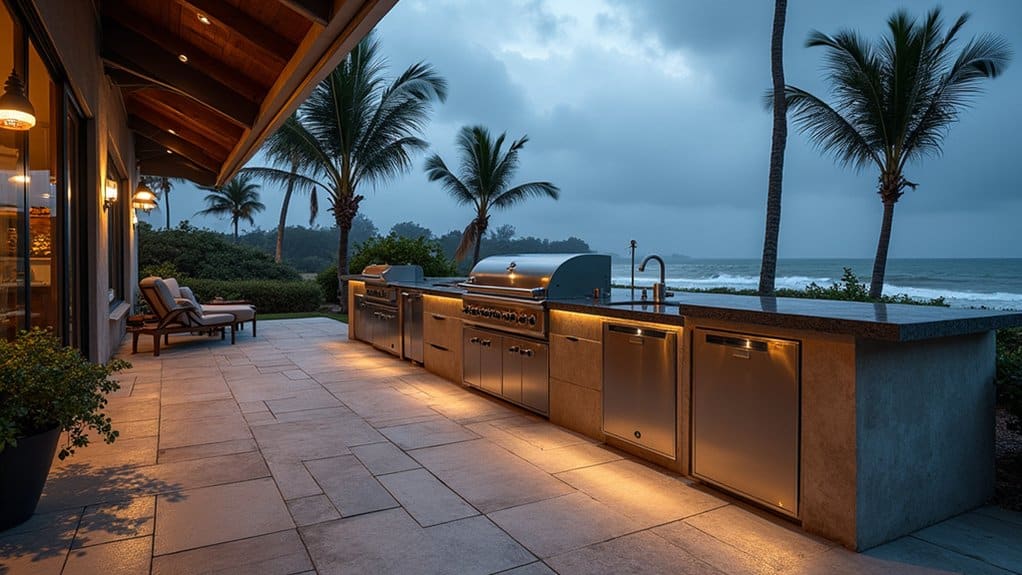
When hurricane season hits Florida, your outdoor kitchen faces a combination of threats that can destroy unprotected installations in a single storm. Wind loads turn unsecured grills, furniture, and décor into dangerous projectiles, while heavy rain creates flooding and water intrusion inside cabinets and utility cavities.
Storm surge and flash flooding pose the greatest risk in low-lying coastal zones, where rising water damages electrical components, gas lines, and structural bases. Utility failure compounds these hazards, compromised gas and electrical connections create secondary dangers during and after the event. Positioning your kitchen near natural windbreaks like fences or shrubbery can significantly reduce direct wind exposure and debris impact.
To build a true hurricane proof outdoor kitchen, you must address wind anchoring, drainage planning, raised placement, and utility protection as integrated design requirements, not optional upgrades. Each risk demands specific structural and code-compliant solutions from the start.
Materials That Survive Salt, Rain, and High Winds
Surviving a hurricane starts with what your outdoor kitchen is built from. For coastal builds, you’ll want marine-grade 316 stainless steel for appliances and cabinetry, it resists salt corrosion far better than standard steel. HDPE polymer cabinets are another strong choice; they’ve withstood winds above 150 mph without damage and won’t absorb moisture like wood framing.
Your countertops matter too. Granite and porcelain both handle heat, rain, and salt exposure well, but stone surfaces require annual resealing to prevent moisture intrusion. Powder-coated aluminum adds lightweight corrosion resistance for structural components. Choosing lighter color surfaces is also advisable, as they reflect heat and minimize temperature buildup during Florida’s intense sun exposure.
For your marine grade outdoor kitchen frame, concrete outperforms wood, it’s non-combustible, moisture-resistant, and structurally sound under wind load. If you’re pulling permits in a coastal zone, these material selections simplify code compliance considerably.
How to Anchor Your Outdoor Kitchen for Hurricane Winds
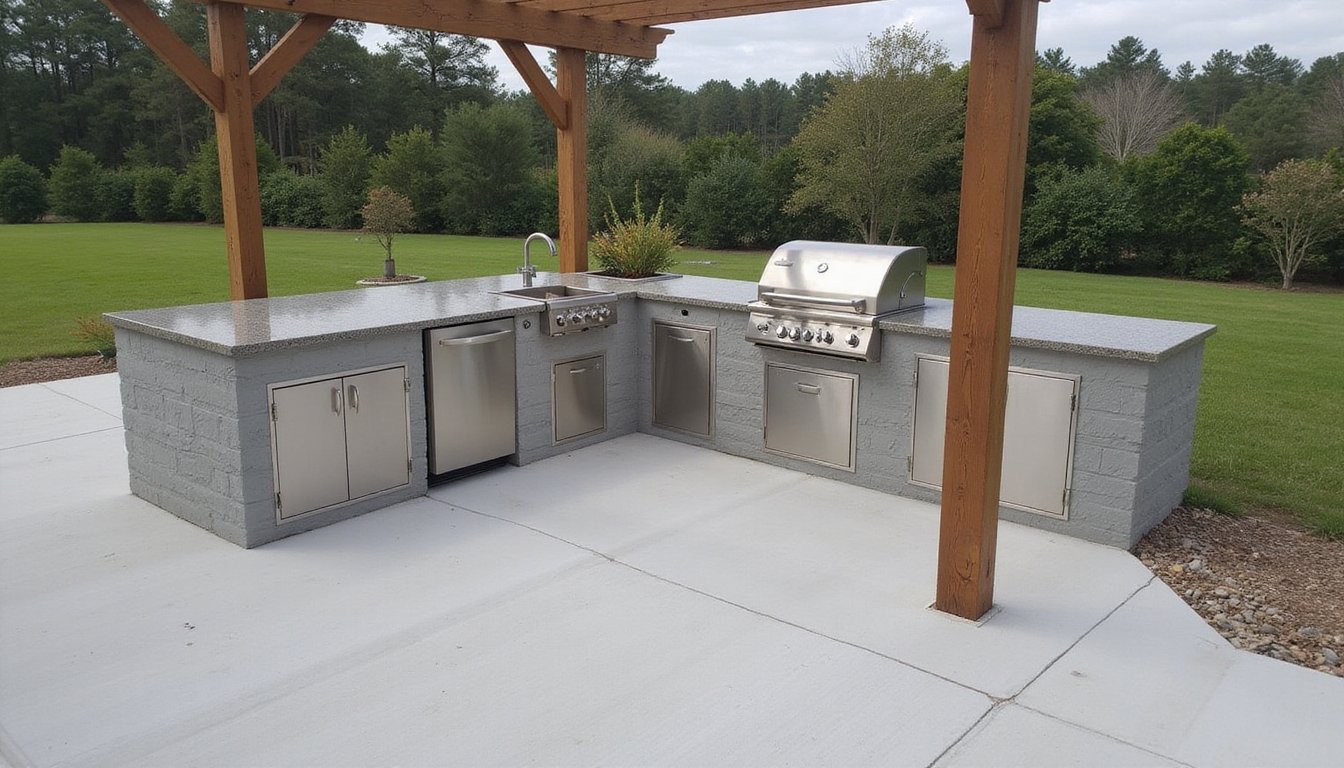
Even the best materials won’t protect your outdoor kitchen if the structure isn’t properly anchored to resist uplift and lateral wind loads. Start with a reinforced concrete slab and epoxy-anchor steel frame base plates directly into it. If you’re building with concrete block walls, key them into the slab using rebar and grout fill for maximum stability.
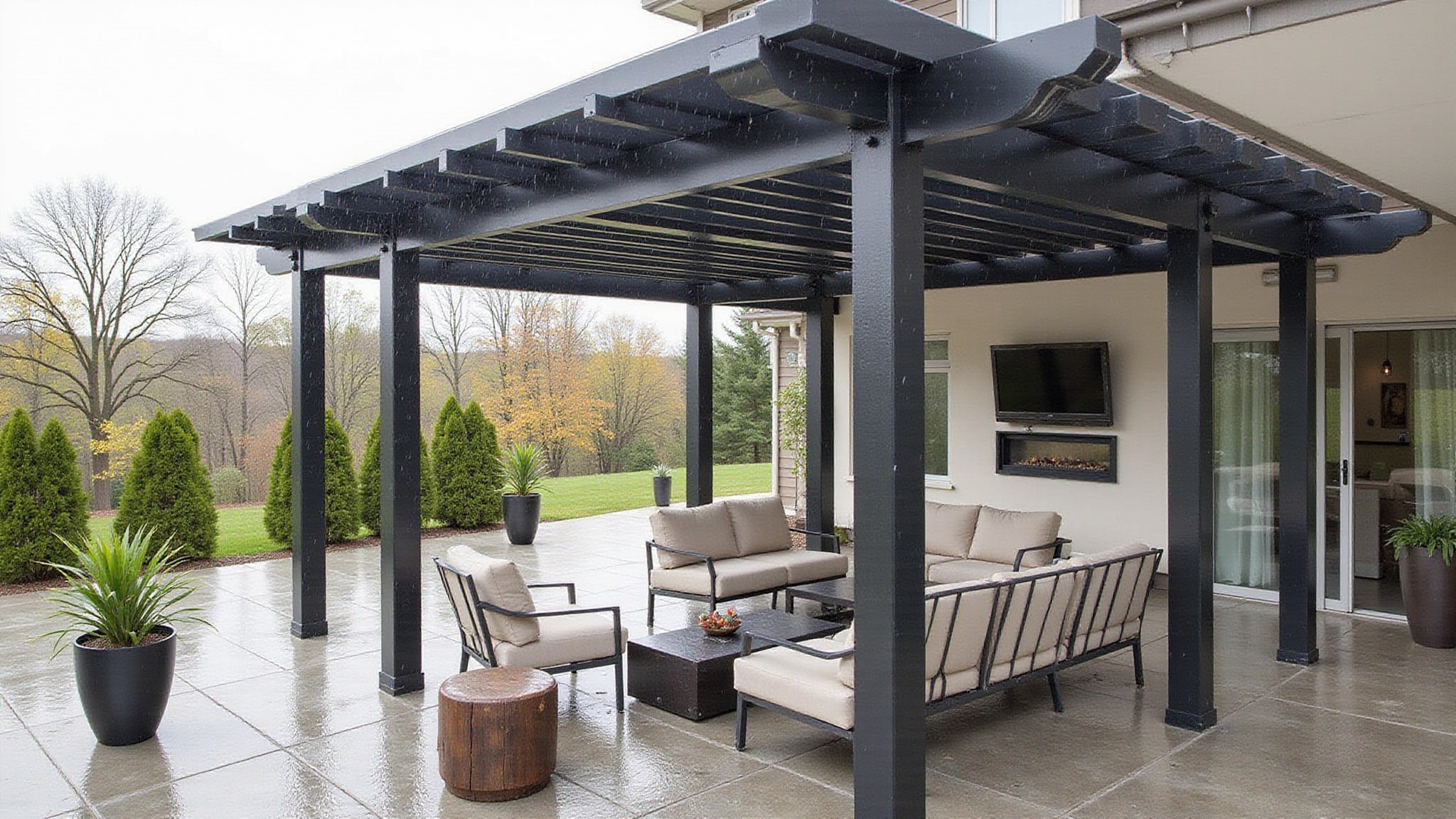
Florida’s anchoring requirements demand hurricane-rated fasteners for permanent outdoor structures. Bolt down grills, refrigerators, and cabinets to prevent movement during high winds. For overhead pergolas, use metal tie-downs with steel or aluminum framing designed to meet local wind-load codes. Additionally, choose impact-resistant patio flooring such as textured concrete or pavers to minimize shifting under extreme weather conditions.
Install hidden anchor points throughout your space for quick tie-down of portable items. Quick-release fasteners let you secure equipment rapidly when a hurricane watch drops within that critical 48, 72 hour window.
Drainage Design to Protect Your Outdoor Kitchen
You’ll need to grade your outdoor kitchen’s hardscape with a slight slope that directs stormwater away from cooking surfaces, cabinet bases, and appliance footings. Catch basins and underground drain lines give you reliable conveyance options, especially where roof downspouts or neighboring runoff would otherwise flood your patio zone. Elevating your cabinetry above the finished grade adds another layer of protection by keeping storage and utility connections above pooling water during heavy storms.
Slope And Grade Planning
Before you pour a slab or set a single base course, your site’s slope and grade plan determines whether stormwater drains away from your outdoor kitchen, or pools against it. Proper slope and grade planning starts with identifying your discharge point, then working back toward higher ground to maintain continuous downward flow. Even hurricane outdoor kitchen covers with proper drip lines won’t prevent damage if runoff collects at the slab perimeter.
- Grade away from the structure using a positive slope, a 4:1 ratio is a common Florida residential benchmark, translating to 2 feet of elevation change over 8 feet of horizontal distance.
- Target minimum 1% slope for smooth drainage pipe (1/8 inch per foot) and 2% for corrugated pipe.
- Mark low spots before finalizing any hardscape to prevent ponding and soil settlement.
Drain System Options
Once your grade plan confirms where water flows, you need to match each drainage point with the right system, sanitary sewer, French drain, dry well, catch basin, or even a simple collection bucket. Each option carries distinct permit requirements and performance limits that affect your storm proof outdoor kitchen.
| System | Best For | Key Limitation |
|---|---|---|
| Sanitary sewer connection | High-use sinks with disposal | Higher install cost if drain line is distant |
| French drain / dry well | Remote sinks without sewer access | Not suitable for food waste; code restrictions apply |
| Catch basin with grinder pump | Layouts where gravity drainage won’t work | Requires power and added maintenance |
You’ll want to keep sanitary and stormwater lines fully separated, mixing them violates code and creates backup risk during heavy rain events.
Elevated Cabinet Placement
Because standing water poses one of the biggest threats to outdoor cabinetry during Florida’s storm season, raising your cabinet bases above the surrounding grade should be a core part of your drainage plan, not an afterthought. Raised cabinet placement reduces direct exposure to pooling water, storm surge, and surface runoff that accumulates across patio slabs during heavy rain events.
To maximize effectiveness, integrate raised cabinet placement with these structural considerations:
- Reinforce foundations using concrete or heavy-duty steel platforms that anchor raised cabinets against lateral wind forces
- Coordinate drainage slopes so runoff flows away from cabinet faces, toe kicks, and storage openings
- Specify weather-sealed materials like aluminum or powder-coated metals, since raised installations still face wind-driven rain and airborne moisture
Plan raising, drainage, and structural anchoring together from permit stage forward.
Florida Permits and Wind-Load Codes for Outdoor Kitchens
Whether you’re adding a sink, wiring outlets, or running a gas line to a built-in grill, most outdoor kitchen projects in Florida will trigger at least one permit. Structural additions like roofs or pergolas require wind-load engineering, just like hurricane shutters on your home. Local building departments enforce strict codes because of hurricane exposure, and inspections cover electrical, gas, and structural work before final approval.
| Project Element | Permit Trigger |
|---|---|
| Electrical outlets or lighting | Electrical permit required |
| Built-in grill gas line | Gas permit required |
| Sink or ice maker plumbing | Plumbing permit required |
| Roof, pergola, or attached structure | Structural permit with wind-load review |
Your municipality determines specific requirements, so check with your city or county building department before construction begins.
Your 48-Hour Pre-Storm Outdoor Kitchen Checklist
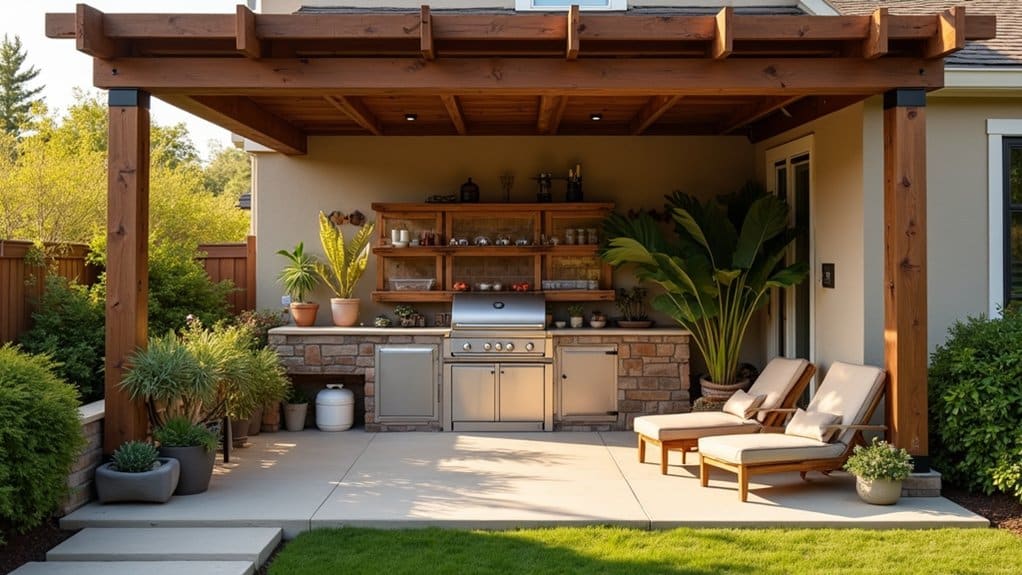
When a hurricane watch is issued, you’ve got 48 hours to secure every loose item in your outdoor kitchen, cushions, lightweight furniture, grill covers, and decorative accessories, before they become wind-driven projectiles. Shut off gas and water at the main valves, and verify your outdoor electrical components are GFCI-protected and shielded from potential flooding or debris impact. Acting within this window guarantees you’re not scrambling when conditions deteriorate and access becomes unsafe.
Secure Loose Items
A single loose chair can hit your outdoor kitchen at over 100 mph during a hurricane, turning everyday items into structural threats. You’ll want to secure outdoor appliances hurricane-ready by walking the entire area and identifying every removable object within your 48-hour prep window.
- Move cushions, umbrellas, aluminum chairs, planters, and decorative accessories indoors, garage or interior storage is always safer than tarps or covers, which shred in high winds.
- Bolt down heavy fixtures like grills and tables using ground anchors and tie-down hardware rated for wind loads.
- Photograph everything before relocating items to support insurance claims with documented proof of condition and ownership.
Perform a final walkthrough as landfall approaches. Confirm all portables are stored and anchored items remain fastened.
Shut Off Utilities
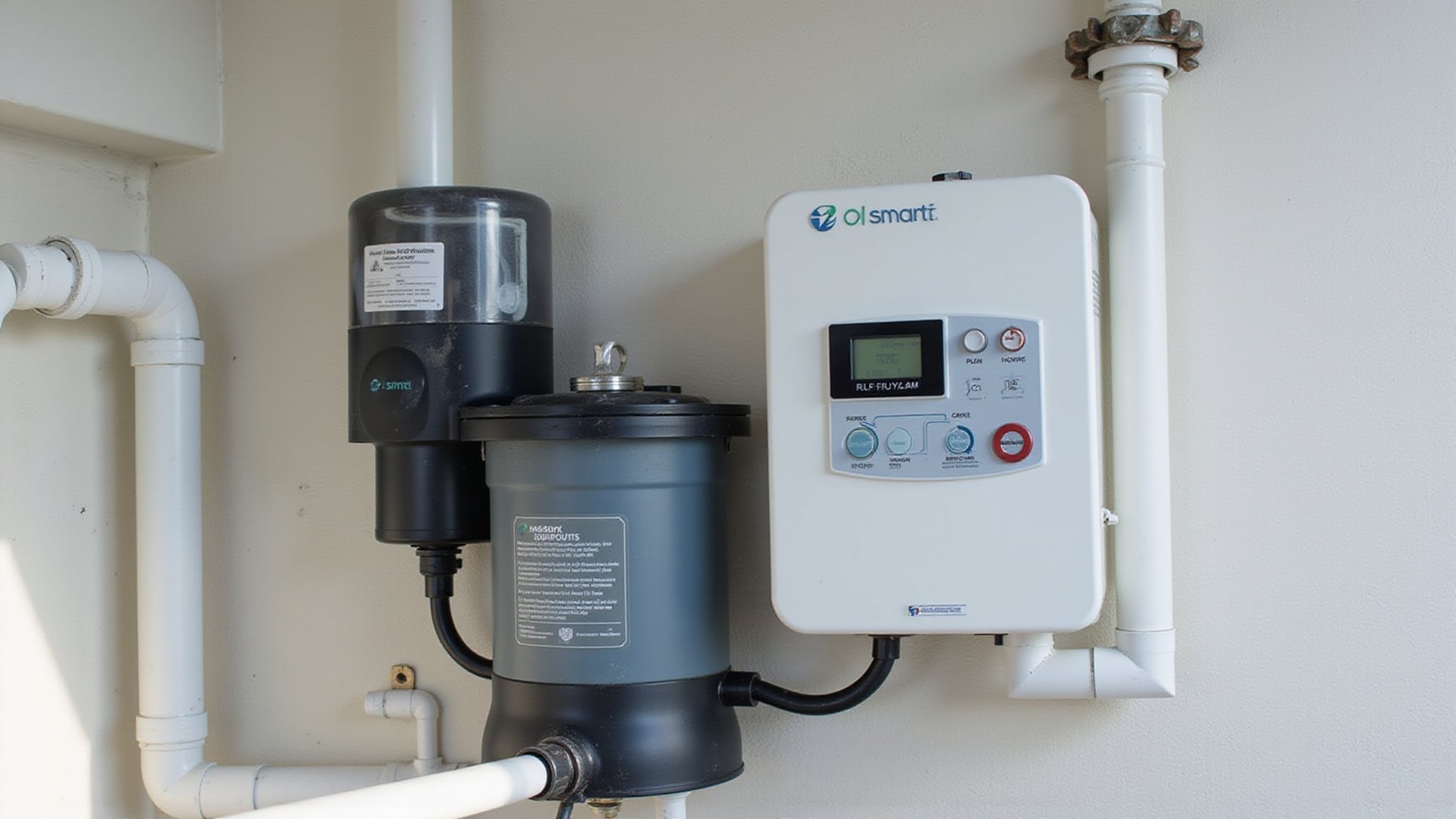
Because floodwater and wind damage can compromise gas lines, electrical circuits, and plumbing simultaneously, you’ll need a clear utility shutdown sequence well before the storm arrives. Start by turning off selected breakers for outdoor kitchen circuits, then shut off utilities at individual gas appliance valves rather than the main service unless directed otherwise.
Drain outdoor plumbing lines tied to sinks and ice makers to prevent burst pipes. Inspect flexible gas connectors for corrosion during your pre-storm check, and confirm all gas appliances, grills, burners, side-cook stations, are fully off before you leave.
Disconnect portable appliances, install surge protection on high-value equipment, and never energize wet equipment post-storm without a qualified inspection confirming dry, safe conditions. Document every valve location for quick reference.
Post-Hurricane Outdoor Kitchen Inspection and Recovery
Once local officials issue the all-clear, you’ll want to approach your outdoor kitchen zone with caution before touching any equipment or utilities. Treat downed lines, shifted gas piping, and standing water as active hazards. Shut off gas, electricity, and water at main controls if you suspect leaks or flooding.
Safety first, never touch equipment or utilities until officials give the all-clear and hazards are assessed.
Begin your structural assessment by inspecting marine-grade cabinetry, anchor points, countertops, and framing for wind-related movement or separation. Document everything with photos before cleanup.
Focus your recovery on these priority areas:
- Water intrusion: Check inside cabinets, utility chases, and behind appliances for pooling, mold, or saltwater corrosion.
- Utility systems: Inspect gas lines, GFCI outlets, and plumbing for damage before restoring service.
- Insurance documentation: Photograph all damage and retain receipts before discarding compromised components.
Schedule licensed inspections before resuming use.
Storm-Proof Your Outdoor Living Today
Florida outdoor living deserves storm protection that doesn’t sacrifice beauty, function, or year-round enjoyment. At Innovative Outdoor Living, our experienced team provides trusted Outdoor Kitchens and pergola construction built to withstand Florida’s toughest weather. Call +1 (561) 594-1495 today and protect your outdoor investment for years to come.
Frequently Asked Questions
Does Homeowners Insurance Cover Hurricane Damage to Outdoor Kitchens in Florida?
Your homeowners insurance may partially cover hurricane wind damage to your outdoor kitchen, but don’t count on full protection. If your kitchen’s detached, it likely falls under “other structures” coverage, typically capped at 10% of your dwelling limit. That won’t cover flooding or storm surge; you’ll need separate flood insurance. Hurricane deductibles of 2, 10% can greatly reduce payouts. Document everything with photos and receipts to strengthen your claim.
How Much Does It Cost to Hurricane-Proof an Outdoor Kitchen?
You’ll typically spend $15,000, $25,000 for a basic hurricane-resistant outdoor kitchen in Florida, $25,000, $60,000 for mid-range builds with reinforced structures and weather-resistant cabinetry, and $75,000, $100,000+ for luxury setups with engineered enclosures. Hurricane-proofing measures, concrete block construction, rebar-reinforced footers, marine-grade hardware, sealed electrical systems, and hurricane-rated anchors, generally add 10%, 15% to your base construction costs. Structural upgrades like permitted pergolas or pavilions can add $5,000, $40,000 more.
Can Portable Outdoor Kitchens Survive Hurricane Conditions Better Than Built-In Ones?
Yes, portable outdoor kitchens generally survive hurricanes better, if you can move them to sheltered storage before landfall. You eliminate wind and debris exposure entirely by relocating the unit. Built-in kitchens rely on structural anchoring, which improves stability but doesn’t remove exposure. However, portability alone won’t protect you; you’ll still need marine-grade HDPE construction and corrosion-resistant hardware. Drainage design matters more than kitchen type when you’re addressing flood risk.
Should Outdoor Kitchen Appliances Be Removed Entirely Before a Hurricane Hits?
You should remove portable appliances, grills, coolers, propane tanks, and loose accessories, and store them in a garage or shed before the storm hits. Don’t remove built-in appliances; instead, shut off gas, electrical, and water lines, then cover them with waterproof protection. You’ll want built-ins anchored to a concrete base with wind-rated brackets. Latch all cabinet doors securely and guarantee proper drainage so stormwater doesn’t pool around fixed equipment.
How Often Should Outdoor Kitchen Hurricane-Proofing Features Be Inspected or Replaced?
You should inspect hurricane-proofing features every 3, 6 months, with operational tests quarterly for motorized screens and mechanisms. Complete your most thorough inspection in May or early June before hurricane season starts. After any storm, you’ll want to recheck anchors, bolts, drainage, and utility connections for hidden damage. Replace components showing rust, corrosion, or weakened fastening immediately, don’t wait for the next cycle. Document all findings to support permit compliance and insurance claims.