Start securing your outdoor furniture 48, 72 hours before a Florida hurricane makes landfall. Photograph everything for insurance, then move cushions, lightweight chairs, and umbrellas indoors. Anchor heavy pieces you can’t relocate using ground fasteners and ratchet straps. Disconnect propane tanks, shut off gas lines, and store portable grills in your garage. Sweep your yard for loose items that could become projectiles. Each of these steps involves specific protocols you’ll want to follow carefully.
Start Securing Patio Furniture 48, 72 Hours Early
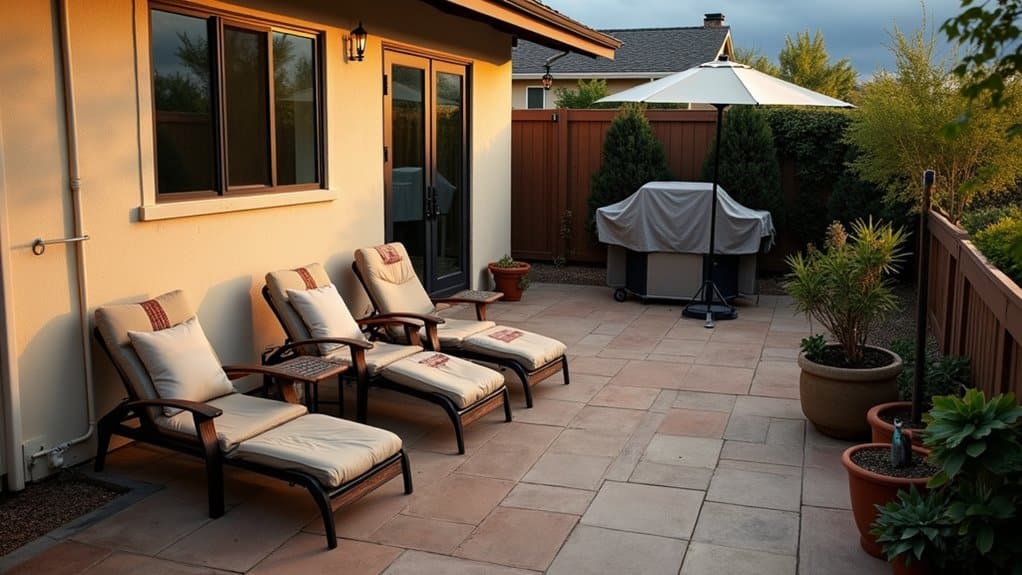
Once a tropical storm or hurricane enters the 72-hour forecast cone for your area, it’s time to start planning your outdoor furniture strategy. Post a checklist near your patio door listing every item and its designated storm location. This 72-hour window gives you time to secure outdoor furniture hurricane-ready without rushing.
At the 48-hour mark, begin your hurricane outdoor furniture prep by physically moving lightweight pieces indoors. Prioritize cushions, pillows, umbrellas, and aluminum chairs, they’re the first to become airborne projectiles. Move small plants into your garage or an interior room.
For heavier pieces, start identifying anchoring patio furniture options like ratchet straps and structural tie-down points. Don’t wait for last-minute track changes to begin preparation. Bookmark the National Hurricane Center website so you can monitor reliable storm tracking updates throughout the process.
Photograph Your Outdoor Furniture for Insurance First
Before you move a single chair, photograph every outdoor item in good daylight to create a dated condition record for potential insurance claims. Pair those images with purchase receipts and an inventory list that includes item names, quantities, and purchase dates, then store everything in cloud backup. Review your homeowner’s policy now to confirm whether outdoor furniture, umbrellas, and grills carry coverage limits or exclusions that could affect a storm-related claim. Keep in mind that Florida’s hurricane deductibles range from 1-5% of the home’s insured value, which may leave you paying out-of-pocket for outdoor furniture damage.
Document Everything Beforehand
Although securing your outdoor furniture is the physical priority, documenting every item with clear photographs should come first. Before you storm proof patio furniture or decide what to bring inside hurricane prep requires, photograph every piece before hurricane season begins. Capture wide shots of your full patio layout, then take close-ups showing brand labels, serial numbers, and existing wear.
Record each item’s make, model, and approximate age. Label photos with item names and locations, patio, lanai, or pool deck. Pair images with a written inventory noting condition and identifying marks.
Store copies in online file storage, a safe deposit box, or with your insurance agent. Don’t keep records solely in your home where the same storm could destroy them alongside your furniture. Having thorough documentation helps establish the replacement cost of each item, which speeds up the claims process if your outdoor furniture is damaged or destroyed.
Save Purchase Receipts
Because photos alone don’t prove what you paid, keeping purchase receipts for every outdoor item strengthens your insurance claim considerably. You should save purchase receipts that include supplier names, itemized costs, and acquisition dates. Copies work when originals aren’t available, but itemized records carry the most weight during claim reviews.
Before outdoor furniture before hurricane season arrives, record identifying details for each item alongside your receipts. Note model numbers, serial numbers, quantities, and current condition. This pairing of financial proof and physical documentation eliminates guesswork after a loss.
Store receipts with your photo inventory in a secure digital location, cloud backups or off-site storage protect against storm destruction. Organized files for each patio, deck, and yard area guarantee you don’t overlook items when filing time-sensitive claims.
Verify Insurance Coverage
Receipts and photos document what you own, but they won’t help if your policy doesn’t actually cover outdoor furniture. Before hurricane season, verify insurance coverage for all outdoor items by reviewing your policy’s personal property section, special limits, and exclusions.
| Check | Detail | Action |
|---|---|---|
| Coverage type | Personal property vs. exclusion | Confirm outdoor items qualify |
| Storage requirement | Inside vs. outside during storm | Note any conditional language |
| Coverage limit | Dollar cap on outdoor property | Compare against inventory value |
| Deductible | Hurricane-specific deductible | Calculate out-of-pocket exposure |
| Documentation required | Proof of ownership and condition | Organize photos and receipts |
Pair your documentation with confirmed coverage details. Store policy summaries alongside your inventory records in a secure, offsite location before conditions deteriorate.
Bring Cushions, Lightweight Pieces, and Décor Inside
When a hurricane warning is issued, your first step should be removing all outdoor cushions, lightweight furniture, and loose décor from exposed areas. Cushion removal and indoor storage prevents waterlogging and projectile hazards during high winds. Move lightweight pieces and loose décor indoors immediately, these items become dangerous in hurricane-force gusts.
Store cushions in a garage, shed, or interior room. Verify they’re completely dry before packing them into sealed plastic bags or water-resistant storage containers. Adding desiccant packets inside containers provides additional moisture, mold, and fabric protection during extended storage. Clean cushion covers with mild detergent before storing, and brush off debris to prevent dirt buildup. Don’t wait until conditions deteriorate, complete this step early so you can focus on securing heavier items as the storm approaches.
Store Patio Umbrellas Indoors Before the Storm

Patio umbrellas rank among the most wind-vulnerable items in your outdoor space, and they require dedicated attention once you’ve moved cushions and lightweight décor inside. Store patio umbrellas indoors, in your garage, shed, or home, to eliminate wind uplift and frame damage risk.
Follow this preparation sequence before storage:
- Clean before storing by washing the canopy with mild soap and water, then rinsing thoroughly to remove residue that degrades fabric.
- Dry completely before putting away by air-drying in a shaded area to prevent mold and mildew from destroying the material.
- Close, strap, and disassemble the umbrella from its base, using a durable tie to secure the canopy tightly.
Place the umbrella in a protective cover and store it off the floor in a cool, dry space.
Anchor Heavy Furniture You Can’t Bring Inside
Some outdoor pieces, cast-iron tables, stone benches, heavy teak sets, are too bulky or cumbersome to move indoors before a hurricane. You’ll need to secure heavy furniture directly to the surface beneath it using ground anchors, expansion bolts, or deck fasteners appropriate for your patio material.
Start by installing anchor points on concrete, wood, or soil surfaces. Then attach ratchet straps from the furniture frame to each anchor, pulling them tight to eliminate slack. Distribute weight evenly by adding sandbags to lower shelves or legs. Lay chairs flat and stack smaller pieces inside larger frames to reduce wind exposure.
Test every connection before conditions worsen. Check straps for wear and corrosion. Position anchored furniture away from windows and doors to minimize damage if any piece shifts.
Secure Your Grill and Disconnect Fuel Sources
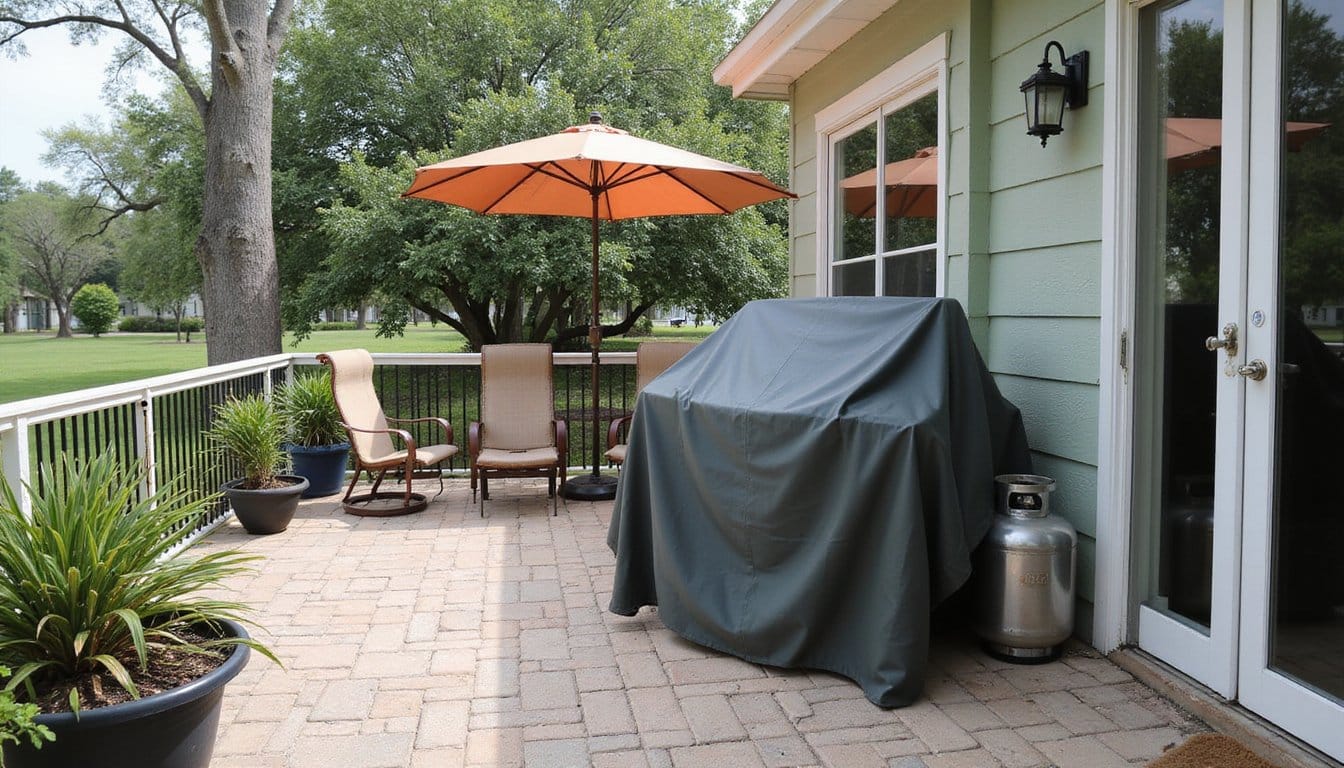
Before the storm arrives, you’ll want to shut off gas lines and disconnect propane tanks from your grill to eliminate fuel-related hazards during high winds. Move portable grills into a garage, shed, or other sheltered location, and lock the wheels on any unit that can’t be relocated. For built-in grills and heavier equipment, anchor them securely, close all vents, and fit a waterproof cover to protect against wind-driven rain.
Move Grills Indoors
Secure your grill well before hurricane-force winds arrive, waiting until conditions deteriorate puts you at risk of injury from sudden gusts that can tip or launch even heavy equipment. Add this task to your hurricane checklist outdoor prep early.
Follow these steps to safely relocate your grill:
- Clean and inspect the grill for rust, wobbling, and damaged parts, remove all grease, ashes, and residue before transport.
- Disconnect and separate fuel sources by detaching the propane cylinder and storing it outdoors, away from open flames and combustibles.
- Move the grill to your garage or basement, ensuring the space is free of propane storage and ignition risks.
If indoor storage isn’t possible, secure the grill outdoors using tie-downs or straps to prevent tipping.
Disconnect Gas Lines
Shut off the fuel supply at the source as soon as a hurricane warning is issued, don’t wait until winds pick up. Close the gas valve first, then turn burners off to purge the line. Once purged, pull back the quick-disconnect sleeve and separate the hose from the supply.
Flexible rubber lines are vulnerable if your grill tips or shifts during high winds, storms rated Category 3 or higher on the Saffir-Simpson scale generate debris that can sever exposed connections. FEMA Ready.gov and Palm Beach County Emergency Management both recommend securing fuel sources as part of outdoor storm prep.
After the storm, inspect all hoses, fittings, and valves using soap solution to detect leaks. Don’t resume operation until you’ve confirmed every connection is intact and undamaged.
Anchor Heavy Equipment
Bolt your grill to a fixed anchor point on the patio, deck, or concrete slab using tie-down bolts rated for wind uplift. Use ratchet straps to fasten the unit to installed anchors before conditions deteriorate. Lock all casters and place wheel chocks at each wheel for additional rolling resistance.
Follow these fuel-safety steps before the storm arrives:
- Turn off the propane tank valve completely to prevent gas leakage during wind-driven impacts.
- Disconnect the tank and store it outdoors in a secured, upright position away from ignition sources, never store propane inside a garage or basement.
- Close all grill vents and secure the cover tightly so it doesn’t become airborne debris.
Clean out grease, ash, and food debris to reduce post-storm maintenance.
Clear Loose Items and Debris Around Your Patio
Before hurricane conditions set in, you’ll want to sweep your entire patio, yard, and side areas for any objects that could become windborne projectiles. Check for tools, toys, lawn decorations, rocks, flowerpots, bicycles, recycling bins, and trash cans. Bring smaller valuable items indoors or into a locked garage or shed. Even small objects become dangerous in strong gusts.
Next, remove dead branches and unhealthy limbs that could snap during extreme winds. Prune any branches hanging near roofs, windows, or fences. Inspect for loose fence planks or nearby materials that might break free.
Clear gutters, drains, and swales of leaves and litter so stormwater doesn’t pool around your patio. Don’t overlook ground-level debris already scattered in your yard, wind will lift it.
Do a Final Outdoor Furniture Check Before Landfall
Once you’ve completed your initial storm preparations, conduct a full patio inventory to confirm every chair, table, umbrella, grill, cushion, and accessory is accounted for. Lightweight items pose the greatest windborne hazard and require priority verification.
Complete these three steps before landfall:
- Inspect for overlooked objects, Check for side tables, planters, tools, and decorative pieces missed during earlier cleanup rounds.
- Verify all anchoring points, Confirm straps, sandbags, and tie-downs remain tight, since pre-landfall gusts can shift furniture or loosen restraints.
- Photograph your outdoor setup, Document the patio’s condition for insurance claims and post-storm comparison.
Recheck everything in the final hours before impact. Hurricane prep isn’t a single pass, it’s a reinforcement protocol that depends on last-stage confirmation.
Storm-Proof Your Outdoor Living Today
Florida outdoor living deserves storm protection that doesn’t sacrifice beauty, function, or year-round enjoyment. At Innovative Outdoor Living, our experienced team provides trusted Outdoor Kitchens and pergola construction built to withstand Florida’s toughest weather. Call +1 (561) 594-1495 today and protect your outdoor investment for years to come.
Frequently Asked Questions
Does Homeowner’s Insurance in Florida Cover Outdoor Furniture Damaged During Hurricanes?
Your Florida homeowner’s insurance typically covers outdoor furniture damaged by hurricane wind under Coverage C (personal property). However, you won’t receive coverage if storm surge or flooding caused the damage, you’d need separate flood insurance for that. Your hurricane deductible (often 2%, 10% of dwelling limits) applies annually, which can reduce smaller payouts. You should review your declarations page, document your items’ condition, and confirm your policy doesn’t exclude outdoor property.
Can I Leave Heavy Wrought Iron Furniture Outside During a Hurricane?
You shouldn’t assume wrought iron is safe to leave out during a hurricane. While its weight makes it more stable in ordinary winds, extreme hurricane-force gusts can still tip, displace, or turn heavy pieces into dangerous projectiles. You’ll want to move wrought iron indoors or to a sheltered area near your home. If that’s not possible, secure items with straps to a stable anchor point and remove all loose accessories.
How Do I Protect Outdoor Furniture if I Have No Garage or Storage Space?
Rent a self-storage unit well before the storm arrives. If that’s not possible, anchor furniture to a sturdy wall or fence using ratchet straps or heavy-duty rope, then cover items tightly with heavy-duty plastic sheeting secured by bungee cords. Add sandbags for extra weight. Turn top-heavy pieces upside down to lower their wind profile. Don’t rely on covers alone, they can shred in hurricane-force winds.
Should I Remove Outdoor Furniture if Only a Tropical Storm Warning Is Issued?
Yes, you should start removing outdoor furniture as soon as a tropical storm warning is issued. Don’t wait for a hurricane warning, tropical storm winds can turn lightweight chairs, cushions, and umbrellas into dangerous projectiles at just 45 mph. Bring everything you can carry into your garage or indoor storage first. If you can’t move heavier pieces, secure them with ratchet straps or sandbags and position them against your home’s walls.
How Soon After a Hurricane Can I Safely Put Outdoor Furniture Back Outside?
Wait until all hurricane watches and warnings have expired and local officials confirm it’s safe. Walk your property first, check for downed power lines, broken glass, and structural damage on patios or decks. You’ll want to return lighter pieces first, then heavier items, and replace cushions last after everything’s dry. If flooding or saltwater exposure occurred, allow extra drying time before placing anything back outside.