Backyard hardscaping typically costs $5 to $25 per square foot, with total projects ranging from $300 to $100,000 depending on scope. At a budget level, you’ll spend $2.35 to $10 per square foot on gravel or basic concrete. Mid-range options like stamped concrete or brick pavers run $8 to $24 per square foot. Premium natural stone can push $35 or higher. Understanding what each tier includes, and where labor, permits, and regional pricing shift the numbers, will help you plan every dollar.
What Does Backyard Hardscaping Actually Cost?
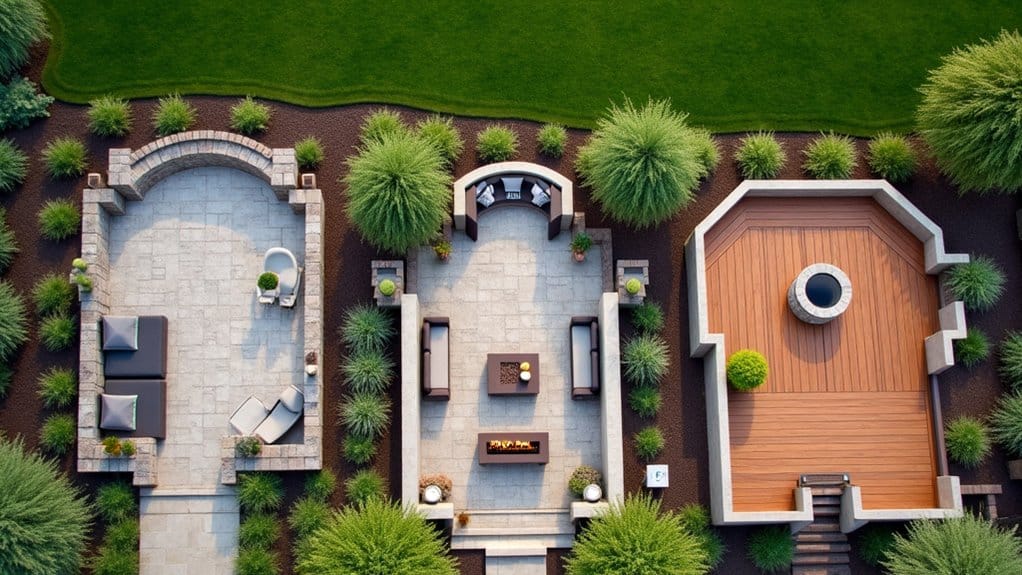
Hardscaping costs break down into a wide range depending on materials, project scope, and where you live. You’ll typically spend $5 to $25 per square foot, with national averages landing around $9,000 per project. Budget-friendly concrete surfaces start at $4 per square foot, while natural stone pushes $45 or higher.
Your total investment can span $300 for minimal work to $100,000 for extensive installations like outdoor kitchens. Regional variance impacts pricing by 30, 50%, with Honolulu averaging $7,550 compared to Charlotte’s $3,900. Don’t overlook feature upkeep costs, you should allocate 5, 10% of installation costs annually for maintenance. Before committing, explore hardscaping financing options to manage cash flow across phased projects without compromising material quality or contractor expertise.
Patio, Walkway, and Retaining Wall Prices
Your patio material choices drive the biggest cost swings, ranging from $2.35 per square foot for gravel to $31.65 per square foot for flagstone pavers. Professional walkway installation runs $35, $60 per square foot, significantly higher than most patio materials due to increased labor intensity and tighter material specifications. Retaining walls add another budget layer entirely, with projects starting at $3,200 for a small 30-linear-foot wall and climbing to $9,000 for large-scale installations reaching 50 linear feet and 6 feet high. Opting for a DIY approach on your patio can save $4, $18 per square foot in labor costs, though you should expect the project to take two to four weekends depending on complexity.
Patio Material Cost Ranges
Whether you’re planning a simple gravel pad or a premium flagstone layout, patio material costs range widely, from as low as $2.35 per square foot for gravel to $35 per square foot for natural stone. Your material selection factors directly determine both upfront expenses and long-term durability. Nationally, homeowners spend a typical range of $2,290 to $6,420 on a new patio, making material choice one of the most impactful budget decisions.
- Budget tier: Gravel ($2.35, $10/sq ft) and basic concrete ($4, $9/sq ft) keep project scope considerations manageable for smaller budgets.
- Mid-range tier: Stamped concrete ($8, $20/sq ft) and brick pavers ($9, $24/sq ft) balance aesthetics with cost efficiency.
- Premium tier: Natural stone and flagstone ($13.65, $35/sq ft) deliver high-end results at considerably higher material spend.
For a 400-square-foot patio, you’ll pay between $2,800 and $14,000 total depending on your chosen material.
Walkway Price Per Foot
Because walkway costs scale directly with material choice and linear footage, even a short path can swing from under $500 to over $4,500 depending on your specs. These walkway material comparisons highlight the range you’ll navigate:
| Material | Cost Per Sq. Ft. | 100 Sq. Ft. Total |
|---|---|---|
| Gravel | $1, $10 | $335, $1,000 |
| Concrete | $7, $17 | $900, $1,700 |
| Paver | $9, $20 | $1,200, $2,500 |
Pavers and natural stone open up walkway customization options like herringbone patterns or mixed-material borders, but they’ll push your budget toward $20, $35 per square foot installed. Stamped concrete offers a mid-range alternative at $10, $21 per square foot. If you’re covering 280 square feet with pavers, expect roughly $4,060, so lock in your footage and material before requesting bids.
Retaining Wall Estimates
Retaining walls run $20 to $50 per square foot installed, though your final number hinges on material choice, wall height, and site conditions. A typical 50-foot wall costs $4,000 to $10,000, with the national average landing around $6,000. Labor adds $10 to $30 per square foot, and permits run $40 to $450.
Material selection directly impacts both structural integrity and visual appeal:
- Poured concrete, $20 to $45 per square foot; ideal for load-bearing applications and maximum durability.
- Interlocking modular blocks, $15 to $35 per square foot; cost-effective with straightforward installation.
- Natural stone, $20 to $85 per square foot; delivers premium aesthetics but requires skilled masonry work.
Budget $40 to $300 per linear foot for walls ranging 2 to 6 feet tall.
What You Get at Every Budget Level
Your hardscaping budget directly determines the scope of materials, features, and craftsmanship you can include in your project. At the lower end ($3,000, $10,000), you’re covering budget-friendly essentials like gravel patios, basic fire pits, and concrete pavers, while mid-range budgets ($10,000, $30,000) open the door to feature upgrades such as wood decks, pergolas, and paver pathways. Once you move into premium territory ($30,000+), you’re investing in natural stone, outdoor kitchens, custom fire features, and multi-element designs that transform your entire backyard.
Budget-Friendly Essentials Included
Every backyard hardscaping project shares a core set of budget essentials, regardless of whether you’re spending $5,000 or $50,000. Addressing hardscaping challenges starts with these non-negotiable line items:
- Site preparation and permits, You’ll need leveling, clearing, and proper drainage, costing $500 to $5,000 depending on soil conditions and excavation scope.
- Basic patio or walkway installation, Concrete pavers at $5 to $15 per square foot deliver functional outdoor surfaces, while gravel walkways offer the lowest entry point.
- Drainage and lighting infrastructure, Outdoor pathway lighting and erosion-prevention drainage protect your investment long-term.
Maintaining hardscaping systems requires budgeting for sealants on concrete elements and ensuring proper grading from day one. A basic fire pit ($300 to $1,500) rounds out every budget tier as a universal feature.
Mid-Range Feature Upgrades
Most homeowners hit the mid-range tier when they move beyond basic concrete slabs and gravel paths into pavers, stamped concrete, or natural stone, materials that run $8 to $50 per square foot depending on the product. A paver patio costs $2,400, $7,000, while stamped concrete lands at $12, $18 per square foot, both solid affordable patio renovations that elevate your outdoor space without exceeding typical regional averages of $3,900, $7,550.
At this level, you’re adding features like firepits ($300, $1,400) and paver walkways (around $2,850). These budget conscious landscaping upgrades create functional gathering areas and polished shifts between zones. Contractor labor runs $50, $100 per hour, so factor installation into your total. Plan for 5%, 10% annual maintenance costs to protect your investment long-term.
Premium Hardscaping Investments
Once your budget crosses the $30,000 threshold, you’re entering premium hardscaping territory, where natural stone, full outdoor kitchens, and multi-tiered retaining walls define the scope.
At this level, you’re investing in materials and features that deliver lifetime durability and significant property value:
- Natural stone patios run $20, $50 per square foot, with flagstone delivering unmatched elegance for high-end installations.
- Outdoor kitchen design ranges from $5,000, $20,000+, incorporating built-in grills, countertops, and integrated utilities for full functionality.
- Tiered retaining walls cost $7,500, $9,000 for larger structures, where retaining wall aesthetics transform sloped yards into usable, visually striking spaces.
Premium paver installations land between $18, $45 per square foot in 2025 pricing. You’re not just building outdoor spaces, you’re engineering long-term assets.
Fire Pits, Pergolas, and Other Feature Costs
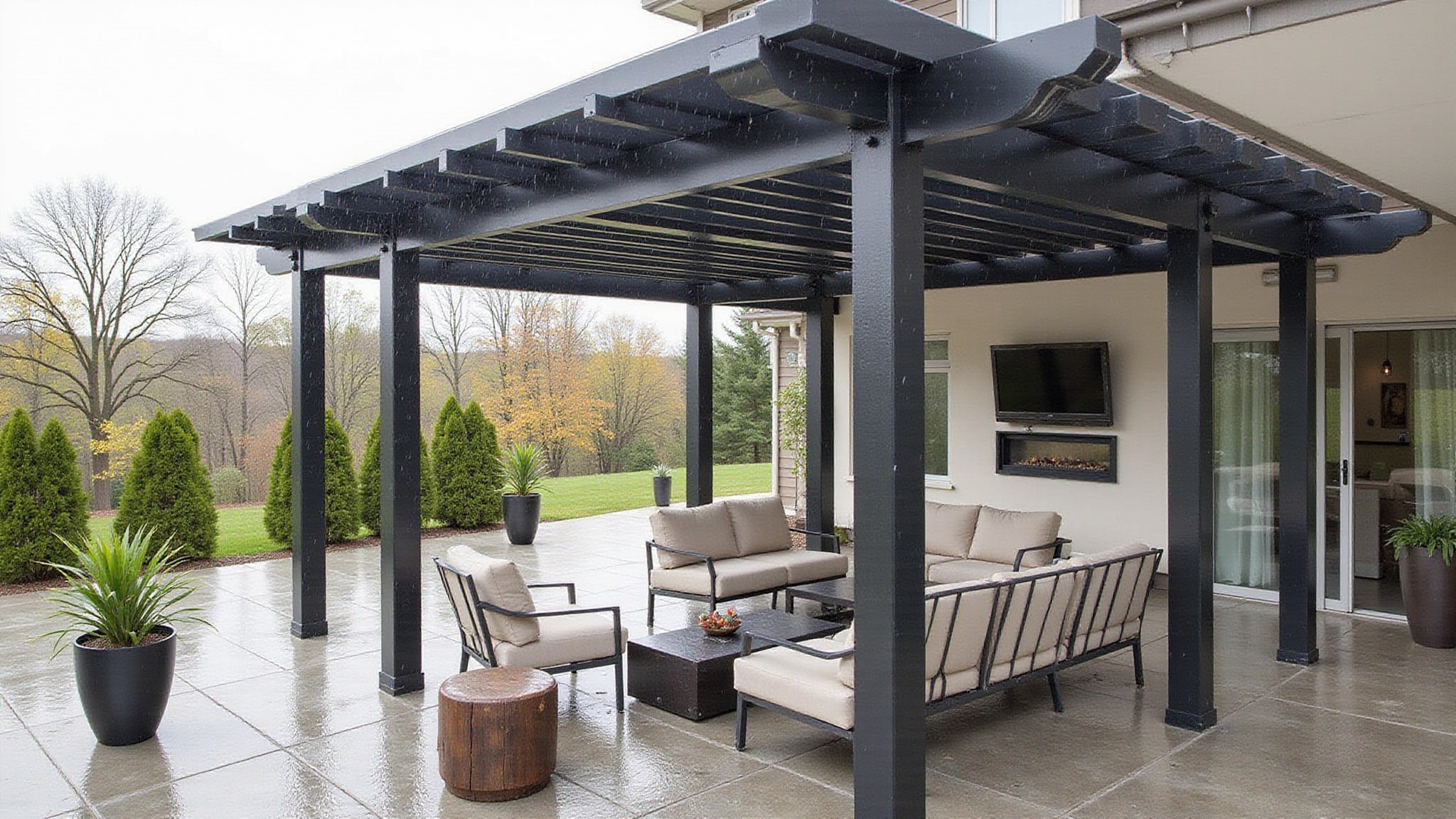
Whether you’re building a cozy gathering spot or a full outdoor entertainment zone, fire pits, pergolas, and similar features add both function and value to your hardscape design. Standard fire pit installations average $850, with most homeowners spending $250 to $2,200. Above-ground units run $200 to $1,500, while in-ground builds reach $1,000 to $3,000 due to excavation costs. Material choice drives pricing substantially, concrete blocks start at $150, whereas natural stone exceeds $3,000. Fuel type also impacts your budget: wood-burning models cost $300 to $1,000, and natural gas units hit $400 to $3,000 after fuel line work. When planning outdoor kitchen budgets alongside these features, factor in ongoing fire pit maintenance costs to protect your long-term investment.
How Your Region Affects the Price
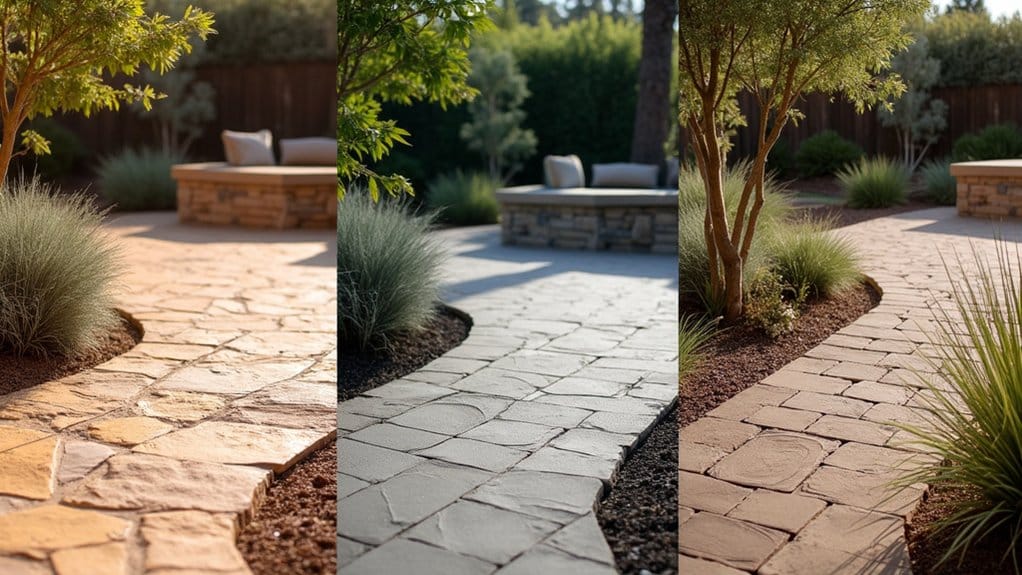
Geography plays a direct role in what you’ll pay for hardscaping, from labor rates to material sourcing to site prep demands. Urban contractors charge $50, $100 per hour, while rural areas trend lower. Seasonal climate factors like freeze-thaw cycles require deeper bases in northern zones, adding material and labor costs. Local permitting regulations in high-density cities also increase project expenses.
Where you live shapes what you’ll pay, climate, labor markets, and local regulations all influence hardscaping costs.
Consider these regional benchmarks:
- Midwest markets offer the lowest patio installs at $18, $35 per sq ft, with Albuquerque averaging $4,500 per project.
- Northeast and Pacific Northwest regions run $22, $45 per sq ft, with Chicago averaging $5,900 and Seattle $5,550.
- Coastal metros like Honolulu reach $7,550, driven by island logistics and heightened demand.
Does Hardscaping Increase Your Home’s Value?
How much value does a patio, fire pit, or outdoor kitchen actually add to your property? The numbers vary by project. Fire pits deliver 67%, 80% ROI, decks return over 70%, and paver patios add 20%, 30% of their cost to your home’s worth. Outdoor kitchens, despite costing $22,000, $100,000, average around 55% ROI.
Beyond raw numbers, hardscaping directly shapes perceived home value and buyer expectations. 78% of real estate agents confirm that poor hardscaping negatively impacts property prices, with 40% calling the effect “very” negative. Well-maintained outdoor spaces signal overall property care, easing buyer concerns and reducing negotiation periods.
Quality hardscaping extends your usable living space, commands premium pricing, and positions your home as move-in ready, factors that accelerate sales.
Smart Ways to Stretch Your Hardscaping Budget
A disciplined budget doesn’t mean settling for a lackluster backyard, it means directing every dollar toward decisions that maximize visual impact and functional return. Cost-effective landscaping starts with phasing your project strategically and prioritizing high-impact features over sprawling additions.
Every dollar should earn its place in your yard, phase smart, prioritize impact, and never settle.
- Compare material pricing across multiple vendors. Quality material selection demands sourcing quotes from at least three suppliers, since prices vary dramatically between vendors for identical products.
- Collect three to five contractor bids. Require itemized breakdowns covering labor, materials, delivery, and cleanup to identify inflated line items.
- Self-source materials when possible. Picking up pavers or gravel directly from quarries eliminates delivery fees that can add hundreds to your total project cost.
Frequently Asked Questions
How Long Does a Typical Backyard Hardscaping Project Take to Complete?
You’ll typically complete a basic deck or patio in one to four weeks, while complex installations like pools with surrounding hardscaping require six to twelve weeks. Your project timeline considerations should account for the design phase (one to six weeks), permit approvals (four-plus weeks), and material availability delays. Seasonal weather impacts can extend hardscaping timelines considerably, so you’ll want to factor potential weather-related disruptions into your budget and scheduling expectations.
Do You Need Permits for Backyard Hardscaping Installations?
Yes, you’ll likely need permits for many backyard hardscaping installations. Projects involving decks, retaining walls over 2 feet, pool barriers, and any electrical or plumbing connections require permits. You should check your local zoning regulations before breaking ground, as requirements vary by municipality. Budget $500, $2,000 for the permit application process, including engineer-stamped drawings if required. Securing permits upfront prevents costly project delays and code-violation fines.
What Time of Year Is Cheapest to Hire Hardscaping Contractors?
You’ll find the cheapest hardscaping rates during late fall through winter, when off peak season pricing drops bids by 10, 30%. Contractor availability peaks during these slower months, giving you stronger negotiation leverage on labor and materials. Bulk stone purchases carry 25% supplier markdowns in winter, and transport fees fall 10, 15%. Schedule your project between November and February to lock in the lowest total costs before spring demand surges.
How Much Maintenance Do Hardscaping Features Require Over Time?
You’ll find hardscaping features require considerably less upkeep than softscape alternatives, cutting ongoing costs by 60% over five years. You’ll budget $50, $100 hourly for basic services like pressure washing and joint re-sanding. Seasonal maintenance includes snow removal at $50, $203 per visit and irrigation winterization at $100, $300 twice yearly. You’ll also reduce annual maintenance visits from 25, 30 down to minimal, freeing your budget for other project priorities.
Can You Finance Backyard Hardscaping Projects Through Payment Plans?
You can finance backyard hardscaping through several payment plan options. Personal loans from lenders like LightStream cover $5,000, $100,000, while home equity products fund larger projects exceeding $100,000. Contractor-partnered financing through companies like System Pavers offers promotional rates, and credit cards provide 0% introductory periods for smaller installations. Key financing considerations include comparing interest rates (6.99%, 23.99%), evaluating repayment terms, and confirming prequalification won’t impact your credit score.