

Three standout backyard walkway designs can transform your backyard’s flow and feel. You’ll get a relaxed, textural look with pea gravel edged in clean metal borders. Concrete stepping stones set in dark gravel deliver a minimal, architectural path that’s easy to maintain. For a sleek, premium finish, bluestone pavers in a herringbone or linear grid pattern pair perfectly with contemporary facades. Each option balances durability, drainage, and style, and the details below will help you choose the right fit.
Pea Gravel for a Casual Modern Backyard Walkway
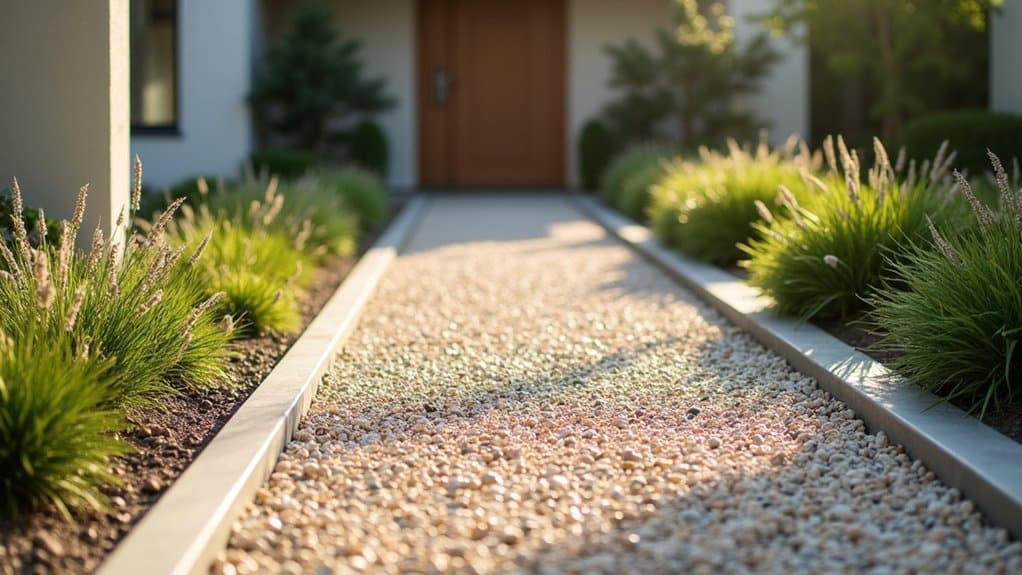
If you’re after a walkway that feels relaxed yet intentionally designed, pea gravel delivers that balance without a complicated install. Its small, rounded stones, ranging from 1/8″ to 3/8″, create a firm yet giving surface that drains efficiently, preventing puddles even during heavy rainfall. Neutral tones in grey, tan, and white blend seamlessly with contemporary landscaping. The smooth, rounded shapes also add natural visual interest that complements various architectural styles, from minimalist to rustic modern.
Pair the gravel with natural stone borders to contain the material and define clean edges against lawn or planting beds. Lay landscape fabric underneath to suppress weeds and maintain a low-maintenance pathway year-round. You won’t need watering, mowing, or trimming, just an occasional rake to redistribute stones. It’s a budget-friendly, durable option that keeps your backyard walkway sharp with minimal effort.
Concrete Stepping Stones for a Clean, Minimal Path
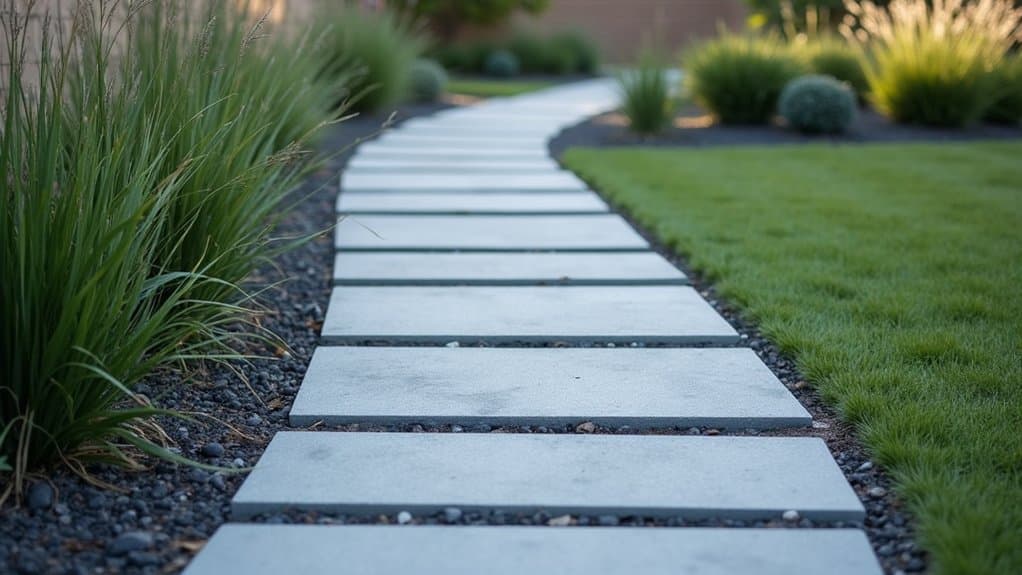
Because concrete stepping stones rely on shape and spacing rather than ornament, they’re one of the most effective ways to build a clean, minimal backyard walkway. Set them 18, 24 inches apart on a gravel base to establish a comfortable stride while maintaining visual openness. Their resistance to staining, moisture, and cracking makes them ideal for high-traffic zones in harsh climates. For a softer, more organic alternative, consider slate flagstone arranged in irregular shapes with moss-filled gaps that blend into shade gardens naturally.
You can achieve a modular porcelain layout by arranging rectangular slabs in a seamless linear pattern, creating architectural continuity across your yard. For added contrast, pair smooth concrete with textured granite borders or dark gravel fill between stones. Low-growing creeping thyme softens joints without cluttering the path. Clean metal edging locks everything tight, preventing erosion and keeping your walkway’s geometry sharp across seasons.
Bluestone Pavers for a Sleek Modern Walkway
Bluestone pavers bring a refined, cool-toned palette to modern walkways that few natural stones can match. Their dense composition resists harsh weather and heavy foot traffic, so you’ll get lasting performance without constant upkeep. Thermal-finished slabs deliver uniform thickness and a smooth surface that’s ideal for sleek, geometric layouts. Predominantly sourced from Pennsylvania and New York, bluestone carries a regional heritage that adds authenticity to its natural appeal.
You can lay elongated planks in a herringbone pattern or linear grid to emphasize clean sightlines through your backyard. The blue gray tones pair naturally with contemporary architecture, while full-color variants introduce subtle rust and tan accents for added depth. Set pavers on a mortar bed over compacted crushed rock for stability, then finish joints with polymeric sand. Border edges with creeping thyme to soften the hardscape and reduce heat absorption.
Frequently Asked Questions
What Brick Paver Patterns Work Best for Modern Backyard Walkway Designs?
You’ll get the most impact from herringbone patterns using clay brick pavers with charcoal grout lines, they’ll distribute loads effectively while adding elegant flair to your backyard walkway. For a subtler approach, basket weave patterns bring structured intricacy that complements modern homes without overwhelming your space. Pair either pattern with a soldier-course border to define edges cleanly, and you’ll create a durable, visually striking surface that anchors your outdoor layout.
How Do You Prevent Flagstone Pavers From Shifting Over Time?
You’ll prevent flagstone pavers from shifting by focusing on proper subsurface preparation, excavating deep enough, compacting a leveling gravel base in controlled lifts, and installing rigid edge restraints along your walkway’s perimeter. Fill joints with polymeric sand to lock stones together and resist washout. If you’re working near mature trees, account for root expansion by positioning your walkway path strategically. These material-focused steps guarantee your flagstones stay firmly set through seasonal movement.
Can Stepping Stones With Grass Handle Heavy Foot Traffic Areas?
Stepping stones with grass won’t hold up well in heavy foot traffic areas. The grass between stones deteriorates quickly under constant use, creating uneven surfaces and drainage concerns as compacted soil stops absorbing water effectively. You’ll need to assess your soil composition, clay-heavy soils worsen waterlogging, while sandy bases drain better but shift more. For high-traffic zones, you’re better off filling gaps with compacted gravel or choosing interlocking pavers instead.
What Ground Cover Plants Grow Best Between Stepping Stones With Grass?
You’ll find creeping thyme and sedum are excellent choices for ground cover plant selection between stepping stones, as both spread densely into narrow gaps while tolerating light foot traffic. If you’re prioritizing drought resistant ground covers, sedum’s water-storing leaves and woolly thyme’s low-water needs make them ideal for sunny, well-drained pathways. For shadier sections, tuck Irish moss into joints, it’ll form a soft, evergreen mat that stabilizes soil beautifully.
How Do You Maintain Proper Edging Along a Brick Paver Walkway?
You’ll maintain proper edging along your brick paver walkway by starting with proper edging material selection, plastic strips laid tight against your pavers’ outer edges, secured with spikes every 12, 18 inches. For curves, you’ll use stakes to prevent shifting. Regular edging maintenance means checking for warped sections, replacing damaged strips, and sweeping polymeric sand into joints to lock bricks firmly. Cover exposed edging with topsoil and seed grass for a clean, integrated border.