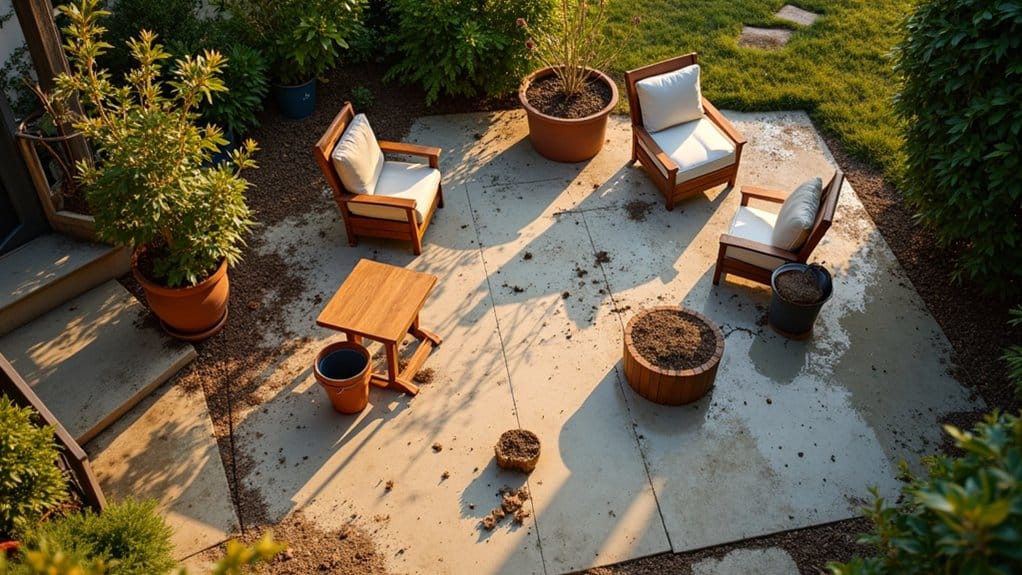
Select drought-resistant shrubs like Buddleja ‘Miss Molly’ and Perovskia ‘Denim ‘n Lace’ for your foundation plantings, complemented by self-maintaining perennials such as daylilies and coneflowers. You’ll heighten visual impact while minimizing maintenance by incorporating native species like Lantana and American Beautyberry, which have evolved superior adaptations to local conditions. For year-round structure, integrate evergreen options including dwarf yaupon holly and pittosporum. The following extensive plant selections will transform your outdoor space into a resilient, low-effort paradise.
Why Low-Maintenance Plants Are the Smart Choice
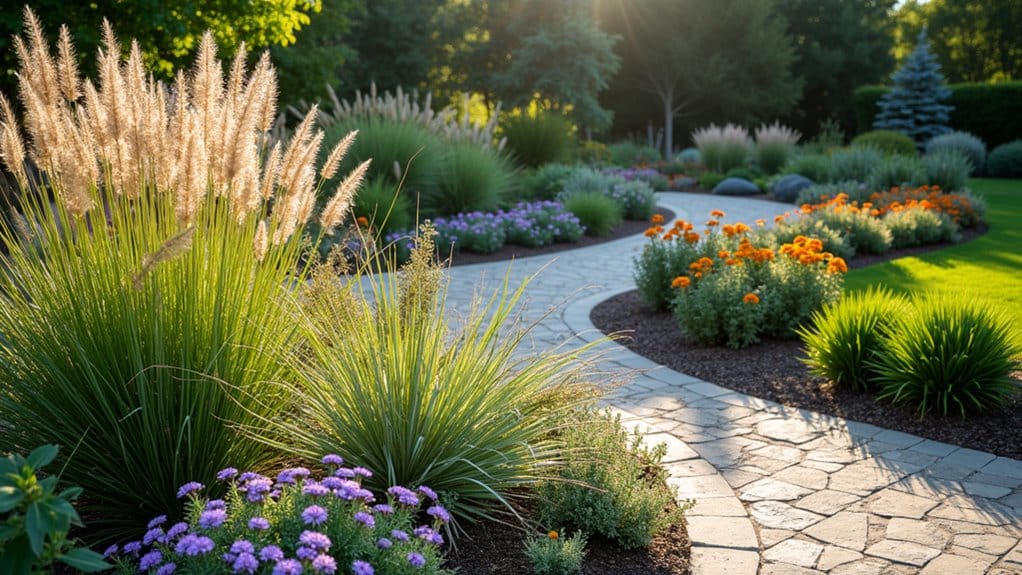
While many homeowners aspire to create stunning outdoor spaces, the time-intensive nature of traditional gardening often presents a significant barrier. Low maintenance plants offer a scientifically proven solution, combining aesthetic appeal with reduced resource requirements.
Essential Features of Easy-Care Landscape Plants
When selecting plants for a low-maintenance scenery, specific botanical characteristics serve as key indicators of long-term success. You’ll want to prioritize drought tolerance, as low-maintenance outdoor plants with minimal water requirements adapt effectively to fluctuating precipitation patterns.
Pest and disease resistance is pivotal, as these cultivars possess natural defense mechanisms that eliminate the need for frequent chemical interventions. Look for specimens exhibiting compact growth habits, which naturally maintain their form without extensive pruning regimens. You’ll benefit from choosing perennial varieties that demonstrate sustained vigor through multiple growing seasons.
Consider specimens that showcase adaptability to diverse edaphic conditions and variable light exposures. These plants’ physiological characteristics enable them to thrive across different soil compositions and sun patterns, maximizing your setting’s sustainability while minimizing required maintenance efforts.
Top Drought-Resistant Shrubs for Year-Round Beauty
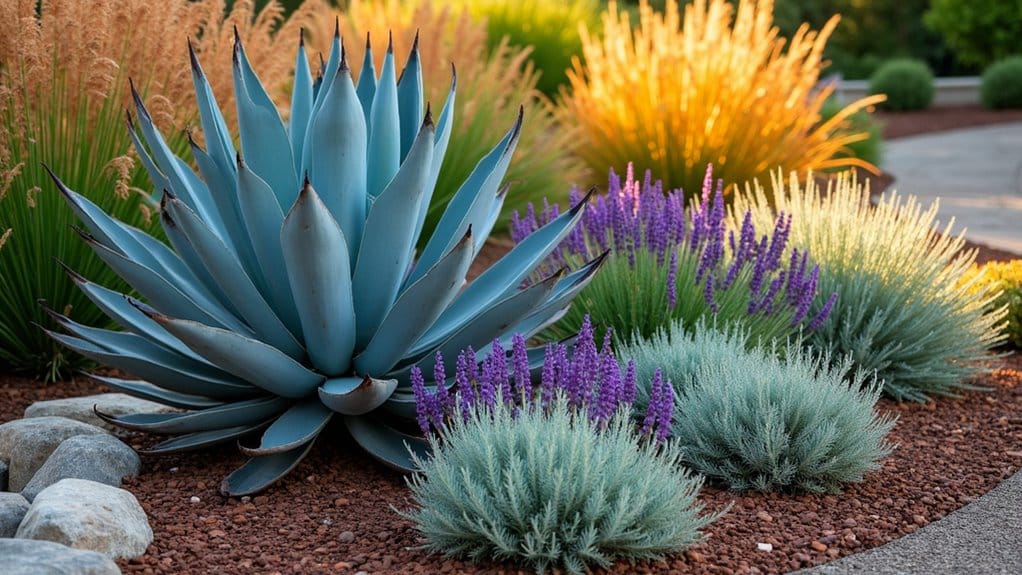
Because modern landscaping demands resilient solutions, drought-resistant shrubs offer exceptional value through their xerophytic adaptations and year-round ornamental appeal. You’ll find exceptional performance in cultivars like Buddleja davidii ‘Miss Molly’ and Perovskia atriplicifolia ‘Denim ‘n Lace’, which thrive in full sun conditions while maintaining their structural integrity.
| Species | Heat Tolerance | Deer Resistance |
|---|---|---|
| B. davidii | Excellent | Moderate |
| P. atriplicifolia | Superior | High |
| I. glabra | Good | High |
For low-maintenance landscapes, integrate Ilex glabra ‘Gem Box’ for its compact habit and minimal pruning requirements. These drought-resistant specimens demonstrate remarkable heat tolerance while deterring deer browsing. The dense branching of ‘Gem Box’ and the sturdy architecture of ‘Denim ‘n Lace’ provide year-round aesthetic appeal, even during dormancy periods.
Best Flowering Perennials That Thrive on Neglect
Since resilient perennials form the backbone of low-maintenance gardens, selecting specimens with proven stress tolerance guarantees reliable performance without constant intervention.
You’ll find daylilies and coneflowers among the most adaptable plants that need minimal care, offering prolific blooming cycles while demonstrating exceptional disease resistance. Lavender’s aromatherapeutic qualities complement its drought-hardy nature, making it ideal for xeriscape designs. For shaded locations, hostas don’t need much attention to maintain their architectural foliage displays, thriving even in challenging conditions beneath established trees. Sedum’s succulent characteristics enable superior drought tolerance, while its late-season blooms provide essential nectar for pollinators. These low-maintenance plants consistently demonstrate superior performance across diverse growing conditions, allowing you to achieve professional-quality landscaping results without intensive horticultural intervention.
Native Plants That Require Minimal Attention
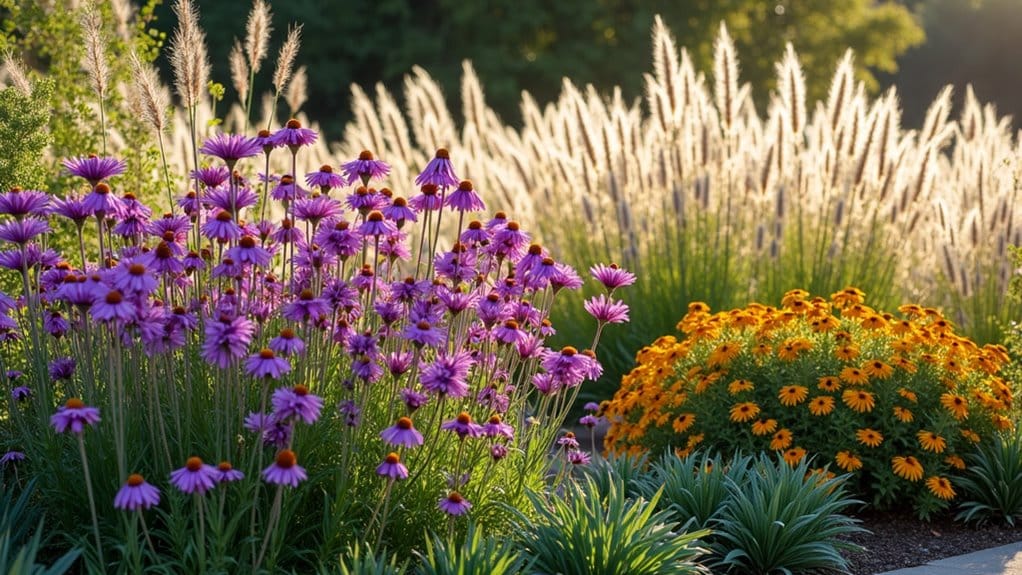
Native Texas plants offer remarkable durability in your terrain, with species like Lantana and American Beautyberry demonstrating superior drought tolerance while requiring minimal irrigation and fertilization protocols. You’ll enhance sustainability through indigenous selections such as Yucca, Agave, and Muhly Grass, which have evolved specific adaptations to local climate conditions and soil compositions. For year-round visual interest with minimal maintenance requirements, incorporate pollinator-supporting natives like Purple Coneflower and Salvia, which establish sturdy root systems and perpetuate through natural reseeding cycles.
Drought-Resistant Texas Favorites
Several drought-resistant Texas favorites have evolved remarkable adaptations to withstand the region’s intense heat and prolonged dry spells. You’ll find Lantana’s deep-rooted system and waxy leaves enable exceptional drought tolerance, while Yucca’s succulent characteristics allow it to store water efficiently in harsh conditions.
The xerophytic Texas Sage exhibits silvery foliage that reflects sunlight and reduces water loss through transpiration, making it ideal for water-conscious terrain. Butterfly Bush demonstrates remarkable resilience through its extensive root system and modified leaf structures. These native specimens have developed specialized physiological mechanisms to thrive in Texas’ challenging climate, including reduced leaf surface area, modified stomatal behavior, and heightened water-use efficiency. When establishing these plants, you’ll benefit from their natural resistance to local pests and their ability to flourish in native soils without supplemental fertilization.
Self-Maintaining Garden Stars
While exploring low-maintenance landscaping options, you’ll uncover that certain indigenous species have evolved to become remarkably self-sufficient garden performers. These botanical champions require less work while delivering maximum impact in your landscape.
Texas lantana’s drought-tolerant growth habit eliminates the need for deadheading, while Turk’s cap naturally maintains its form in shaded areas. You’ll appreciate how flame acanthus establishes itself with minimal intervention, creating a deer-resistant barrier that thrives in challenging conditions. For ground coverage, inland sea oats’ self-sowing nature helps maintain consistent regeneration without mowing requirements. Mexican feathergrass complements these selections with its self-managing flowing structure, requiring only occasional grooming. These native specimens demonstrate how strategic plant selection can greatly reduce maintenance demands while sustaining a vibrant, ecologically sound garden environment.
Year-Round Color Solutions
Building upon nature’s self-maintaining wonders, year-round color solutions present a sophisticated palette of indigenous specimens that deliver continuous visual interest throughout the seasons. You’ll optimize your landscape’s aesthetic continuity by integrating evergreen foliage like American holly and Cherry laurel with drought-tolerant perennials such as Butterfly weed and Yarrow.
Strategically position ground cover varieties like Bugleweed and Mondo grass to establish dense, maintenance-free carpeting between your low-maintenance flower beds. Native Texas plants, including Lantana and Beautyberry, provide vibrant blooms while naturally adapting to local climate conditions. For xeric zones, incorporate Desert willows and Red yucca to maintain visual appeal without supplemental irrigation. This scientifically curated combination preserves your landscape’s professional polish throughout Houston’s diverse seasonal shifts.
Evergreen Options for Effortless Curb Appeal
Countless evergreen species offer the perfect solution for creating enduring curb appeal with minimal maintenance requirements. You’ll find much value in selections like holly and cherry laurel, which maintain year-round foliage while demanding little irrigation or pruning intervention. Live oaks demonstrate exceptional adaptability to Houston’s climate zones, establishing themselves as low-maintenance anchors in your scenery.
For vertical interest, consider Confederate jasmine or climbing fig, two evergreen vines that provide structural elements without excessive cultivation demands. Ground-level coverage benefits from rapidly spreading evergreen options like monkey grass and Japanese pachysandra, which efficiently colonize bare soil zones. By strategically incorporating these evergreen varieties, you’ll create a sophisticated, layered setting that maintains visual appeal throughout all seasons while minimizing your maintenance obligations.
Heat-Tolerant Plants That Stay Beautiful All Season
When you’re seeking resilient terrain performers, heat-tolerant cultivars like Lantana ‘Miss Huff’ and Salvia greggii ‘Hot Lips’ demonstrate superior drought resistance and sustained flowering through peak temperature periods. These xeric-adapted specimens, along with Portulaca ‘Pazazz’ and Gaillardia ‘Sundance’, maintain their ornamental value without intensive irrigation protocols or specialized maintenance regimens. Your design gains year-round visual interest by incorporating these thermophilic perennials, which exhibit exceptional bloom cycles and architectural presence even during challenging meteorological conditions.
Drought-Proof Beauty Stars
These five drought-proof beauties deliver striking visual impact while requiring minimal maintenance in harsh conditions. You’ll find Agave’s architectural silhouette creates dramatic focal points in xeriscape landscaping, while Purple Fountain Grass introduces dynamic movement with its swaying, burgundy foliage. Red Yucca’s towering bloom spikes emerge in spring, offering vertical interest and avian attraction.
For continuous flowering performance, Esperanza’s prolific yellow trumpets persist through extreme heat, complementing Lantana’s multicolored blooms that serve as critical nectar sources for pollinators. These specimens demonstrate superior drought tolerance through specialized adaptations: Agave’s succulent leaves store water, Lantana’s woody base enables deep rooting, and Red Yucca’s fibrous foliage minimizes moisture loss. You’re investing in sustainable plant selections that optimize aesthetic appeal while conserving water resources.
Year-Round Color Champions
Five spectacular heat-loving perennials deliver reliable color throughout multiple seasons, combining resilient growth habits with extended bloom cycles. Lantana camara produces abundant flower panicles in bright red, orange, and yellow hues, while thriving in intense sun exposure. You’ll find Hibiscus rosa-sinensis equally adaptable to hot climate conditions, offering large, dramatic blooms that persist through summer. Bougainvillea’s vivid bracts provide consistent color saturation, demonstrating exceptional heat tolerance. For sustained flowering performance, integrate Salvia greggii, which maintains continuous blooms from spring until peak frost. Complete your year-round display with Esperanza’s clusters of yellow trumpet flowers, which flourish in high-temperature environments. These cultivars exhibit prime performance with minimal intervention, making them ideal choices for low-maintenance landscape designs in sun-intensive zones.
Set-and-Forget Garden Winners
Building on the success of year-round bloomers, a new category of ultra-resilient plants offers even greater self-sufficiency in your setting. Diamond Frost, Mountain, and Snow Euphorbia varieties make landscaping effortless across different soils, requiring minimal intervention while maintaining their ornamental appeal.
Sedum mexicanum serves as an excellent choice for gardeners seeking versatile ground coverage, while Supertunia Vista petunias demonstrate superior vigor without deadheading requirements. For structural integrity, ‘Denim ‘n Lace’ Perovskia’s sturdy stems and extended bloom appearance provide reliable vertical interest. Truffula Pink Gomphrena pulchella rounds out these plants that are easy to maintain, offering consistent flowering performance despite challenging conditions.
These specimens represent the epitome of low-maintenance horticulture, combining drought tolerance, heat resistance, and extended blooming periods with minimal cultural demands.
Ground Covers That Suppress Weeds Naturally
Strategic placement of natural ground covers represents one of the most effective methods for suppressing weed growth in your setting. You’ll find exceptional weed suppression capabilities in Sedum spurium, which creates impenetrable mats while demanding minimal irrigation. For fragrant alternatives, consider Creeping Thyme‘s rapid spread and dense coverage characteristics.
White Clover and Micro Clover offer dual benefits: they’ll naturally fix nitrogen while their low-growing habit effectively crowds out unwanted vegetation. You can rely on Vinca minor‘s evergreen foliage for year-round weed control, particularly in shaded areas. For high-traffic zones, Liriope muscari‘s sturdy growth pattern makes it an ideal choice, forming dense clusters that prevent weed establishment. These ground covers deliver low maintenance solutions while maintaining your terrain’s aesthetic appeal through natural weed suppression mechanisms.
Low-Growing Bushes for Simple Border Maintenance
For your border plantings, dwarf cultivars like Abelia ‘Kaleidoscope’ and Inkberry ‘Gem Box’ maintain their compact shape without frequent pruning while providing year-round structure. You’ll achieve professional-looking scenery edges by selecting naturally low-growing specimens that reach a maximum height of 2-4 feet, such as Loropetalum and compact Barberry varieties. These architectural shrubs establish clear visual boundaries and reduce maintenance requirements through their inherent growth habits, allowing you to create polished borders without constant upkeep.
Border-Friendly Compact Varieties
The ideal border-friendly shrubs combine compact growth habits with architectural interest, creating low-maintenance foundation plantings that maintain their shape throughout the seasons.
You’ll find excellent hardiness zone versatility in Abelia Kaleidoscope, which offers multi-seasonal appeal with its yellow-gold to orange-red foliage alteration. For year-round structure, consider Inkberry holly ‘Gem Box’, a foundation plant that maintains dense, ground-level branching at a manageable 2-3 feet. Dwarf loropetalum delivers consistent ruby-red leaves year-round, punctuated by electric-pink blooms in late spring. For butterfly attraction, integrate Buddleia ‘Miss Molly’, a non-invasive cultivar that stays contained at 4-5 feet. Compact barberry provides architectural interest with its thorny stems, while its foliage transforms from bright orange to chartreuse, offering excellent deer resistance.
Pruning-Free Dwarf Shrubs
Several compact dwarf shrubs offer the perfect solution for gardeners seeking maintenance-free borders, combining naturally restrained growth habits with structural longevity.
You’ll work hard less time when you select cultivars like Abelia Kaleidoscope, which features leaves that turn from lime to ruby throughout the seasons. The drought-tolerant Loropetalum and Inkberry Holly maintain their 2-5 foot dimensions without annual pruning interventions. For flowers all summer long, consider compact barberry and buddleia varieties that max out at 3-5 feet while deterring deer browsing.
Complement these woody specimens with subshrubs like Russian sage ‘Denim ‘n Lace’ and reblooming daylily ‘Sound of My Heart.’ These selections, along with low-profile Sedum mexicanum, create multi-layered borders that retain their form naturally, eliminating the need for routine maintenance schedules.
Time-Saving Tips for Plant Selection and Care
Selecting plants strategically can reduce your terrain maintenance by up to 70%. When you’re evaluating specimens for your landscape, prioritize drought-tolerant varieties with minimal pruning requirements as new growth emerges. You’ll optimize efficiency by choosing perennials that reliably produce plant blooms without annual replanting interventions.
Native Texas species offer superior adaptability to local climate conditions, requiring markedly less irrigation and maintenance oversight. Replace traditional turfgrass with spreading groundcovers that form dense vegetative matrices, eliminating mowing requirements. Evergreen specimens provide year-round foliar interest while minimizing seasonal debris management.
As any experienced writer and editor in horticulture will confirm, proper plant selection is vital for sustainable landscape development. Focus on species that demonstrate natural resistance to regional pests and diseases, ensuring your garden’s long-term viability with minimal intervention.
Frequently Asked Questions
What Is the Easiest Landscaping to Maintain?
You’ll find the most effortless landscaping combines water-efficient options like artificial turf with climate-appropriate selections of native plants. Consider hardscaping elements that require zero mowing, complemented by ground covers with minimal pruning needs. For ideal maintenance reduction, integrate drought-resistant native species and evergreen varieties that are specifically adapted to your local environment. This scientifically proven approach enhances curb appeal while minimizing your ongoing landscape management requirements.
What Plants Are Good for Outdoors All Year Round?
You’ll find excellent year-round performance from drought tolerant perennials like Echinacea and Salvia, which maintain their root structure through winter. Heat loving succulents, including Sempervivum and Sedum species, offer perpetual foliage interest while requiring minimal irrigation. Incorporate evergreen shrubs such as Nandina domestica and Camellia japonica for consistent structure. Low water ground covers like Juniperus horizontalis provide permanent soil coverage and erosion control in challenging terrain.
What Is the Easiest Plant to Take Care of Outside?
You’ll find that drought-tolerant succulents, particularly Sedum species, are your easiest outdoor maintenance option. These low-water plants utilize Crassulacean Acid Metabolism (CAM), allowing them to thrive with minimal irrigation. Hardy ground covers like Thymus serpyllum and native wildflowers such as Echinacea are also remarkably self-sufficient. For ideal success, select perennials indigenous to your USDA hardiness zone, as they’ve naturally adapted to your local climate conditions.
What Is the Rule of 3 in Landscaping?
The Rule of 3 in landscaping is a foundational design principle where you’ll create repetitive patterns by planting identical species in groups of three. You’re establishing visual rhythm through strategic layering of plant materials, whether in asymmetrical design or structured arrangements. When you implement this rule, you’ll achieve color harmony and architectural balance in your garden composition. This technique amplifies spatial flow while maintaining horticultural cohesion through deliberate triadic groupings.