

Consider your outdoor space’s specific needs when selecting flooring materials. You’ll want to balance durability against your local climate, with options like concrete pavers offering crack resistance ($5-$10/sq ft) and natural stone providing exceptional longevity ($15-$30/sq ft). Factor in maintenance requirements, installation complexity, and your home’s architectural style. While poured concrete offers easy maintenance, composite decking resists deterioration better. Understanding these key factors will help guide your ideal material selection.
Popular Outdoor Flooring Materials and Their Uses
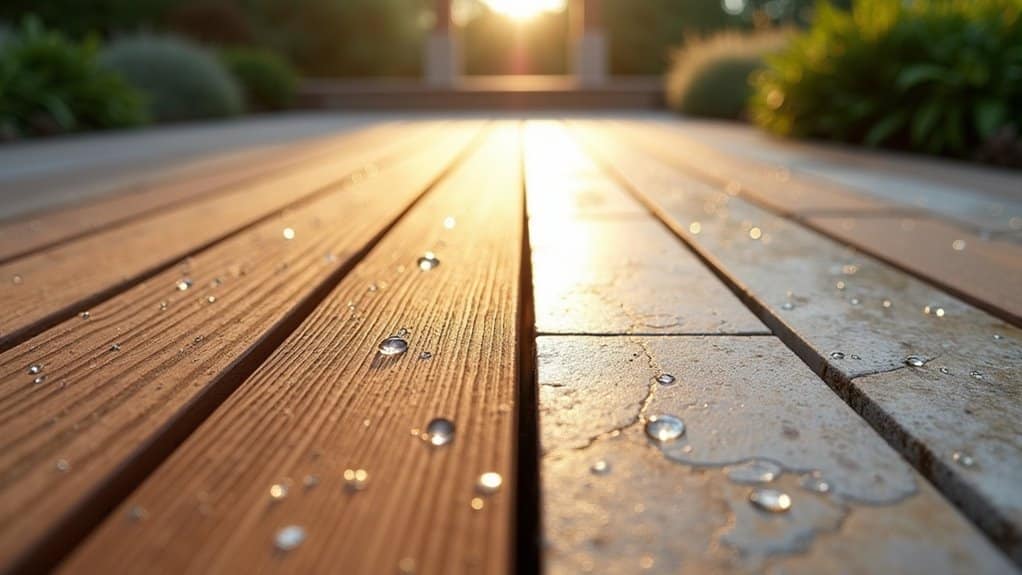
When designing your outdoor living space, selecting the right flooring material substantially impacts both aesthetics and functionality. You’ll find diverse options ranging from poured concrete to natural stone pavers, each offering distinct advantages for your patio needs.
Concrete presents an economical foundation, whether poured or installed as individual pavers, though maintenance requirements differ between these applications. For a traditional aesthetic, brick pavers deliver durability and cost-effectiveness, while porcelain tiles offer modern appeal with superior weather resistance. If you’re seeking a wood-like appearance without extensive upkeep, composite decking provides an eco-conscious solution that resists fire and weathering.
Consider your specific requirements for maintenance, cost, and durability when choosing between these materials. While natural stone pavers may require a higher initial investment, their longevity and repair flexibility often justify the expense.
Weather Resistance and Durability Factors
The long-term performance of outdoor flooring materials hinges directly on their ability to withstand environmental challenges. When you’re evaluating weather resistance and durability, concrete pavers offer superior crack resistance compared to traditional poured surfaces, while natural stone options like flagstone deliver exceptional long-lasting durability against harsh conditions.
For areas with high UV exposure and moisture concerns, you’ll find composite decking materials engineered specifically to prevent deterioration and rotting. Porcelain tiles stand out for their imperviousness to water and staining, making them ideal for heavy-traffic outdoor spaces. If you’re seeking a natural aesthetic with modern durability, consider resin-bound gravel systems that combine stone’s appeal with UV-stable binding technology. Each material’s specific weather resistance properties should align with your local climate conditions and intended use.
Cost Comparison of Different Flooring Options
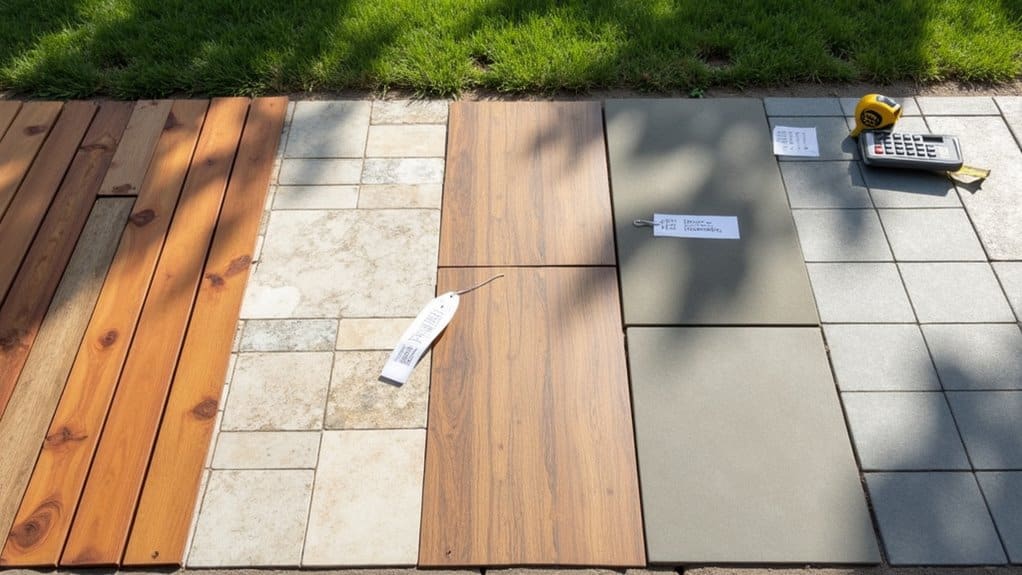
Understanding your budget constraints will help narrow down the most suitable outdoor flooring materials for your project. When comparing the variety of materials available, you’ll find decorative chip gravel offers the lowest initial cost at $2-$5 per square foot, though it requires more upkeep in high-traffic areas.
Concrete pavers provide excellent value at $5-$10 per square foot, offering better durability than poured concrete, which runs $10-$15 per square foot but is low maintenance and easy to clean. Brick pavers, priced at $10-$20 per square foot, deliver a classic look with moderate durability. For premium spaces, natural stone patios command $15-$30 per square foot, representing the highest investment but delivering unmatched elegance and longevity. Your choice should balance upfront costs with long-term maintenance requirements and aesthetic preferences.
Installation Requirements and Maintenance Needs
Successful outdoor flooring installations demand careful attention to proper base preparation and ongoing maintenance protocols. You’ll need to ponder both initial installation complexity and long-term upkeep when selecting your outdoor flooring material.
- If you’re choosing natural stone, prepare for a labor-intensive installation process due to irregular shapes and sizes, requiring expert placement to prevent an uneven and unstable surface.
- For paver installations, guarantee a solid concrete base and apply protective sealants to extend their lifespan and guard against weather damage.
- While decorative chip gravel offers simpler installation, you’ll need to perform regular maintenance to maintain proper leveling and containment.
- Contemplate that poured and stamped concrete, though easier to install initially, requires careful preparation to minimize cracking from seasonal changes and may need periodic repairs.
Design Considerations and Style Compatibility
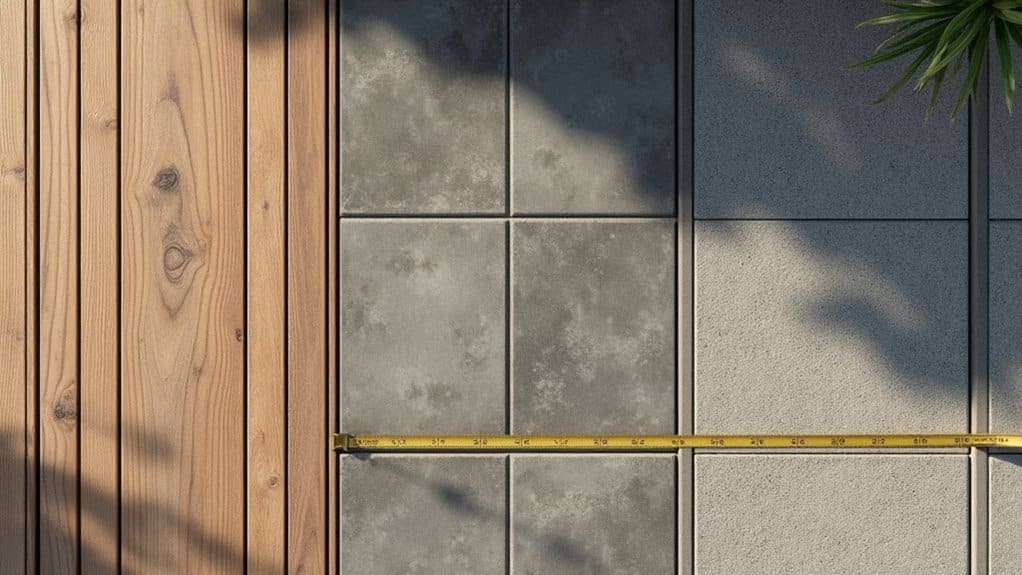
Beyond technical installation requirements, selecting outdoor flooring materials demands a thoughtful consideration of design aesthetics and architectural harmony. You’ll want to match your home’s architectural style with complementary materials concrete patio and stone patio options work beautifully with traditional designs, while composite deck tiles create a modern feel.
For traditional homes, clay pavers and stamped concrete can provide timeless appeal, while natural wood and traditional wood decking suit contemporary aesthetics. When you’re working with smaller spaces, consult a scenery designer about scale-appropriate materials. Consider wood chips for casual areas and rubber tiles for functional spaces. Remember to evaluate how different materials’ textures and colors will interact contrasting elements can create visual interest while maintaining design cohesion throughout your outdoor space.
Frequently Asked Questions
What Material Is Good for Outdoor Flooring?
You’ll find several excellent outdoor flooring options to suit your needs. Concrete pavers and brick pavers offer durability and versatility, while natural stone tiles create an elegant, timeless appeal. For low maintenance, consider wood composite decking or porcelain tiles that won’t rot or fade. Interlocking rubber tiles provide safety for play areas, and artificial grass stays green year-round. Pebble flooring, recycled plastic tiles, and stamped concrete round out your weather-resistant choices.
What Type of Flooring Is Best for Outdoor?
Your best outdoor flooring choice depends on balancing several key factors. You’ll want weather-resistant materials like concrete pavers or composite decking that offer strong UV protection capabilities and slip-resistant surfaces. Consider your climate suitability, maintenance requirements, and budget constraints. For longevity expectations, natural stone excels but costs more. If you’re eco-conscious, permeable options like gravel work well. Match your aesthetic preferences with installation considerations to make the ideal choice.
What Are the Options for Outdoor Deck Flooring?
You’ll find multiple decking options to suit your outdoor space. For traditional appeal, consider pressure treated wood, cedar wood, redwood, or premium ipe wood. If you’re seeking durability, composite deck boards made from recycled plastic offer excellent longevity. For modern designs, you can opt for porcelain tiles or natural stone. Alternative materials like rubber pavers provide safety and comfort, while artificial grass adds a unique touch to deck surfaces.
What Is the Budget Friendly Outdoor Flooring?
You’ll find several budget-friendly outdoor flooring options to improve your space. Poured concrete offers a cost-effective foundation at $5-$10 per square foot, while inexpensive patio tiles and low-priced outdoor vinyl tiles provide versatile alternatives. Consider budget-friendly interlocking pavers or cost-effective brick pavers for a classic look. For natural areas, gravel ($2-$5/sq ft) and wood chips deliver economical solutions. Affordable artificial turf and budget-friendly rubber flooring work well for high-traffic zones.