
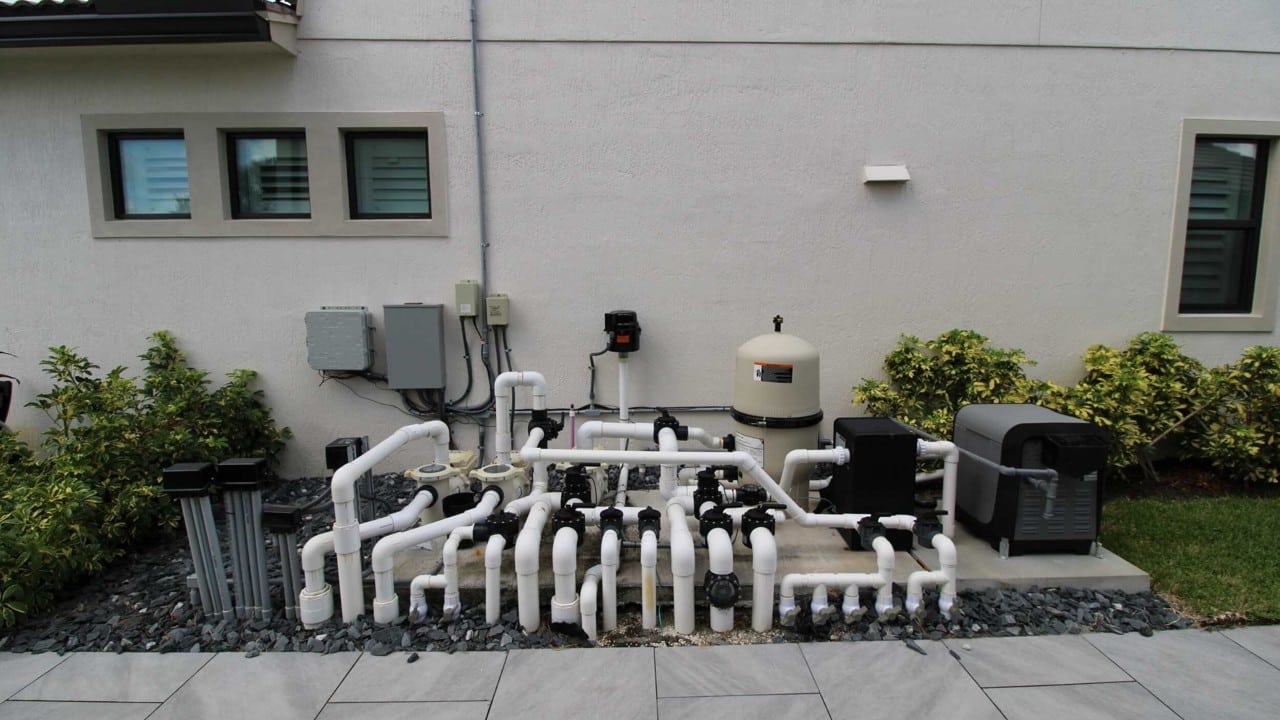
If you’re designing a Florida backyard, gas fire pits suit compact patios with closer seating and smoke-free entertaining, while wood-burning pits create a dramatic focal point in open yards. Gas units deliver clean flames at 30,000, 60,000 BTUs; wood pits reach higher heat but produce more smoke. Both styles shape your layout differently, from fuel storage to setback requirements. Below, you’ll find everything you need to choose the right fit.
Gas vs. Wood Fire Pits: Fuel, Ignition, and How They Work
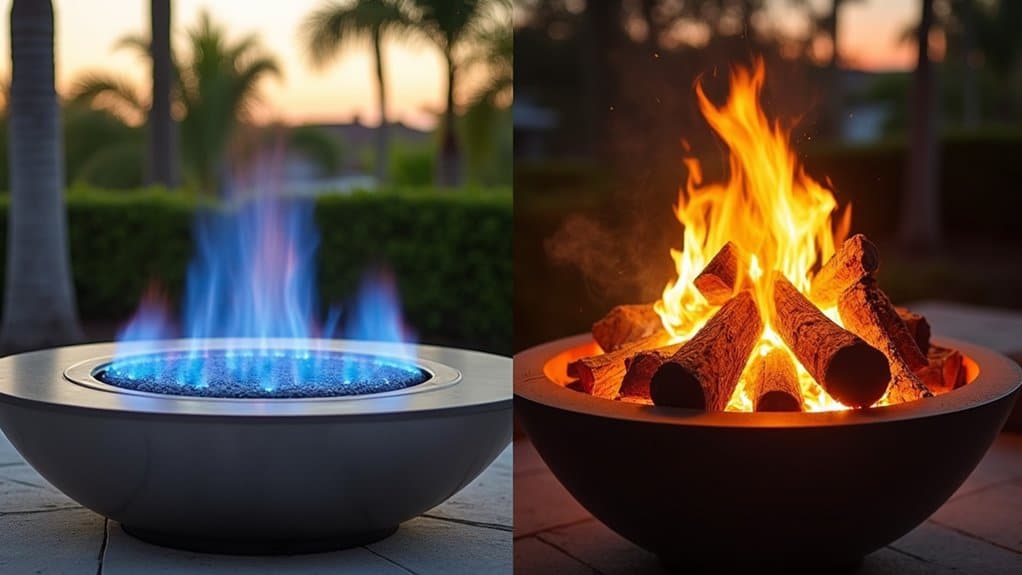
Gas and wood-burning fire pits operate on fundamentally different fuel systems, and that distinction shapes everything from installation to nightly use. When comparing a gas vs wood burning fire pit, you’re choosing between a burner-fed system running propane or natural gas and a manually tended wood fire requiring dry firewood and kindling.
Your fire pit fuel type determines ignition, flame control, and visual presentation. Gas systems offer electronic, match-lit, or standing pilot ignition with adjustable flame output through decorative media like glass stones or ceramic logs. Wood pits demand hands-on fire-building and continuous tending. Gas units need fuel line access or tank placement, which affects your layout options. Wood pits require no infrastructure but need firewood storage space, making each option distinctly suited to different backyard configurations. Gas fire pits also provide clean and smokeless operation, which can be a deciding factor for homeowners in close-neighbor Florida communities.
Heat Output and Smoke in Florida’s Humid Climate
Because Florida’s climate stays warm most of the year, heat output plays a different role here than in northern states. You’re designing for ambiance, not survival warmth. Gas fire pits deliver 30,000, 60,000 BTUs with minimal smoke levels, making them ideal for covered or semi-enclosed layouts. Wood-burning options reach 30,000, 80,000 BTUs but produce noticeably more smoke, especially when Florida’s humidity dampens your firewood.
| Feature | Gas | Wood-Burning |
|---|---|---|
| Heat Output | 30,000, 60,000 BTUs | 30,000, 80,000 BTUs |
| Smoke Levels | Minimal | Moderate to high |
For most Florida backyards, you don’t need maximum heat, you need clean, controlled flames that complement your space. Gas keeps smoke levels low and pairs well with tighter seating arrangements, while wood suits open layouts where airflow manages smoke naturally. Since gas fire pits produce no flying embers, they’re also a safer choice for residential settings where covered patios and nearby landscaping are common.
What Gas and Wood Fire Pits Cost to Install and Run
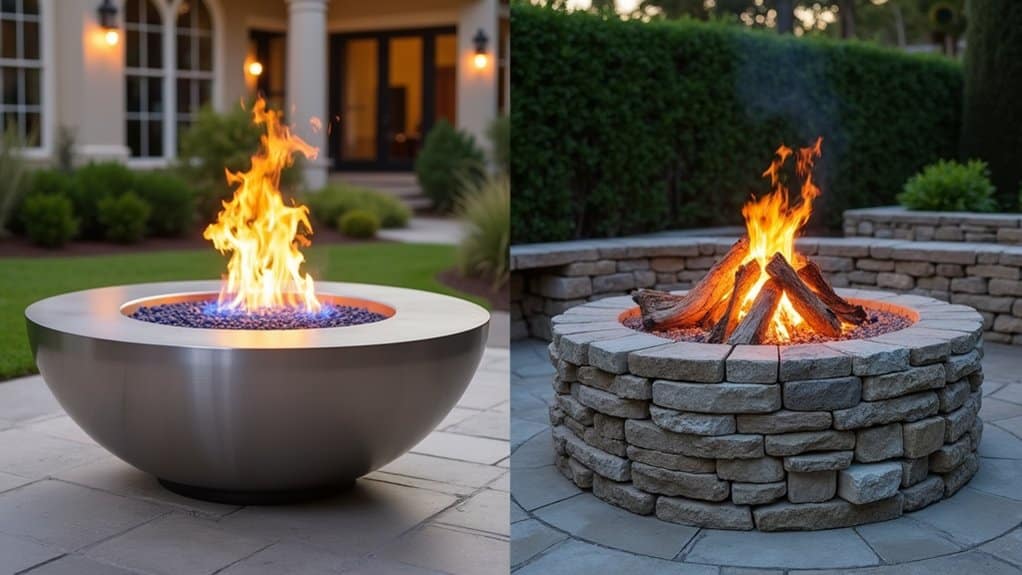
When you’re weighing gas against wood-burning fire pits, installation and fuel costs shape your budget from day one. In a wood burning fire pit comparison, wood options typically run $300 to $5,000 installed, while a natural gas fire pit ranges from $2,000 to $10,000+ for custom builds. Gas lines add $300 to $500 for a 20-foot connection. Most homeowners find that spending $3,000 to $8,000 for professional installation covers the majority of fire pit projects regardless of fuel type.
Here’s how ongoing costs break down:
- Wood fuel costs $0 if you’ve got your own supply, but requires ash cleanup and firewood storage space.
- Propane tanks run $20 to $50 per refill, lasting 8 to 20 hours per tank.
- Natural gas averages $10 to $30 monthly, with no tank swaps cluttering your design.
Annual maintenance typically runs $100 to $300 regardless of fuel type.
Which Fire Pit Style Fits Your Florida Backyard?
How well a fire pit fits your backyard depends on your space, layout, and how you actually use it. A gas fire pit suits compact patios where controlled flames and instant ignition let you place seating closer without worrying about smoke drift or clearance issues. It pairs naturally with modern, polished entertainment spaces. Portable fire pits for backyard versatility offer an excellent alternative for those seeking warmth without the permanence of a built-in fire feature. They can easily be moved to create different atmospheres for gatherings, whether you’re grilling with friends or enjoying a cozy evening alone.
A wood fire pit works better in open yards where the broader heat radius and traditional flame become a landscape focal point. You’ll need room for firewood storage and ash cleanup, so factor that into your layout. Types of fire pits for Florida backyards can vary greatly based on climate and usage. For instance, gas fire pits offer quick lighting and controlled temperatures, making them ideal for humid summer evenings.
If you prioritize quick weeknight fires with minimal effort, gas matches that rhythm. If you enjoy building a fire and gathering around crackling flames, wood delivers that experience. Your space and lifestyle should drive the decision.
Florida Fire Pit Rules to Check Before You Build
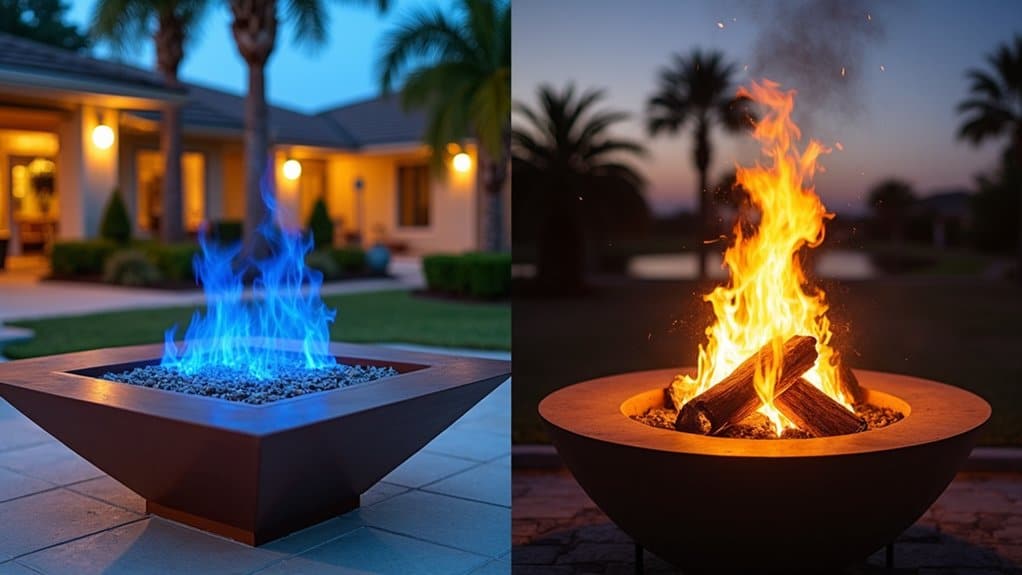
Florida’s fire codes shape where and how you can build a fire pit, so check local rules before committing to a design. Most jurisdictions require a 25-foot setback from structures, which directly impacts your layout options. A propane fire pit often fits tighter spaces where wood-burning setbacks restrict placement, while a smokeless fire pit can reduce nuisance complaints from neighbors.
Before you pick a design, check Florida’s fire codes, setback rules may decide the fuel type for you.
- Verify local permit exemptions, small recreational fire pits may not need permits, but definitions vary by county and fire type.
- Confirm fuel restrictions, burn only clean, dry wood; trash, treated lumber, and construction debris are prohibited in most Florida jurisdictions.
- Plan for supervision and extinguishing, keep a hose or extinguisher nearby and never leave your fire unattended.
Call Today and Build a Custom Fire Feature
From custom fire pits to modern fire walls and bowls, the right fire feature adds warmth, value, and unforgettable curb appeal. At Innovative Outdoor Living, our skilled team provides trusted Backyard Makeovers built around your style, space, and outdoor lifestyle. Call +1 (561) 594-1495 today and bring your backyard vision to life.
Frequently Asked Questions
Can You Convert a Wood-Burning Fire Pit to Gas Later?
Yes, you can convert most wood-burning fire pits to gas using a burner pan, flex line, and key valve. You’ll need adequate ventilation, typically 36 square inches, to prevent gas pooling. Your fire pit’s interior dimensions must accommodate the burner with proper clearances. Once converted, you can finish the look with fire glass, lava rock, or ceramic logs that complement your backyard’s design. A certified gas technician should handle the installation.
Are Gas Fire Pits Safe to Use During Florida Hurricane Season?
You can use gas fire pits during hurricane season, but you’ll need to follow strict safety steps. Shut off both the control valve and fuel supply before any storm, clear loose media and debris, and let the unit cool completely before covering it. You’ll also want to maintain proper clearances from structures and combustible materials, since wind amplifies hazards. Always check local fire codes for Florida-specific seasonal restrictions.
How Long Do Gas Fire Pit Burners Typically Last?
Quality gas fire pit burners typically last many years to decades, especially when you choose brass or stainless-steel materials. Premium brass burners won’t rust and often carry lifetime warranties, signaling exceptional durability. You’ll extend your burner’s life by covering it when not in use, keeping the area clean, and scheduling annual professional inspections. Protecting your investment means your fire pit’s design stays pristine and your backyard aesthetic remains effortlessly polished.
Do Fire Pits Increase Home Resale Value in Florida?
Fire pits can boost your home’s marketability in Florida, though you’ll likely see partial cost recovery rather than a full return. Zillow research shows listings mentioning “fire pit” sold for 2.8% more on average. You’ll maximize appeal with a permanent, built-in gas design using quality materials that complement your outdoor layout. Pair it with cohesive seating and lighting to create a polished entertaining space buyers notice immediately.
Can You Cook Food Over a Gas Fire Pit?
You can roast marshmallows and simple camp-style foods over a gas fire pit, but most units aren’t designed for full meal cooking. They’re typically certified as decorative appliances, not cooking equipment, and they burn cooler than wood fires. That lower heat makes it harder to cook food evenly. If you’re planning a backyard space around outdoor cooking, a wood-burning fire pit gives you more versatility for direct grilling.