Hardscaping covers the non-living, structural elements, stone, concrete, brick, and wood, that define spatial boundaries, create usable surfaces, and guide movement through your outdoor space. Landscaping is the broader discipline that layers in softscape features like plants, trees, and turfgrass to add color, texture, and seasonal variation. You’ll get the best results when you treat hardscaping as the foundation and integrate living elements around it. Understanding how these two systems work together will shape every design and budget decision ahead.
What Hardscaping and Landscaping Actually Mean
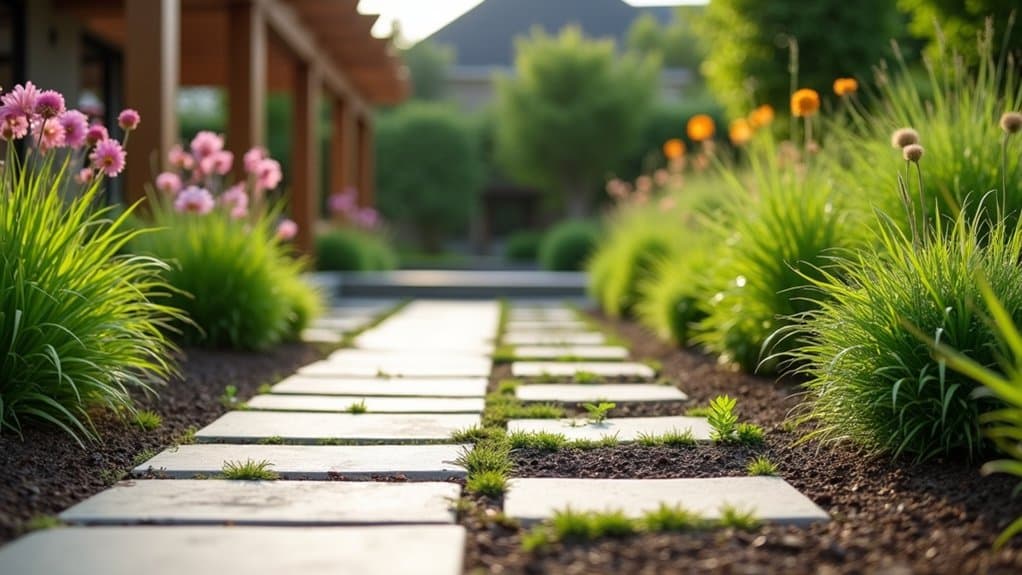
When you’re planning an outdoor space, understanding the distinction between hardscaping and landscaping determines how effectively you’ll allocate resources, sequence construction phases, and achieve a cohesive design. Hardscaping refers specifically to non-living, structural elements, stone, brick, concrete, and wood installations that provide permanence and functionality. These components serve clear design purposes: defining spatial boundaries, creating usable surfaces, and guiding movement through your environment.
Landscaping encompasses all outdoor work, integrating both hardscape structures and softscape elements like plants, trees, and turfgrass. Each living component serves an aesthetic purpose, adding color, texture, and seasonal variation. You’ll alter your yard’s foundation through hardscaping first, then layer in softscape features. Together, these systems create sustainable outdoor environments balancing structure with organic liveliness.
Hardscaping vs. Landscaping: The Materials Behind Each
| Category | Key Materials | Sustainability Factor |
|---|---|---|
| Concrete & Stone | Stamped concrete, flagstone, granite | Recycled concrete promotes groundwater recharge |
| Wood & Composite | Cedar, ipe, wood-plastic composites | Composites use recycled fibers; mulch retains moisture |
| Innovative | Permeable pavers, resin-coated DG, gravel | Reduces runoff, supports eco-friendly drainage |
When conducting an environmental impact comparison, you’ll find permeable systems and recycled rubber mulch outperform traditional poured concrete. Prioritize materials matching your climate, traffic loads, and sustainability goals. With over 20 years of experience, Flooring Plus LLC specializes in helping homeowners select the right hardscaping materials, ensuring durable installations and long-term maintenance for driveways, patios, and walkways.
Maintenance, Durability, and Everyday Upkeep Compared
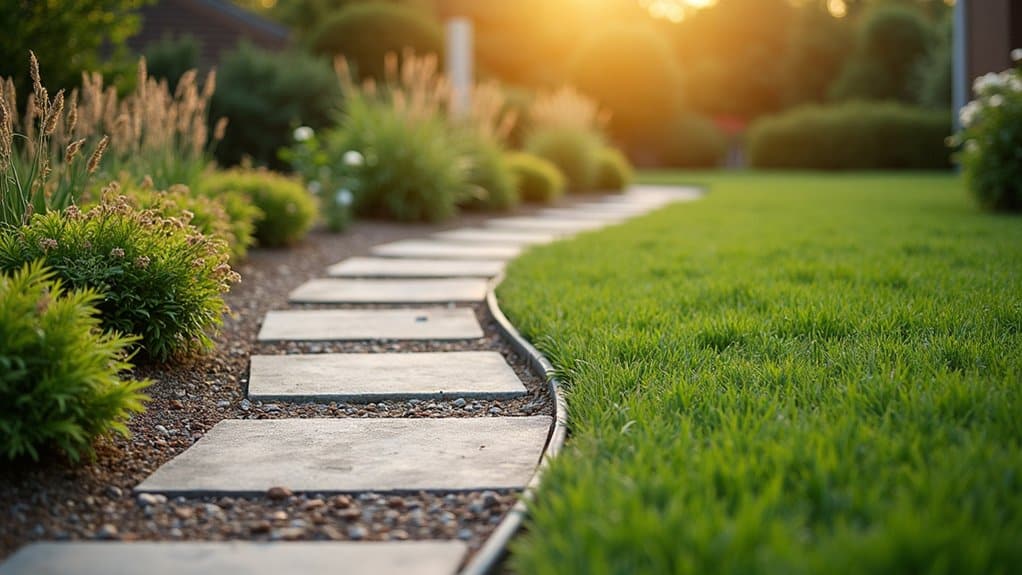
Choosing the right materials sets the foundation, but understanding how those materials perform over time determines your project’s true value. Hardscaping, stone, brick, concrete, withstands decades of heavy use and weather with only occasional cleaning or sealing. Landscaping demands consistent watering, pruning, mowing, and seasonal fertilizing to maintain its liveliness.
Your budget considerations extend well beyond installation. A $4,000 stone pathway delivers long-term stability with minimal intervention, while plant beds accumulate recurring costs through mulch replacement, weeding, and adaptive seasonal care. Annuals die each fall; pavers don’t. Hardscaping also addresses terrain challenges, as features like retaining walls actively manage soil erosion that would otherwise compromise your property over time.
The smartest approach combines both elements strategically. You’ll reduce overall maintenance by replacing high-effort plant zones with functional hardscape features while preserving targeted green spaces. This creates aesthetic balance without overwhelming your upkeep schedule.
The Benefits Only Landscaping Can Deliver
While hardscaping provides structural permanence, landscaping delivers biological functions that stone and concrete simply can’t replicate. You’ll gain seasonal color and texture that evolve throughout the year, improved air quality through natural filtration and oxygen production, and natural soil stabilization that protects your property from erosion. These living systems actively work to enhance your site’s environmental performance in ways no inert material can match.
Seasonal Color And Texture
Beyond aesthetics, seasonal color directly supports your emotional well being and health enhancement. Fragrance, texture, and vibrant blooms reduce stress while encouraging outdoor engagement. Virginia Tech research confirms well-landscaped properties gain a 5.5% to 12.7% price advantage, value hardscape alone can’t generate. You’re softening rigid architectural lines, creating welcoming atmospheres, and building year-round curb appeal through intentional, climate-responsive plant design that evolves rather than stagnates.
Improved Air Quality
Unlike hardscape surfaces that absorb and radiate heat, living plant systems actively scrub pollutants from the air you breathe every day. Through pollutant sequestration, trees, shrubs, and turfgrass absorb NO₂, SO₂, CO, and ground-level ozone, converting them into less harmful compounds. Strategically designed plantings deliver measurable respiratory health improvement across your property.
- Particulate filtration: Roadside dense vegetation reduces pollutants downwind by 30%.
- Carbon capture: A single 16-inch urban tree sequesters 34.6 pounds of carbon annually.
- Temperature regulation: Green spaces lower surrounding air temperatures up to 10°F, slowing ozone formation.
- Oxygen output: One mature tree produces enough oxygen for two people yearly.
- Health impact: Increased tree cover yields a 1.4% average pollutant concentration decrease.
Natural Soil Stabilization
Because every landscape depends on the ground beneath it, natural soil stabilization stands as one of landscaping’s most critical, and often overlooked, advantages. When you integrate sod, native plants, and organic topsoil, you’re engineering a living system that binds soil particles, reduces runoff velocity, and enhances structural cohesion from the surface down.
Plant roots drive microbial soil aggregation, creating durable particle bonds that resist displacement during heavy storms. Biodegradable polymers derived from natural sources further boost moisture retention without introducing synthetic residues. Meanwhile, lime treatments reduce plasticity in clay-heavy substrates, improving permeability and workability.
You’re not just planting, you’re reinforcing your site’s foundation. Combined with strategic gravel placement and topsoil layering, these techniques deliver measurable shear strength gains and long-term erosion resistance that hardscaping simply can’t replicate.
How Hardscaping and Landscaping Work Together
- Permeable pavers paired with rain gardens reduce runoff while promoting natural water filtration
- Strategic tree placement alongside hardscape structures provides shade and reduces energy costs
- Lush greenery surrounding patios creates secluded, private outdoor retreats
- Drought-resistant plantings integrated with stone elements deliver eco-friendly, low-maintenance designs
- Combined approaches recover 50, 75% of installation costs through increased property resale value
Hardscaping or Landscaping: Which Should You Budget for First?
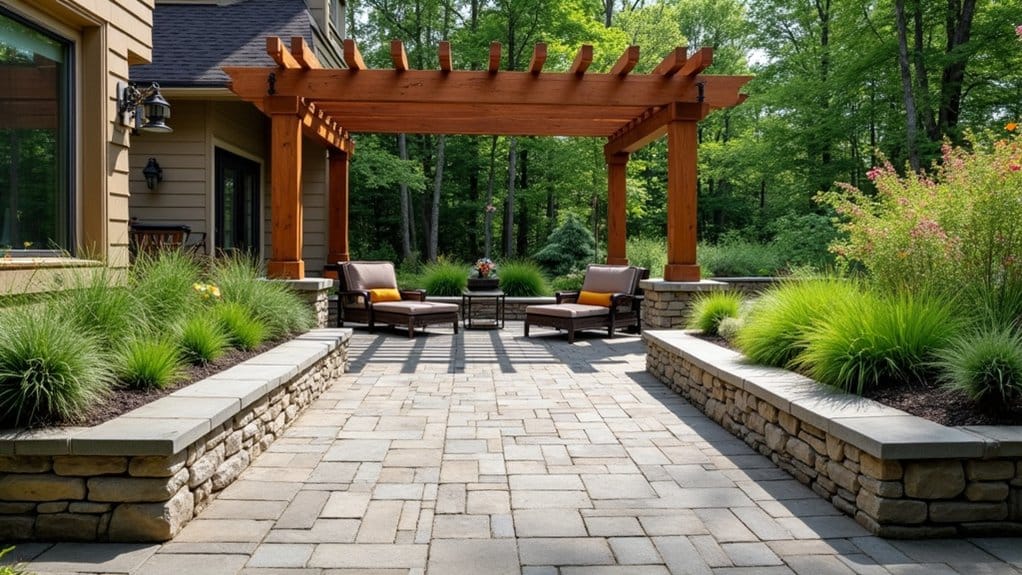
How you sequence your outdoor investment matters as much as the total amount you spend. Prioritize hardscaping first, it establishes your site’s foundation, addresses drainage, and prevents costly rework later. A backyard hardscape typically runs $3,000, $15,000, setting a stable base for everything that follows.
Your budgeting approach considerations should account for hardscaping’s higher upfront costs but lower annual maintenance, just 5%, 10% of installation expenses. Landscaping, by contrast, demands $600+ yearly in ongoing care.
From long term investment perspectives, hardscaping delivers durable, permanent value through materials like stone and concrete. Once that infrastructure’s in place, you can phase in landscaping incrementally, starting with mulch and shrubs under $1,000. This sequenced strategy maximizes both structural integrity and aesthetic impact without overextending your budget.
Frequently Asked Questions
Can Hardscaping Increase the Resale Value of My Home?
Yes, hardscaping can considerably boost your home’s resale value by 15, 20%. When you install patios, retaining walls, and permeable surfaces, you’re creating increased outdoor living space that buyers actively seek. Improved curb appeal through well-designed hardscape features like outdoor kitchens and structured walkways signals durability and intentional design. You’ll maximize returns by selecting sustainable materials and maintaining clean, neutral layouts that appeal to eco-conscious buyers.
Do I Need Permits to Install Hardscape Features in My Yard?
Yes, you’ll likely need permits for certain hardscape features depending on your local regulations requirements. Retaining walls over 3, 4 feet, fences exceeding 6, 7 feet, and raised decks typically trigger permit thresholds. You should always check your municipal code restrictions before breaking ground, since non-compliance risks stop-work orders, fines, and compromised structural integrity. Ground-level patios, low retaining walls, and gravel paths usually remain exempt, but confirming ensures your project stays sustainable and code-compliant.
How Long Does a Typical Hardscaping Installation Project Take to Complete?
Your project timeline considerations start with scope: basic paver patios take 2, 5 days, while multi-feature designs with grade changes and custom patterns require 3, 4 weeks or longer. Key factors impacting installation duration include material selection, natural stone demands more handling time than concrete, permit acquisition, crew availability, and site preparation like grading and drainage work. You’ll also want to account for material lead times, since backorders can pause progress considerably.
Can Hardscaping Be Installed Over an Existing Landscaped Area?
Yes, you can install hardscaping over an existing landscaped area. Through thoughtful hardscape integration planning, designers assess your terrain and complement current softscape elements with non-living features like patios and walkways. Existing landscape preservation remains achievable when you excavate properly, install fabric and compacted gravel bases, and grade effectively. You’ll need to balance hardscape with softscape for a cohesive, sustainable design that enhances functionality, drainage, and long-term durability.
What Time of Year Is Best for Starting a Hardscaping Project?
Late spring offers you the ideal weather conditions for hardscaping, as moderate temperatures prevent material cracking and support proper curing of concrete, stone, and brick elements. You’ll want to factor in project timeline considerations by booking contractors in early spring, securing premium sustainable materials before peak demand drives up costs. Planning during winter lets you assess drainage patterns and complete permits, ensuring your installation finishes efficiently for summer use.