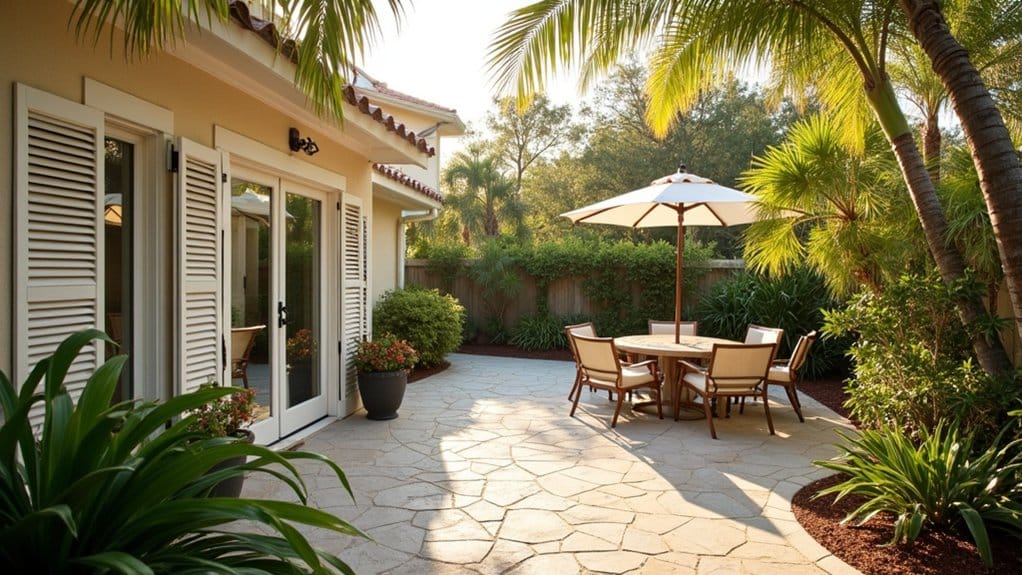
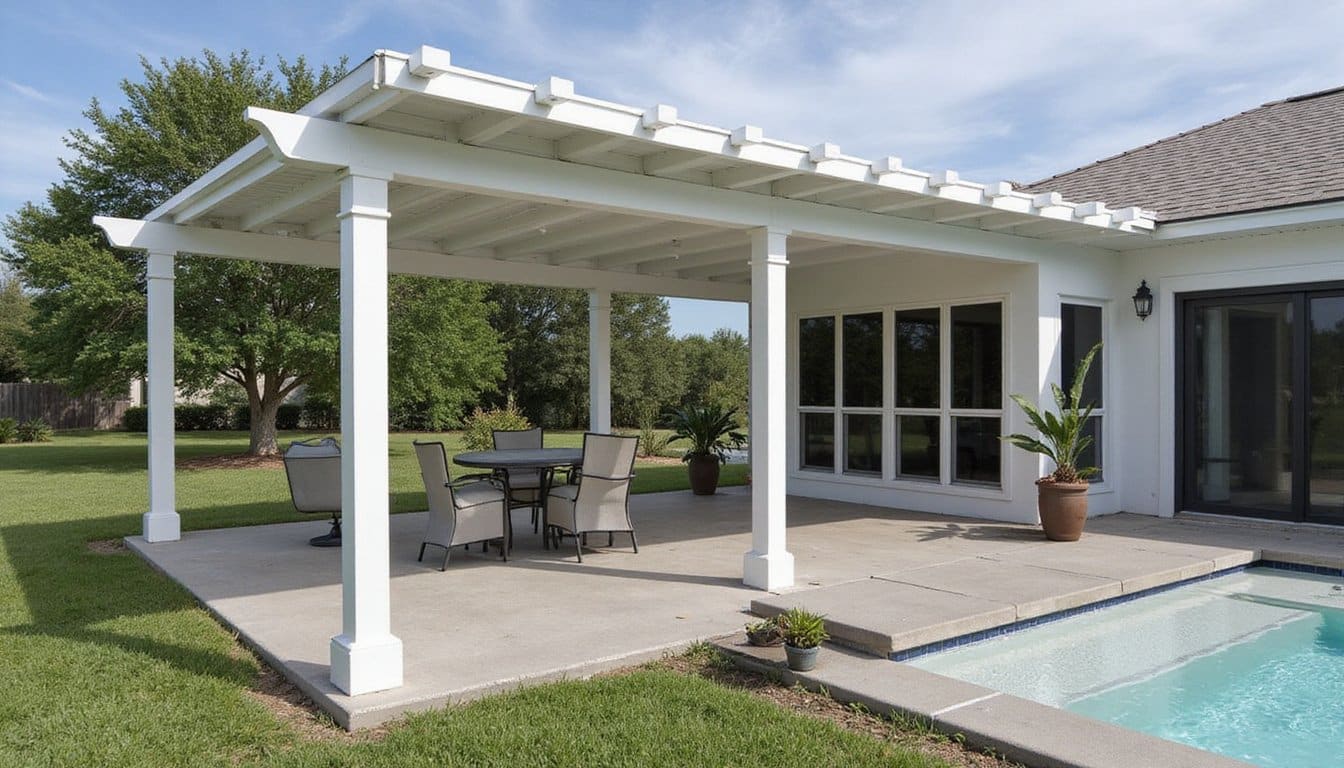
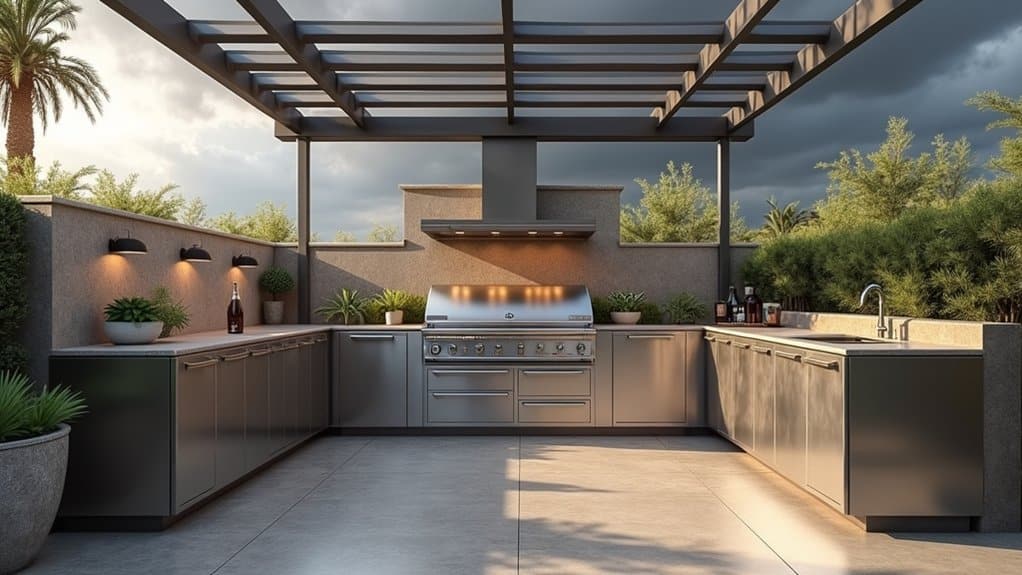
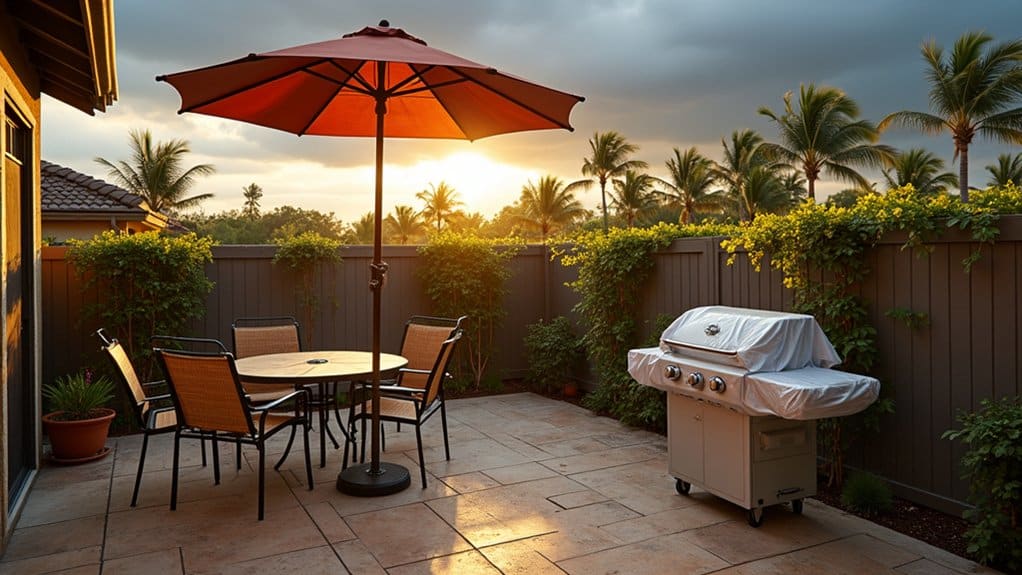
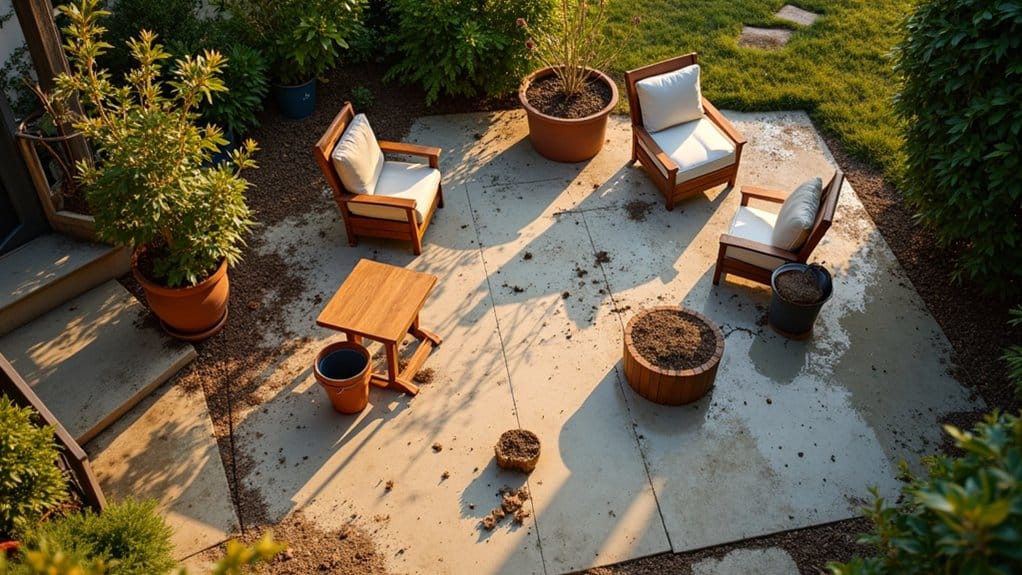
Three patio hardscape ideas that improve backyard functionality are paver patios, multi-level patios, and fire pit patios. You’ll find paver patios easiest to build and repair since you can swap individual stones without disturbing the whole surface. Multi-level designs use retaining walls to terrace sloped yards into usable zones. fire pit patios anchor a social hub that extends your season well past summer. Each design offers specific details you’ll want to explore below.
Paver Patios Are the Easiest to Build and Maintain
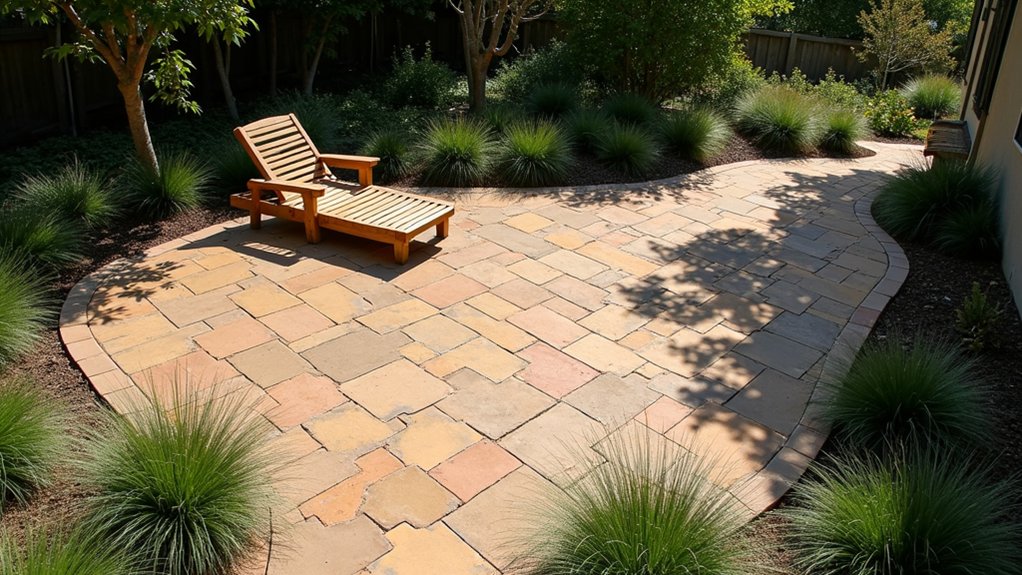
When you’re planning a patio hardscape, pavers stand out as the most approachable option for both DIY builders and seasoned contractors. The process begins with staking layout lines, excavating to depth, and compacting a 4, 6 inch gravel base. You’ll screed a one-inch sand bed using PVC pipes and a 2×4, then lay pavers evenly while checking slope with a straightedge.
This cost-effective installation is accessible for DIY enthusiasts who follow each step methodically. Maintenance stays minimal, weekly sweeping, periodic rinsing, and seasonal joint sand replenishment keep your surface stable. Seal every one to three years to guard against UV damage and staining. Damaged pavers pop out individually for replacement, so repairs never require tearing up the entire patio. Filling cracks with polymeric sand also helps deter weed growth that can develop in paver crevices and compromise the patio’s appearance over time.
Multi-Level Patios Turn Sloped Yards Into Usable Space
Retaining wall systems built from stone, brick, or concrete create flat terraces while managing soil pressure and directing drainage downhill. Wide connecting steps double as seating and accommodate terraced garden beds that soften hardscape edges. Observing your yard during a rainstorm reveals natural water flow patterns that should guide where you position each terrace to prevent pooling and structural damage. For steeper grades, split-level designs place entertaining decks six feet above lower lounging areas with hot tubs or fire pits, giving you dramatic elevation changes that maximize views and separate activities by mood.
Fire Pit Patios Extend Your Backyard Season Year-Round
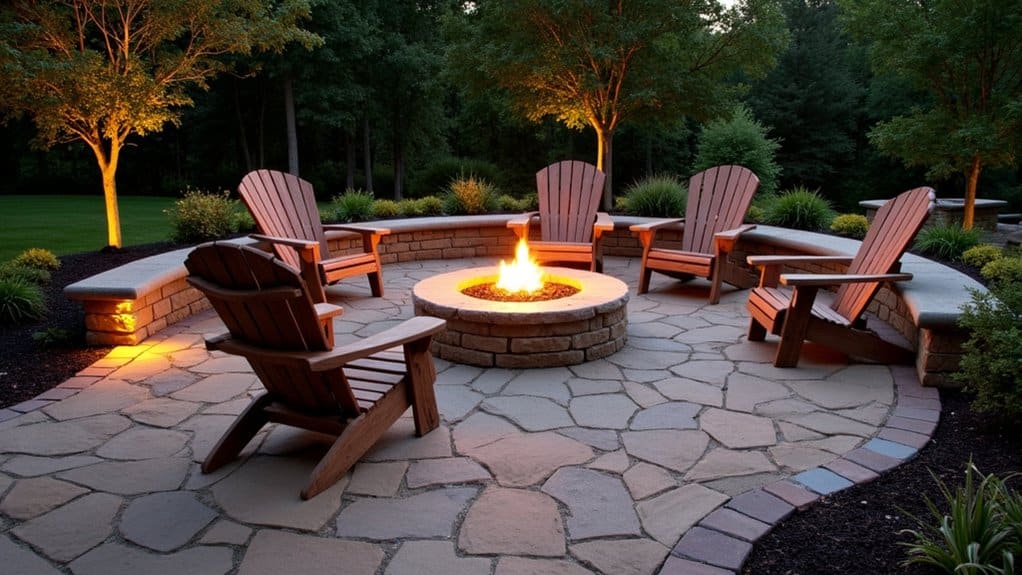
You’ll find these features serve as multifunctional design elements, gas fire tables double as dining surfaces, while wood-burning pits create dedicated cooking zones. The flickering warmth naturally draws guests inward, establishing a social hub that guides seating arrangements and conversation flow. From roasting marshmallows to grilling over an open flame, these setups add a fun, interactive element that creates lasting memories through simple meals shared outdoors. Low-maintenance gas models keep upkeep minimal, and well-integrated fire features boost property marketability. Position yours as a focal point, and you’ll transform your patio into a destination regardless of dropping temperatures.
Frequently Asked Questions
How Much Does a Hardscape Patio Typically Cost to Install?
You’ll typically spend $2,500 to $6,600 on a hardscape patio installation, with the national average landing around $4,500. Your cost factors include patio size, site preparation complexity, and labor rates ranging $50, $100 per hour. Material selection drives the biggest price swings, gravel starts at $2.35 per square foot, while natural stone pavers reach $31 or more. You’ll want to match your material choice to your site’s grade, drainage needs, and overall design vision.
Do Patio Hardscapes Require Permits From Local Building Authorities?
Yes, most patio hardscapes do require permits, depending on your project’s scope and location. Permit requirements vary widely, flagstone, pavers, and poured concrete patios often need zoning or building approvals. You’ll want to check your local zoning regulations for specifics on impervious surface limits, setback distances, and retaining wall heights. Don’t overlook flood zone compliance or HOA restrictions, as non-compliance can trigger fines, forced removal, or complications when selling your home.
Can Hardscape Patios Be Installed Over Existing Concrete Slabs?
Yes, you can install hardscape patios directly over existing concrete slabs, provided the surface is structurally sound without significant cracking or deterioration. You’ll want thorough surface preparation, cleaning, leveling, and applying a bontar bonding agent, to guarantee lasting adhesion. Equally critical, you should verify proper drainage capabilities by confirming adequate slope so water doesn’t pool beneath your new pavers. This approach preserves your existing foundation while delivering a beautifully refreshed, design-forward patio.
How Long Does a Professional Patio Hardscape Installation Usually Take?
Most professional patio hardscape installations take 2, 7 days, though your average installation timeline depends on project scale, material choice, and design complexity. For a standard 20×20 paver patio, you’ll see typical labor requirements of 1, 3 days once site prep’s complete. Curved layouts, custom features like fire pits, or concrete curing needs can extend your schedule. Weather, crew size, and site access also directly influence how efficiently your installation progresses.
What Eco-Friendly Patio Materials Help With Water Drainage and Runoff?
You’ll get the best drainage from permeable pavers, which feature wider joints and layered aggregate bases that capture stormwater and filter it directly into the ground. Natural stone pavers like flagstone and limestone offer premium textures with wide joints that reduce runoff and recharge groundwater. For added sustainability, consider grass lattice grids or recycled-material pavers, they’ll blend green space into your design while qualifying for local environmental rebates.