

You can transform your backyard’s toughest slopes into functional outdoor spaces with five retaining wall strategies. Terraced walls convert grades into layered gardens with built-in water management. Segmental block walls create level pool decks on hillsides. Low retaining walls carve out fire pit zones with proper airflow design. Built-in seating walls extend 18, 24 inches for ergonomic comfort. Privacy walls integrate dense hedges and pollinator-friendly plantings. Each approach below breaks down the technical details you’ll need to get started.
Terraced Retaining Walls That Turn Slopes Into Gardens
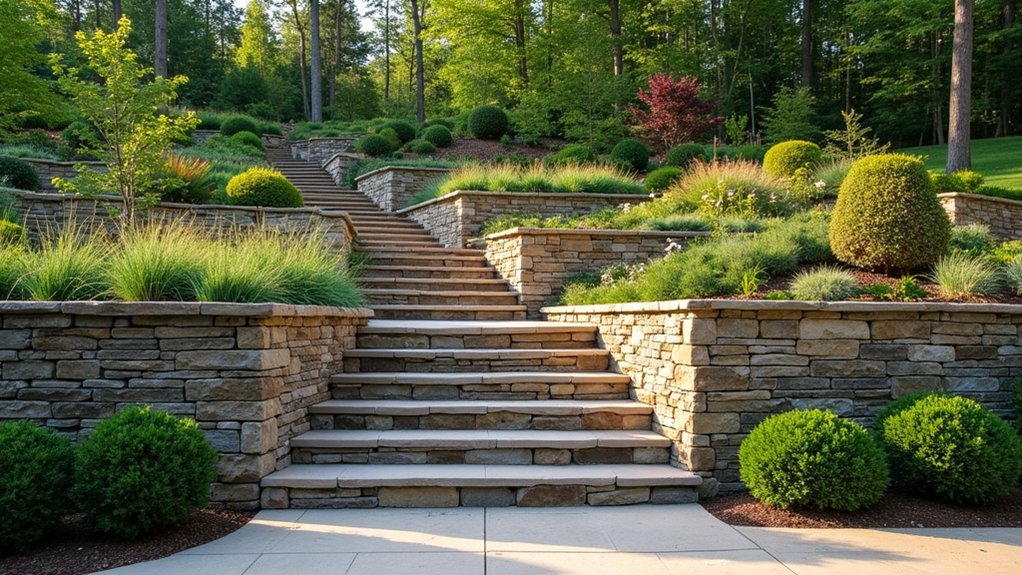
Beyond aesthetics, terraced systems function as built-in water management solutions. The series of walls controls runoff velocity, reduces soil erosion, and directs water flow between levels, protecting plant health and structural integrity simultaneously. You’ll want to incorporate drainage pipes, gravel backfill, and weep holes at each tier to prevent hydrostatic pressure buildup.
Integrate steps or pathways between terraces for easy maintenance access. This approach maximizes your slope’s planting potential while maintaining long-term soil stability. Before building, conduct a thorough assessment of soil properties and groundwater conditions to inform the appropriate wall type and design for each terrace level.
Retaining Walls That Make Sloped Pool Areas Work
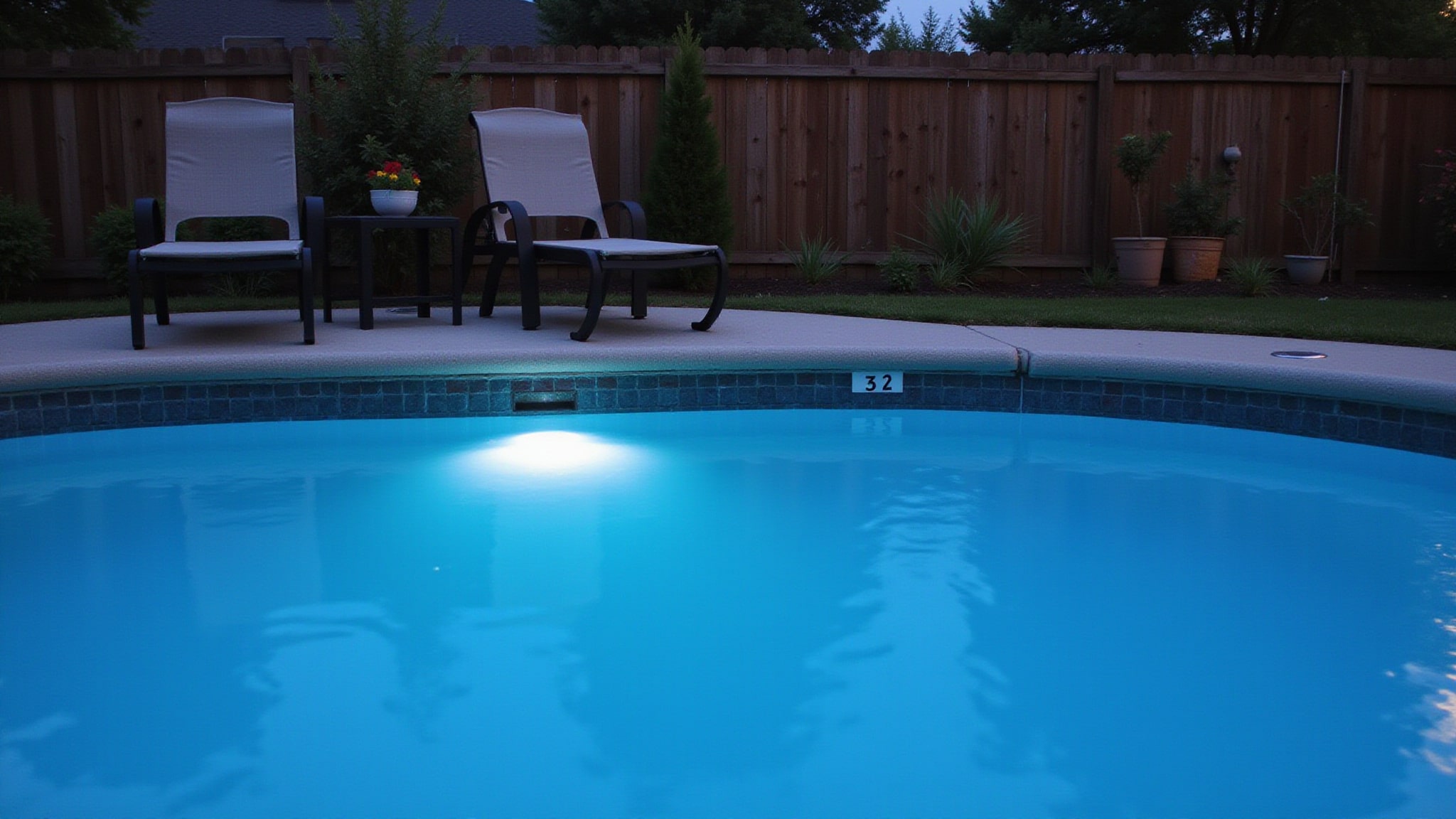
When your property drops several feet across the pool zone, segmental block retaining walls deliver the most budget-friendly path to a level deck and stable pool shell. Position your pool high enough on the slope to prevent runoff onto the patio, then use walls to retain soil on the high side and fill the low end. On one side, a retaining wall may function as a decorative bench, while the opposite side holds up the patio grade.
Walls exceeding two feet require engineered designs per local codes. Build 12, 24 inch walls as functional sitting ledges with built in lighting features along the cap for nighttime ambiance. The integration of water features, cascades fed through subtle slots beneath the top stone, transforms structural walls into focal points. Natural sandstone or segmental block options range from $7,000 to $20,000+, depending on slope severity and wall height.
Carve Out a Fire Pit Zone With Low Retaining Walls
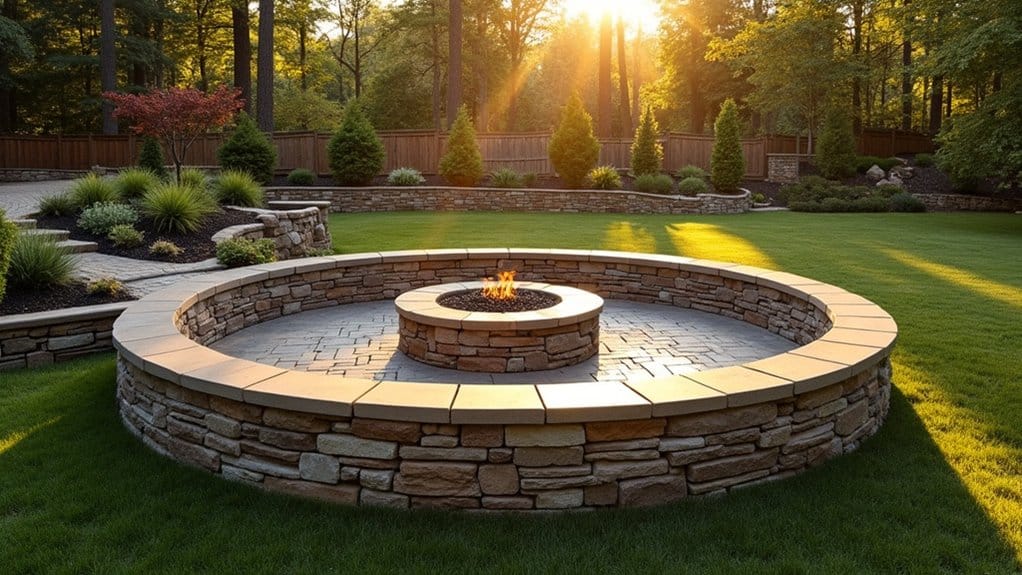
| Feature | Circular Layout | Square Layout |
|---|---|---|
| Best Fire Pit Materials | Trapezoidal blocks | Concrete pavers |
| Seating Pairing | Curved Lakeland Kit | Straight Riverland Kit |
| Surface Treatment | Crushed white pebbles | Herringbone pavers |
| Ideal Setting | Open slopes | Narrow contemporary yards |
| Airflow Detail | Bottom-course intake holes | Bottom-course intake holes |
When planning your fire pit zone, maintain 10 to 15 feet of clearance between the pit and any nearby structures, fences, overhanging trees, or deck boards to ensure safety and compliance with local fire codes.
Retaining Walls With Built-In Seating and Steps
Seatwalls ramp up the value of a standard retaining wall by merging structural support with comfortable, built-in seating, creating natural gathering spots around patios, fire pits, and dining areas that outlast any outdoor furniture.
To maximize function and style, follow these specifications:
- Height: Extend walls 18, 24 inches above the patio surface for ergonomic bench seating.
- Caps: Use 2-inch-thick natural stone or cast concrete caps with 1.5, 2-inch overhangs routed for water drainage.
- Steps: Integrate built-in steps within tiered structures so multi level seating walls frame each terrace while providing access between grades.
- Shape: Use curved seat wall designs to maximize usable space on sloped lots while softening hardscape edges.
Pair with integrated planters and low-voltage lighting for year-round durability and ambiance.
Use Retaining Walls and Greenery to Add Privacy
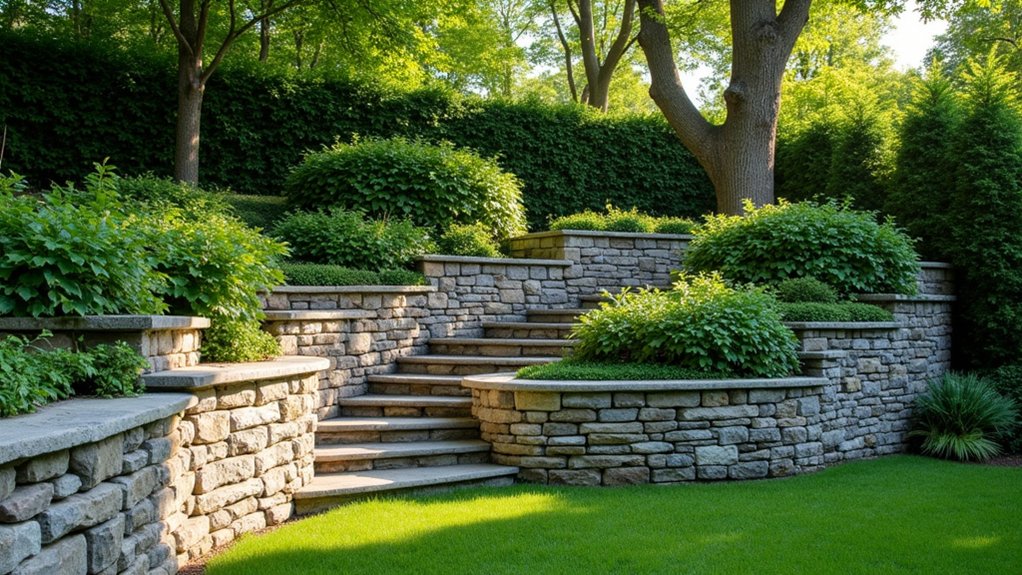
Privacy, real, lasting privacy, comes from pairing retaining walls with strategic greenery rather than stacking walls higher at exponential cost. Top your walls with dense hedges like Prunus caroliniana ‘Bright ‘n Tight,’ which reaches 10 feet by 6 feet within a decade, delivering substantial screening without structural overbuilding.
Build plant-integrated pockets directly into wall faces using ferns, geraniums, or boxwoods for a living wall effect that softens hardscape visually. Add free-standing trellises along wall tops to train climbing roses or clematis for vertical coverage.
Layered foliage combinations amplify results, berms planted with tiered shrubs, ornamental grasses, and dense conifers at 15 feet depth reduce both sightlines and noise. You’re reinforcing land, creating intimate garden rooms, and supporting pollinators simultaneously through one integrated system.
Frequently Asked Questions
How Much Does It Cost to Build a Retaining Wall per Square Foot?
You’ll typically pay $20 to $50 per square foot to build a retaining wall, with total installed costs reaching $35 to $65 per square foot. Your material costs differ markedly, concrete runs $20 to $55, while interlocking blocks offer a sustainable option at $15 to $35 per square foot. Labor requirements add $10 to $30 per square foot, depending on your wall’s complexity, height, and the eco-conscious design features you’re incorporating.
Do Retaining Walls Require Drainage Systems to Prevent Water Damage?
Yes, you’ll need drainage systems for most retaining walls to prevent hydrostatic pressure buildup that causes leaning, cracking, or collapse. Your water drainage requirements include installing perforated pipes at the wall’s base, crushed stone aggregate backfill, and weep holes spaced every 6, 10 feet. You should also evaluate soil composition concerns, since poorly draining soils trap moisture behind walls. For walls exceeding four feet, you’ll want engineered multi-zone drainage for long-term structural sustainability.
What Permits Are Needed Before Constructing a Retaining Wall in My Backyard?
You’ll need to check your local permit requirements before breaking ground, as most jurisdictions mandate permits for retaining walls exceeding 3, 4 feet in height. If your wall exceeds 4 feet, you’ll need stamped engineered plans detailing cross-sections, drainage, and soil pressure calculations. Submit your application early, standard processing takes 2, 4 weeks, directly impacting your construction timeline. Designing with proper authorizations guarantees a structurally sound, sustainable landscape investment.
How Long Do Retaining Walls Typically Last Before Needing Major Repairs?
Your retaining wall’s longevity depends heavily on the lifespan of materials you select. Concrete and stone walls can last 50, 100+ years, while timber typically endures 10, 20 years with proper care. Brick offers 50, 80 years when you maintain mortar joints. Staying on top of maintenance requirements, monthly inspections, annual drainage clearing, and timely sealing, can extend your wall’s service life by 50, 100%, helping you avoid costly replacements and supporting a more sustainable landscape design.
Can Retaining Walls Be Built During Winter or Cold Weather Conditions?
Yes, you can build retaining walls during winter, though you’ll face construction challenges like frost heave and adhesive cure limitations. Ideal weather conditions aren’t always necessary, modern techniques, including excavating below the frost line, using geotextile reinforcement, and compacting angular stone in thin lifts, make cold-weather installation feasible. You’ll want to keep trenches dry, use high-density blocks with mechanical connections, and prioritize proper drainage to guarantee long-term structural sustainability.