Modern fire features let you shape your outdoor space with real architectural intent. Linear fire walls anchor clean geometric edges and double as privacy screens. Fire bowls deliver sculptural impact in compact zones, while fire tables create natural gathering points with seating on every side. You’ll choose between gas for instant control and wood for crackling warmth, then match materials, stone, steel, or copper, to your existing design. Below, you’ll find the details to make every decision with confidence.
Modern Fire Features at a Glance: Types, Fuel, and Fit
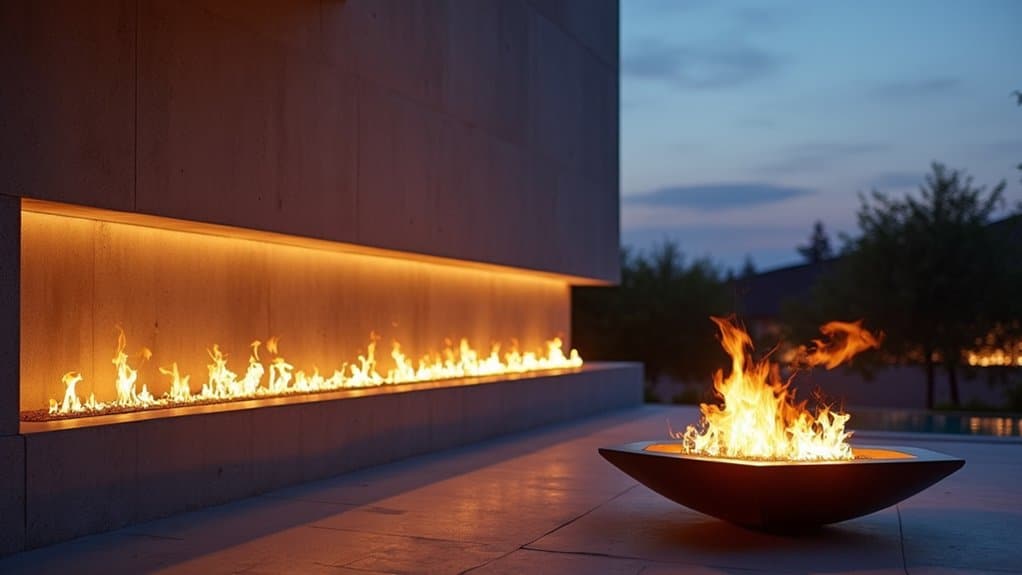
How do you choose the right fire feature when fire tables, fire bowls, and linear designs each serve different roles in an outdoor layout? Start by matching the feature to your space and intent. A fire table outdoor setup works best as a social centerpiece where seating surrounds the flame on multiple sides, delivering ambience over high heat. Outdoor fire bowls suit compact zones like pool edges and accent corners, offering sculptural impact without a large footprint. Linear fire walls anchor contemporary patios with clean architectural lines. Fuel choice shapes performance, gas and propane keep modern fire features outdoor systems low-maintenance, while ethanol and water vapor options open placement flexibility where combustion isn’t practical. These outdoor installations effectively blur the line between indoor and outdoor living, transforming exterior spaces into functional extensions of the home. Custom fire pit prices in South Florida can vary widely based on materials and design complexity. It’s important to research local suppliers to find the best options that fit your budget and aesthetic preferences.
Linear Fire Walls for a Sleek Architectural Edge
A linear fire wall gives your patio a streamlined flame presentation that stretches across a clean, horizontal plane rather than radiating from a single point. You can integrate the wall into a seat wall, privacy screen, or landscape border so the fire element becomes part of the structure rather than an accessory. Gas-fueled burner systems let you control flame height and heat output while eliminating the ash, smoke, and maintenance that come with wood-burning designs. In commercial or structural contexts, true fire walls are independent barriers designed to remain standing even if adjacent structures collapse, so it is important not to confuse decorative fire features with code-rated assemblies.
Streamlined Flame Presentation
Because linear fire walls replace the compact flame cluster of a traditional fire pit with a continuous ribbon of flame stretched across a long, narrow burner, they introduce a fundamentally different visual language to your backyard. The wide, even flame band reads as architectural rather than decorative, giving your patio or poolside wall a clean geometric edge that reinforces modern horizontal lines. With lengths ranging from 3 feet to 21 feet or more, these fire walls can be scaled to match any outdoor space.
As a contemporary fire feature, the linear fire wall keeps the flame as the dominant visual element within a low-profile form. Its flame presentation characteristics include a steady, controlled burn line that won’t flicker erratically or break the composition’s continuity. You’ll notice the effect immediately, flame becomes structure, not ornament. This streamlined format integrates with surrounding materials and spatial proportions rather than competing against them.
Wall Integration Benefits
When you build a linear fire wall directly into a seat wall, retaining wall, or freestanding partition rather than setting it apart as a standalone object, the flame line becomes an architectural extension of the hardscape itself. This architectural integration lets the fire element reinforce spatial edges rather than interrupt them. A fire wall corten steel finish weathers naturally alongside stone or concrete, anchoring the feature within the material palette.
Because the wall structure stands independently, you gain flexibility in layout without burdening adjacent framing. An infinity fire feature mounted along a freestanding partition can define zones between dining and lounge areas while maintaining sightlines. The result is a cleaner composition where flame, material, and structure read as one coordinated element rather than separate additions competing for attention.
Gas-Fueled Design Advantages
Gas fuel transforms the linear fire wall from a visual accent into a high-performing design system. With efficiency ratings reaching 85% AFUE or higher, gas-fueled linear units from brands like HPC Fire and The Outdoor GreatRoom Company deliver direct radiant heat while maintaining a clean, minimalist profile. You won’t deal with ash, soot, or creosote, just push-button ignition and consistent flame control.
Sealed combustion keeps exhaust isolated from your living space, supporting cleaner air quality around patios and poolside lounges. This matters especially when you’re integrating fire-on-water features near seating areas. Gas burners pair seamlessly with decorative fire glass and stainless steel components, giving you a polished finish without ongoing maintenance demands. The result is a fire feature that performs as precisely as it looks.
Fire Bowls That Double as Outdoor Sculpture
Fire bowls with sculptural metal finishes, like hand-cut carbon steel or weathered corten, bring a gallery-level presence to your patio or courtyard, reading as art objects even when unlit. You can select portable decorative flame art in geometric or globe-style forms that anchor a seating area without permanent installation. These pieces let you introduce bold visual texture and functional warmth through a single, craft-forward feature.
Sculptural Metal Finishes
Although most fire bowls serve a purely functional role, sculptural metal versions blur the line between fire feature and outdoor art. You’ll find these pieces crafted from hot-rolled mild steel, copper, cast iron, or recycled steel, materials that accept rust patina and iron oxide finishes naturally over time. Brands like Bobe Water and Fire offer hand-cut designs that read as functional steel sculptures, even when unlit.
The open-bowl geometry lets flames dance visibly, creating a strong visual presence across patios, courtyards, and pool surrounds. You can select gas or wood-burning configurations depending on your site. Each patina develops uniquely with weather exposure, giving your fire bowl a one-of-a-kind character. When scaled to match your landscape’s architecture, these pieces anchor the space as lasting design elements. Fire pit styles for Florida homes can enhance outdoor gatherings while providing warmth during cooler evenings. These designs often incorporate materials that withstand high humidity and intense sunlight, making them both functional and aesthetically pleasing.
Portable Decorative Flame Art
When a fire bowl is designed as portable decorative flame art, it shifts from a stationary heat source to a movable sculptural object you can reposition across your patio, courtyard, or pool deck as the occasion demands. Handcrafted from heavy-gauge carbon or Corten steel, these pieces function as one-of-a-kind flame sculptures, each with distinct cut patterns and fire behavior.
- A hand-cut steel globe casting flickering light patterns across a courtyard wall at dusk
- A minimalist bowl centered on a gravel pad, its flame reflecting off a nearby pool surface
- A themed sculptural form anchoring an intimate seating arrangement during an evening gathering
Fuel options, wood-burning, gas, or ethanol, affect smoke output, ignition speed, and portability. You’ll want to match fuel type to your placement, clearance requirements, and intended use frequency.
Fire Tables Built for Conversation and Compact Patios
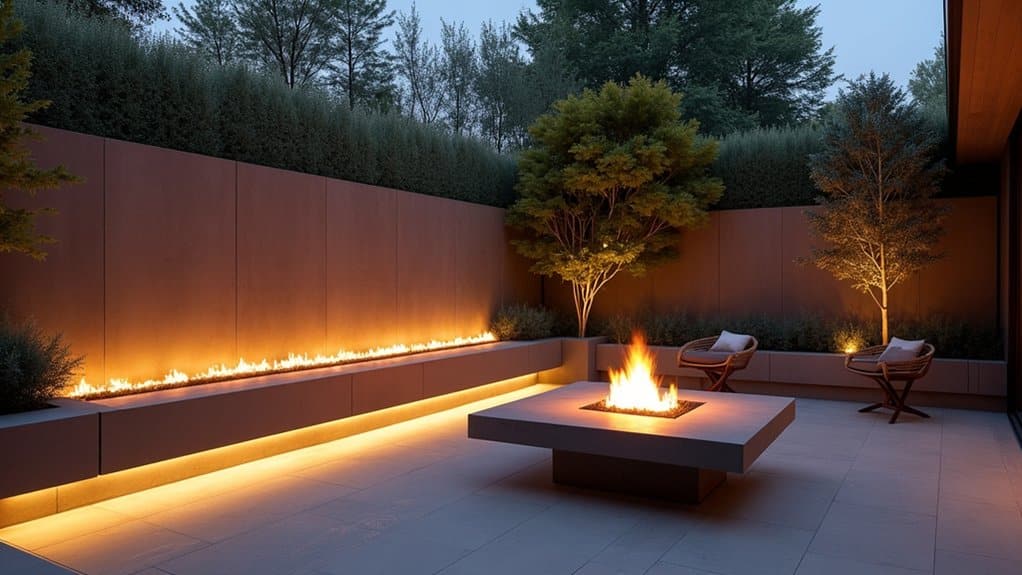
Because compact patios demand furniture that earns its footprint, fire tables offer a smart dual-purpose solution, combining a low-profile flame with usable tabletop surface in a single piece. A 30, 40 inch model fits tight layouts without sacrificing warmth or function, while preserving circulation space around seating. You’ll find propane and natural gas options, with 20-pound tanks being the standard for portability.
The centered flame creates a natural focal point for face-to-face conversation, and the surrounding surface holds drinks or small plates during evening gatherings. For placement, maintain 10, 20 feet of clearance from structures and avoid enclosed or covered spaces where heat and sparks pose risks. Always verify local codes before finalizing position, compact doesn’t mean flexible when it comes to safety spacing.
Gas vs. Wood: Fuel Options for Modern Fire Features
The fuel you choose for a modern fire feature directly shapes its ambiance, maintenance demands, and installation requirements. Gas systems offer instant ignition, consistent flame control, and minimal cleanup, no ash, no embers. Natural gas connects to a permanent line for uninterrupted supply, while propane provides placement flexibility without trenching. Wood-burning features deliver higher heat output, crackling sound, and a sensory depth gas can’t replicate.
- A linear gas fire wall casting steady, smoke-free flames across a contemporary patio at dusk
- A wood-burning fire bowl radiating intense heat with visible ember glow near a poolside lounge
- A propane fire table igniting instantly on a rooftop deck with no permanent gas connection
Gas carries higher upfront costs but lower long-term maintenance. Wood demands more effort but rewards you with authenticity.
Stone, Steel, or Copper: Choosing the Right Material
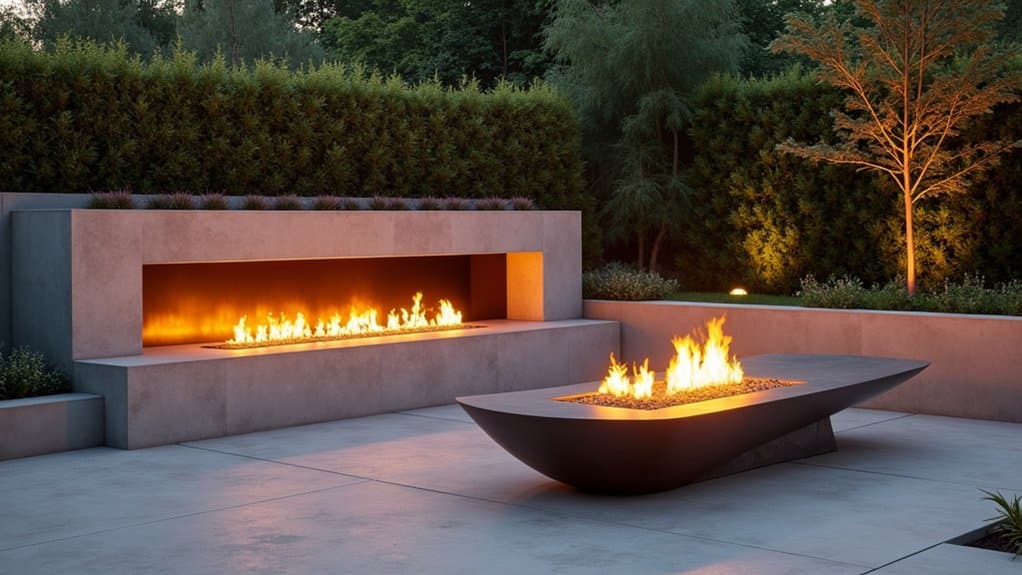
Every material you wrap around a flame shapes how your fire feature looks, weathers, and holds up season after season. Stone delivers permanence and architectural weight for built-in fire walls and tables, but masonry expands under intense heat, proper engineering prevents cracking over time. Steel offers clean lines and fabrication flexibility at a lower cost, making it a natural fit for contemporary linear designs. Stainless steel resists rust, though outdoor exposure still demands high-temperature sealant and consistent drying.
Copper brings artisan character and distinctive form, especially in hammered finishes. It’s durable but develops a patina that shifts its appearance. For mixed-material builds, steel inserts protect stone surrounds from heat stress. Your choice ultimately depends on placement, style, fuel type, and how much finish care you’re willing to maintain.
Safe Placement for Modern Fire Features
Once you’ve locked in your material, where you place that fire feature matters just as much as what it’s made of. You’ll want to account for clearances, surface stability, and airflow before committing to a location. Choosing the right spot can enhance the experience, especially when considering portable fire pits for outdoor gatherings. These features not only provide warmth but also create a cozy atmosphere for friends and family.
- Keep at least 10 feet between your fire feature and structures, including fences, pergolas, and overhanging trees, and verify local code requirements, which can push that distance to 15 feet.
- Set your feature on a non-combustible, level surface like concrete, stone, or compacted pavers, never directly on wood decking unless the unit’s rated for it.
- Orient the flame relative to prevailing winds so smoke drifts away from seating, doors, and covered areas.
Position seating roughly three feet from the feature’s edge, and maintain a 36-inch walkway clearance around the arrangement.
Seating, Lighting, and Accessories Around the Flame
A well-placed fire feature loses impact if the seating, lighting, and accessories around it aren’t planned with the same care. Keep 18, 24 inches between the fire feature edge and the front of seating for comfortable heat exposure. Allow 36 inches of clear walking space behind seating for circulation. Sitting walls built at 20, 22 inches high with a 12, 18-inch capstone create comfortable, functional surfaces for drinks and plates.
Under-cap LED lighting defines seating edges and improves nighttime navigation without competing with the flame. Low-level path lighting supports safe movements between zones.
Built-in storage compartments keep cushions and accessories organized. A wind guard steadies flame performance, and a protective cover extends the feature’s lifespan. Match every accessory to the fire feature’s shape, finish, and surrounding design.
Which Modern Fire Feature Fits Your Space?
How well a fire feature performs depends less on its visual appeal and more on whether it matches your patio’s size, design style, and functional needs. A fire bowl suits a compact courtyard where portability matters. A fire table fits a mid-sized lounge where usable surface area adds function. A linear fire wall anchors a wider layout with strong architectural presence.
- A slim fire bowl on a stone courtyard edge, casting light across a small planting bed without crowding the walkway.
- A concrete fire table centered between low-profile chairs, holding drinks while flames rise through dark fire glass.
- A linear fire wall running along a patio’s back wall, defining the space like a built-in architectural element against an evening sky.
Call Today and Build a Custom Fire Feature
From custom fire pits to modern fire walls and bowls, the right fire feature adds warmth, value, and unforgettable curb appeal. At Innovative Outdoor Living, our skilled team provides trusted Backyard Makeovers built around your style, space, and outdoor lifestyle. Call +1 (561) 594-1495 today and bring your backyard vision to life.
Frequently Asked Questions
Can Modern Fire Features Increase the Resale Value of a Home?
Yes, you can increase your home’s resale value by installing modern fire features. Built-in options like linear fire walls, fire bowls, and fire tables can boost valuations by 6% to 12% compared to homes without them. You’ll also benefit from faster sale times and stronger buyer interest, especially when you integrate the feature as a permanent design element that complements your backyard’s layout and materials.
Do Fire Bowls Work Well in Windy Coastal Florida Locations?
Fire bowls can work well in windy coastal Florida locations when you plan the setup carefully. You’ll want to choose deeper bowl designs that block wind and reduce spark scatter, pair them with glass wind guards, and place them in sheltered patio areas rather than exposed waterfront edges. Selecting coastal-grade materials like corten or stainless steel helps you resist salt-air corrosion, and CSA-certified systems give you more reliable, consistent performance outdoors.
How Long Do Modern Fire Features Typically Last Before Needing Replacement?
Most modern fire features last 10 to 15 years, though high-end materials like GFRC or 316 stainless steel burners can push that to 20 years or longer. You’ll shorten that range with heavy daily use or poor maintenance. If you’re choosing stainless steel fire bowls or quality fire tables, you’ll get more life by scheduling regular burner cleanings, clearing debris, and addressing visible wear like cracks or rust early.
Are Permits Required to Install Outdoor Fire Features in Florida?
It depends on your local jurisdiction. Florida doesn’t enforce one statewide permit rule for outdoor fire features. Some counties exempt small, commercially sold fire pits, while others require building permits for permanent installations like masonry fire walls or gas-connected fire tables. You’ll typically need permits for fuel-gas lines, built-in structures, and features near pools or property lines. Always check your city, county, and HOA requirements before finalizing your design.
Can Modern Fire Features Be Used During Florida’s Summer Months Comfortably?
Yes, you can use modern fire features comfortably during Florida’s summer when you plan around evening use, lower flame settings, and proper airflow. Pairing your fire bowl or fire table with shade structures, outdoor fans, and well-spaced seating keeps radiant heat manageable. Gas features give you better control over output than wood-burning options. Treating the flame as an ambiance element rather than a heat source makes summer use practical and enjoyable.