


Power down your AC unit at both the exterior shut-off box and circuit breaker before performing any maintenance. You’ll need to clear a 2-foot perimeter of debris, leaves, and vegetation around the unit monthly to maintain proper airflow. Clean condenser coils with mild detergent solution and a soft brush, then straighten bent fins using a fin comb tool. Proper maintenance prevents efficiency drops of up to 15% and extends your unit’s lifespan. Uncover additional protective measures to optimize your AC’s performance.
Safety First: Powering Down Your AC Unit
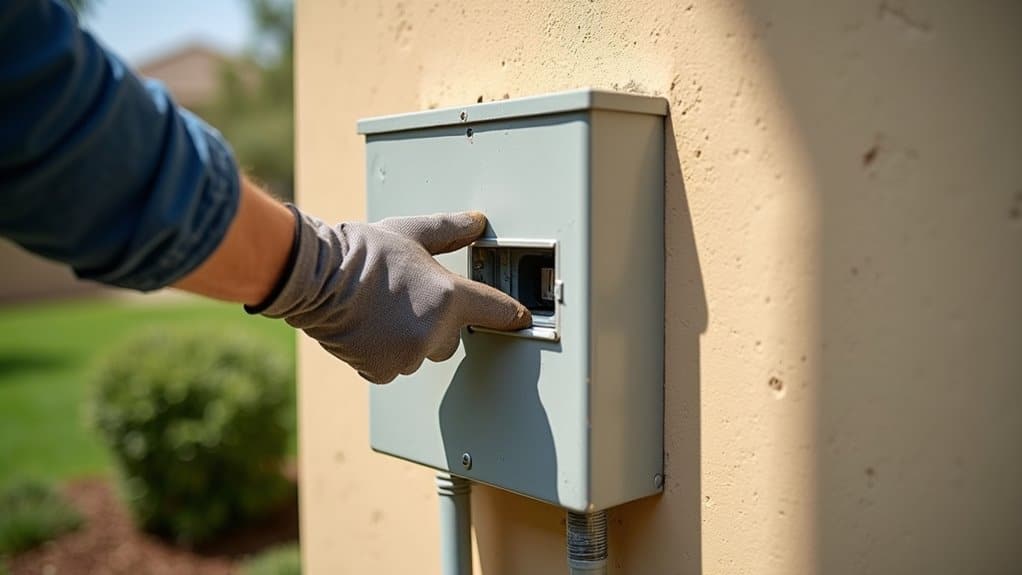
Before performing any maintenance on your outdoor AC unit, you must completely disconnect the power supply to guarantee your safety. To properly shut down your HVAC unit, locate both the exterior shut-off box near the air conditioning unit and the corresponding circuit breaker in your home’s electrical panel.
Turn off power at both locations to safeguard the unit is fully de-energized. This critical two-step process prevents any possibility of accidental startup while you’re working on the system. The complete power disconnection protects you from electrical hazards and eliminates risks associated with moving parts that could suddenly activate. Never skip this essential safety procedure, even for quick maintenance tasks. Keep in mind that your HVAC unit contains complex electrical components and mechanical elements that require proper power isolation before any service work begins.
Clearing Debris and Vegetation Around the Unit
While your AC unit relies on proper electrical connections for operation, keeping clear surroundings is just as crucial for ideal performance. Your outdoor AC unit requires unobstructed airflow to function efficiently as a condenser unit.
Start by removing all leaves, sticks, and debris within a 2-foot perimeter of your unit. Trim back any encroaching bushes or shrubs to prevent them from interfering with proper airflow. Don’t forget to clear the top of the unit, as falling leaves and branches can greatly impact performance.
Remove any grass, weeds, or mulch touching the base of your unit to prevent moisture accumulation. Regular inspections of your outdoor AC unit’s surroundings will help identify potential obstructions early. By maintaining these clearances, you’ll guarantee optimal unit efficiency and extend its operational lifespan.
Proper Cleaning Techniques for Condenser Coils
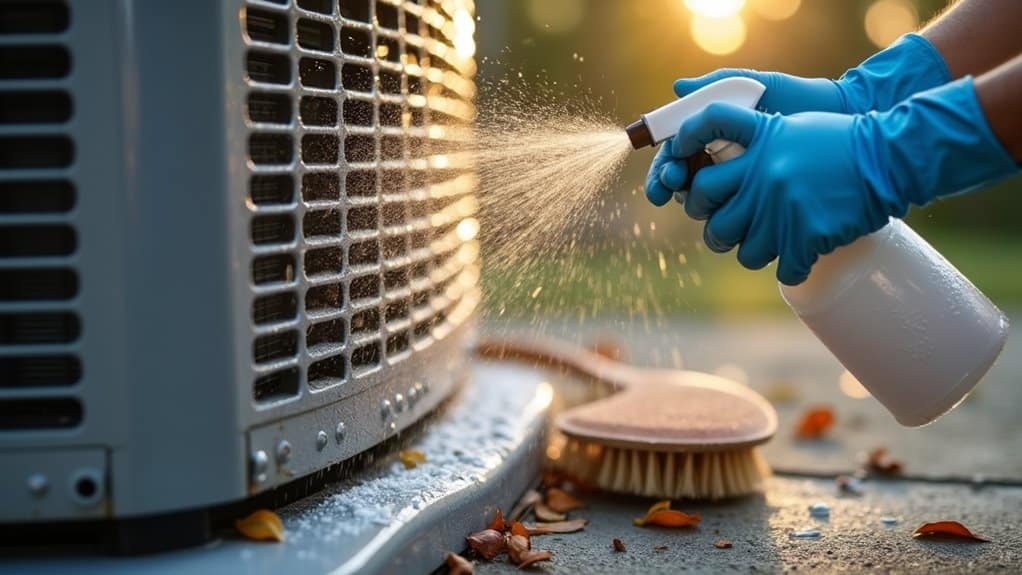
Maintaining clear surroundings sets the stage for the next indispensable maintenance task: cleaning your condenser coils.
Start by applying a commercial coil cleaner or a mild detergent-water solution to remove accumulated dirt and debris that’s reducing your unit’s efficiency. Using a soft-bristle brush or fin comb, carefully straighten any bent fins while avoiding damage to the underlying tubes. It’s essential to work gently, as these components are delicate.
Next, thoroughly rinse the coils with a garden hose to remove all cleaning solution, preventing potential corrosion. While cleaning, inspect for signs of damage, such as corroded areas or leaks. If you notice any issues, don’t wait to address them. For ideal results, schedule an annual cleaning with a qualified HVAC technician as part of your regular maintenance routine.
Maintaining Optimal Airflow and Ventilation
Establish a monthly maintenance schedule to remove leaves, grass clippings, and other debris that can obstruct your outdoor AC unit’s airflow patterns. You’ll need to verify that your unit remains perfectly level on its pad or platform, as any tilt can strain internal components and disrupt proper air circulation. Using a fin comb tool, carefully straighten any bent aluminum cooling fins to restore ideal heat transfer and maintain unrestricted airflow through the condenser coil matrix.
Clear Debris Monthly Schedule
Because your outdoor AC unit constantly battles environmental elements, implementing a monthly debris removal schedule is crucial for system longevity and performance. Your HVAC system’s efficiency can drop by 15% when debris restricts airflow, placing unnecessary strain on the compressor.
To maintain your air conditioning system, follow these monthly maintenance steps:
- Inspect the unit’s exterior for leaves, grass clippings, and other organic matter
- Clear all vegetation within a 2-foot radius of the unit
- Using a garden hose or soft brush, carefully clean the condenser coils
- Avoid bending or damaging the aluminum fins during cleaning
- Remove any accumulated debris from the unit’s base
Consistent monthly cleaning prevents performance degradation and extends your AC’s lifespan, ensuring ideal airflow and ventilation throughout the cooling season.
Keep Unit Level Always
Beyond regular debris removal, your outdoor AC unit’s level positioning plays a fundamental role in its operational efficiency. To extend the life of your system and guarantee proper airflow, you’ll need to regularly verify and maintain your unit’s level position.
| Action Item | Frequency |
|---|---|
| Visual inspection | Monthly |
| Level check | Quarterly |
| Shim adjustment | As needed |
| Support pad evaluation | Annually |
Maintaining a level air conditioner helps prevent compressor strain and facilitates proper condensate drainage. When your unit isn’t level, it works harder, consuming more energy and risking premature component failure. Use a bubble level to check the unit’s position from multiple angles. If you notice any tilting, immediately adjust the support pad or install shims. This simple maintenance task substantially impacts your system’s efficiency and longevity.
Straighten Bent Cooling Fins
Your AC unit’s cooling fins require regular inspection and maintenance to prevent airflow restrictions and maintain ideal heat transfer efficiency. Inspect the aluminum fins monthly for signs of bending, crushing, or damage that can reduce cooling efficiency.
To straighten bent fins, purchase a fin comb tool specifically sized for your AC unit’s fin spacing. Work carefully from top to bottom, inserting the fin comb’s teeth between the rows to realign bent sections. Don’t apply excessive force, as fins are delicate and can break easily. Before starting, turn off power to the unit and clear away dust and dirt with a soft brush.
If large sections are severely damaged or you’re not confident in performing this maintenance yourself, contact a qualified HVAC technician to prevent accidental damage to your system’s critical components.
Straightening and Protecting AC Unit Fins
The thousands of aluminum fins on your outdoor AC unit serve as critical components for heat transfer and airflow efficiency. Keeping your AC running to an ideal degree requires regular inspection and maintenance of these delicate fins, which can become bent or damaged over time. When air conditioners have compromised fins, their performance suffers and components may need to be replaced sooner.
To maintain and protect your unit’s fins:
- Use a fin comb or butter knife to carefully straighten bent fins, working in the direction of the fin rows to avoid further damage
- Clean fins gently without high-pressure water, which can cause distortion and restrict airflow
- Install a protective cover over the unit during off-seasons to shield fins from debris and weather damage
Proper fin maintenance secures ideal heat transfer and extends your unit’s lifespan through improved efficiency.
Leveling Your Outdoor AC Components
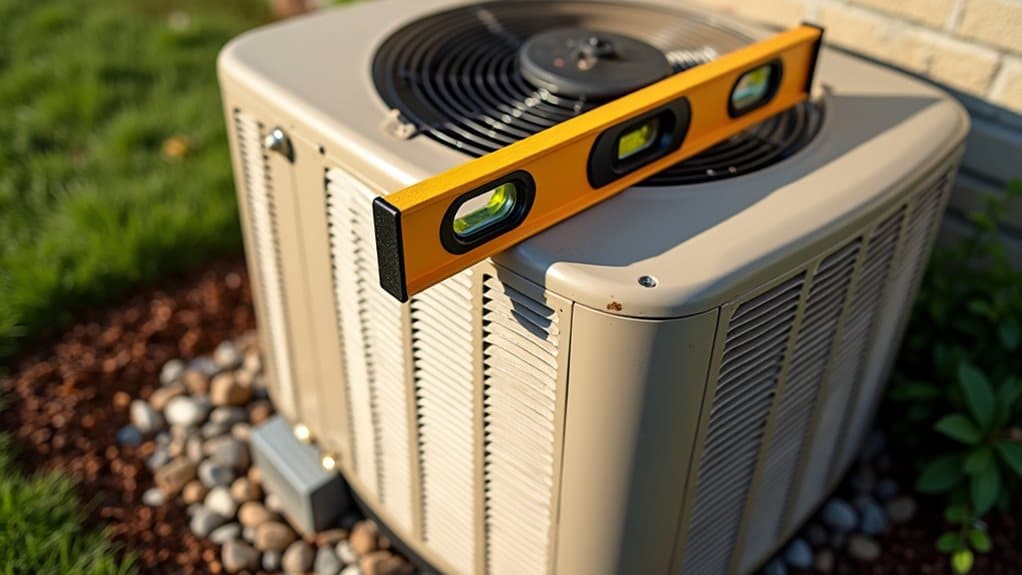
Check your outdoor AC unit’s base for wobbling or instability, as an unlevel foundation can lead to premature compressor failure and reduced cooling efficiency. Install rot-resistant shims beneath the unit’s corners to achieve proper leveling, maintaining a slight tilt away from your home’s foundation to guarantee proper water drainage during defrost cycles. You’ll extend your system’s operational life and maintain peak performance by regularly monitoring the unit’s level and making necessary adjustments during your maintenance routine.
Checking Unit Base Stability
When maintaining ideal AC performance, proper unit leveling stands as a critical foundation for system longevity. Your HVAC system’s life depends significantly on a stable, level base that prevents undue stress on components, particularly the compressor.
Regular inspection of your unit’s stability helps protect your investment and guarantees optimal operation. Here’s what you need to check:
- Verify the unit sits completely level on its pad, using a bubble level to check multiple points
- For heat pump systems, confirm a slight tilt away from your home’s foundation (approximately 1/4 inch per foot) for proper drainage
- Inspect for signs of pad settling or deterioration that could affect unit stability
If you notice any leveling issues, use rot-resistant shims to make adjustments, ensuring even refrigerant flow and safeguarding crucial system components from premature wear.
Adjusting Foundation With Shims
Now that you’ve identified any stability issues with your outdoor unit, proper shimming techniques can restore ideal levelness and protect your AC system’s components.
When leveling your outdoor unit, initially check the pad’s angle using a reliable level tool. For standard AC units, aim for complete levelness. If you have a heat pump, create a slight downward slope away from your house’s foundation to guarantee proper defrost drainage. Insert sturdy, rot-resistant shims under the pad or unit feet to correct deviations up to one inch. Position shims strategically at support points to allocate weight evenly and prevent future settling.
Regular level inspections and prompt shimming adjustments will optimize your compressor’s lifespan by reducing mechanical stress. This maintenance step also enhances system airflow and operational efficiency, preventing premature component failure.
Proper Drainage For Longevity
Proper drainage of your outdoor AC unit directly impacts its operational longevity and performance efficiency. The level positioning of your condenser unit plays a vital role in proper care and minimizing utility costs throughout the life of your AC system.
Critical maintenance steps for ideal drainage:
- Check the unit’s level quarterly using a bubble level, adjusting with corrosion-resistant shims when necessary to prevent premature compressor wear
- Ensure the concrete pad slopes slightly away from your home’s foundation at approximately 1-2 degrees to facilitate proper condensate flow
- Inspect the drain line monthly for blockages and verify condensate flows freely away from the unit
Regular monitoring of these drainage factors helps prevent moisture accumulation, reduces system strain, and protects against premature component failure. Proper drainage maintenance considerably extends equipment lifespan while maintaining optimal performance efficiency.
Professional Inspection and Seasonal Care
Professional HVAC inspections serve as your AC system’s critical defense against premature failure and performance issues. Schedule thorough tune-ups before peak cooling and heating seasons to maximize energy efficiency and protect your investment. During these vital service visits, technicians will clean your system’s coils, verify refrigerant levels, and guarantee all electrical connections remain secure.
To keep your AC running ideally for 15-18 years, enroll in a professional maintenance plan. You’ll receive priority service scheduling, repair discounts, and automated service reminders. Your technician will lubricate moving components, preventing unnecessary wear and identifying potential issues before they become costly repairs. This proactive approach to HVAC maintenance can extend your unit’s operational lifespan by 3-5 years, ultimately saving you thousands in premature replacement costs.
Smart Positioning and Shading Strategies
Strategic positioning of your outdoor AC unit plays a critical role in maximizing its operational efficiency and longevity. Placing your unit in a shaded area can boost performance by up to 10% while extending its service life by 2-3 years. To optimize your unit’s placement, follow these essential guidelines:
Proper placement of your AC unit in shaded areas enhances performance and extends lifespan, making it a crucial factor in system optimization.
- Install the outdoor unit with 2-foot clearance on all sides to guarantee proper airflow and prevent compressor strain
- Orient the unit away from direct sunlight to increase cooling capacity by 5-8%
- Elevate the unit several inches above ground level to minimize corrosion risks from water pooling and debris accumulation
Consider installing an awning or strategically planting shade trees to create a protective canopy over your unit. This investment in proper positioning will substantially enhance your system’s efficiency and durability.
Frequently Asked Questions
How to Prolong the Life of an AC Unit?
To optimize your AC unit’s lifespan, you’ll need to implement a systematic maintenance routine. Start with regular filter cleaning every 1-3 months to prevent system strain. Schedule biannual tune-ups with certified technicians to check refrigerant levels and inspect electrical components. Minimize shading around the outdoor unit, maintaining a 2-foot clearance from vegetation. Don’t skip professional inspections, as they’re essential for identifying potential issues before they become major problems.
How to Maintain Your Outside AC Unit?
To maintain your outside AC unit effectively, you’ll need to check air filters regularly, replacing them every 1-3 months to prevent system strain. Clean condenser coils annually using a soft brush and coil cleaner to remove debris and guarantee ideal heat transfer. Schedule professional tune-ups once a year to monitor refrigerant levels and inspect electrical components. Keep a 2-foot clearance around the unit, and inspect for damage after severe weather events.
What Is the $5000 AC Rule?
The $5000 AC rule states that if your repair costs exceed 50% of your unit replacement cost, you should opt for a new system. You’ll need to ponder energy efficiency factors and location considerations when making this decision. For example, if your AC repair is $2,500 and a new unit costs $5,000, replacement is recommended. Following an annual maintenance schedule can help prevent reaching this threshold and extend your unit’s lifespan.
Is It Good to Spray Water on an Outside AC Unit?
While you can spray water on your outdoor AC unit, you’ll need to avoid direct spraying to prevent damaging the delicate fins and coils. Instead, regularly clean coils using a gentle garden hose setting from a safe distance. To guarantee proper airflow, remove debris and maintain clearance around the unit. It’s best to schedule professional inspections for thorough cleaning with specialized solutions that won’t compromise your system’s integrity.