Outdoor audio zones let you split your pool, pergola, and patio into independent areas, each with its own source, volume, and weatherproof speakers matched to the environment. You’ll want IPX7-rated units near the pool, discreet beam-mounted options under the pergola, and full-range enclosures across the patio. A multi-zone receiver ties everything together, while app and voice controls give you hands-free management from anywhere in the yard. Below, you’ll find the exact setup strategy for every zone.
Why Outdoor Audio Zones Beat a Single Speaker
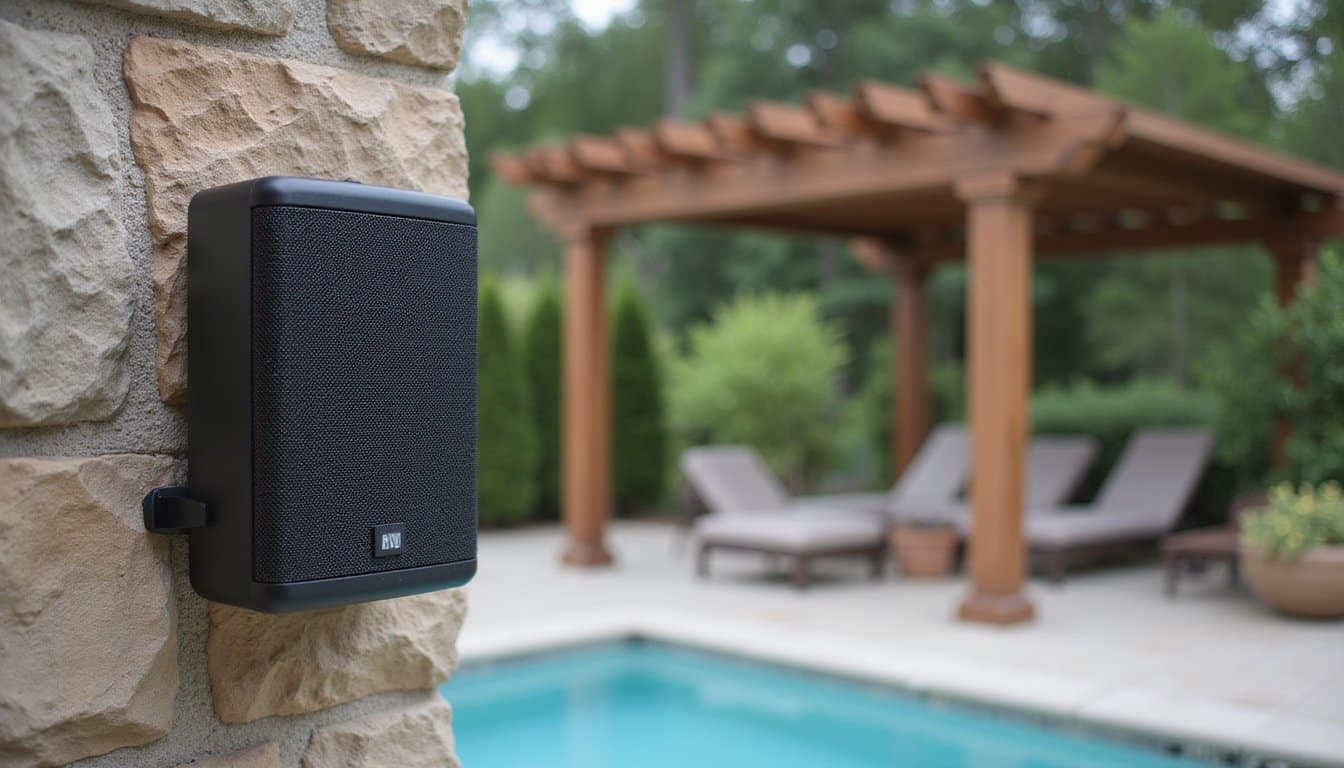
When you rely on a single speaker to cover an entire backyard, you’re fighting physics. Open-air spaces lack walls and ceilings to reinforce sound, so audio disperses rapidly. You’re left choosing between too loud near the source and too quiet at the edges.
Outdoor audio zones solve this by distributing smart speakers across defined areas, pool decks, pergolas, patios, and lounges. Each zone operates independently, letting you set precise volume levels matched to the activity. A BBQ area gets background-level playback while the pool zone runs louder for energy.
This distributed approach reduces overall system volume, limits sound spill to neighbors, and eliminates dead spots. You get controlled, even coverage instead of one speaker straining to fill space it wasn’t designed for. Brands like Sonance and Paradigm offer weatherproof speaker designs that withstand summer heat and winter snow, ensuring reliable year-round performance without bringing equipment indoors.
How Pool, Pergola, and Patio Zones Divide Sound
Because outdoor sound disperses across open space rather than bouncing between walls, dividing your yard into activity-based zones, pool, pergola, and patio, gives each area its own acoustic identity. Each zone serves a distinct function, so your speaker density and volume targets should match how people actually use the space.
Pergolas create a natural acoustic room effect, reflecting sound downward through overhead timbers and concentrating coverage within the seating area. Pool decks introduce hard-surface reflections that require lower, targeted output to prevent echo. Patio zones need 20%, 30% speaker overlap for smooth transitions between adjacent areas.
Multi zone outdoor speakers let you run different audio content simultaneously across all three spaces. Boundary features like trellis walls and slatted partitions reduce cross-zone bleed while maintaining your yard’s open-air design. Systems like Sonos or Bose SoundTouch support wireless streaming from smartphones, making it easy to manage each zone’s playback independently from anywhere in the yard.
Pool Zone: Weatherproof Speakers That Handle Splash
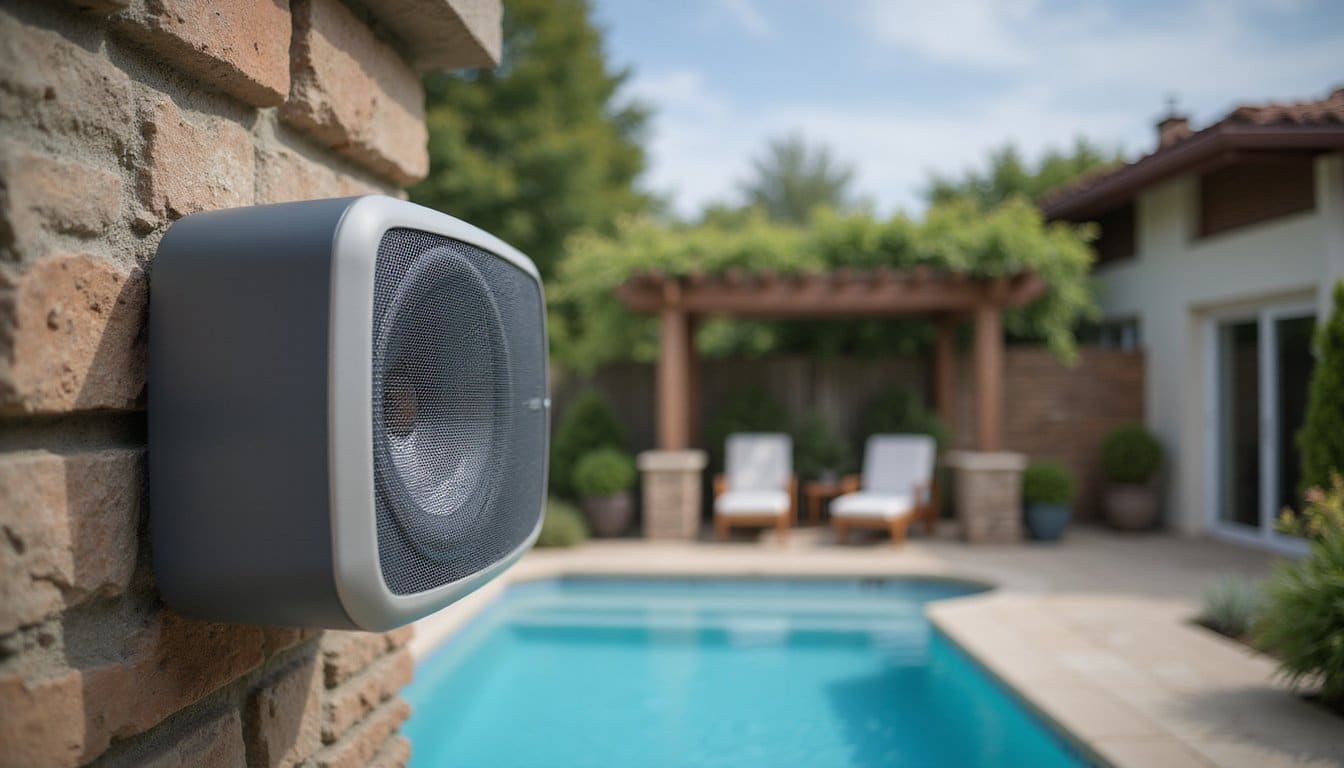
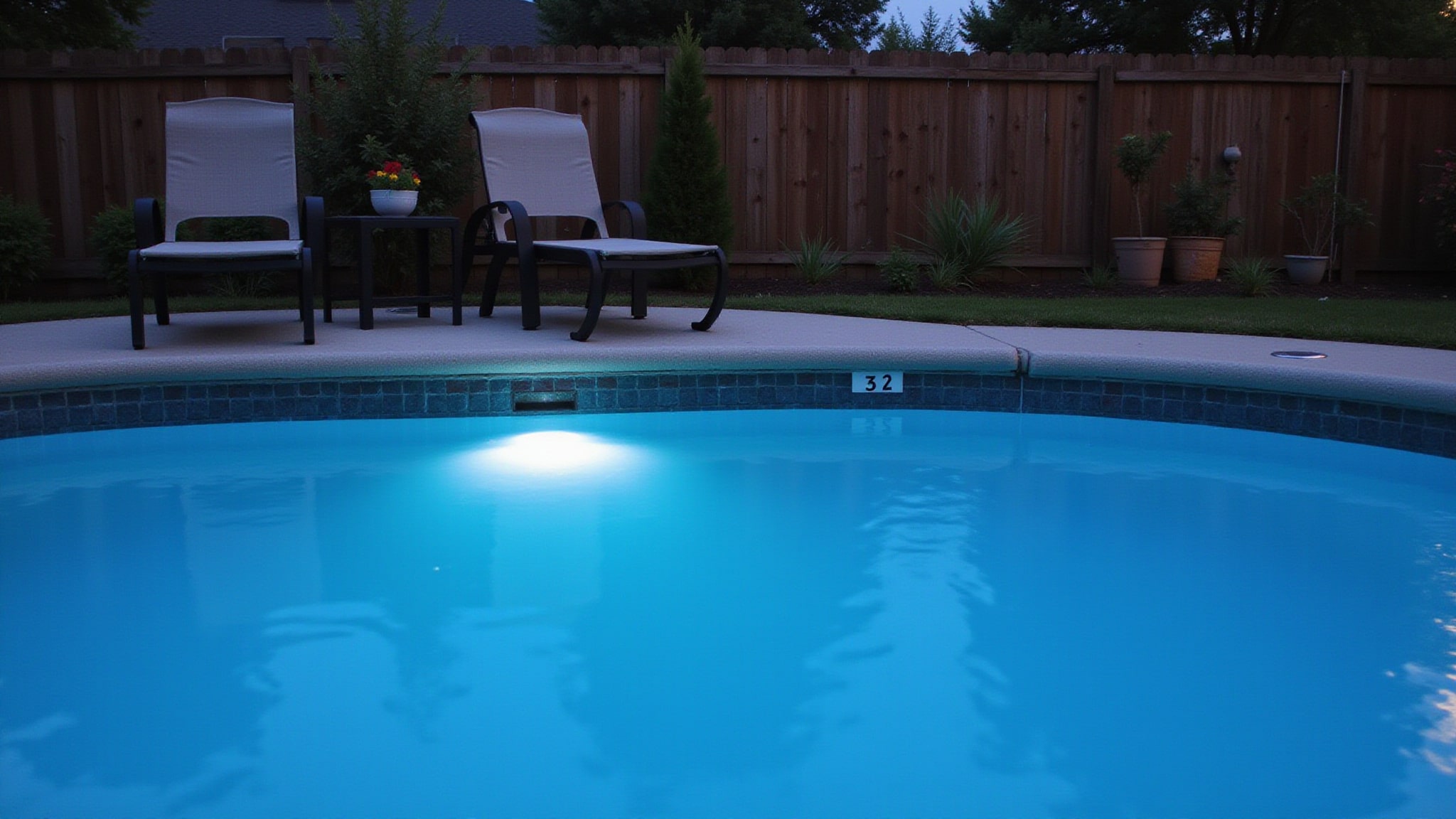
When you’re placing speakers around the pool zone, you’ll want models rated at IPX7 or higher to handle splash exposure, and you should keep them at least 10 feet apart to maintain even coverage across the deck. Pair that layout with an in-ground subwoofer buried near the pool’s hardscape edge to deliver low-end response without cluttering your sight lines. Route all amplifier and receiver components indoors, running only speaker wire out to the wet zone so your electronics stay protected. A model like the 12″ Outdoor In-Ground Subwoofer offers 600W burial rated performance, making it an ideal choice for poolside low-end reinforcement.
Splash-Resistant Speaker Placement
Pool-zone speaker placement demands more than standard outdoor durability, it requires verified splash and immersion protection rated to handle direct water contact. For splash-resistant speaker placement, you’ll want units rated IPX7 or IP67 at minimum, these survive immersion up to one meter for 30 minutes.
Position poolside speakers on raised or protected mounts to reduce direct splash impact. Don’t assume a general weatherproof rating covers pool-zone exposure; you need to confirm the specific IP rating against water contact, not just rain tolerance. IPX4 handles light splashes but won’t protect against accidental submersion.
If you’re integrating floating speakers, check rated submersion limits, prolonged water exposure beyond specifications degrades performance. For permanent installations near pool decks, prioritize IP67 models that add dust resistance alongside water protection.
In-Ground Subwoofer Options
Splash-resistant speaker placement covers the above-ground side of pool-zone audio, but low-end coverage requires a different approach, burying the bass. In-ground subwoofer options let you integrate bass directly into your landscape, leaving only a low-profile mushroom-shaped dome visible above the surface.
Installation typically requires a hole around 22 inches wide and 17 inches deep, with a 2 to 4 inch drainage base of sand and gravel. You’ll want to avoid flood-prone areas and irrigation zones. Direct-burial speaker wire and waterproof wire nuts seal connections against moisture and corrosion, no exposed copper.
For pool zones, match driver size and power handling to your coverage area. A 500W model fills roughly twice the space of a 250W unit. Models like the IP66-rated options provide strong dust and water protection.
Pergola Zone: Discreet Outdoor Audio That Blends In
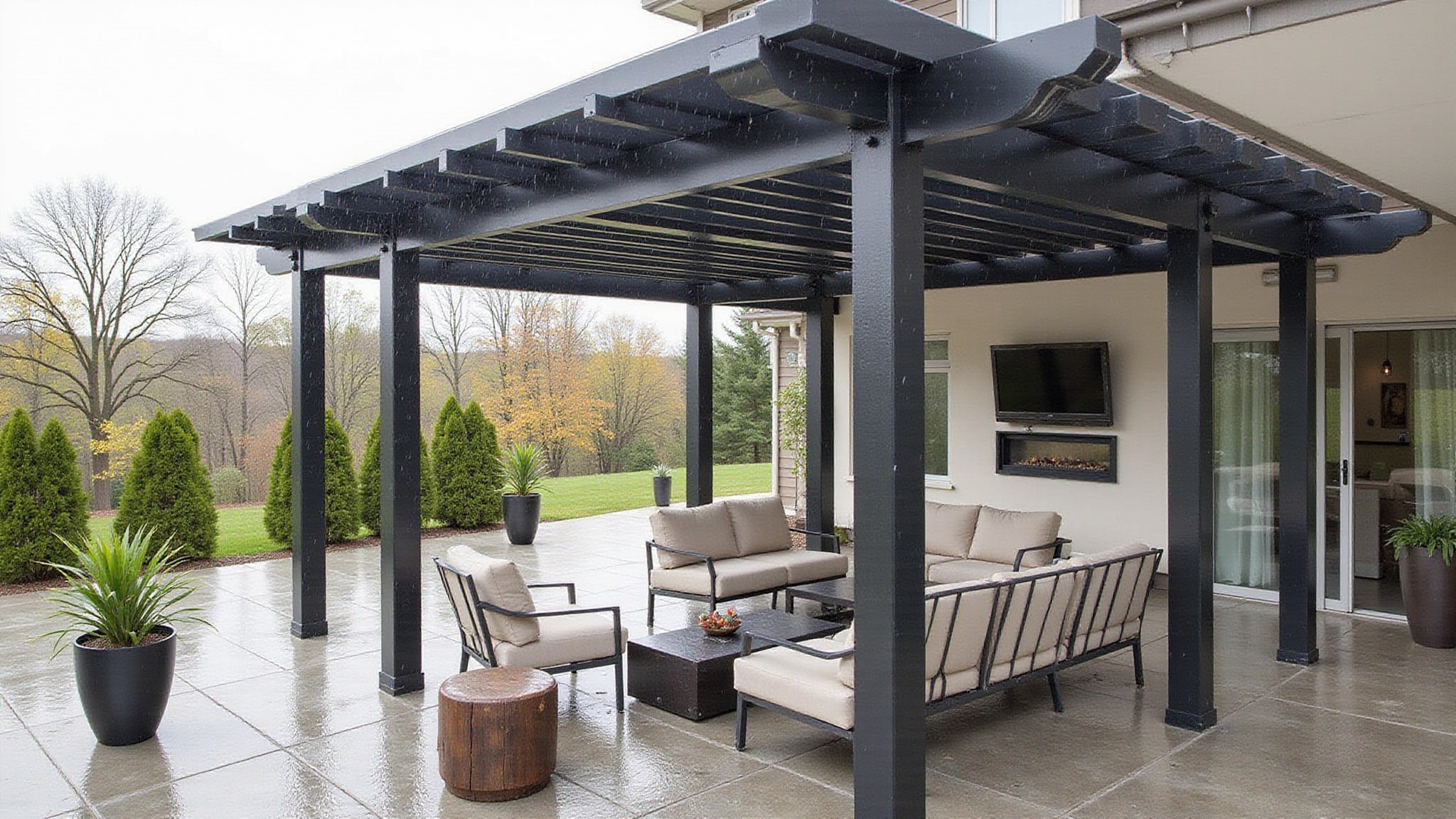
Because pergola spaces prioritize clean sightlines and relaxed aesthetics, your audio setup should disappear into the structure rather than compete with it. Achieving discreet outdoor sound means selecting speakers designed for concealment and weather endurance.
- Beam-mounted speakers tuck into wood framing, maintaining the pergola’s architectural lines while delivering even coverage.
- Planter and rock speakers disguise audio sources within landscaping elements surrounding your pergola zone.
- Weather-resistant casings with UV protection and anti-rust components guarantee long-term performance under open-air exposure.
Rather than cranking volume, distribute multiple speakers around the pergola’s perimeter to aim sound inward. This creates balanced listening levels that support conversation without dead spots. When integrated into a multi-zone controller, your pergola operates as an independent channel with dedicated volume and playlist management.
Patio Zone: Full-Range Outdoor Sound for Entertaining
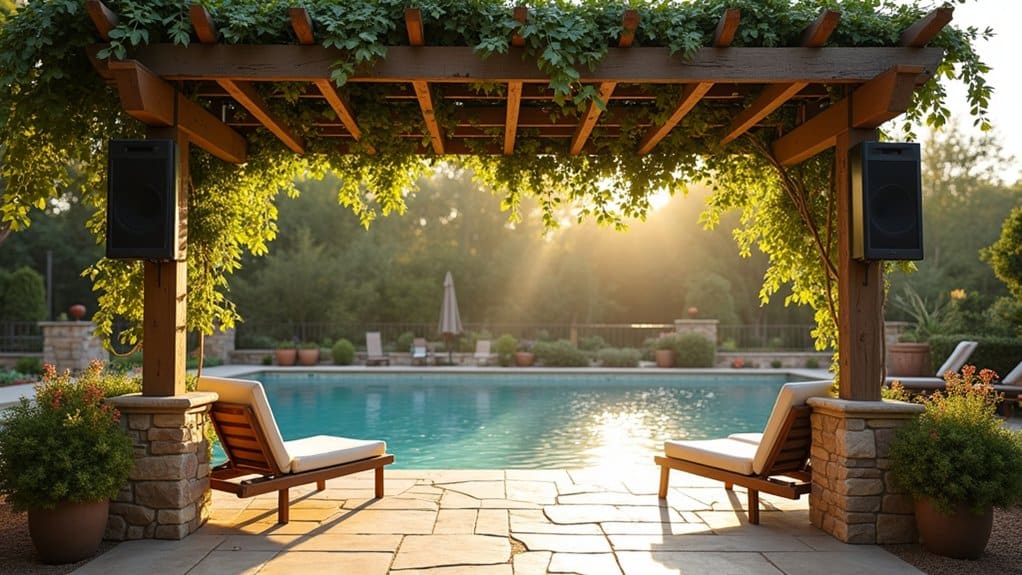
Your patio zone demands full-range speakers positioned for even stereo coverage across seating, dining, and grill areas where open-air conditions offer no acoustic reinforcement from walls or ceilings. You’ll want outdoor-rated enclosures built to handle moisture, UV exposure, and temperature swings without compromising sound clarity. Choosing between wall-mount, landscape, or wireless models lets you match speaker placement to your patio layout while maintaining consistent output across the entire zone.
Balanced Patio Coverage
A patio zone demands even sound distribution, not sheer volume, to keep music consistent across seating, dining, and circulation areas. When you’re evaluating options like Sonos Outdoor by Sonance, you’ll want speakers that prioritize wide dispersion and full-range playback over peak output.
Key principles for balanced patio coverage:
- Even perimeter spacing creates overlapping sound fields that smooth volume differences between near and far listening positions
- Consistent mounting heights improve dispersion patterns and reduce abrupt loudness shifts across the zone
- Angled orientation toward primary seating concentrates energy where it’s needed while limiting spill into adjacent zones
Larger patios benefit from multi-speaker distribution rather than a single high-output pair. This approach maintains intelligible vocals, defined treble, and balanced bass across every position where guests gather.
Weatherproof Speaker Selection
Since patio speakers face direct sun, rain, wind, and temperature extremes that indoor models never encounter, weatherproof construction isn’t optional, it’s the baseline selection criterion for any installed outdoor zone. You’ll want to verify IP ratings that confirm dust and water resistance, particularly if speakers sit near pool splash zones or uncovered pergola edges. Sealed cabinets, corrosion-resistant grilles, and marine-grade hardware protect against moisture intrusion, UV degradation, and seasonal temperature swings.
When evaluating weatherproof outdoor sound options, prioritize models explicitly rated for permanent exterior installation rather than portable units repurposed for patio use. You should match enclosure durability to your zone’s specific exposure, a covered patio demands less protection than an open poolside mount. This guarantees your system delivers consistent, reliable performance across multiple seasons without premature component failure.
Outdoor Speaker Materials for UV, Salt, and Moisture
Outdoor speakers deployed across pool decks, pergolas, and patio zones face relentless exposure to UV radiation, salt-laden air, and moisture, three forces that’ll degrade unprotected components quickly.
For any outdoor sound system smart enough to handle multi-zone deployment, you’ll want enclosures built from materials engineered for environmental resilience:
- UV-stable plastics and FRP housings resist cracking and fading under prolonged sun exposure, maintaining structural integrity across full-sun patio installations.
- Aluminum grilles with corrosion-resistant hardware and coated metal housings defend against salt-air deterioration common in poolside and coastal zones.
- IP65/IP66-rated enclosures with rubber seals, waterproof cable glands, and hydrophobic coatings protect internal crossovers and drivers from moisture ingress during heavy rain or high humidity.
These material choices directly determine speaker longevity across your outdoor audio zones.
Speaker Placement Tips for Open-Air Audio Zones
Even the most weather-resistant speakers won’t deliver consistent sound if they’re poorly positioned across your outdoor zones. Place speakers around the perimeter of each gathering area rather than clustering them on one side. For rectangular patios, position two speakers at opposite corners approximately 10 to 12 feet apart for balanced stereo separation.
Mount units at 6 to 7 feet for seated listening zones or 10 feet for standing areas like outdoor kitchens. Angle each speaker slightly downward and inward toward your primary listening position. Products like the Sonance Landscape Series work well in zone-based layouts where each area, pool, pergola, patio, requires independent coverage planning. Test placement with familiar music at moderate volume, since open-air acoustics often differ greatly from planned coverage maps.
Smart Controls for Independent Outdoor Audio Zones
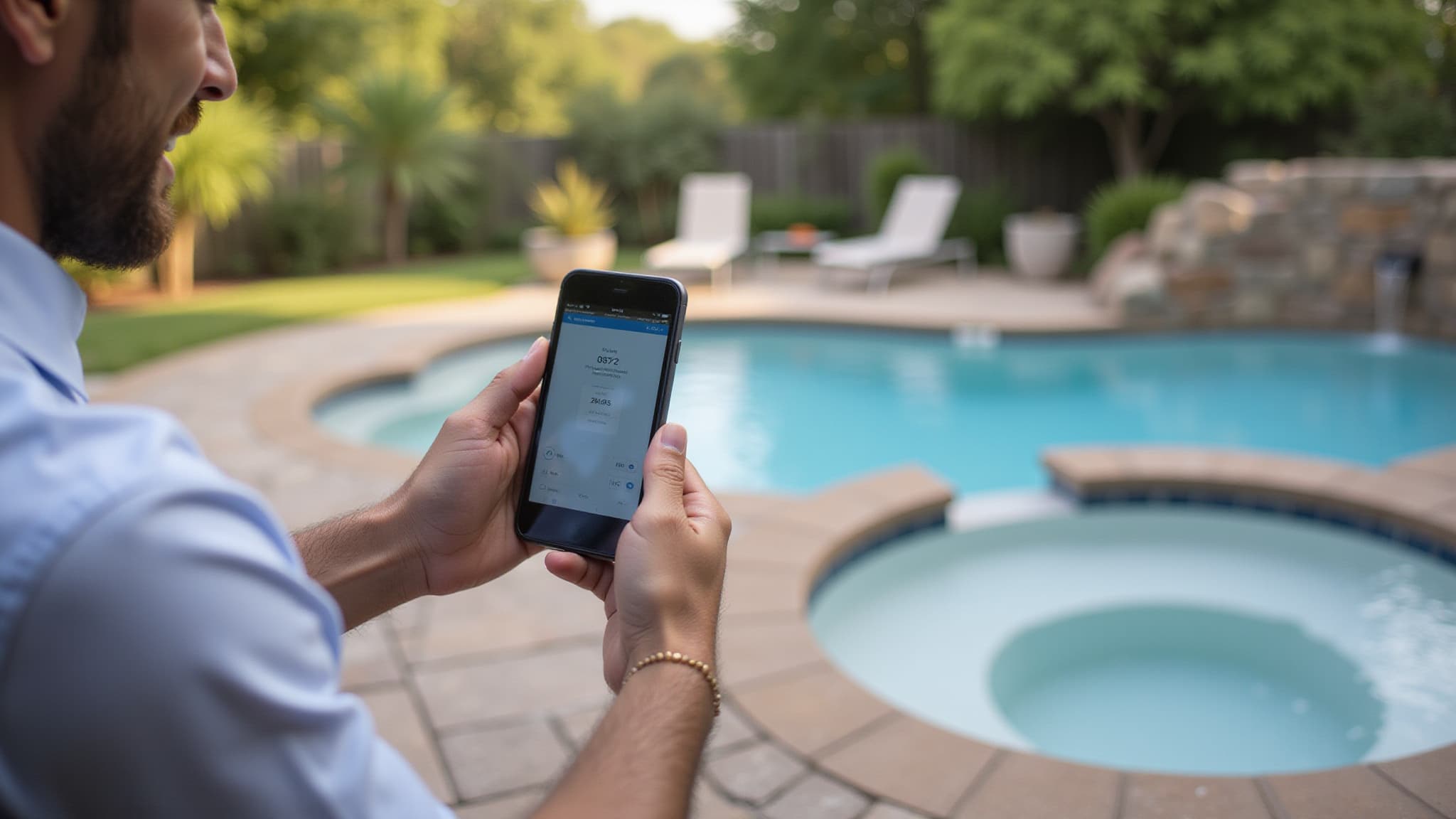
When your outdoor space spans multiple activity areas, independent zone control becomes the feature that ties your entire audio system together. Smart controls for independent outdoor audio zones let you route different sources to separate spaces simultaneously, music by the pool, podcasts at the pergola, silence near the dining table. Automating your backyard with Alexa allows for effortless management of lighting, irrigation, and entertainment systems. This integration enhances the overall experience, making gatherings more enjoyable.
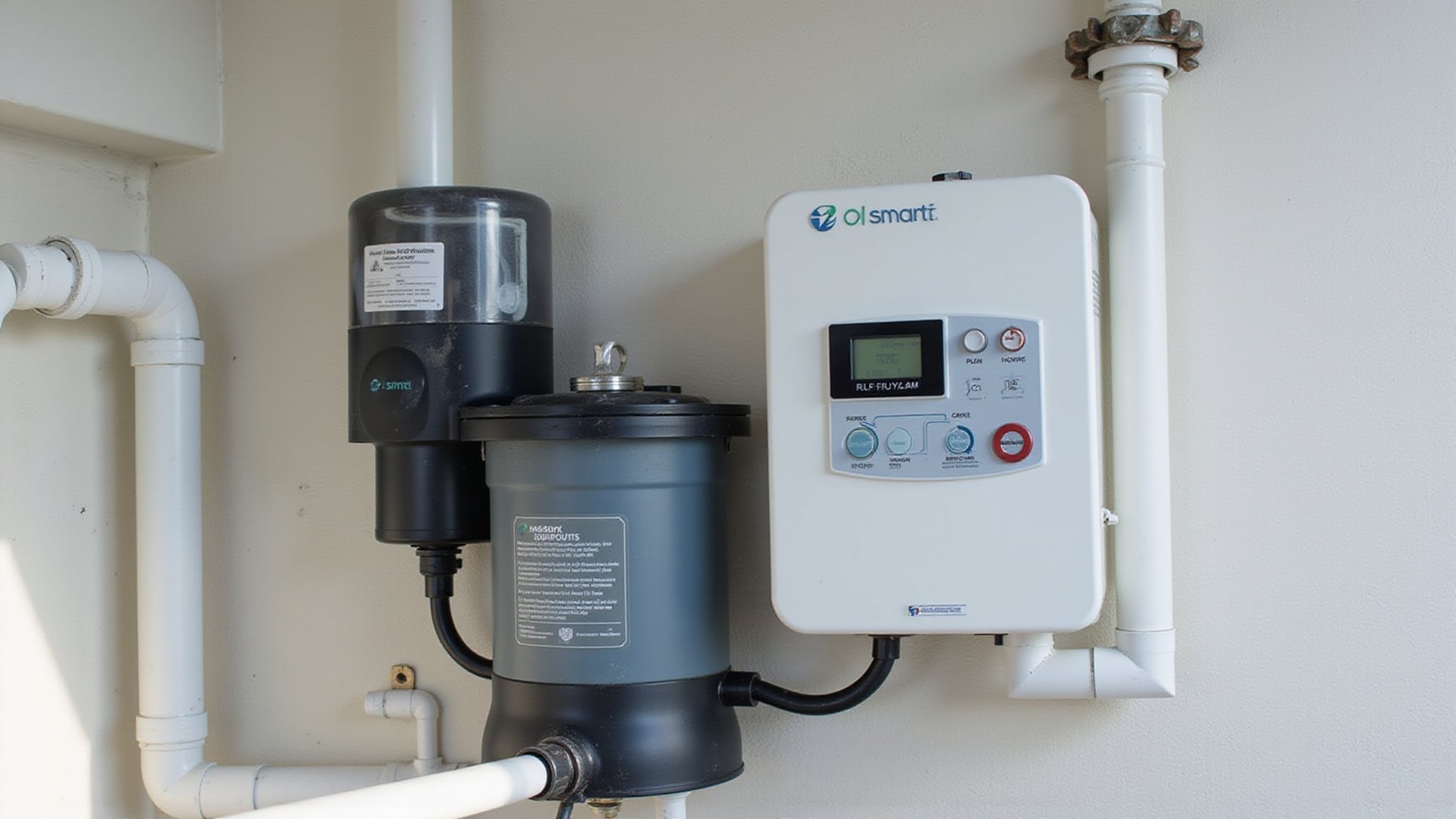
Multi-zone receivers serve as the foundation, distributing audio across distinct areas with per-zone volume and source selection. Key control capabilities include:
- App-based zone management for remote source switching, volume adjustment, and selective zone activation from your phone
- Voice control integration through smart-home platforms for hands-free operation
- Zone grouping to unify multiple areas for full-yard playback or isolate a single space
Systems supporting up to 16 zones make large-scale outdoor audio architectures fully achievable.
Step-by-Step Order for Building Your Outdoor Audio System
Five distinct phases turn a blank backyard into a fully zoned outdoor audio system, and the order you tackle them directly impacts installation efficiency, sound quality, and long-term reliability. Smart backyard features to enhance living can transform your outdoor space into an inviting retreat. By integrating technology and design, homeowners can create environments that not only serve practical purposes but also elevate aesthetic appeal.
Phase 1: Define your audio map, mark pool, pergola, and patio as independent zones before selecting equipment. Phase 2: Choose speaker locations per zone, targeting 10 feet between left and right channels for stereo balance. Phase 3: Plan power, signal, and cable routes using 16-gauge wire for runs under 80 feet and 14-gauge for longer distances. Phase 4: Drill, mount, and secure hardware to stable surfaces with weather-appropriate brackets. Phase 5: Connect, test, and refine coverage across all zones. Whether you’re running a sonos outdoor pool setup or a multi-amp configuration, sequential execution prevents costly rework.
Call Today and Take Control of Your Outdoor Space
From pool automation to smart lighting and audio zones, the right control system makes outdoor living effortless and elegant. At Innovative Outdoor Living, our skilled team delivers reliable SMART Backyard & Pool Control Systems built around modern luxury and seamless functionality. Call +1 (561) 594-1495 today and turn your backyard into a smart oasis.
Frequently Asked Questions
Can Outdoor Audio Zones Work With Existing Smart Home Systems?
Yes, your outdoor audio zones can work with existing smart home systems. You’ll connect through network-enabled receivers, smart amps, or multi-zone audio platforms that integrate with SmartThings, Alexa, Google Home, or Siri. You can control each zone, pool, pergola, patio, independently from your phone or voice assistant. For the strongest integration, you’ll want to plan your amplifier, speaker wiring, and smart home platform together so every outdoor zone responds seamlessly.
How Many Speakers Do I Need per Outdoor Zone?
You’ll typically need at least one pair of speakers per zone, but larger or irregularly shaped zones require additional pairs. Space speakers 10 to 12 feet apart for even coverage, and don’t exceed 20 to 25 feet between units. A small pergola zone might need just two speakers, while a wide pool deck could require four to six. Start with a scale layout of each zone to determine exact speaker count.
Do Outdoor Speaker Systems Need Special Amplifiers Compared to Indoor Setups?
You don’t always need a special amplifier, standard amps work fine if power output and speaker impedance match. However, outdoor zones benefit from dedicated zone amplifiers that simplify multi-zone control across your pool, pergola, and patio areas. You’ll want to place any amplifier in a weather-safe enclosure since moisture damages electronics quickly. For longer cable runs, you’ll need heavier gauge wiring, and open-air zones often benefit from added subwoofer support since bass dissipates outdoors.
Can I Add New Zones to an Outdoor Audio System Later?
Yes, you can add new zones later if your system’s designed for expansion. You’ll need an amplifier with spare channels or a speaker selector that supports additional outputs. Home-run wiring practices and centralized equipment placement make future routing much easier. When expanding, you’ll want to match amplifier wattage to your new speaker load so you don’t lose sound quality. Planning your control platform and infrastructure upfront gives you the most flexibility.
How Much Does a Multi-Zone Outdoor Speaker System Typically Cost?
You’ll typically spend around $400, $500 for a basic DIY multi-zone setup, $2,500 for a mid-range package with broader zone coverage, and $5,000, $6,000 for expanded premium systems. Your total depends on how many zones you’re controlling, speaker count, amplification requirements, weatherproof ratings, and whether you’re using smart zone control. Each additional zone increases hardware and wiring costs, so you’ll want to plan your zone layout before committing to a budget.