
Traditional outdoor saunas heat the air to 150, 185°F and carry the strongest cardiovascular research. Infrared models warm your body directly at a lower 120, 140°F, making them ideal if you’re heat-sensitive or short on space. Wood-fired saunas reach 160, 200°F without any electrical hookup, perfect for off-grid setups. Each type differs in session length, maintenance, and safety requirements, details that’ll help you confidently choose the right fit below.
Traditional, Infrared, and Wood-Fired Outdoor Saunas Explained
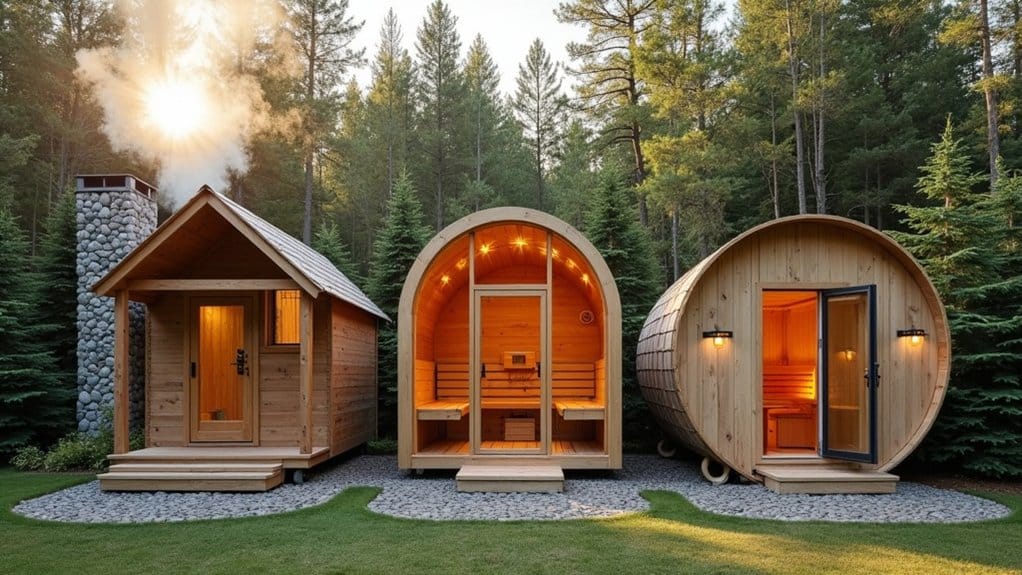
When you’re choosing an outdoor sauna, the heat source shapes everything, from how the session feels to how much maintenance you’ll take on. Traditional saunas use electric heaters or wood stoves to warm rocks, reaching 140, 194°F with optional steam bursts. Infrared saunas operate cooler at 110, 140°F, using radiant panels that warm your body directly. Wood-fired outdoor saunas burn fuel to heat dense stones over 1, 3 hours, delivering an immersive, hands-on ritual. Backyard wellness retreat essentials can transform your outdoor space into a serene sanctuary. Incorporating calming elements like cozy seating, ambient lighting, and soothing decor helps create an inviting atmosphere.
With traditional, infrared, and wood-fired outdoor saunas explained regarding heat delivery, the differences become practical. Infrared units heat in 10, 15 minutes with minimal upkeep. Electric traditional models need 30, 60 minutes. Wood-fired systems demand fuel storage, fire tending, and airflow management, but reward you with natural ambiance and the strongest connection to sauna tradition. Portable tent saunas offer a middle ground, using a compact wood-fired stove that heats up in under 30 minutes, faster than traditional log saunas while preserving the authentic wood-fired experience.
How Each Outdoor Sauna Type Heats Your Body Differently
Although traditional, infrared, and wood-fired saunas all produce sweat and raise core temperature, each type delivers heat to your body through a distinct pathway. Traditional and wood-fired models heat the surrounding air first, warming your skin before deeper tissue responds. Infrared panels skip the air entirely and transfer radiant energy directly into your body at lower ambient temperatures. Because infrared saunas operate at lower temperatures, they allow longer sessions for heat-sensitive individuals who might otherwise find conventional saunas overwhelming.
| Feature | Traditional / Wood-Fired | Infrared |
|---|---|---|
| Heat pathway | Convective (heated air to skin) | Radiant (panels to tissue) |
| Operating range | 170, 200°F | 120, 170°F |
| Steam option | Yes (water on stones) | No |
Understanding how these outdoor sauna types transfer heat helps you match the experience to your comfort preferences and wellness goals.
Outdoor Sauna Temperature and Humidity Compared
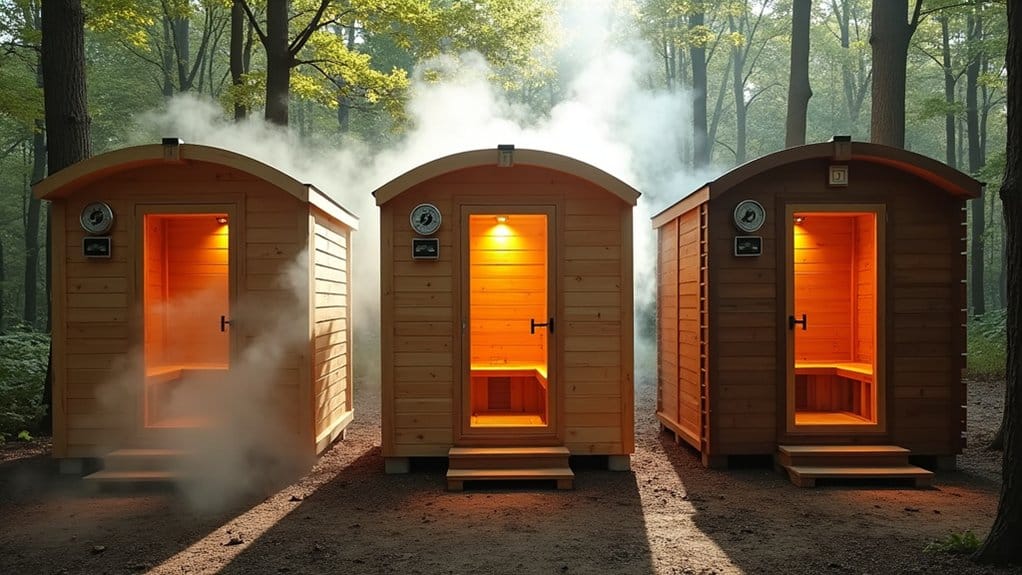
Heat pathway matters, but temperature and humidity numbers shape the actual feel of each session. Traditional sauna temperature and humidity typically start around 150, 185°F with roughly 10% relative humidity before you ladle water onto stones. The Finnish sauna “Rule of 200” suggests your temperature plus humidity should total about 200 for balanced comfort. A wood fired sauna outdoor setup follows the same high-heat, manual-steam pattern, often reaching 160, 200°F depending on fire intensity and stone mass.
When comparing infrared vs traditional sauna conditions, the difference is significant. Infrared panel rooms run 120, 140°F with near-ambient humidity, yet still produce heavy sweating through direct radiant heating. Whether you’re evaluating a prefab outdoor sauna from Finnleo, Almost Heaven, Dundalk, or Sun Home Saunas, understanding these ranges helps you match barrel sauna home installations, cedar vs spruce builds, electric sauna heater specs, and outdoor sauna cost to your preferred session intensity. For accurate readings, mount your thermometer and hygrometer at head height on the top bench rather than directly above the heater, where localized heat can skew the numbers.
Which Outdoor Sauna Has the Strongest Health Evidence?
How well does the science actually back each sauna type? Traditional Finnish-style saunas carry the most robust research, while infrared and wood-fired options fall into different evidence categories. The scientific basis of contrast therapy suggests that alternating between hot and cold exposure can enhance recovery and reduce muscle soreness. Research indicates that this method may also improve circulation and metabolic efficiency.
- Traditional sauna has the strongest long-term data, with large observational studies linking frequent use (3, 7 sessions per week) to lower risks of cardiovascular disease, all-cause mortality, dementia, and Alzheimer’s disease.
- Infrared sauna shows promise for blood pressure, pain relief, and fatigue reduction, but Mayo Clinic notes that larger, more rigorous studies are still needed to confirm these findings.
- Wood-fired sauna shares traditional sauna’s evidence base since researchers categorize it as a traditional subtype, the health variable is heat exposure, not fuel source.
Who Should Pick an Infrared Outdoor Sauna?
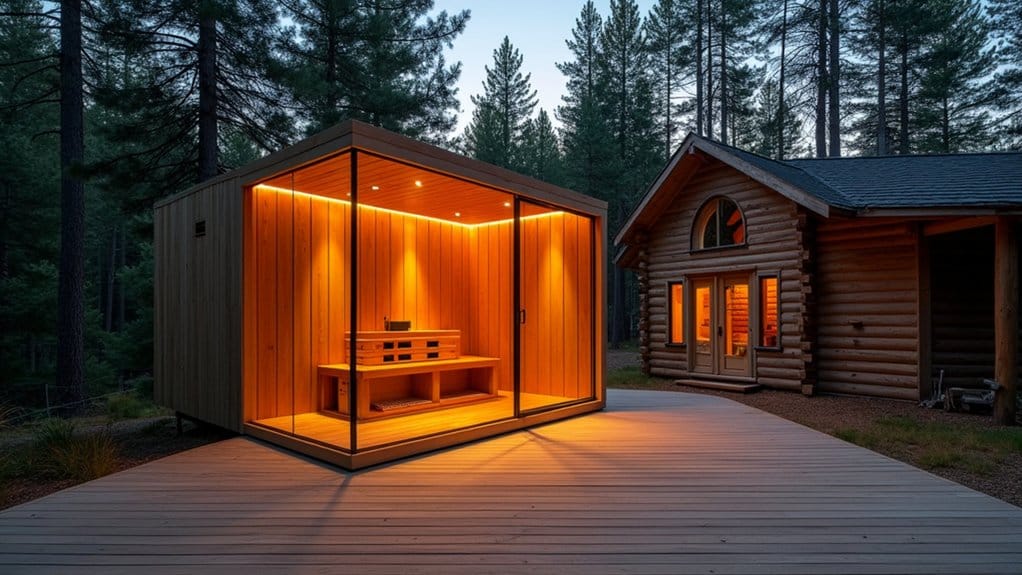
Infrared outdoor saunas operate at 120°F, 150°F, making them a strong match for homeowners who want consistent heat therapy without the intense air temperatures of a traditional cabin. You’ll heat up faster since infrared panels warm your body directly rather than the surrounding air, so there’s minimal wait time after power-on.
If you’re focused on post-workout recovery or joint relief, the lower temperature supports longer, more comfortable sessions. Full-spectrum models offer near-, mid-, and far-infrared wavelengths for broader heating options.
Infrared units typically cost less upfront and require simpler maintenance than traditional or wood-fired saunas. Most outdoor models run on a 240-volt outlet and include digital controls, Bluetooth audio, and chromotherapy lighting. You’ll need proper weatherproofing, but in Florida’s climate, outdoor infrared saunas perform reliably year-round.
Who Should Pick a Wood-Fired Outdoor Sauna?
Wood-fired outdoor saunas fit best if you’re in a rural or off-grid setting where electrical service is limited or unavailable. You don’t need an electrician for most kits, and the heat source operates independently of grid power.
This type also works well if you want the most authentic sauna experience, crackling fire, natural wood scent, and variable heat profiles that mirror classic sauna culture.
A wood-fired sauna is your strongest match if you meet these criteria:
- You prefer high-heat sessions. Wood-fired units reach higher temperatures than most electric models and deliver deeper, more penetrating heat.
- You’re comfortable with manual operation. You’ll manage the fire, maintain hardwood below 20% moisture content, and add fuel every 20, 30 minutes.
- Your site supports proper chimney clearance, ventilation, and fire safety setbacks.
Who Should Pick a Traditional Outdoor Sauna?
If you want the classic Finnish sauna experience with high air temperatures, steam, and full control over heat and humidity, a traditional outdoor sauna is your strongest match. Traditional models reach 170, 200°F and let you pour water over hot stones to create löyly, something infrared saunas can’t replicate. They’re also backed by the deepest body of research on heat therapy benefits, making them a well-supported choice for serious sauna users. Hot and cold outdoor shower options can enhance your sauna experience, providing refreshing relief after a session. These showers are perfect for cooling down or warming up, depending on your preference and the season.
Strong Research Support
Traditional outdoor saunas earn their strongest recommendation when you need high heat, steam control, or a lower entry price, and the research backs each case clearly.
- Heat and humidity range. Traditional models reach 170, 200°F and support löyly, steam created by pouring water over hot stones. Infrared panels can’t replicate this.
- Budget accessibility. Traditional outdoor sauna kits are recommended for budgets under $6,000, and barrel designs offer a practical entry-level build. Wood-fired models can also eliminate 240V electrical upgrade costs.
- Off-grid readiness. Wood-burning heaters remove the need for dedicated electrical circuits, making traditional saunas a strong fit for rural lots, cabins, and remote properties.
Each advantage is tied to documented product capabilities, not preference. You’re choosing based on what the equipment actually delivers.
Classic Heat Experience
| Best Fit | Poor Fit |
|---|---|
| You want authentic high-heat sessions above 150°F | You’re sensitive to extreme heat or have heat intolerance |
| You value ritual, atmosphere, and heavy sweating | You prefer gentle, low-temperature warming |
Traditional saunas suit you if you’re drawn to strong heat sensation, stress reduction, and circulation support through heat-induced vasodilation. They’re less suitable if you experience dizziness or discomfort during prolonged heat exposure.
Space, Ventilation, and Setup for Each Outdoor Sauna
Because each sauna type generates heat differently, the space, ventilation, and foundation requirements vary considerably across traditional, infrared, and wood-fired models.
- Traditional saunas need the largest footprint for heater clearances, bench layout, and dual intake/exhaust vents. They typically require a 240V dedicated circuit rated at 30, 50 amps.
- Infrared saunas fit smaller spaces since heating panels mount along walls. Ventilation demands are simpler, and smaller units may run on 120V.
- Wood-fired saunas require extra clearance for the stove, chimney path, and combustion airflow, plus safe distance from structures and vegetation.
Across all three types, you’ll need a flat, level base, concrete pad, compacted gravel (4, 6 inches deep), or a reinforced deck, with proper drainage to prevent moisture damage and structural shifting.
How to Stay Safe in Any Outdoor Sauna
Whether you’re using a traditional, infrared, or wood-fired sauna, safe habits protect you from dehydration, overheating, and injury every session. Drink plenty of water before, during, and after use, and avoid alcohol entirely. Limit sessions to 15, 20 minutes, starting with 5, 10 minutes if you’re building tolerance. Keep temperatures between 150°F and 175°F for comfort, and exit immediately if dizziness or faintness develops.
Always have a licensed electrician handle wiring, install GFCI protection, and never use your sauna during lightning. Maintain proper ventilation to manage humidity, heat buildup, and carbon monoxide risk. Shower before and after each session, and wipe down benches with a clean towel. Children under 6 shouldn’t use saunas, and kids 7, 13 need direct adult supervision.
Traditional vs Infrared vs Wood-Fired: Quick Comparison
Three main sauna types, traditional, infrared, and wood-fired, differ in how they deliver heat, what temperatures they reach, and how much setup they require.
- Traditional sauna, Heats air to 158°F, 230°F using an electric heater or stones. You can pour water on the stones to create steam and control humidity. Warm-up takes 30, 60 minutes.
- Infrared sauna, Uses radiant panels to warm your body directly at 113°F, 140°F. It’s drier, more compact (1, 4 seats), and easier to install and maintain.
- Wood-fired sauna, Delivers the same high-heat, steam-capable experience as traditional but runs on a wood stove, adding fuel handling and ventilation requirements.
Your choice depends on your preferred heat style, available space, and how much maintenance you’re willing to manage.
Call Today and Transform Your Backyard Wellness
From cold plunge tubs to outdoor saunas, every wellness feature deserves a builder who understands how luxury and function come together. At Innovative Outdoor Living, our skilled team delivers reliable Backyard Makeovers built around your wellness goals and lifestyle. Call +1 (561) 594-1495 today and bring your dream retreat to life.
Frequently Asked Questions
Can You Use an Outdoor Sauna Year-Round in Florida’s Humid Climate?
Yes, you can use an outdoor sauna year-round in Florida. The humid subtropical climate doesn’t prevent regular use, but your construction must account for humidity, rain, UV exposure, and mold risk. You’ll want covered or semi-covered placement, stainless hardware, weather-rated roofing, and proper drainage to protect your investment. After each session, leave the door open 15, 20 minutes to dry the cabin and prevent moisture buildup.
How Much Does It Cost to Build an Outdoor Sauna?
A DIY outdoor sauna typically costs $2,000 to $5,000, while prefab kits range from $5,000 to $15,000. Custom builds can exceed $10,000 once you factor in materials, heaters ($800, $4,600), and professional installation ($1,500, $10,000+). Size, wood species, heater type, and site prep drive your total budget. You’ll also want to budget $15, $30 monthly for electricity under typical use.
Does an Outdoor Sauna Increase Your Home’s Resale Value?
A well-installed outdoor sauna can increase your home’s resale value, though the return isn’t dollar-for-dollar. Estimates suggest you’ll recoup around 50% to 80% of your investment, with potential value increases of $5,000 to $20,000 depending on quality and buyer demand. About 42% of homebuyers consider a sauna desirable. You’ll see the strongest returns when your sauna’s professionally installed, well-maintained, and integrated into a cohesive backyard design.
What Is the Best Wood Material for an Outdoor Sauna?
Western Red Cedar is the top choice for outdoor saunas because it resists decay, insects, and moisture while staying cool to the touch. If you’re working with a tighter budget, Canadian hemlock gives you strong performance at a lower price point. You should avoid pine, which can release resin at high temperatures, and hardwoods like oak that retain too much heat. Cedar and hemlock consistently rank highest for Florida’s outdoor conditions.
Can You Pair an Outdoor Sauna With a Cold Plunge Pool?
Yes, you can pair an outdoor sauna with a cold plunge pool for contrast therapy. Alternating between heat exposure and cold immersion supports circulation, muscle recovery, and overall wellness. You’ll want to place both features close together for quick changes and plan for proper drainage, electrical access, and water filtration. It’s best to consult a medical professional before starting, especially if you have any underlying health conditions.