You’ll want to position your outdoor shower near existing plumbing and grade the pad at 1/4 inch per foot for proper runoff. Choose a cold rinse station for quick post-swim cleanups or a hot-and-cold system for year-round comfort. Use Marine Grade 316 stainless steel fixtures and slip-resistant flooring to handle constant moisture. From enclosure design to drainage solutions, there’s plenty more to evaluate below.
Where to Place an Outdoor Pool Shower
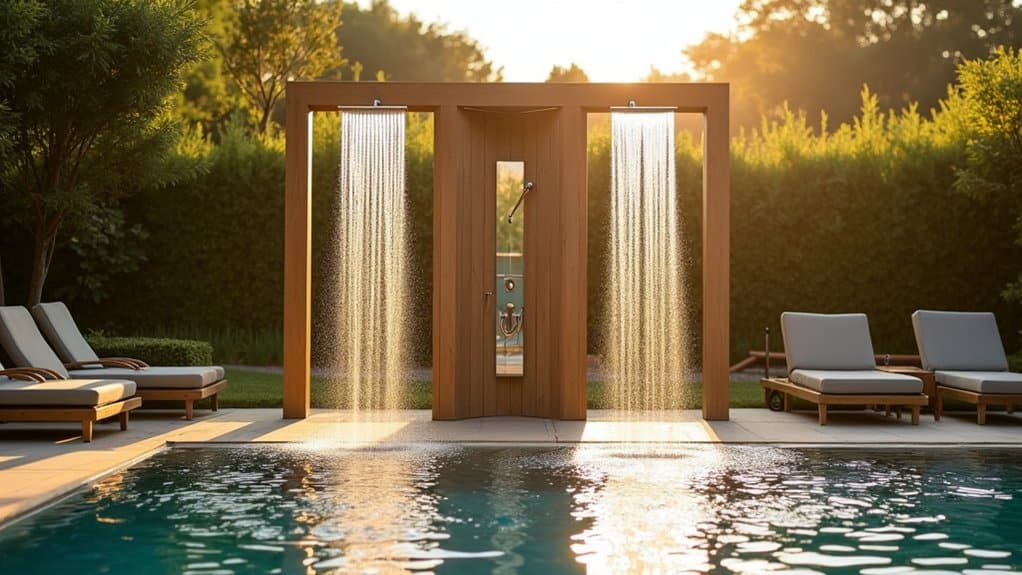
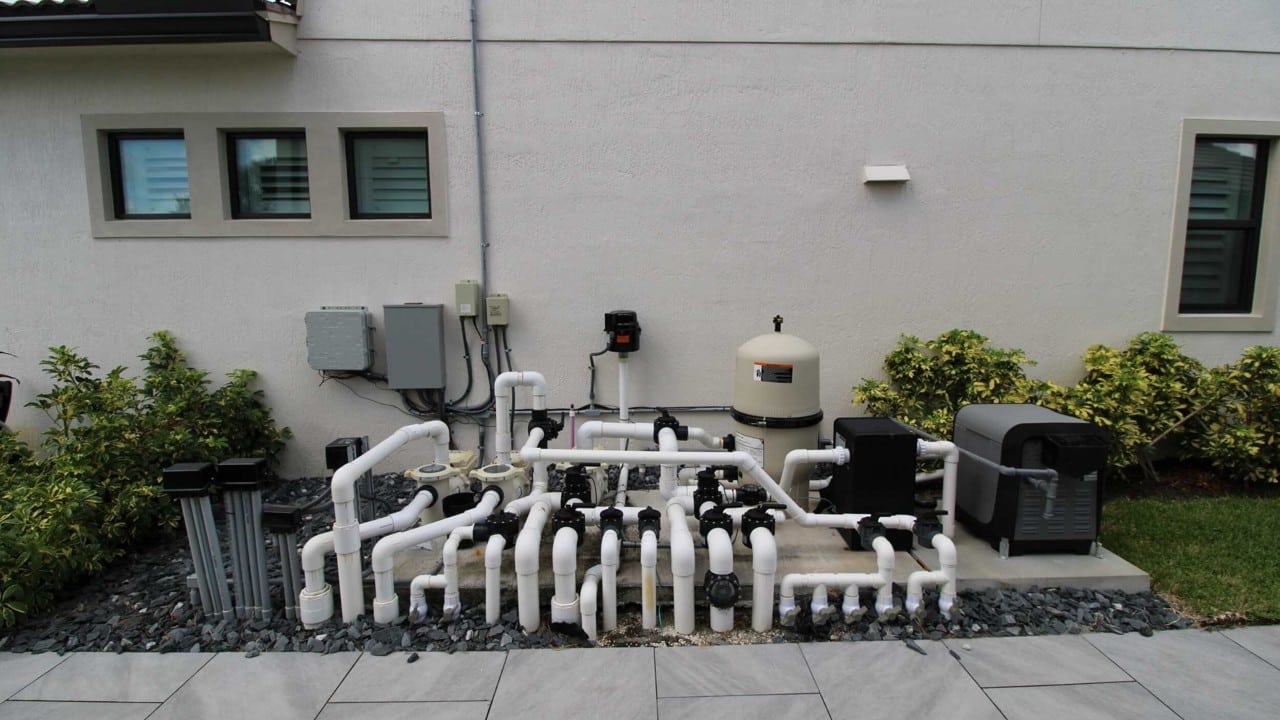
When you’re choosing where to install an outdoor shower, start with plumbing proximity. Position the unit near your laundry room, pool equipment pad, or rear utility zone to shorten hot and cold water runs. Shorter lines reduce heat loss and material costs, simplifying your outdoor shower plumbing from the start. When considering your outdoor shower setup, also think about the benefits of cold water therapy. Many people are looking into the best brands for cold plunge tubs to enhance their wellness routines.
Grade the shower pad at 1/4 inch per foot to direct runoff away from structures. Where soil drains poorly, install a French drain or dry well. Your pool shower design should balance drainage, privacy, and sun exposure, place it where sightlines from neighbors stay blocked, airflow keeps surfaces dry, and access from the pool deck feels natural. Avoid damp, enclosed corners that trap moisture and promote mildew growth. A well-chosen location also creates a seamless extension of your living space, enhancing both usability and aesthetic value.
Cold Rinse vs. Hot-and-Cold Outdoor Shower Systems
Match your system to climate, use pattern, and budget:
- Cold rinse systems suit warm-climate pool decks where quick post-swim cleanup is the primary function.
- Hot-and-cold systems support extended shower routines, cooler seasons, and muscle recovery after sauna or exercise.
- Cold-only setups lower operating costs by eliminating water-heating energy use.
- Mixed-temperature systems let you adjust output to activity, weather, and time of day. Both system types are commonly crafted from Marine Grade 316 Stainless Steel to ensure corrosion resistance and long-term performance in exposed outdoor environments.
Outdoor Shower Enclosures for Privacy and Airflow
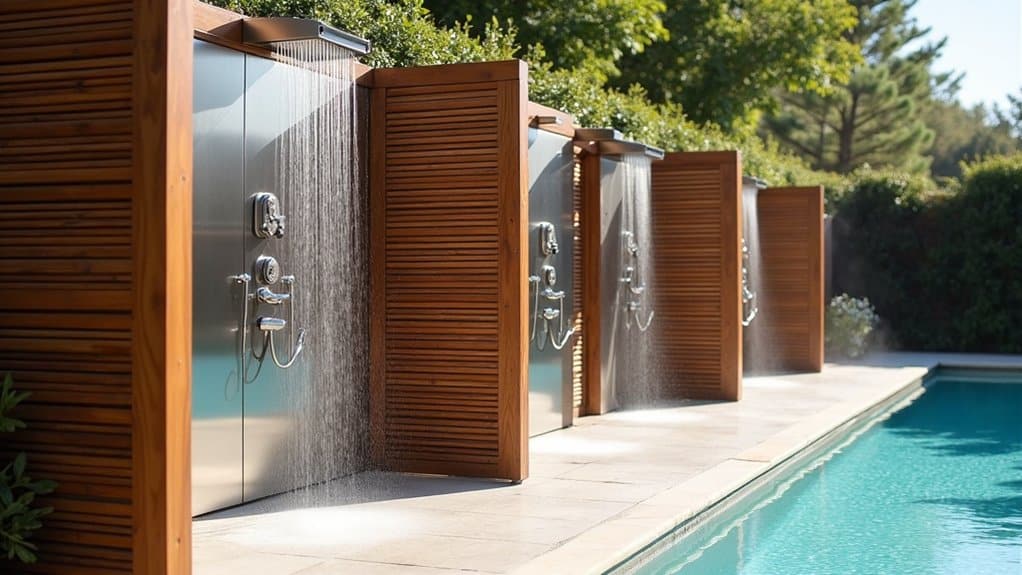
Because outdoor shower enclosures must balance privacy with ventilation, louvered and slatted wall systems offer the most practical solution for pool deck installations. A privacy-first enclosure using louvered panels screens sightlines while promoting airflow, preventing heat buildup and trapped humidity inside the stall. When creating a personal retreat, setting up a home sauna experience can significantly elevate relaxation. Thoughtful placement of the sauna can enhance the overall ambiance of your outdoor space.
Your outdoor shower design should specify weather-resistant materials like polywood or cedar door systems with proper trim, stops, and cap pieces for durability. Site the enclosure near existing plumbing runs and position it for direct pool access without blocking deck circulation paths. Compact single-stall formats work well on tighter decks. Include reliable door hardware, towel hooks, and a slatted roof panel that admits daylight while maintaining overhead screening. The enclosure should match your surrounding architecture for a cohesive poolside result. A well-crafted enclosure using quality materials is considered a premium upgrade that enhances both functional appeal and market value of the property.
Drainage and Slip-Resistant Flooring for Pool Showers
Since poolside showers handle constant water flow, your drainage plan must slope the shower pad away from the house and direct runoff into a dedicated collection path. Understanding drainage design principles for pool showers starts with grading the surface for gravity flow, then installing perforated pipe over crushed stone wrapped in landscape fabric to move water efficiently.
When selecting slip-resistant flooring materials and surface traits, prioritize options that handle constant moisture:
- Interlocking drainage tiles with raised bases that promote airflow and let water pass beneath the walking surface
- Vinyl drainage matting that adds traction in heavy water-exposure zones
- Perforated plastic tiles resistant to mold and mildew buildup
- Open-joint decking systems that channel water through gaps instead of pooling on top
Outdoor Shower Accessories Worth Installing
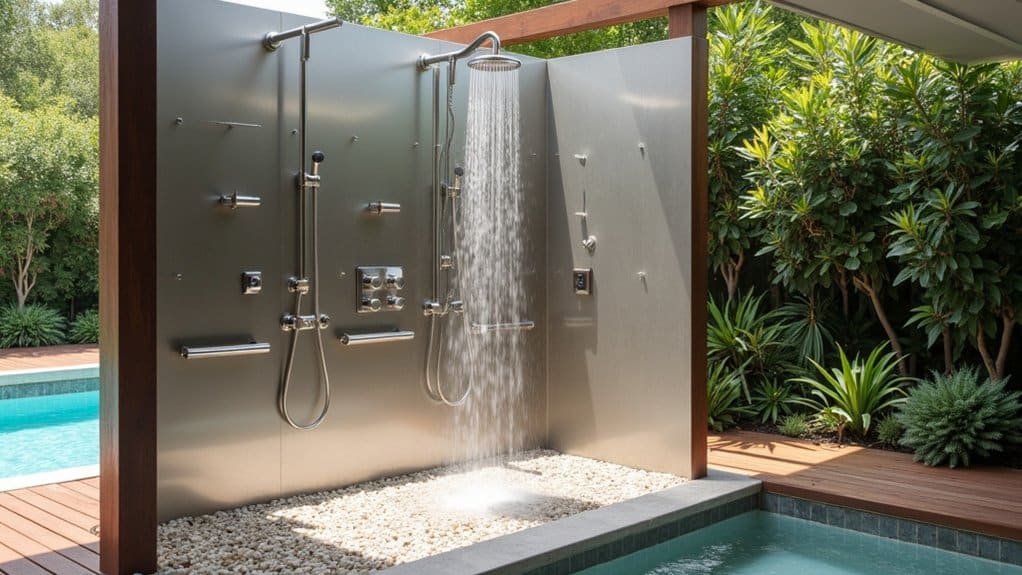
Add storage and organization accessories like cedar benches for seating and towel staging, plus hooks that keep essentials off wet surfaces. Handheld showerheads provide flexibility for rinsing sand and debris before entering the pool. Solar-powered heaters extend warm-water comfort without added utility load. For enclosed setups, frosted glass doors maintain privacy while preserving sightlines. Finish with mosaic tile backsplashes or weather-resistant artwork to anchor the design. Each accessory should match your material palette and withstand sustained outdoor exposure. Infrared sauna technology explained plays an integral role in enhancing wellness experiences. This innovative technology utilizes light to create heat, promoting relaxation and detoxification.
Call Today and Transform Your Backyard Wellness
From cold plunge tubs to outdoor saunas, every wellness feature deserves a builder who understands how luxury and function come together. At Innovative Outdoor Living, our skilled team delivers reliable Backyard Makeovers built around your wellness goals and lifestyle. Call +1 (561) 594-1495 today and bring your dream retreat to life.
Frequently Asked Questions
Do Outdoor Showers Need a Building Permit?
You’ll likely need a permit when your outdoor shower includes plumbing, drainage tie-ins, or a fixed structure. Hot-and-cold setups with hard-piped supply lines and drain connections almost always trigger plumbing permits. Simple cold-water rinse stations without drains may be exempt in some jurisdictions. If you’re adding enclosure walls, roofing, or electrical, you’ll need building permits too. Check your local building and plumbing department before starting work.
How Much Does It Cost to Install an Outdoor Shower?
You’ll typically spend $500 to $1,200 for a basic cold-water rinse station, while a hot-and-cold setup runs $1,500 to $3,000. Add an enclosure with premium materials like teak or stainless steel, and you’re looking at $4,000 to $8,000+. Factor in plumbing ($600, $1,600), drainage ($300, $1,200), and site grading ($1,000+) if your deck slope needs correction. Material specification and drainage tie-ins drive most of the final cost.
Can Outdoor Showers Be Used in Freezing Winter Temperatures?
Yes, you can use outdoor showers in freezing temperatures if you’ve designed the plumbing for winter operation. You’ll want to install freeze-proof sillcocks, place mixing valves inside your home, and specify insulated piping sloped for gravity drainage. Heat tape on exposed lines prevents ice buildup. If your system isn’t frost-rated, you should winterize it completely, drain all lines, blow them with compressed air, and store removable components like cartridges and shower heads indoors.
How Do You Winterize an Outdoor Shower to Prevent Pipe Damage?
You’ll want to shut off the indoor supply valves, then open the outdoor shower controls and any low-point bleeder valves to drain the lines completely. Use a compressor blowout to clear residual moisture from the piping. Remove cartridges, shower heads, and hand sprays, storing them indoors. Leave outdoor valves open so any remaining water can expand without bursting pipes. In spring, restore supply and inspect for leaks before use.
What Materials Hold up Best for Outdoor Shower Fixtures Long-Term?
Stainless steel gives you the best long-term corrosion resistance for outdoor shower fixtures, especially near pool decks and splash zones. You’ll also get strong performance from copper and brass components, though they’ll develop a patina over time. For structural surrounds, teak and cedar resist rot naturally and hold up well in wet conditions. You should avoid galvanized steel entirely, it corrodes fast, particularly in coastal settings.