

Start by creating a detailed property map marking key features, dark zones, and existing electrical outlets. You’ll want to space path lights 6-10 feet apart, position flood lights strategically for security, and angle uplights 8-12 inches from trees. Consider motion sensors and dimmers for efficiency and control. Focus on entry points, gathering spaces, and architectural elements while ensuring proper voltage distribution. The following guidelines will help you master professional-grade outdoor lighting design.
Mapping Your Outdoor Space
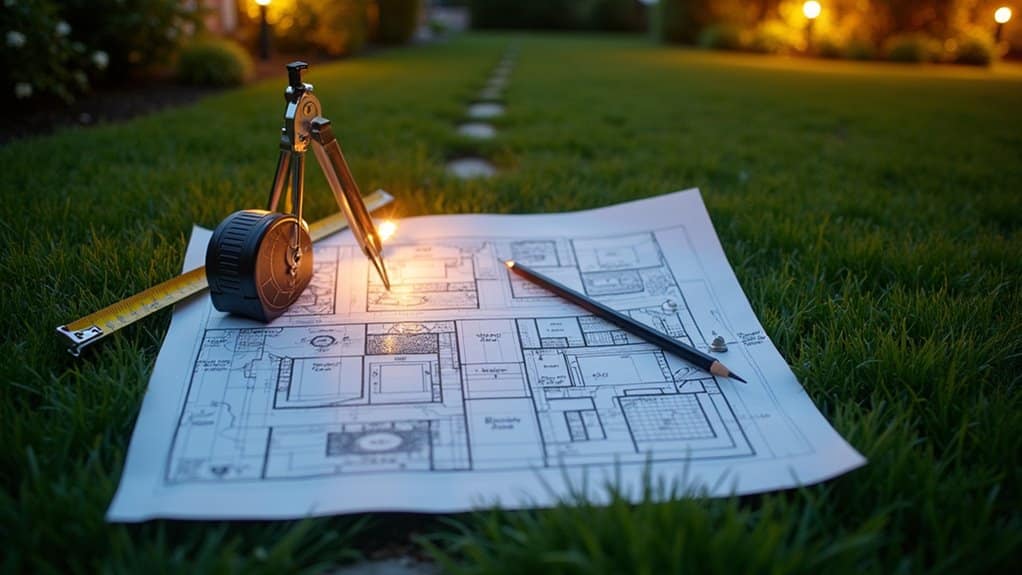
A detailed map of your outdoor space serves as the foundation for an effective lighting plan. Begin by measuring and sketching your property’s dimensions, including structures, walkways, trees, and key landscape features. You’ll need this precise layout to determine ideal fixture locations and calculate lighting coverage areas.
Mark potential dark zones and safety-critical areas where lighting is essential. Your landscape lighting design should account for existing electrical outlets, voltage requirements, and wire routing paths. Consider how different lighting zones will interact and complement each other throughout your yard. Look for opportunities to create depth and visual interest through layered lighting techniques.
With careful planning, you’ll avoid common pitfalls like overlighting or creating harsh shadows that can make your yard look unnatural. Document all fixture locations and specifications for seamless installation.
Essential Lighting Goals and Objectives
Your outdoor lighting goals should initially address security and safety concerns by illuminating entry points, walkways, and potential hazards around your property. You’ll want to strategically highlight architectural elements, landscaping features, and focal points that deserve attention after dark. Ultimately, consider how you’ll create functional outdoor living spaces by incorporating task lighting for cooking areas, ambient lighting for entertainment zones, and accent lighting for atmosphere and depth.
Security and Safety Priorities
When planning outdoor lighting layouts, establishing thorough, extensive, or all-encompassing security and safety measures should be your primary objective. Your outdoor lighting strategy must combine motion-activated security lights and flood lights to create a protective perimeter around your property. Install lighting fixtures at entry points, walkways, and potential concealment areas where intruders might hide.
You’ll need to position motion sensors strategically to detect movement and trigger immediate illumination in vulnerable zones. Bolster your security system’s effectiveness by implementing energy-efficient LED lighting fixtures that provide ideal brightness while keeping operational costs low. Remember to layer your lighting approach with path lights and focused beams to eliminate dark spots and trip hazards. Regular lighting maintenance guarantees all security components remain fully functional, sustaining your home’s protective barrier throughout the year.
Highlighting Key Features
Strategic outdoor lighting design begins with identifying essential features that require focused illumination. When planning your scene lighting installation, focus on architectural elements that make your home unique. Your lighting project should strategically improve these distinctive features through carefully positioned accent lights.
- Install well lights at the base of columns or pillars to create dramatic upward shadows
- Position spotlights to showcase decorative stonework, unique siding, or custom trim details
- Use wash lights to emphasize the texture of architectural walls or distinctive facades
- Place landscape lights to highlight mature trees, sculptures, or water features
- Add cross-lighting techniques to eliminate harsh shadows and create depth
Consider how different lighting angles and intensities interact to create a cohesive look that enhances your home’s architectural character while maintaining a balanced, professional appearance.
Creating Outdoor Living Spaces
Beyond architectural highlights, outdoor lighting must transform exterior spaces into functional living areas that extend your home’s usable square footage. You’ll need to strategically illuminate key zones to create welcoming, practical spaces for evening activities.
| Zone Type | Lighting Approach |
|---|---|
| Patio/Deck | Recessed step lights, post caps |
| Outdoor Kitchen | Task lighting, pendant fixtures |
| Water Features | Submersible LEDs, spotlights |
| Seating Areas | Ambient path lights, sconces |
Focus your outdoor lights on establishing distinct activity zones while maintaining a cohesive welcoming glow throughout the living space. Install dimmers to adjust brightness levels for different occasions. Consider motion sensors for security and energy efficiency. When lighting water features or outdoor kitchen areas, guarantee proper IP ratings for moisture resistance and safety compliance.
Strategic Fixture Placement
The success of your outdoor lighting design hinges on the precise placement of each fixture to create a cohesive, functional illumination scheme. When installing your landscape lighting system, proper fixture positioning and focused beam control are essential for achieving optimal results with your LED lights.
- Space path lights 6-10 feet apart to guarantee consistent illumination along walkways without creating gaps or overlapping pools of light
- Position floodlights and accent lights tactically to highlight key architectural features while maintaining balanced coverage
- Install uplights at slight angles from trees and shrubs, approximately 8-12 inches from their base
- Mount downlights above gathering spaces to provide even, functional lighting without glare
- Calculate beam spread carefully when positioning each fixture to prevent unwanted shadows and maintain proper light distribution through your wiring method.
Choosing the Right Wiring Method
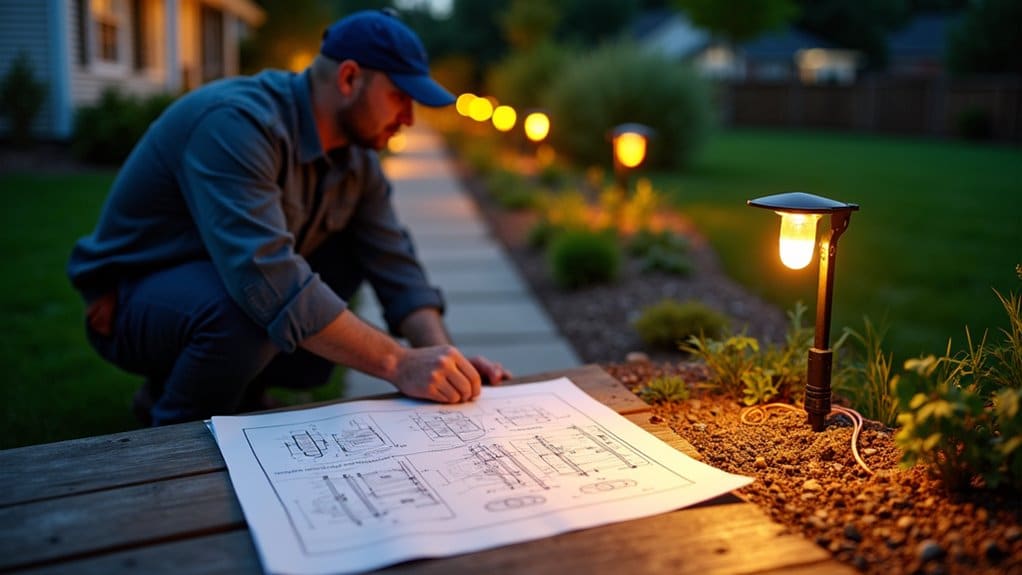
Proper light distribution depends heavily on your selected wiring configuration, which directly impacts voltage consistency and thorough system performance. While the daisy chain method offers straightforward installation, you’ll need to examine potential voltage drop issues that can affect fixture brightness uniformity.
The hub method delivers consistent power to each fixture through a central connection point, though it requires more extensive wiring. If you’re looking for a balanced approach, the T-method presents an effective compromise, reducing voltage drop while maintaining simplified installation. For complex layouts, ponder implementing a combination method that adapts to your specific needs.
When selecting your wiring method, assess your installation’s size, voltage requirements, and future expansion possibilities. Your choice will greatly influence both the initial setup and long-term system reliability.
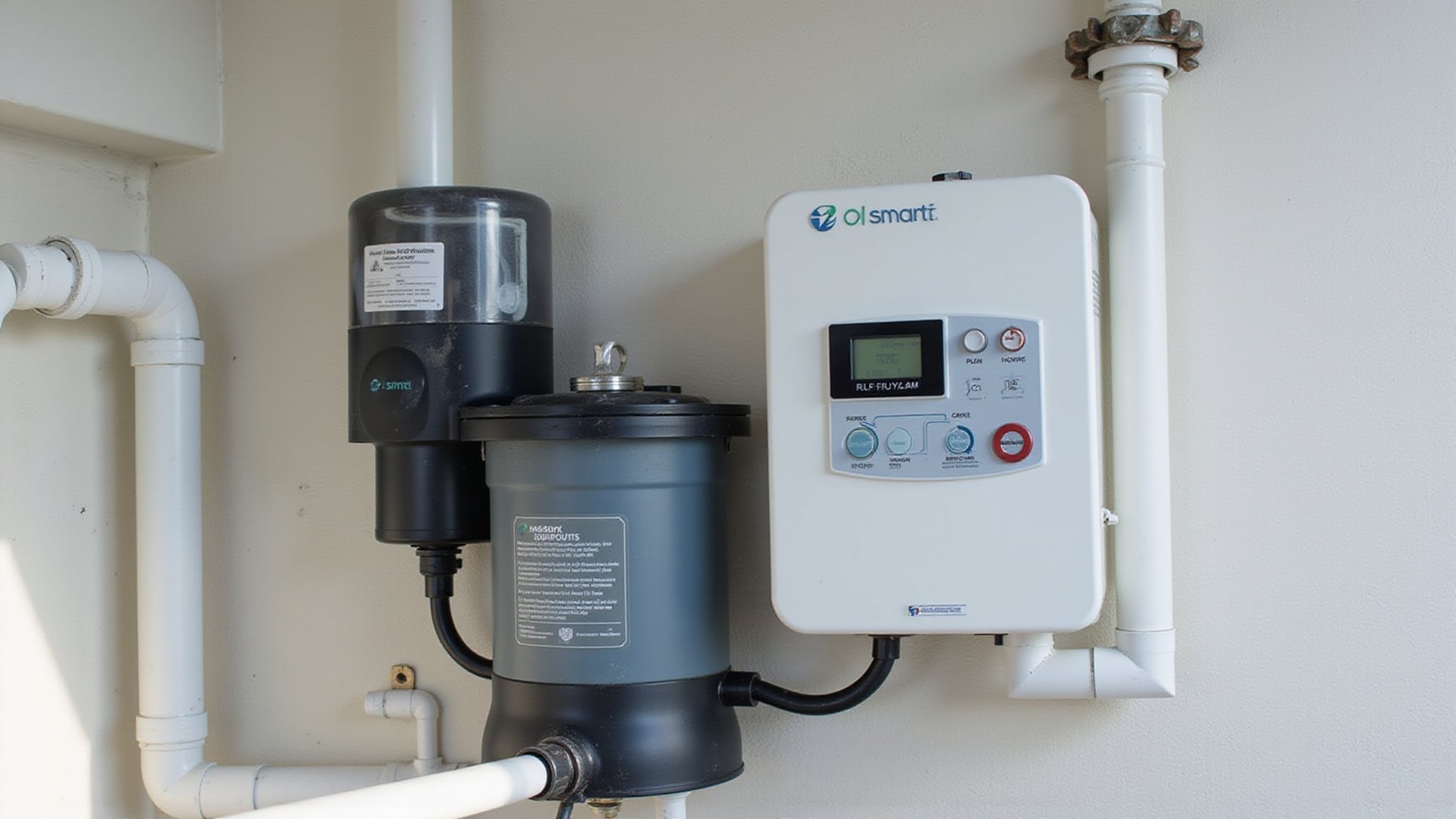
Transformer Location and Power Requirements
Selecting an ideal transformer location and power capacity forms the foundation of your outdoor lighting system’s performance. When planning your LED outdoor lighting setup, you’ll need to carefully consider both placement and power requirements to guarantee functional efficacy.
- Position your transformer in a concealed yet accessible spot near your lighting fixtures to minimize voltage drop across wire runs
- Calculate your system’s total wattage by adding up all fixture power requirements, then add 20% extra capacity for future expansion
- Check local building codes for specific transformer placement requirements, especially regarding water proximity and burial depth
- Choose a transformer location that allows for the shortest possible wire runs to maintain consistent brightness
- Install your transformer in a protected area that’s safe from environmental factors while remaining accessible for maintenance
Always verify your calculations and placement decisions align with manufacturer specifications and local regulations.
Creating Lighting Zones and Effects
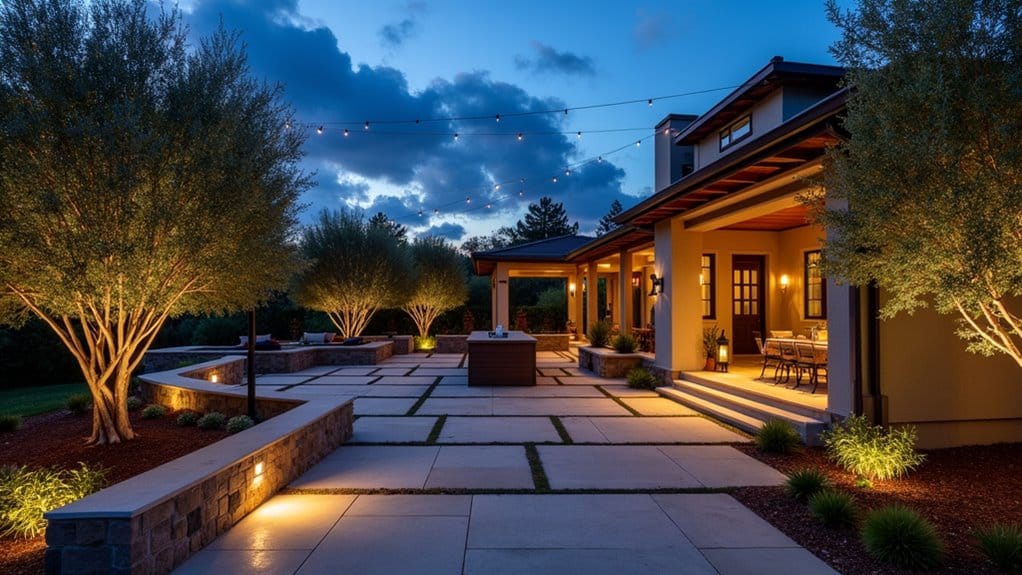
To create depth and visual interest in your outdoor lighting design, you’ll want to layer multiple light sources at different heights and intensities throughout distinct zones. You can augment functionality by defining specific illumination needs for different activities, such as brighter lighting for cooking areas and softer ambiance for seating spaces. Combine uplighting, downlighting, and silhouetting techniques with varied beam spreads to achieve a professional, multi-dimensional lighting scheme that serves both practical and aesthetic purposes.
Layer Multiple Light Sources
Successful outdoor lighting design hinges on strategically layering multiple light sources to create distinct zones and dramatic effects throughout your terrain. By combining efficient lighting techniques with assorted LED lighting fixtures, you’ll achieve depth and visual interest across your geography.
- Position Bullet Lights at different heights to create dimensional layers that prevent flat, monotonous illumination
- Combine uplighting behind trees with downlighting on pathways to achieve balanced, even illumination
- Install accent fixtures to create dramatic silhouettes against walls or fences
- Coordinate color temperature across different zones, using warmer tones (2700K-3000K) for intimate areas and cooler tones (4000K) for security lighting
- Mix multiple lights types strategically path lights for navigation, floodlights for broad coverage, and accent lights for focal points
Define Activity-Based Illumination
Building on the layered lighting approach, activity-based illumination focuses on creating purposeful lighting zones that align with how you’ll use different outdoor spaces. Each area plays an essential role in your landscape’s functionality, from pathways and entryways to seating zones and architectural features.
Pathway lights are often positioned 6-10 feet apart, making it easier to navigate through your outdoor space safely. For activity areas, combine downlighting and accent lighting to establish the right ambiance. These powerful tools help you create visual depth while highlighting key features. You’ll want to adjust color temperatures based on specific uses warmer tones work well for intimate seating areas, while cooler lights can dramatize architectural elements. Incorporate techniques like wall-washing and silhouetting to add dimension and visual interest to your landscape’s distinct zones.
Safety and Code Compliance
Safety stands paramount when installing outdoor lighting systems, requiring strict adherence to local building codes and electrical regulations. Before starting your DIY project, you’ll need to understand essential safety measures to prevent voltage-related hazards and guarantee proper cable runs.
- Consult a licensed electrician to verify your project meets all local building codes and safety standards
- Install UL-listed fixtures specifically rated for outdoor use and consider lower voltage options for improved safety
- Safeguard proper weatherproofing of all electrical components and connections
- Position fixtures away from water sources and use one grounding system throughout the installation
- Implement appropriate wiring methods that protect against environmental exposure and physical damage
Remember to document your installation plans and maintain detailed records of compliance measures. These steps will help create a safe, code-compliant outdoor lighting system that serves your needs while protecting your property and family.
Design Tools and Resources
When planning your outdoor lighting layout, you’ll find several sophisticated design tools and professional resources that can streamline the process. TCP’s Landscape Lighting Design Tool collects information about your space and helps you visualize where lights come into play. You’ll need to know that cookies are used to save your designs as you explore a wide range of lighting possibilities.
| Resource Type | Features | Benefits |
|---|---|---|
| Design Software | 3D Visualization | Real-time Shadow Mapping |
| Learning Centers | Technical Guides | Professional Insights |
| Demo Services | Kichler Test Kits | Preview Total Amount |
For extensive support, consider consulting landscape lighting professionals who can provide expertise for complex projects. The Landscape Lighting Book and FX Luminaires Learning Center offer additional technical guidance to help you achieve your desired outdoor ambiance through strategic fixture placement.
Frequently Asked Questions
How to Create an Exterior Lighting Plan?
Start by sketching your property’s layout, considering light fixtures and ideal placement points. You’ll need to evaluate electrical needs and power sources while maximizing light coverage for different zones. Incorporate safety features like motion sensors and timers, and guarantee you’re addressing maintenance concerns with weather-resistant components. Balance aesthetic appeal by layering different lighting types ambient, task, and accent while maintaining practical functionality. Don’t forget to check local codes and regulations.
How Do You Arrange Outdoor Lights?
You’ll want to begin with strategic placement of your outdoor lights, ensuring proper illumination while maintaining aesthetic harmony. Start by mapping safety considerations like pathways and entrances. Layer your lighting by combining downlights for general illumination, accent lights for focal points, and uplights for architectural features. For energy efficiency, space pathway lights 6-10 feet apart and use LED fixtures. Create depth by creatively layering different light intensities and angles throughout your terrain.
What Is the Rule of Thumb for Outdoor Lighting?
For outdoor lighting, you’ll want to space pathway lights 6-10 feet apart to reach ideal brightness levels and eye-catching illumination. You should position accent lights strategically, angling them 45 degrees in the direction of features you want to highlight. Don’t forget to integrate ambient light and implement glare reduction techniques for comfort. When planning your energy-efficient solutions, guarantee your transformer’s capacity exceeds total wattage by 20% for future flexibility and proper system function.
What Is the T Method for Landscape Lighting?
The T method for terrain lighting is your strategic approach to wiring outdoor fixtures. You’ll connect lights to a main power wire that runs to a central point, with secondary wires branching out like a “T” to each fixture. This creates balanced light distribution and effective illumination patterns across your setting. When you use complementary lighting fixtures with this layered lighting approach, you’ll achieve better voltage consistency and more flexibility for future expansions.