

To create your perfect backyard garden, start by measuring your property and mapping sun patterns throughout the day. Designate functional zones based on light exposure, and position raised beds with south-facing exposure for ideal growing conditions. Choose native plants that match your USDA zone and soil type, grouping them by water needs. Incorporate smart irrigation and soil sensors to maximize efficiency. A well-planned garden can boost your property’s value by up to 20%, and there’s much more to discover about transforming your outdoor space.
Planning Your Garden Layout: Essential First Steps
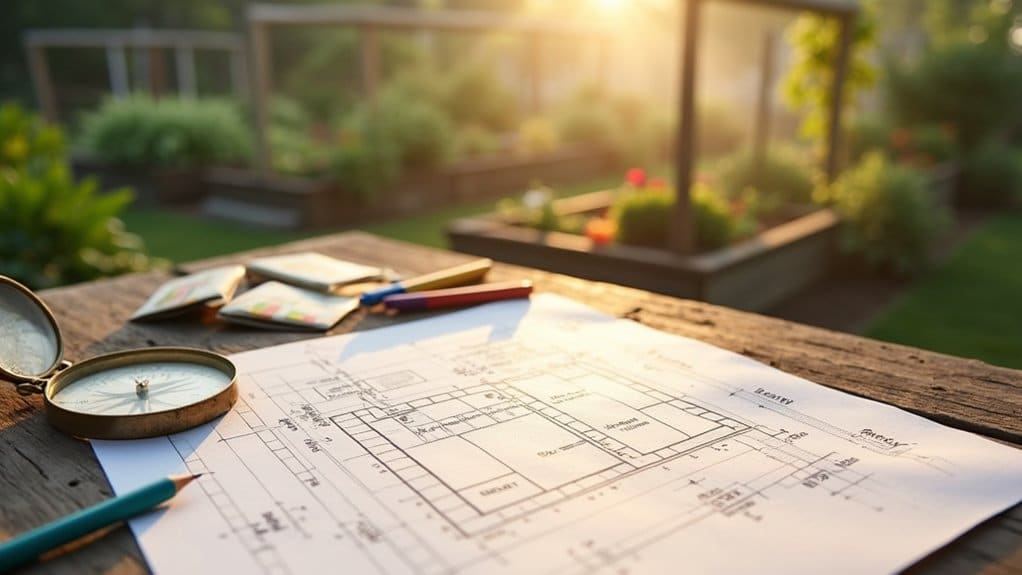
Before breaking ground on your backyard garden, a well-thought-out layout plan serves as your roadmap to success. Start by using a measuring tape to document your property’s dimensions, including existing structures, utilities, and access points. Create a scaled drawing that captures these elements accurately. Consider using Google Maps satellite view to help verify your measurements and property boundaries.
Consider your garden design‘s key functional areas: vegetable beds, pathways, and gathering spaces. Position beds in a sunny spot with proper drainage, ensuring they’re easily accessible for maintenance. Leave adequate space between growing areas for wheelbarrow access and comfortable movement. For optimal functionality, install raised garden beds that provide better drainage and earlier spring planting opportunities. When planning pathways, connect your water source to garden zones efficiently. A width of 3 to 4 feet for garden beds allows for easy reaching and maintenance from either side.
Factor in your soil preparation needs and plant selection by designating spaces for both annual and perennial crops. Group plants strategically, placing taller varieties on the north side to prevent shading shorter ones.
Understanding Sun Patterns and Garden Aspects
To create an efficient garden layout, you’ll need to carefully observe how sunlight moves across your property throughout the day, marking exposure patterns at key times like 9AM, noon, 3PM, and 6PM. Your sun mapping observations will help you identify full-sun zones (6+ hours), partial sun areas (3-6 hours), and shaded spots (less than 3 hours), which directly determines where specific plants can thrive. Once you’ve documented these patterns, you can strategically group plants with similar light requirements together, maximizing both growing success and maintenance efficiency. Using a compass or app will help you determine which direction your garden faces, ensuring accurate sun exposure assessment for optimal plant placement. Creating a sun map serves as a visual cheat sheet that you can reference throughout the growing season to make informed planting decisions. Modern tools like Shadowmap Home provide interactive year-round sunlight simulations to help visualize how light conditions change across seasons.
Tracking Daily Light Movement
Understanding how sunlight moves across your garden space throughout the day stands as one of the most essential steps in successful garden planning. To create an accurate sun mapping system, you’ll need to track sunlight exposure at key intervals: 9 AM, noon, 3 PM, and 6 PM.
Start by sketching your garden layout, including permanent features like buildings, trees, and fences. As you record data throughout the day, note how shade zones shift and create distinct microclimate zones. Graph paper sketches help visualize your garden’s unique sunlight patterns with precision. You’ll want to document these patterns over several sunny days for accuracy. Mid-summer mapping provides the most reliable data for understanding your garden’s light patterns. This detailed tracking helps inform smart plant placement decisions in your garden design.
Consider using digital apps or taking photos at set times to enhance your documentation. Sun Seeker and similar tools can provide precise tracking data for optimal results. Remember, sun patterns change seasonally, so you’ll benefit from monitoring during different times of the year.
Optimal Plant Zone Planning
While successful gardening depends on many factors, mastering your garden’s unique growing zones stands as the cornerstone of thriving plant cultivation. When planning your garden location, carefully assess sun patterns throughout the day to identify ideal plant zones. Position raised beds with south-facing exposure for maximum sunlight, and consider how tall structures affect shade patterns across your space. Begin with a manageable size to avoid becoming overwhelmed as a new gardener.
Create distinct zones based on light intensity and seasonal considerations. Place sun-loving crops in full-exposure areas, while utilizing partially shaded spots for heat-sensitive plants. Reference your local USDA hardiness zone to select plants that will thrive in your specific climate. Consider companion planting strategies by grouping plants with similar water needs near irrigation sources. When ordering soil, verify proper drainage holes in raised beds to prevent waterlogging. Drawing inspiration from experienced resources, utilize a garden planting map to effectively organize your space. Remember that zones aren’t static, they’ll shift with the seasons, requiring adaptable planning for year-round success.
Choosing the Right Plants for Your Space
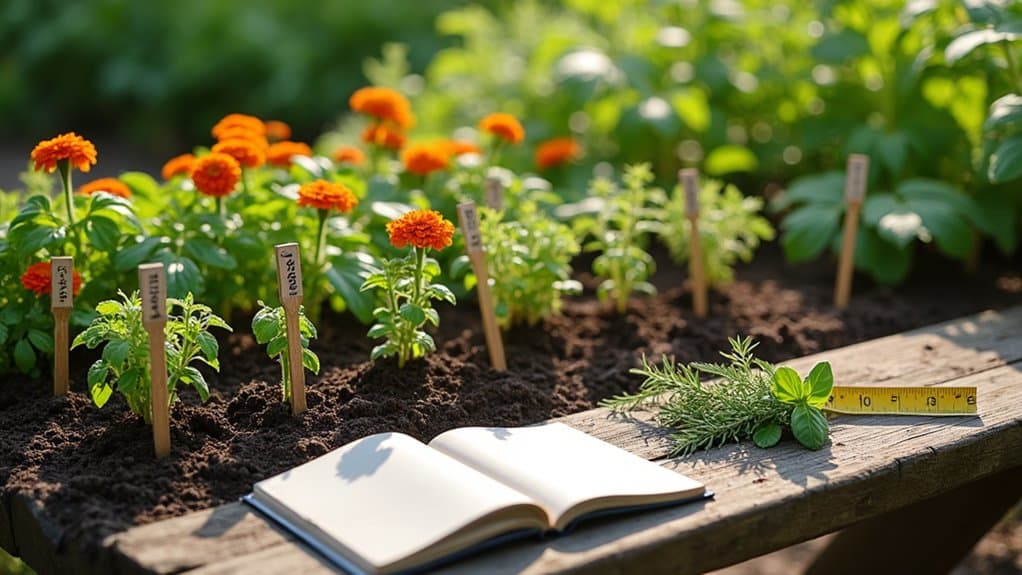
Selecting the right plants for your garden space requires careful consideration of multiple environmental factors that will directly impact your growing success. Begin by evaluating your local climate, USDA hardiness zone, and soil type. Test your soil’s pH to determine which plants will thrive, and map out the daily light patterns across your garden beds. Creating a successful garden means understanding your local seasonal rainfall patterns and planning accordingly. Assessing each area for sun exposure levels will help determine which plants can flourish in specific locations. When making selections, research invasive species carefully to avoid introducing problematic plants that could harm local ecosystems.
For a productive garden, combine native plants with your chosen vegetables and fruiting crops. Native species aren’t just low-maintenance; they’ll support local pollinators and enhance your garden’s resilience. Group plants with similar water requirements together to streamline maintenance, and consider each plant’s mature size to prevent overcrowding. If you’re dealing with specific challenges like deer or drought, prioritize resistant varieties that’ll flourish despite these conditions.
Smart Technology Integration for Modern Gardens
Modern gardening has evolved beyond traditional methods, incorporating smart technology to enhance efficiency and results. You’ll find smart irrigation systems that integrate with weather data to maximize water usage, while soil sensors provide real-time insights into moisture, pH, and nutrient levels. Robotic gardeners now handle routine tasks like weeding and pruning autonomously.
Environmental monitoring through IoT-connected devices lets you track garden conditions continuously, allowing for data-driven decisions. Automated watering through drip irrigation guarantees precise delivery, while AI-driven pest management systems detect issues early through camera monitoring and machine learning. Climate control features maintain ideal growing conditions, especially vital for sensitive plants.
You can manage all these features through centralized mobile apps, creating a seamless gardening experience. These integrated control systems not only simplify garden maintenance but also improve yields while conserving resources through automated, precision-based care.
Sustainable Design and Environmental Impact
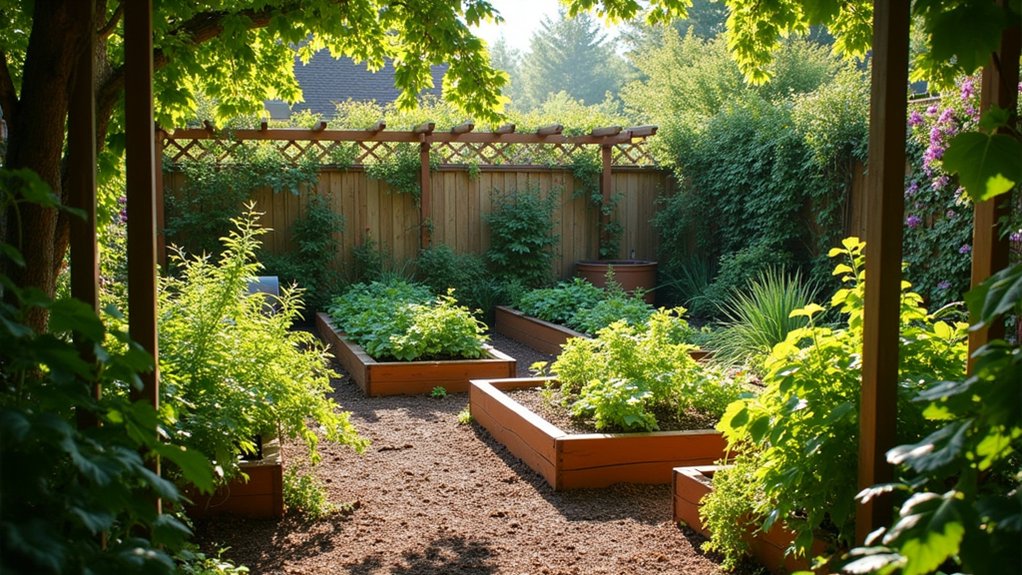
When you’re designing your backyard garden, start by incorporating native plants that require up to 80% less water than non-natives while providing natural habitats for local wildlife. You’ll maximize water efficiency by pairing these native selections with targeted solutions like drip irrigation systems and rain gardens that capture stormwater runoff. Your sustainable garden design will flourish with minimal intervention as native plants naturally adapt to local soil conditions and climate patterns, reducing the need for fertilizers and maintenance while supporting essential pollinators. Additionally, consider incorporating a variety of plant heights and textures to create a visually appealing landscape that attracts more wildlife. For those new to gardening, these beginner’s gardening tips can help you choose the right native species and design layouts that promote healthy growth.
Native Plant Benefits
Native plants serve as the cornerstone of sustainable garden design, offering far more than just aesthetic appeal. They’re powerful tools for ecosystem stability and biodiversity support, with the ability to attract 70% more birds, butterflies, and pollinators to your garden. By choosing native plants, you’ll improve soil health improvement while preventing erosion through their deep root systems.
| Benefit | Impact | Value |
|---|---|---|
| Climate | CO₂ absorption | 48 lbs/year per tree |
| Wildlife | Species support | 70% increased diversity |
| Soil | Erosion control | Deep root stabilization |
| Resources | Maintenance | Minimal water needs |
| Community | Health | Improved air quality |
Your garden’s climate resilience will increase while chemical use decreases, as native plants naturally resist local pests and diseases. They’ll create accessible greenspace that provides community benefits through enhanced nutrient cycling and natural ecosystem services.
Water Conservation Solutions
Effective water conservation in your garden starts with implementing a thorough strategy that combines smart irrigation, soil management, and thoughtful design. By installing efficient irrigation systems like drip irrigation, you’ll reduce water waste by 25-75% compared to traditional sprinklers. Landscape design techniques like xeriscaping can cut your outdoor water use in half, while proper soil management with organic mulch helps retain moisture and prevents erosion.
- Install a drip irrigation system with a timer to deliver water directly to plant roots, saving up to 7,600 gallons annually
- Harvest rainwater using covered containers, a 1,000 sq. ft. roof can collect 600 gallons from just one inch of rain
- Apply organic mulch to regulate soil temperature, suppress weeds, and reduce evaporation while improving soil structure for better water retention
Maximizing Property Value Through Landscaping
While many homeowners focus on interior improvements, a well-designed landscape can dramatically boost your property’s market value by 15-20%. To maximize this investment, you’ll want to allocate 5-10% of your home’s value to landscaping projects, prioritizing mature trees and strategic hardscaping elements like patios and walkways. Incorporating features such as lighting and water elements can further enhance the aesthetic appeal of your outdoor space. For homeowners in this region, seeking expert landscaping services in North Palm Beach can ensure that your project is executed with professionalism and craftsmanship.
Your outdoor features should blend functionality with curb appeal. Consider installing eco-friendly landscapes with sustainable practices like xeriscaping and native plants, which not only attract environmentally conscious buyers but also reduce ongoing maintenance costs. Smart additions of hardscaping elements, such as well-designed pathways and retaining walls, can provide immediate value increases. Remember, properties with mature trees are 20% more likely to sell, and upgrading your landscape from average to excellent can add 10-12% to your home’s overall market value.
Frequently Asked Questions
How Do I Deal With Pest Problems Without Using Harmful Chemicals?
You’ll find great success using natural pest control methods. Start by installing floating row covers to block common pests, and hand-pick visible insects into soapy water. Plant companion flowers like sweet alyssum to attract beneficial insects such as ladybugs. Apply neem oil or insecticidal soap in the evening for soft-bodied pests, and maintain healthy soil to boost plant immunity. Don’t forget to rotate crops and clean up plant debris regularly.
What’s the Best Way to Prepare Soil During Winter Months?
You’ll want to protect and enrich your soil during winter by planting cover crops like winter rye or clover to prevent erosion and fix nitrogen. Add thick layers of organic matter, compost, manure, or leaf mold, to boost fertility and soil structure. Conduct a soil test to guide specific amendments, then cover beds with mulch or shredded leaves for insulation. If you’re using raised beds, consider protective covers to preserve soil quality.
Can I Grow Vegetables in Containers if Space Is Limited?
Yes, you can definitely grow vegetables in containers with limited space! You’ll need containers that are at least 2 gallons for small plants and 5 gallons for larger ones. Focus on compact varieties like lettuce, herbs, and bush beans, or try vertical growing with vining crops. Use high-quality potting mix and guarantee good drainage. Don’t forget that containers need more frequent watering and fertilizing than in-ground beds.
How Often Should I Fertilize Different Types of Garden Plants?
Your fertilizing schedule depends on the plant type. For annuals and vegetables, apply a slow-release granular fertilizer at planting, then follow up with water-soluble fertilizer every 2-4 weeks during the growing season. You’ll want to feed perennials and shrubs just once in early spring, while houseplants need monthly liquid fertilizer during active growth (spring-fall). Always stop fertilizing in early fall to prevent tender growth before frost.
What Are Effective Methods for Preventing Plant Diseases in Humid Climates?
You’ll need to focus on air circulation and moisture control to prevent diseases in humid climates. Install fans for continuous airflow, space your plants properly, and water early in the morning so leaves dry before evening. Use drip irrigation to keep foliage dry, remove infected plant material immediately, and maintain strict sanitation practices. Adding mulch prevents soil splashing, while copper-based fungicides can help when preventive measures aren’t enough.