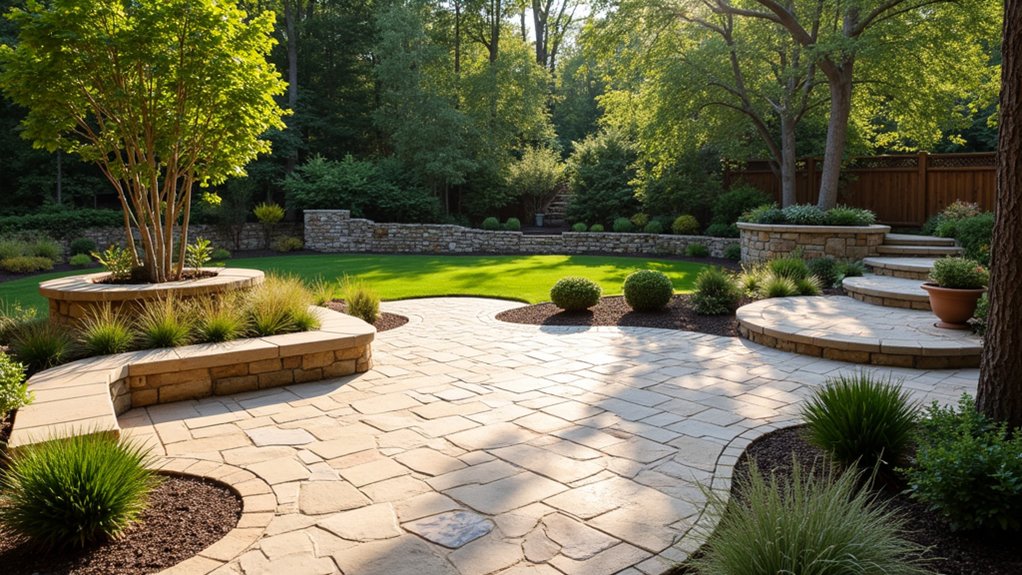
To design the best outdoor pizza oven, you’ll need to focus on heat retention through proper materials and construction. Start with high-temperature refractory materials, incorporate a dome shape for superior heat circulation, and guarantee walls are sufficiently thick. Select the right size based on your cooking needs: 16-inch for 2-3 pizzas, 24-inch for 4-5, or 32-inch for 6+. Don’t forget proper ventilation with a front-positioned chimney and adequate insulation. There’s much more to ponder for achieving the perfect Neapolitan-style results.
Essential Design Elements for Heat Retention
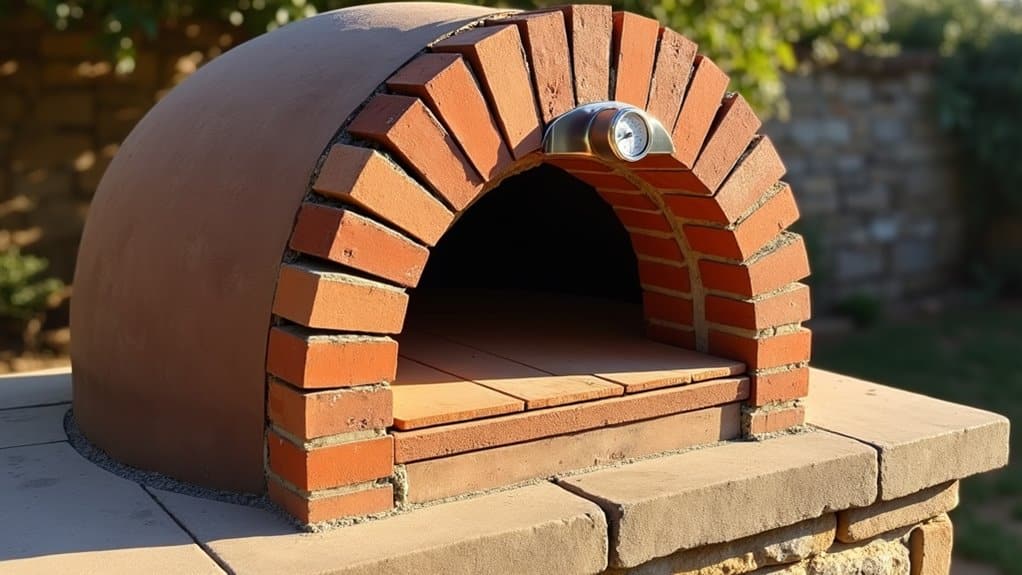
How effectively your outdoor pizza oven retains heat will determine the quality and consistency of your pizzas. To achieve great heat retention, you’ll need to incorporate specific design elements focused on insulation and thermal mass. Start by selecting high-temperature refractory materials for the oven’s core structure, and make sure your brick or refractory cement walls are sufficiently thick.
A dome-shaped design isn’t just aesthetically pleasing it’s indispensable for ideal wood fired cooking performance. The curved architecture promotes superior heat circulation and maintains uniform temperatures throughout the cooking chamber. When planning your oven’s construction, consider how your chosen fuel source, whether it’s wood fired or gas, will impact the design requirements. Installing proper insulation layers and selecting materials with high thermal mass will help your oven retain heat longer and perform better during extended cooking sessions.
Choosing the Right Materials and Construction
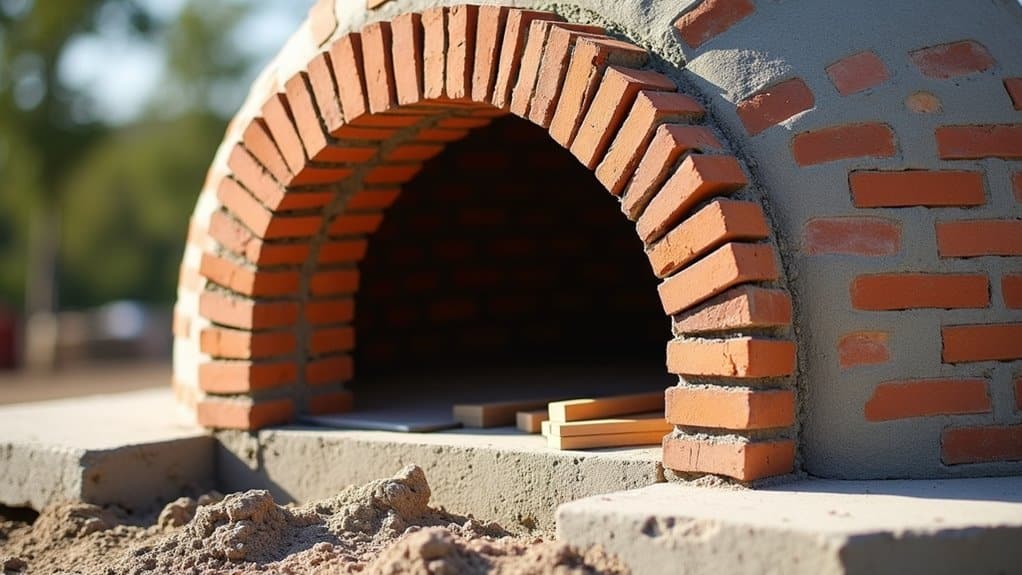
When building an outdoor pizza oven, selecting the right materials and implementing proper construction techniques will determine your project’s success. Your outdoor kitchen centerpiece requires careful consideration of heat-resistant materials and proper insulation.
| Material Type | Best Application |
|---|---|
| Brick | Traditional wood fired pizza ovens |
| Refractory Concrete | High-temperature resistance |
| Natural Stone | Decorative outer layers |
| Insulation Board | Critical heat retention |
For brick ovens, you’ll need to focus on thermal mass and proper joint sealing. Reinforced concrete provides excellent structural support, while specialized insulation maintains consistent cooking temperatures. When constructing brick pizza walls, guarantee uniform thickness and proper curing time. Your outdoor cooking experience will benefit from high-quality materials that can withstand repeated heating cycles and maintain ideal cooking conditions for years to come.
Proper Ventilation and Chimney Placement
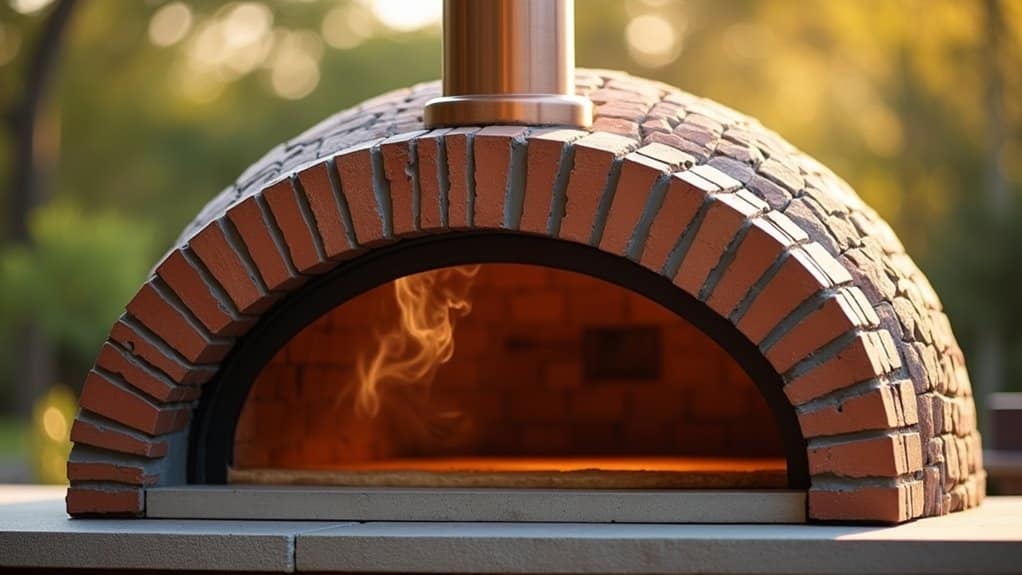
Building upon your carefully selected materials, the next major consideration for your outdoor pizza oven is proper airflow management through strategic ventilation and chimney placement. Your wood-fired ovens require precise airflow control to maintain optimal cooking temperatures and prevent smoke buildup in your outdoor space.
For successful FIRED PIZZA OVEN DESIGN, follow these critical ventilation principles:
- Position your chimney at the oven’s front dome to create a strong natural draft, pulling fresh air across your cooking surface
- Guarantee your Brick Oven’s flue diameter matches the oven’s size typically 1/10th of the cooking floor area
- Install the chimney at a minimum height of 36 inches above the dome to promote efficient smoke evacuation and maintain consistent heat distribution
These specifications will help your pizza ovens achieve the high temperatures needed for authentic Neapolitan-style cooking.
Sizing Your Pizza Oven for Optimal Performance
Selecting the right size for your outdoor pizza oven stands as a critical factor in achieving ideal cooking performance and fuel efficiency. When choosing between different Wood Fired Oven options and Oven Kits, you’ll need to match the dimensions to your cooking needs and outdoor spaces.
| Oven Size | Capacity | Heat Output |
|---|---|---|
| 16-inch | 2-3 pizzas | Medium |
| 24-inch | 4-5 pizzas | High |
| 32-inch | 6+ pizzas | Very High |
You’ll want to examine how many pizzas you’ll typically cook at once. While larger ovens offer greater capacity and higher temperatures, they’ll consume more fuel during preheating and operation. A 16-inch oven suits most home cooks, while commercial-sized 32-inch ovens work best for entertaining large groups or professional settings. The key is balancing your cooking requirements with available space and energy efficiency.
Creating an Efficient Cooking Chamber
The design of your pizza oven’s cooking chamber directly influences its performance and heat efficiency. For your perfect pizza oven, whether you’re building a contemporary outdoor or compact outdoor model, you’ll need to focus on essential structural elements that create ideal cooking conditions.
When crafting your Sleek and Modern cooking chamber, consider these great things:
- Shape selection – Choose a dome design for superior heat circulation, or opt for a square chamber that enhances your step by step building process
- Insulation implementation – Install firebrick or refractory cement to maintain consistent high temperatures
- Chimney configuration – Position your vent to create optimal airflow patterns while maintaining proper width-to-height ratios
Your chamber’s internal dimensions must accommodate both heat transfer requirements and functional cooking space, ensuring every pizza achieves perfect results.
Building a Functional Landing and Prep Area
While your outdoor pizza oven’s chamber handles the cooking magic, a well-designed landing and prep area serves as your essential workspace command center. For anyone interested in using the oven efficiently, whether it’s Gas Fired or wood-burning, you’ll need a sturdy landing constructed from materials like brick, stone, or concrete.
Your hard work in planning the landing’s dimensions and placement will pay off during busy cooking sessions. Guarantee you’ve got sufficient space for dough preparation, ingredient staging, and pizza peel maneuvering. When integrating this workspace into outdoor kitchens, consider adding built-in storage compartments and task lighting to streamline your workflow. A well-executed landing area transforms your pizza-making station into a professional-grade setup, making every step from prep to launch smoother and more efficient.
Weather Protection and Durability Features
Building a lasting outdoor pizza oven requires careful consideration of weather protection and durability features from the ground up. You’ll need to incorporate weather-resistant materials and strategic design elements to guarantee your oven performs ideally in any condition.
Key weatherproofing features to include:
- Install proper ventilation and flue systems that prevent smoke accumulation while protecting against rain infiltration
- Use weatherproof materials like stainless steel or refractory concrete for the main construction, combined with high-quality insulation to maintain consistent cooking temperatures
- Mount your oven on a stable base that can handle uneven terrain and varying weather conditions
Don’t forget to add protective covers to shield your oven from wind and rain when not in use. These essential elements will drastically extend your oven’s lifespan and maintain its performance through changing seasons.
Aesthetic Customization Options
Creating your dream outdoor pizza oven extends beyond functional design into endless aesthetic possibilities that can transform your cooking space into a stunning focal point. You’ll get much better visual impact throughout the entire structure by mixing materials strategically. For the best pizza oven aesthetics, consider hexagonal tiles or round mosaic patterns for a modern touch, or opt for traditional design elements using bricks and Mediterranean-inspired yellow stucco. Make this fun project distinctively yours by incorporating distinctive features like tree trunk vents or decorative tile work. For upscale appeal, marble and white stucco create sophisticated elegance, while natural stone and pebble finishes deliver authentic rustic charm. Each material choice affects not just appearance but also connects to the comprehensive outdoor cooking experience.
Frequently Asked Questions
What Should I Look for in an Outdoor Pizza Oven?
When selecting an outdoor pizza oven, you’ll want to focus on fuel efficiency and a cooking temperature range of 700-900°F for authentic results. Check the insulation quality to maintain consistent heat, and guarantee ease of use with features like temperature controls and accessible doors. Consider portability features if you plan to move the oven, and look for accessories availability including pizza peels, covers, and cleaning tools.
What Is the Best Shape for a Pizza Oven?
The round dome shape is your best choice for a pizza oven due to its superior heat retention capabilities and natural heat circulation. You’ll find that dome-shaped ovens, when built with proper insulation materials, maintain consistent cooking temperatures ranging from 700-1000°F. They’re also more forgiving with ventilation requirements and work well with diverse fuel source options, including wood and gas. The dome’s curved interior naturally directs heat downward, ensuring even cooking across your pizza.
Is It Cheaper to Build or Buy a Pizza Oven?
When comparing costs, building your own pizza oven is typically cheaper, with materials running $300-$500, versus $1,000-$5,000 for pre-made options. However, you’ll need to ponder the installation process, which requires significant time and skill. Your material selection impacts both initial costs and maintenance requirements. While DIY ovens offer better energy efficiency through customization, pre-made ovens generally maintain higher resale value and provide immediate functionality without construction expertise.
What Is the Best Surface for an Outdoor Pizza Oven?
For your outdoor pizza oven’s cooking surface, you’ll want to prioritize fire rated bricks or heat resistant tiles as your primary options. These materials can withstand extreme temperatures while providing ideal heat distribution. While natural stone looks attractive, it’s best reserved for the exterior. You’ll need a concrete slab foundation and stainless steel base for structural support, all protected by a weatherproof enclosure. The cooking surface should be at least 1.5 inches thick for perfect heat retention.