

Create modern DIY outdoor planters by focusing on clean geometric forms and industrial-sophisticated materials like cedar and metal. You’ll want to combine rough-sawn lumber with pocket hole joinery for a sleek aesthetic while ensuring weather resistance through protective finishes. Apply the thriller-filler-spiller method when arranging plants, and position your containers at varying heights for dynamic visual impact. These fundamental principles serve as your foundation for mastering contemporary planter design.
Essential Design Principles for Modern Planters
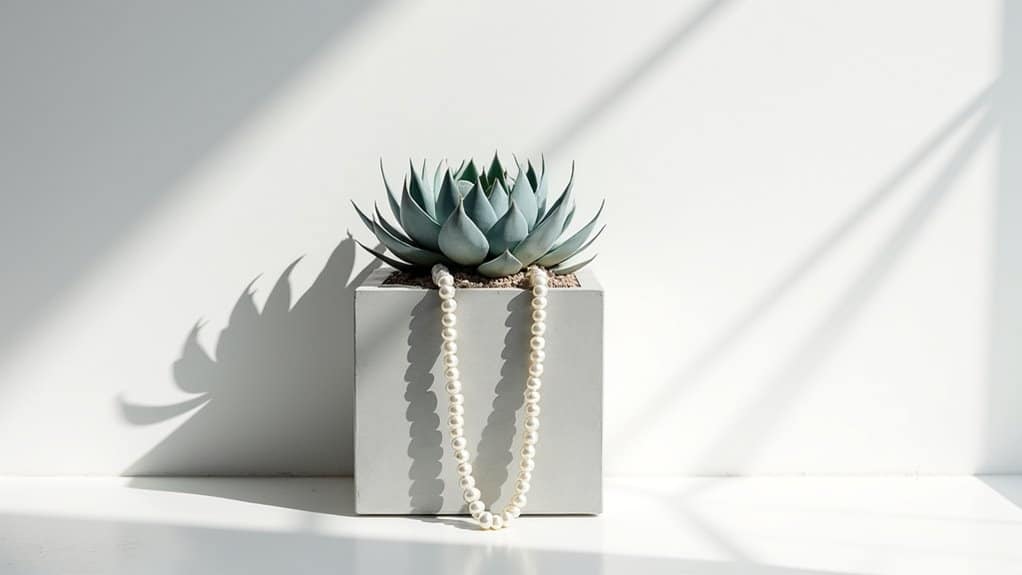
When designing modern outdoor planters, mastering fundamental aesthetic principles becomes essential for achieving that coveted contemporary look. You’ll want to adopt clean, geometric forms while avoiding ornate details that can detract from the modern aesthetic. Focus on incorporating long slats of natural wood or sleek metal components arranged in precise patterns.
Select materials that embody industrial sophistication concrete for its raw appeal, powder-coated steel for durability, or minimalist wood tones for organic warmth. Your color choices should remain neutral and refined, emphasizing blacks, whites, and natural finishes. Consider how your planter’s form follows function, ensuring adequate drainage and root space while maintaining visual balance. For maximum versatility, investigate modular designs that you can reconfigure as your outdoor space evolves, creating a dynamic yet cohesive modern look.
Material Selection and Weather Considerations
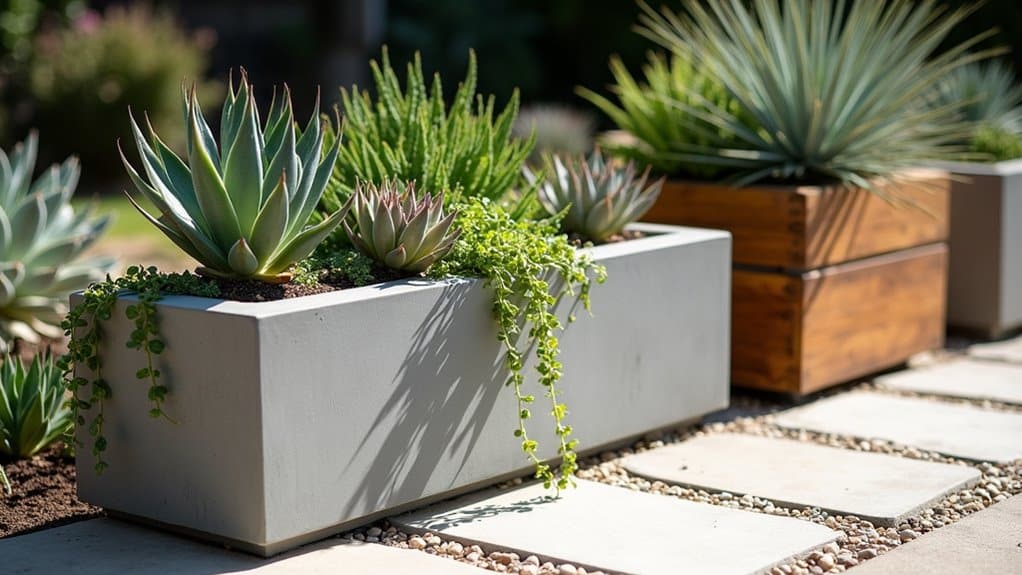
Since outdoor planters face constant exposure to the elements, selecting weather-resistant materials becomes crucial for long-term durability. You’ll find cedar, redwood, and pressure-treated lumber offer excellent resistance to decay and insects, making them ideal choices for your planter construction.
For a sophisticated modern design, combine rough-sawn cedar 2x4s to create a strong frame with horizontally-mounted cedar fence pickets as decorative slats. Add visual refinement by routing 1/8-inch chamfers along the slats’ edges. You’ll achieve clean lines and professional results using pocket hole joinery to hide fasteners throughout the assembly.
Protect your outdoor planter from moisture damage by applying exterior paint to the frame and spar varnish to the slats. This combination guarantees lasting durability while maintaining the wood’s natural beauty.
Plant Combinations for Visual Impact
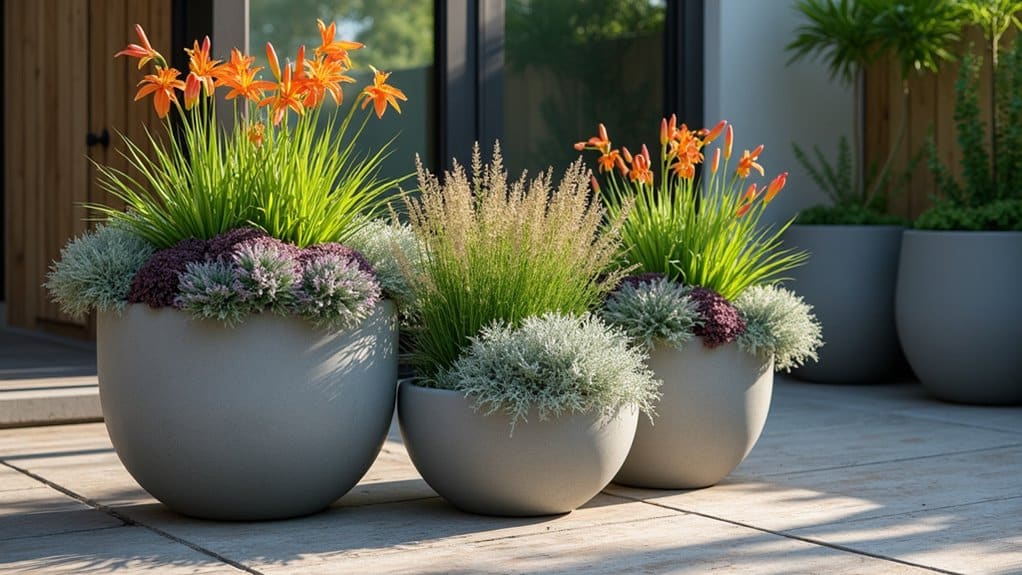
To optimize your planter’s visual impact, incorporate plants with contrasting heights, textures, and colors using the proven thriller-filler-spiller method. Anchor your design with a structural evergreen like dwarf arborvitae, then apply two coats of visual interest by combining drought-tolerant companions such as agapanthus and senecio.
Creating dynamic color schemes is super easy when you work with triadic combinations. Pair yellow melampodiums with Truffula Pink gomphrenas and ‘Blue Daze’ evolvulus for maximum impact. For architectural drama, position string of pearls to cascade over edges while raised caladiums create sweeping, gown-like effects above. Consider analogous color groupings of pink, orange, and yellow-green blooms for cohesive vibrancy, or opt for classic red-green combinations that provide lasting summer appeal.
Creative Placement Strategies
By strategically positioning your outdoor planters, you’ll transform ordinary spaces into alluring focal points. When putting together your outdoor space, consider elevating containers on wooden stands or stacked bricks to create dynamic height variations. This technique adds visual interest while defining entryway zones and spatial boundaries.
Incorporate sculptural elements by positioning varnished log sections with midcentury legs as standalone features. Place steampunk-inspired planters adorned with carriage bolt nail-head trim along pathways or against walls for industrial contrast. For naturalistic arrangements, arrange tiered hypertufa containers in asymmetrical groupings, allowing their rough-hewn textures to complement surrounding scenery. Layer your placement strategy by combining different planter heights, materials, and styles to create depth and visual rhythm throughout your outdoor environment.
Seasonal Maintenance and Styling Tips
While seasonal changes present unique challenges for outdoor planters, proper maintenance guarantees your container gardens thrive year-round. We’ve got essential tips to help you maintain your planter box displays through every season, combining both practical care and aesthetic appeal.
Successful container gardens require year-round attention, but with proper seasonal care, your outdoor planters will flourish in every weather condition.
- Monitor soil conditions closely – water thoroughly when the top inch feels dry, and apply monthly balanced liquid fertilizer to compensate for nutrient depletion from frequent watering.
- Practice strategic pruning by removing spent blooms regularly, which encourages continuous flowering and maintains the design’s visual impact throughout the growing season.
- Adapt to temperature fluctuations by switching spring annuals to heat-tolerant summer varieties like zinnias and coleus when temperatures rise, and protect tender plants from frost by relocating containers indoors or using protective coverings during cold snaps.
Frequently Asked Questions
How Do I Arrange My Backyard Planters?
When arranging your backyard planters, consider plant placement using the filler-spiller-thriller method. Start with tall, structural plants as your thrillers, add mounding fillers for density, and finish with trailing spillers to create dynamic flow. Evaluate visual balance by grouping containers in odd numbers and varying heights. You’ll want to layer textures and colors strategically, positioning containers to draw the eye through your space naturally.
How to Make Cheap Planters Look Expensive?
You’ll instantly boost your basic planters by applying metallic spray paint or a faux concrete finish to mimic high-end materials. Incorporate unique textures by adding decorative elements like river rocks, moss, or bamboo trim. Don’t overlook hardware swap plastic for brushed metal feet or copper corner details. Layer different materials, such as wrapping rope around plastic containers or applying wood veneer strips, to transform budget-friendly planters into sophisticated statement pieces.
What Is the Best Color for Outdoor Planters?
There’s no single “best” color for outdoor planters, as your ideal choice depends on your home’s exterior and setting. You’ll want to ponder neutral earth tones like terracotta and beige for a timeless look that integrates naturally with your garden. If you’re aiming for impact, try vibrant color combinations like turquoise or sunshine yellow. For contemporary sophistication, opt for metallic finishes or moody dark tones that’ll create striking contrast with your plants.
What Do You Put in the Bottom of an Outdoor Planter?
You’ll want to create layers in your planter’s base for ideal drainage material and soil quality. Start by covering drainage holes with mesh or broken terra cotta pieces. Add a 1-2 inch layer of gravel or small rocks, then place ground cover fabric above it. You can reduce soil volume by adding empty plastic bottles as filler. Top these layers with organic matter like bark or leaves to improve drainage and provide nutrients for your plants.