

Three gas fire pit styles can redefine your outdoor space. Stone designs deliver timeless warmth with rich, natural textures that pair beautifully with smokeless ring systems. Concrete fire pits blend flush into your patio, matching its geometry for a seamless, curated look. Metal options, from stainless steel to Corten’s living rust patina, create sleek, modern silhouettes that double as statement furniture. Each material brings a distinct design language worth exploring below.
Stone Gas Fire Pit Designs for a Classic, Warm Look
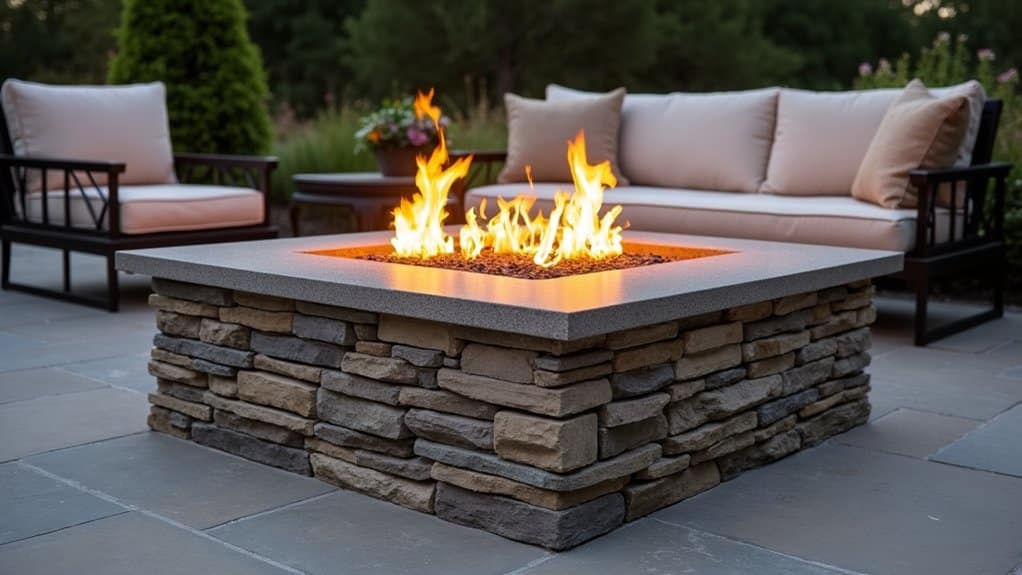
Stone gas fire pits consistently deliver a timeless warmth that anchors any outdoor space with natural elegance. You’ll find that limestone and sandstone offer strength, longevity, and earthy tones that elevate your patio’s aesthetic. When considering material choices, natural stone exteriors showcase rich textures while porous sandstone tops double as stable surfaces for drinks.
Your design options extend beyond traditional circles. Square or rectangular shapes introduce a modern edge, while sunken pits surrounded by creeping thyme create an intimate campfire atmosphere. Pair your stone pit with smokeless features like inner ring systems that boost oxygen flow, reducing emissions so you’re never chasing smoke. Add decorative fireproof rocks to accentuate clean-burning flames and maintain a cohesive, stylish appearance throughout your gathering space. Since gas fire pits produce less smoke than wood-burning options, they make socializing around the flames far more enjoyable without constant interruptions.
Concrete Gas Fire Pits That Disappear Into Your Patio
When you pour concrete directly into your patio’s footprint, the fire pit becomes part of the surface itself, not an addition sitting on top of it. Organic color variations from the pour create seamless patio shifts that make the fire feature feel architecturally intentional. Since the fire pit sits on a concrete slab, a vapor barrier isn’t needed to protect the gas burner kit from ground moisture.
Pour concrete directly into your patio’s footprint and the fire pit becomes the surface, not something bolted onto it.
- Flush-mounted burner systems sit level with surrounding surfaces, eliminating visual disruption
- Custom fire pit shapes match your patio’s geometry, rectangular for modern layouts, curved for organic designs
- Orbital sanding with 120-grit paper refines the surface, filling voids for a polished finish that mirrors your existing hardscape
- Silicon caulk beveling softens edges, creating subtle linkages between fire pit and patio
Accelerated concrete mixes cut curing to three hours, making this a realistic weekend project.
Metal Gas Fire Pit Styles for Sleek, Modern Spaces
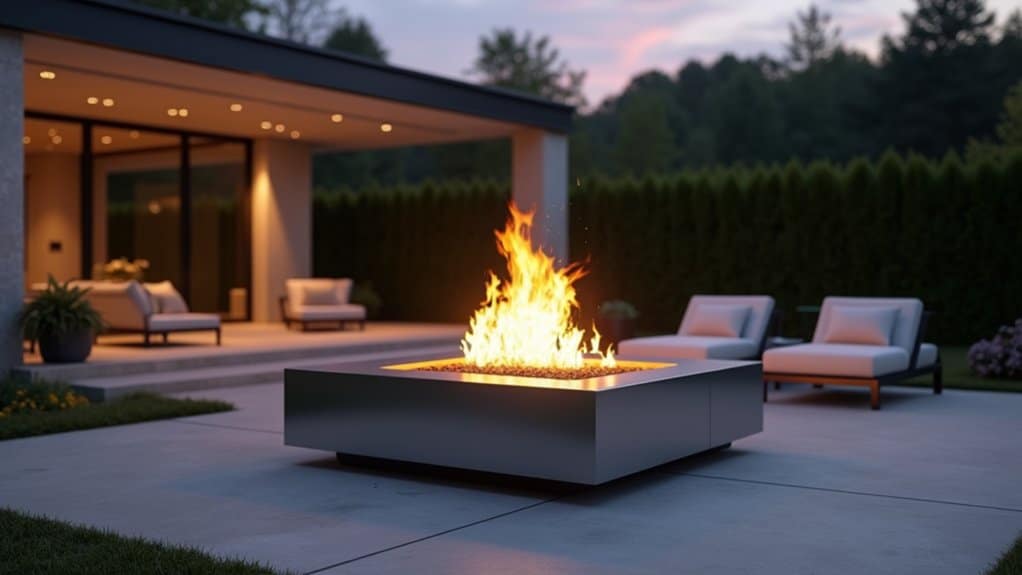
Metal fire pits strip outdoor design down to its essentials, clean geometry, honest materials, and flame as a focal point. Stainless steel delivers weather-resistant durability, while Corten steel develops a living rust patina that brings industrial chic appeal to contemporary exteriors. This blend of modern and classical elegance gives metal fire pits a distinctive edge over other outdoor heating options.
You’ll find powder coated finishes across iron and aluminum models, boosting rust resistance without sacrificing visual edge. Rectangular bases create streamlined silhouettes that echo modern architecture, and copper accents bridge the gap between classical warmth and minimalist restraint.
For dramatic impact, consider linear designs like the Robata or Komodo, long, low-profile forms that double as coffee tables or space dividers. Top them with basalt, lava rock, or glass to complete the look. These pieces don’t decorate your space; they define it.
Frequently Asked Questions
What Gravel Types Work Best Surrounding a Gas Fire Pit?
You’ll want to layer decomposed granite as your compactable base, it creates a firm, patio-like surface that resists heat beautifully. Top it with pea gravel for barefoot comfort, then define your borders with smooth river stones that add sculptural texture. This layered approach maximizes drainage while creating visual depth in tight spaces. Extend your gravel at least six feet from the fire pit to balance safety with a polished, intentional design.
How Do Mosaic Gas Fire Pits Handle Exposure to Rain?
Mosaic gas fire pits feature weather-resistant construction with powder-coated steel and ceramic tabletops that handle occasional rain well. You’ll want to prioritize water damage protection by using a custom-fit cover immediately after use, preventing moisture from reaching burners and internal components. For regions with harsh winters, freeze thaw durability matters, ensure proper drainage underneath to avoid pooling. Positioning your pit in a sheltered area preserves its brushed bronze aesthetic while extending its lifespan.
Can Gas Fire Pits Be Placed Under Pergolas Safely?
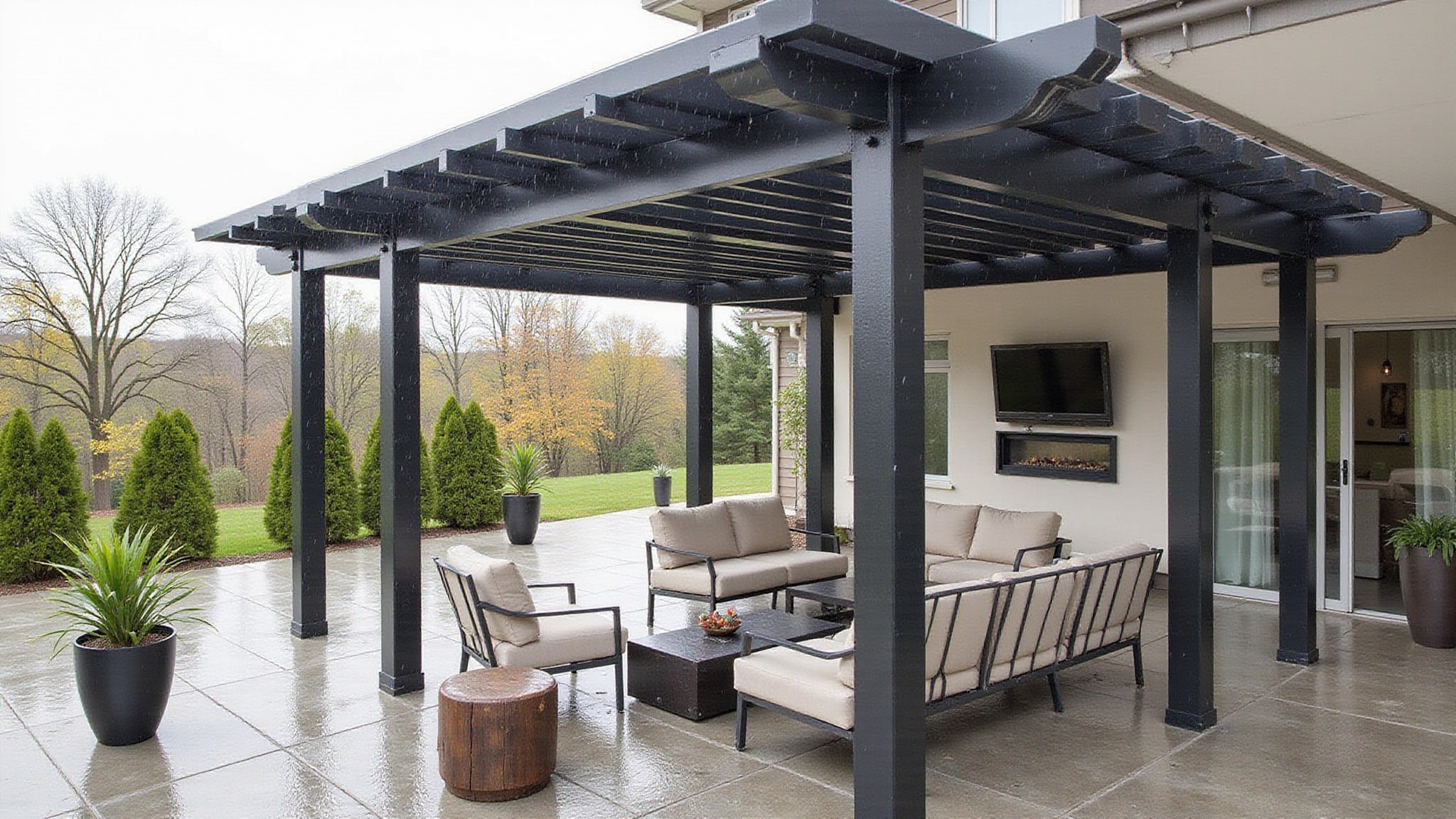
Yes, you can safely place a gas fire pit under your pergola if you meet proper ventilation requirements, keep at least three sides open for cross-airflow and maintain 10, 15 feet of vertical clearance. To minimize potential fire hazards, choose a sleek, low-profile gas unit with controlled flame height, and center it away from posts and overhead beams. This setup creates an intimate, design-forward gathering space without sacrificing safety.
What BTU Output Suits Open Plan Outdoor Fire Pit Layouts?
For open plan layouts, you’ll want to boost your BTU output by at least 30% since heat escapes in every direction. The proper BTU range for open plan layouts typically falls between 60,000, 90,000 BTUs, depending on your space’s square footage and wind exposure. The ideal BTU output for open concept designs pairs a medium-to-large fire table with reflective hardscaping surfaces, maximizing radiant warmth while maintaining your patio’s sleek, uncluttered aesthetic.
How Do Paver Surrounds Affect Gas Fire Pit Installation Costs?
Your paver material selection directly shapes your budget, with concrete pavers pushing premium designs toward $10,000, while brick surrounds range from $300 to $2,200. Paver installation complexity adds excavation ($200, $500), gravel base prep ($100, $300), and labor ($300, $1,500), substantially increasing your total investment. You’ll want to balance aesthetic ambitions with spatial proportions, choosing prefab paver kits can streamline costs while still creating a visually cohesive, architecturally refined fire pit setting.