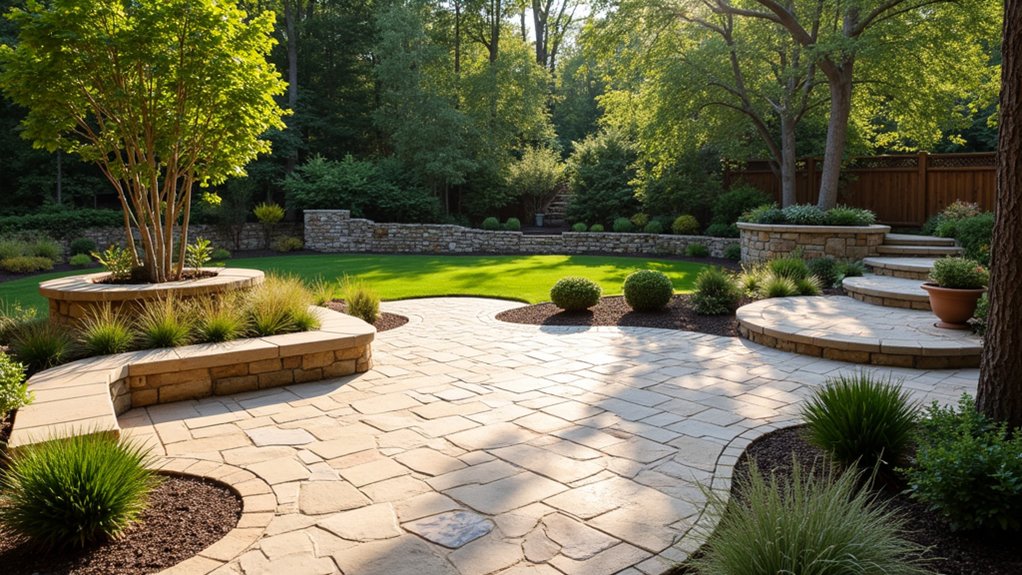
You’ll find 2025’s outdoor design trends focusing on seamless indoor-outdoor integration through retractable glass walls and smart automation systems. Native plant gardens, wellness-focused spaces with cold plunge pools, and sustainable entertainment areas define modern yard transformations. Eco-conscious materials merge with technology-driven solutions, while multifunctional spaces adapt to your changing needs. Smart home integration and sustainable practices lead the way in the direction of reimagining outdoor living for tomorrow’s lifestyle evolution.
Blending Indoor and Outdoor Living Spaces
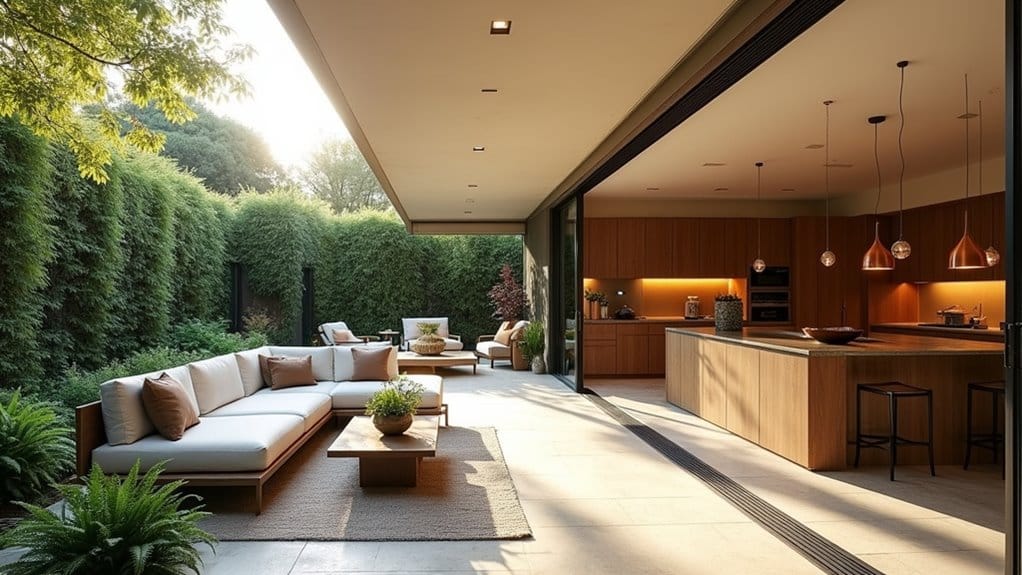
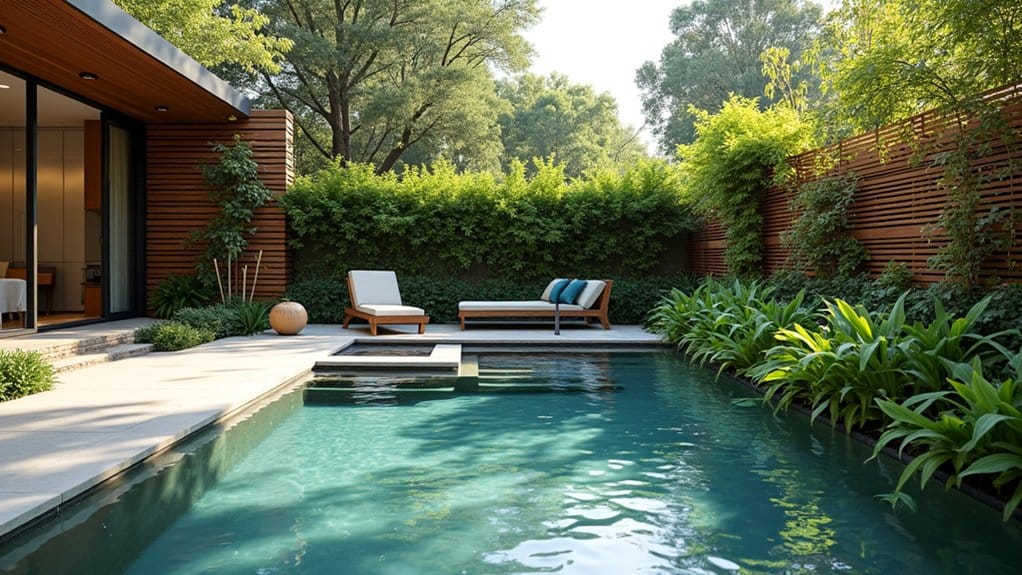
As modern design evolves, the traditional boundaries between indoor and outdoor spaces continue to dissolve, creating fluid living environments that optimize your home’s potential. You’ll find novel design ideas incorporating solariums and retractable glass walls that seamlessly connect your interior with nature.
Transform your outdoor area into multifunctional spaces by selecting sophisticated furniture pieces that mirror your indoor aesthetic. Create cohesive shifts by extending your interior design elements to your outdoor living areas through consistent materials, textures, and color palettes. Consider installing a greenhouse or covered patio that serves as a connective zone between environments.
This integrated approach to indoor and outdoor living doesn’t just expand your usable space it creates a harmonious flow throughout your property, allowing you to amplify both comfort and functionality in every season.
Smart Technology Integration for Modern Yards
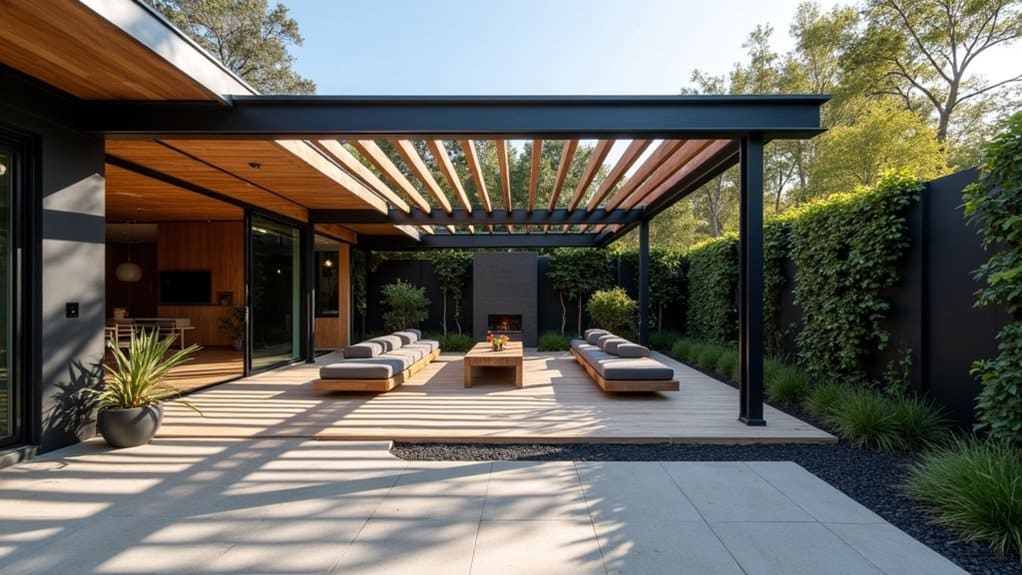
Modern outdoor spaces now extend beyond aesthetic design into the domain of intelligent automation. Your outdoor design ideas can now seamlessly integrate smart technology to create sophisticated, efficient living spaces that respond to your needs. From voice-controlled lighting systems to automated irrigation, these innovations are revolutionizing how you interact with your outdoor environment.
Smart technology transforms outdoor spaces from simple gardens into responsive environments that enhance both functionality and lifestyle.
- Install weather-responsive automation systems that adjust outdoor features like retractable awnings and sprinklers based on real-time conditions
- Transform your outdoor living spaces with smart security solutions, including AI-powered cameras and automated access control
- Implement robotic lawn maintenance systems that keep your yard pristine while reducing water consumption and physical labor
- Connect your entire outdoor ecosystem through a centralized smart home hub, allowing you to control lighting, entertainment, and climate features from a single interface
Sustainable Gardens With Native Plant Species
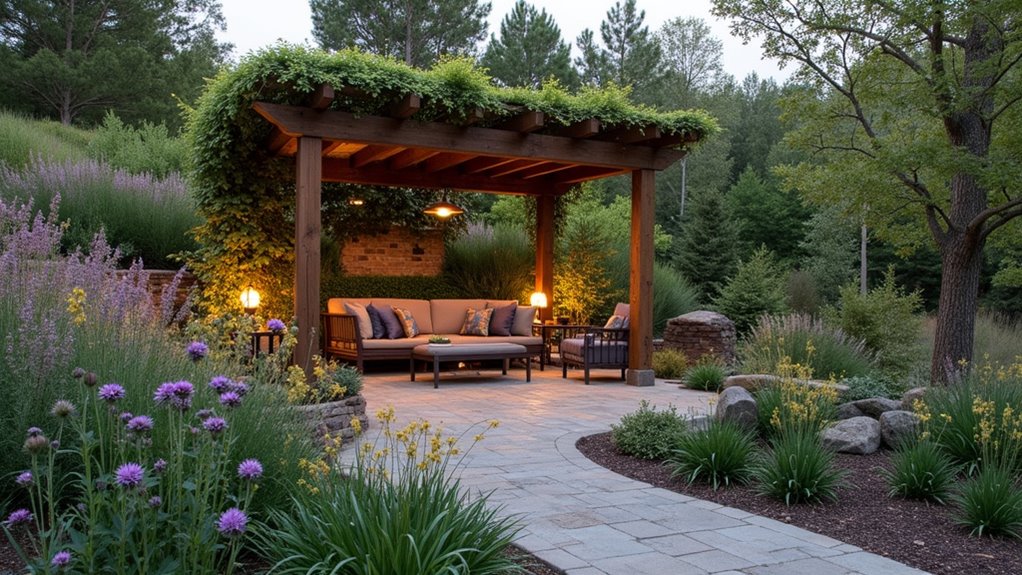
Creating a sustainable garden starts with selecting native plant species that naturally thrive in your local ecosystem. You’ll find that native plants require less water, fertilizer, and maintenance while providing essential habitat for local wildlife and pollinators. Consider incorporating nativars cultivated varieties of native plants that offer enhanced adaptability for your home garden without sacrificing ecological benefits.
Design your garden with drought-tolerant plants beyond traditional succulents to create a lush, water-conscious terrain. You can layer different native species to establish diverse pollinator gardens that remain beautiful through all seasons. For areas prone to wildfires, integrate fire-resistant native plants strategically throughout your design. This modern approach to gardening embraces nature’s cycles while creating resilient outdoor spaces that support local biodiversity and sustainable practices.
Wellness-Focused Outdoor Retreats
Transform your backyard into a therapeutic wellness sanctuary by incorporating spa-like elements such as a cold plunge pool, which can increase circulation, reduce inflammation, and elevate mental clarity. You’ll find that strategically placing meditation zones, aromatherapy gardens, and hydrotherapy features creates a cohesive retreat that supports both physical and emotional well-being. Your outdoor wellness space should integrate natural materials and calming water features that work together to reduce stress while promoting recovery and rejuvenation.
Spa-Like Sanctuary Elements
Why settle for periodic spa visits when you can design a restorative sanctuary steps from your back door? Today’s outdoor spaces blend wellness and sustainability through smart technology and eco-conscious materials. You’ll transform your backyard into a personal retreat by incorporating therapeutic elements that promote physical and mental well-being.
- Install a temperature-controlled cold plunge pool with app-managed settings to reduce inflammation and augment recovery
- Create a meditation garden featuring sustainably-sourced teak benches and natural stone pathways
- Design an elevated yoga platform with weather-resistant decking for year-round practice
- Add a modern outdoor sauna pod with integrated lighting and smart controls
These spa-like elements merge seamlessly with your setting while providing the healing benefits of professional wellness facilities. Choose materials and systems that minimize environmental impact while maximizing therapeutic value.
Cold Plunge Pool Benefits
While traditional pools focus on recreation, cold plunge pools deliver targeted therapeutic benefits that align with today’s wellness-conscious lifestyle. You’ll experience reduced inflammation and enhanced muscle recovery through controlled exposure to cold temperatures, making these features increasingly popular in modern outdoor designs.
| Benefit Category | Physical Impact | Wellness Outcome |
|---|---|---|
| Recovery | Reduced inflammation | Faster healing |
| Mental Health | Endorphin release | Improved mood |
| Stress Response | Cellular adaptation | Enhanced resilience |
| Overall Wellness | Circulation surge | Better vitality |
As the $1.8 trillion wellness industry continues to grow, incorporating cold plunges into your outdoor space isn’t just trendy it’s a strategic investment in your mental well-being. These compact wellness features transform ordinary backyards into therapeutic retreats, offering you a daily reset button that combines health benefits with sophisticated design aesthetics.
Year-Round Entertainment Areas
Modern outdoor entertainment areas have evolved beyond seasonal limitations, offering sophisticated year-round living spaces that seamlessly blend indoor comfort with open-air ambiance. Today’s outdoor designs integrate smart technology, weather-resistant materials, and functional and comfortable features that transform your backyard into a versatile entertainment hub.
- Install retractable shade structures and built-in climate control systems to maintain optimal comfort regardless of weather conditions
- Create a fully equipped outdoor kitchen with energy-efficient appliances for sustainable entertaining and dining experiences
- Incorporate durable, eco-friendly furniture made from materials like teak or recycled polywood that withstand environmental elements
- Add fire features such as built-in fireplaces or sleek fire pits to extend evening gatherings and provide sustainable heating solutions
These thoughtful design elements guarantee your outdoor space remains inviting and functional throughout all seasons while minimizing environmental impact.
Climate-Resilient Landscape Design
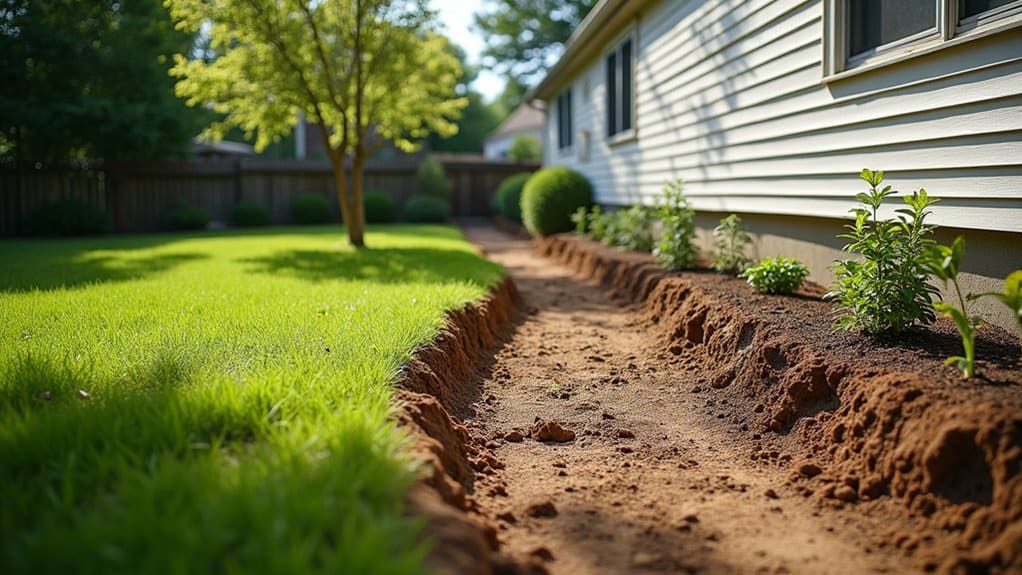
To create a storm-resistant outdoor space, you’ll want to incorporate permeable pavers and bioswales that efficiently channel rainwater away from your home while naturally filtering runoff through native vegetation. Your plant selection should focus on deep-rooted, heat-tolerant varieties like sedums, lavender, and native grasses that can withstand temperature extremes while stabilizing soil during heavy rains. Installing strategically placed shade trees and drought-resistant ground covers will help moderate outdoor temperatures and reduce water consumption, making your terrain more resilient to climate fluctuations.
Sustainable Storm Management Solutions
As climate patterns become increasingly unpredictable, integrating sustainable storm management solutions into your terrain, setting, or environment isn’t just environmentally responsible it’s essential for protecting your property.
Your outdoor landscaping strategy should incorporate groundbreaking features that combat climate change while maintaining aesthetic appeal. Installing permeable pavers and bioswales can tremendously reduce water runoff, while smart drainage systems help manage excess rainfall effectively.
- Replace traditional hardscaping with permeable materials that allow natural ground absorption
- Install bioswales and rain gardens to filter stormwater and prevent flooding
- Implement smart irrigation systems that adjust to weather patterns and soil moisture levels
- Create strategic water catchment zones using retractable barriers and natural slopes
These solutions won’t just protect your property they’ll create a resilient outdoor space that thrives in challenging weather conditions while contributing to environmental sustainability.
Heat-Resistant Plant Selection
With temperatures reaching record highs across the world, selecting heat-tolerant plants has become essential for establishing sustainable, climate-adaptive environments. You’ll want to focus your scenery design on drought-resistant perennials like sage and lavender, which add vibrant colors while requiring minimal water. Native and adapted species offer superior resilience compared to traditional ornamentals, making them ideal choices for your outdoor spaces.
Incorporate succulents and cacti into your design scheme, as they’ve proven exceptionally capable of withstanding extreme temperatures. These plants store water efficiently and create striking visual interest with their unique forms. Don’t forget to complement your plant selection with strategic shade elements like pergolas and trees, creating microclimates that protect both your plants and outdoor living areas from intense heat.
Edible Gardens and Outdoor Kitchens
While traditional backyards once focused solely on ornamental plants, modern outdoor spaces now seamlessly blend edible gardens with functional cooking areas. You’ll find design inspiration in spaces that combine aesthetically pleasing vegetable beds with fully equipped outdoor kitchens, creating a sustainable and practical living environment.
Transform your backyard into a multipurpose haven with these integrated features:
- Raised garden beds filled with herbs, vegetables, and fruits, strategically placed near cooking zones for easy harvest
- Full-service outdoor kitchens complete with brick ovens, stovetops, and prep surfaces
- Year-round cooking stations with weather-resistant countertops and storage solutions
- Edible landscaping that doubles as ornamental design, incorporating fruit trees, berry bushes, and flowering herbs
This sustainable approach to outdoor design creates a self-sufficient space that elevates both your lifestyle and property value.
Eco-Friendly Materials and Features
Today’s environmentally conscious homeowners recognize that sustainable outdoor spaces require more than just green practices they demand thoughtfully selected materials and novel features. You’ll find that incorporating eco-friendly elements into your outdoor design isn’t just trendy it’s essential for reducing environmental impact while creating beautiful spaces.
| Material Type | Benefits | Applications |
|---|---|---|
| Recycled Plastic | Durable, Low Maintenance | Furniture, Decking |
| Bamboo | Fast-Growing, Renewable | Fencing, Screens |
| Reclaimed Wood | Character, Zero Waste | Benches, Planters |
Consider environmentally friendly alternatives to traditional lawns by installing permeable pavers and drought-resistant plantings. You’ll greatly enhance sustainability by combining FSC-certified materials with renewable energy features like solar-powered lighting and smart irrigation systems. These choices don’t merely minimize your carbon footprint but also create sophisticated, forward-thinking outdoor environments that align with contemporary design principles.
Minimalist Hardscaping Solutions
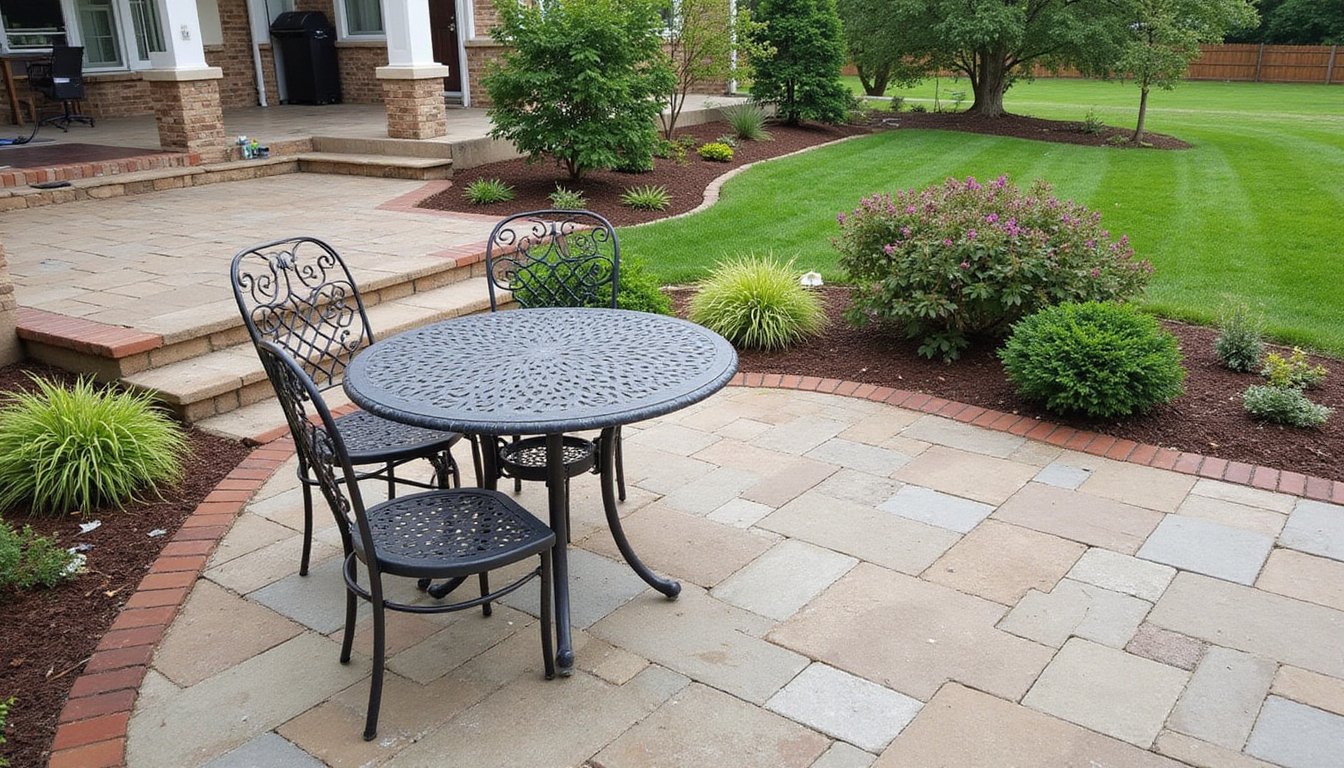
You’ll discover that minimalist hardscaping alternatives highlight crisp lines and natural components like stone and timber to produce refined, low-upkeep outdoor areas. By incorporating sustainable permeable pavers into your plan, you’re decreasing water runoff while attaining a contemporary aesthetic that complements the encompassing scenery. These streamlined hardscape elements don’t just minimize visual disorder but also foster environmental accountability through their sustainable materials and thoughtful application.
Clean Lines, Natural Materials
Modern homeowners are increasingly drawn to minimalist hardscaping solutions that combine clean architectural lines with sustainable natural materials. As outdoor design trends evolve, you’ll find that incorporating elements like permeable pavers and decomposed granite creates sophisticated landscaping ideas while managing stormwater runoff. These eco-conscious choices improve your time outdoors by delivering both form and function.
- Natural stone pavers arranged in geometric patterns provide contemporary appeal while allowing water infiltration
- Decomposed granite pathways offer a sleek, low-maintenance alternative to traditional materials
- Sustainable hardscape materials reduce environmental impact while creating uncluttered, modern spaces
- Clean-lined designs using permeable surfaces help manage runoff while maintaining visual simplicity
This approach to hardscaping delivers a streamlined aesthetic that’s both environmentally responsible and visually striking, perfect for creating modern outdoor living spaces that require minimal upkeep.
Sustainable Pavers Reduce Runoff
Building on the principles of clean-lined design, sustainable pavers represent a significant advancement in minimalist hardscaping. You’ll find these novel materials leading the trends in eco-conscious outdoor spaces, offering both style and functionality.
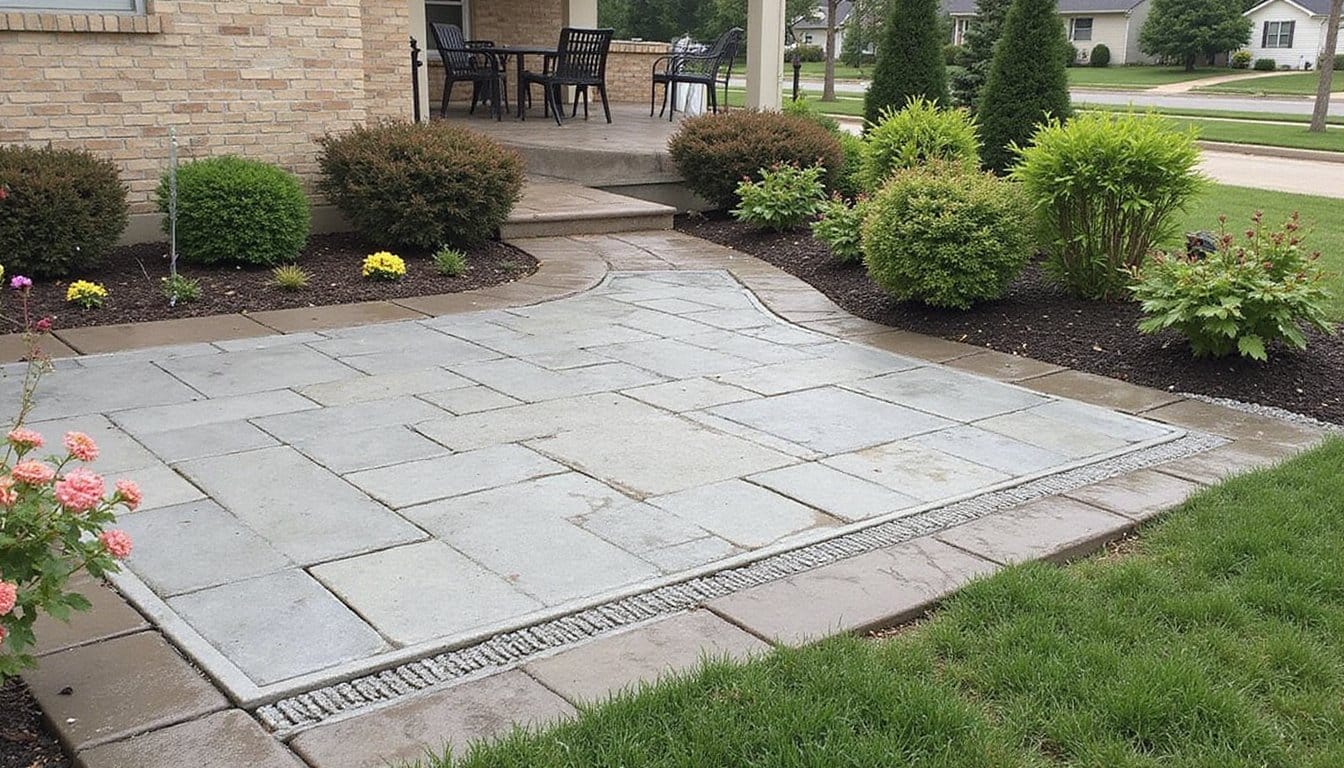
When you’re planning your scenery design, consider how permeable pavers can transform your space. These sustainable solutions allow water to naturally seep into the ground, reducing flood risks while maintaining a sleek, modern aesthetic. You’ll appreciate how their clean lines and simple geometry create a sophisticated look that’s both timeless and environmentally responsible.
The combination of natural stone and concrete pavers doesn’t just minimize maintenance it optimizes environmental benefits. By choosing these minimalist hardscaping elements, you’re contributing to groundwater recharge while elevating your outdoor design with contemporary appeal that meets today’s eco-friendly demands.
Multi-Functional Outdoor Workspaces
A laptop perched beneath a shaded pergola represents today’s evolving workspace, where the boundaries between indoor and outdoor productivity continue to blur. With more than a third of Americans shifting toward remote work, your outdoor living space can transform into a functional office that optimizes even small spaces while maintaining connectivity and comfort.
Create your ideal outdoor workspace with these essential elements:
- Weather-resistant canopies or pergolas with adjustable shade features to protect electronics and guarantee comfortable viewing
- Ergonomic, durable furniture with ample surface area for devices and materials
- Smart technology integration, including Wi-Fi extenders and weatherproof power solutions
- Multi-functional design elements that seamlessly migrate from workday productivity to evening relaxation
This sustainable approach to remote work combines professional functionality with the proven benefits of connecting to nature, enhancing both productivity and well-being.
Frequently Asked Questions
How Much Does Professional Outdoor Lighting Installation Typically Cost?
You’ll typically spend between $2,000 to $6,000 for professional lighting design and installation, with average installation costs varying based on your property’s size and complexity. Popular lighting fixtures like LED path lights, spotlights, and energy-efficient sconces can add $100-300 per fixture. For a thorough system, including smart controls and sustainable low-voltage options, you’ll want to budget $3,500-8,000 for a standard residential property.
What Insurance Considerations Should I Have for Water Features and Pools?
You’ll need extensive liability coverage for your water features and pools, as these installations can pose significant risks. Make sure your policy includes both property damage and personal injury protection. You should also factor in annual maintenance costs and guarantee you’re meeting all local safety regulations, including proper fencing, covers, and slip-resistant surfaces. It’s wise to increase your umbrella coverage to at least $1 million when adding water features to your property.
Which Outdoor Design Trends Have the Highest Return on Investment?
You’ll enhance your return on investment by focusing on low maintenance landscaping, which reduces long-term costs while increasing curb appeal. Native plants and xeriscaping can cut water bills by 50-70%. Smart home integration, including automated irrigation and LED lighting systems, delivers energy savings and modern appeal. Sustainable materials like composite decking and recycled pavers offer durability and reduced maintenance costs, while meeting growing eco-conscious buyer demands.
Are Permits Required for Installing Permanent Shade Structures or Pergolas?
You’ll need permits for most permanent shade structures and pergolas, as they’re deemed structural augmentations to your property. Check your local building code requirements before starting, as regulations vary by location and structure size. You’ll also need to ponder structural support considerations like foundation depth and wind loads. When selecting materials, opt for sustainable options like FSC-certified wood or recycled composites that meet code specifications while minimizing environmental impact.
How Do HOA Regulations Affect Outdoor Design Choices and Modifications?
Your HOA’s guidelines will considerably impact your outdoor design choices. You’ll need to submit detailed plans through the landscaping approval process before making modifications. Most home owner association guidelines regulate everything from fence heights to plant selections and hardscape materials. Be sure to review your zoning ordinances impact, as they work alongside HOA rules. You’ll find it’s easier to plan your project when you understand these restrictions upfront.