For maximum weather resistance, you’ll want to select a 100% acrylic latex or elastomeric paint formulation that offers superior UV and moisture protection. These advanced polymer-based paints provide exceptional flexibility to handle temperature fluctuations while preventing cracking, peeling, and fading. Professional-grade epoxy and polyurethane options deliver additional durability for extreme conditions. Consider your specific climate challenges and surface type to determine the ideal protective coating formulation for your project’s longevity.
Essential Factors for Selecting Weather-Resistant Paint
When selecting exterior paint for ideal weather resistance, you’ll need to evaluate several critical performance factors that directly impact longevity and protection. Your primary consideration should be UV resistance, as UV rays can degrade paint compounds and cause premature fading. Choose formulations specifically engineered to combat ultraviolet radiation.
Consider moisture resistance capabilities, which prevent water infiltration and subsequent paint failure. You’ll want to select 100% acrylic latex or elastomeric formulations that offer superior flexibility to temperature changes, allowing the coating to expand and contract without compromising adhesion. These weather-resistant exterior options provide heightened durability against climate fluctuations and harsh environmental conditions. Look for products that specifically state their performance ratings in moisture resistance, UV protection, and temperature adaptability to guarantee you’re investing in a coating system that delivers perfect weather protection.
Top-Performing Exterior Paint Types and Their Properties
While numerous exterior paint options exist in today’s market, five high-performance formulations stand out for their exceptional protective qualities. You’ll find acrylic latex paint leading the pack with its superior resistance to fading, cracking, and peeling in harsh weather conditions.
For industrial applications, epoxy-based paints deliver unmatched protection against chemical exposure and abrasion. If you’re dealing with surfaces prone to cracking, elastomeric coatings provide a waterproof barrier that flexes to bridge minor imperfections. When UV resistance is your primary concern, both urethane and polyurethane formulations excel at maintaining color integrity and sheen retention under intense sunlight.
Each weather-resistant option offers unique protective properties, making your choice dependent on specific environmental challenges. For ideal durability, match your exterior paint selection to your surface’s exposure conditions and performance requirements.
Understanding Paint Composition and Durability Features
Modern exterior paints derive their durability from a precise combination of three essential components: binders, pigments, and carriers. When you’re selecting durable paints for outdoor applications, understanding these elements helps you make informed decisions about weather resistance and longevity.
Acrylic Latex formulations incorporate specialized binders that allow your paint to flex with temperature fluctuations while maintaining adhesion. The composition of high-performance exterior paints includes UV-resistant pigments and protective additives that shield against harsh weather conditions. You’ll find that epoxy-based and polyurethane variants contain advanced polymer structures that create an impenetrable barrier against moisture and chemical exposure. For maximum durability, elastomeric coatings utilize unique elastic properties that bridge minor surface cracks, while urethane-modified formulations deliver superior color retention and gloss stability in sun-exposed areas.
Climate-Specific Paint Recommendations
Selecting the best exterior paint for your specific climate zone greatly impacts the longevity and performance of your coating system. For high-quality exterior paint that’s weather-resistant, you’ll need to match your regional conditions with the right formulation.
In Arizona’s intense sun, choose light-colored, UV-resistant paints to prevent degradation. Acrylic Exterior formulations work best in areas with temperature swings due to their flexibility. If you’re in a coastal region, environmentally friendly elastomeric coatings provide superior moisture protection. For harsh weather in cold climates, opt for oil-based paints that resist freeze-thaw damage. Areas with heavy rainfall require epoxy-based formulas offering amplified mildew resistance and adhesion. The Best weather-resistant paint for your location depends on understanding these climate-specific challenges and selecting formulations engineered to combat your particular environmental stressors.
Professional Application Techniques for Maximum Longevity
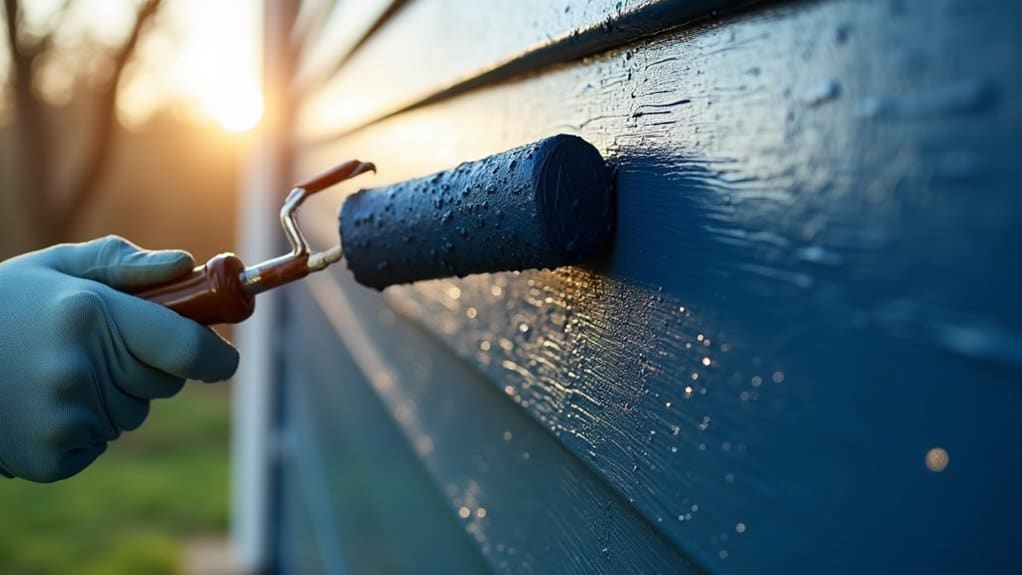
To enhance your outdoor paint’s longevity, you’ll need to follow strict surface preparation protocols, including thorough cleaning, methodical sanding, and strategic priming techniques that create a prime foundation for adhesion. Your selection of professional-grade application tools, such as premium rollers and angled brushes, will greatly impact the uniformity and durability of the final finish. You’ll achieve the optimal results by timing your application during ideal weather conditions, maintaining proper temperature and humidity levels throughout the curing process.
Surface Preparation Best Practices
Professional surface preparation stands as the cornerstone of any successful exterior painting project. When you’re working with surfaces exposed to weather elements, you’ll need to thoroughly clean and inspect the substrate before any paints can adhere well.
Begin by removing all existing paint, dirt, and debris through pressure washing or scraping. Next, repair any structural imperfections, including cracks, gaps, or loose materials that could compromise your exterior painting results. Apply a surface-specific primer that’s compatible with your chosen paint system to guarantee durability and ideal adhesion.
You’ll want to allow adequate drying time between preparation steps, particularly in humid conditions. Keep in mind that proper surface preparation directly impacts your paint’s longevity, so don’t rush this critical phase. Follow manufacturer guidelines for surface preparation protocols specific to your chosen paint system.
Proper Application Tool Selection
Once your surface is properly prepared, the quality of your application tools becomes the next determining factor in achieving professional-grade results. Select high-density, shed-resistant roller covers and angled brushes that’ll optimize paint coverage while minimizing visible brush strokes. For expansive exterior walls, consider professional airless sprayers to achieve uniform coverage and superior weather protection.
You’ll need to maintain proper paint consistency throughout the application process. This means thorough stirring and appropriate thinning to achieve vital viscosity for your chosen tools. When using brushes and rollers, apply thin, even coats that promote maximum adhesion. For cutting in edges and corners, specialized angled brushes provide precise control. Remember, your choice of application tools directly impacts the paint job’s durability and longevity, making proper tool selection essential for long-term exterior protection.
Weather-Smart Timing Strategies
Successful exterior painting demands strategic timing that aligns with favorable weather conditions for maximum adhesion and durability. When selecting weather-resistant acrylic latex paints, you’ll need to coordinate your application schedule with ideal environmental factors to guarantee longevity, especially in areas exposed to harsh elements.
Monitor temperature ranges between 50-85°F for ideal paint viscosity and curing
Track humidity levels below 70% to prevent moisture-related adhesion issues
Schedule work during low wind conditions to avoid airborne debris contamination
Plan your project during periods of minimal precipitation forecast for 24-48 hours
Time your application between 10 AM and 3 PM for optimal surface temperature
These timing strategies are your best option for minimizing volatile organic compounds’ evaporation rates while maximizing your paint options’ protective properties, guaranteeing professional-grade results that withstand environmental challenges.
Sustainable and Eco-Friendly Weather-Resistant Options
You’ll find significant environmental advantages in choosing zero-VOC and low-VOC exterior paints, which release minimal harmful compounds while maintaining excellent weather resistance. Natural paint alternatives derived from plant oils, resins, and minerals offer superior sustainability compared to traditional petroleum-based formulations, particularly when coupled with proper disposal practices. Water-based acrylic latex options further strengthen your eco-friendly approach by reducing toxic emissions and providing sturdy protection against outdoor elements.
Low-VOC Paint Benefits
While traditional exterior paints often release harmful chemicals into the environment, low-VOC and zero-VOC alternatives provide superior eco-friendly solutions without compromising performance.
When you’re selecting sustainable outdoor paint options, consider these essential benefits:
- Zero-VOC formulations contain less than 5g/L of volatile organic compounds, vastly reducing environmental impact
- Natural paint alternatives derived from renewable resources like plant oils and minerals offer exceptional safety profiles
- Low-VOC paints contribute directly to LEED certification requirements, enhancing your building’s green credentials
- Modern eco-friendly formulations maintain superior weather resistance and durability comparable to conventional paints
- You’ll protect both the environment and human health while achieving professional-grade results
These sustainable paint options demonstrate that environmental responsibility doesn’t require sacrificing performance in exterior applications, making them ideal for conscious consumers and professional contractors alike.
Natural Paint Solutions
Natural paint solutions represent a breakthrough in sustainable exterior finishes, combining time-tested organic materials with modern performance requirements. You’ll find that linseed oil-based paints deliver superior flexibility and durability against harsh environmental conditions, including UV exposure and temperature variations.
For historic preservation projects, milk-based casein paints offer exceptional breathability and mold resistance while maintaining an authentic appearance. Clay-based paints excel in moisture regulation, making them ideal for humid climates. When you’re prioritizing air quality, zero-VOC natural paints eliminate harmful emissions without sacrificing weather protection.
These eco-friendly alternatives incorporate plant oils, mineral pigments, and beeswax to create sturdy exterior finishes that rival conventional options. Each natural paint type serves specific performance needs while ensuring environmental sustainability and long-lasting weather resistance for your outdoor surfaces.
Zero-Emission Coating Options
Modern zero-emission coatings represent a significant advancement in sustainable exterior finishes, offering both environmental benefits and exceptional weather resistance. You’ll find several high-performance options that deliver superior protection while minimizing environmental impact.
- Zero-VOC paints contain less than 5g/L of volatile compounds, ensuring optimal prime air quality during and after application
- Acrylic latex paints with low-VOC formulas provide excellent weather resistance while allowing easy water cleanup
- Mineral-based paints utilize natural clay and silicates, creating a breathable barrier that adapts to climate fluctuations
- Linseed oil-based paints harness renewable plant oils for a durable, low-odor finish that matures gracefully
- Bio-based polyurethane coatings derived from soy or corn deliver exceptional UV and moisture protection
These novel solutions combine environmental responsibility with professional-grade performance, making them perfect for exterior applications where durability and sustainability are paramount.
Frequently Asked Questions
What Is the Most Weather Resistant Exterior Paint?
You’ll find that polyurethane coatings offer superior paint adhesion properties and exceptional weather resistance. They’re unmatched in UV light protection and fade resistant qualities, while delivering outstanding mildew resistance and water repellent characteristics. Their temperature tolerant performance guarantees stability in extreme conditions. However, acrylic latex paints are a close second, particularly when you need a balance between durability and cost-effectiveness for exterior applications.
What Exterior Paint Finish Is Most Durable?
When comparing paint sheen options, you’ll find that satin and semi-gloss finishes offer the most durability for exterior applications. During paint preparation steps, these sheens create a harder, more resilient surface that’s easier to maintain. While paint color selection and paint brand comparisons matter, the sheen level remarkably impacts longevity. Your paint application techniques will work best with these finishes, as they’re more forgiving and provide superior protection against moisture, UV rays, and daily wear.
What Is the Best Exterior Paint for Harsh Weather?
For harsh weather conditions, you’ll want to evaluate elastomeric or polyurethane paint types, as they offer superior coating properties against environmental factors. Elastomeric coatings provide excellent waterproofing and flexibility, while polyurethane delivers outstanding UV resistance. Before application techniques, guarantee proper surface preparation by cleaning, priming, and addressing any damage. Consider your specific climate considerations – if you’re dealing with extreme temperature fluctuations, elastomeric is your best choice; for intense UV exposure, opt for polyurethane.
What Is the Best Exterior Paint for Longevity?
You’ll achieve maximum paint life expectancy with Sherwin-Williams Duration exterior paint, which offers superior UV protection and fade resistance. Its elastomeric properties provide excellent paint flexibility, preventing cracking in varying temperatures. For ideal moisture resistance and paint mildew resistance, pair it with proper surface preparation and primer. Choose light, neutral colors to boost longevity, and maintain your paint job regularly with gentle cleaning and periodic inspections for the best long-term results.