You’ll want 50 to 300 lumens per fixture for most landscape lighting, matching output to each object’s size and purpose. Small plants and shrubs need roughly 50 to 150 lumens, while medium features call for 150 to 300. Specific fixtures vary: step lights use 12 to 100, path lights 100 to 200, tree uplights 200 to 700, and flood or security lights 700 to 1300. Lumens measure brightness, not energy, so they let you compare LED and halogen directly. Several other factors shape how your light actually looks.
Key Takeaways
- Most landscape fixtures fall within a 50 to 300 lumen range, matched to the size and purpose of what you’re lighting.
- Match lumens to fixture type: step lights 12 to 100, path lights 100 to 200, accent lights 50 to 185, tree uplights 200 to 700, and floods 700 to 1300.
- Use lumens, not watts, to compare brightness across LED, halogen, and other fixture technologies.
- Favor lower outputs to preserve shadows and texture, since higher lumens can flatten surfaces and cause glare or washout.
- Adjust perceived brightness with beam angle, color temperature, CRI, placement, and spacing rather than lumens alone.
The Right Lumens for Landscape Lighting
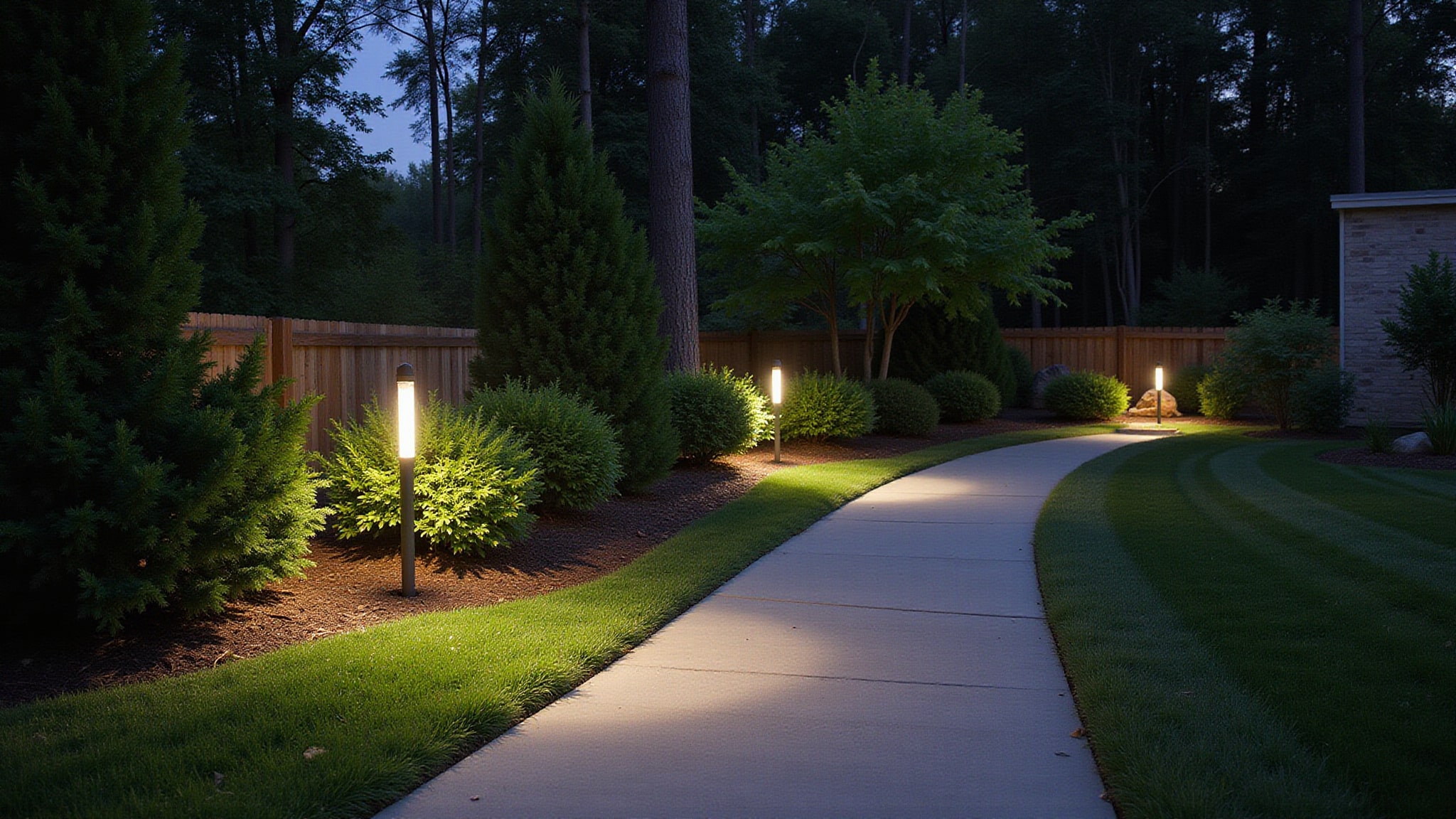
Landscape lighting works best at 50 to 300 lumens per fixture as your general working range. This range covers most decorative and functional needs, letting you calibrate landscape lighting brightness to each feature you’re illuminating. Small plants and shrubs sit at the low end, around 50 to 150 lumens, while medium landscape features call for 150 to 300 lumens. If you’re wondering how many lumens landscape lighting requires, start by matching output to the object’s size and purpose. Use layered lighting to balance ambient, task, and accent needs across your yard. General garden or small shrubbery looks effective near 50 lumens, giving you subtle definition without glare. Keep your outdoor lighting scaled precisely so each fixture contributes to a cohesive, controlled nighttime composition. Proper burial depth for landscape wire is crucial to ensure that the electrical connections remain protected from moisture and damage. Digging the right depth not only safeguards the wire but also enhances the longevity of your landscape lighting system.
What are lumens and why do they matter outdoors
Lumens measure the total visible light a fixture emits, and they matter outdoors because they’re the metric you’ll rely on most when planning outdoor illumination. Unlike watts, which quantify energy consumption, lumens quantify actual brightness, the value that determines whether a fixture performs as intended. When you review landscape lighting lumens, you’re evaluating output independent of the technology producing it, so LED and halogen fixtures compare directly. Outdoors, this precision matters because ambient darkness, distance, and open space absorb light differently than interior environments. A low-lumen fixture that’s adequate indoors can disappear across a wide yard. By calculating outdoor lighting lumens against your specific application, pathways, accents, or security, you’ll match intensity to purpose. Understanding this metric lets you specify fixtures accurately rather than guessing, preventing over-lit glare or insufficient coverage. When exploring solar landscape lighting effectiveness comparison, it’s crucial to consider the efficiency of each fixture type. Evaluating how different brands and technologies perform in various outdoor conditions will provide insights into the best options for your needs.
How many lumens do you need for each fixture type
Each fixture type carries its own lumen target: step lights need 12 to 100, path lights need 100 to 200, accent/hardscape fixtures need 50 to 185, uplights for trees need 200 to 700, and flood/security lights need 700 to 1300. Matching output to function is where effective landscape lighting begins. You’ll want to align each fixture’s brightness with its intended role, since underlighting compromises safety while overlighting creates glare and washout. Path lights, step lights, uplights, and floods each serve distinct purposes, so calibrate accordingly.
| Fixture Type | Lumen Range |
|---|---|
| Step lights | 12 to 100 |
| Path lights | 100 to 200 |
| Accent/hardscape | 50 to 185 |
| Uplights (trees) | 200 to 700 |
| Flood/security | 700 to 1300 |
Use lower outputs for stairs and decorative accents to reduce glare, moderate levels for pathways and small plantings, and higher outputs for large trees or security zones. When you match lumens to fixture function precisely, you’ll achieve balanced, layered illumination without excess.
How does brightness affect the look of your yard
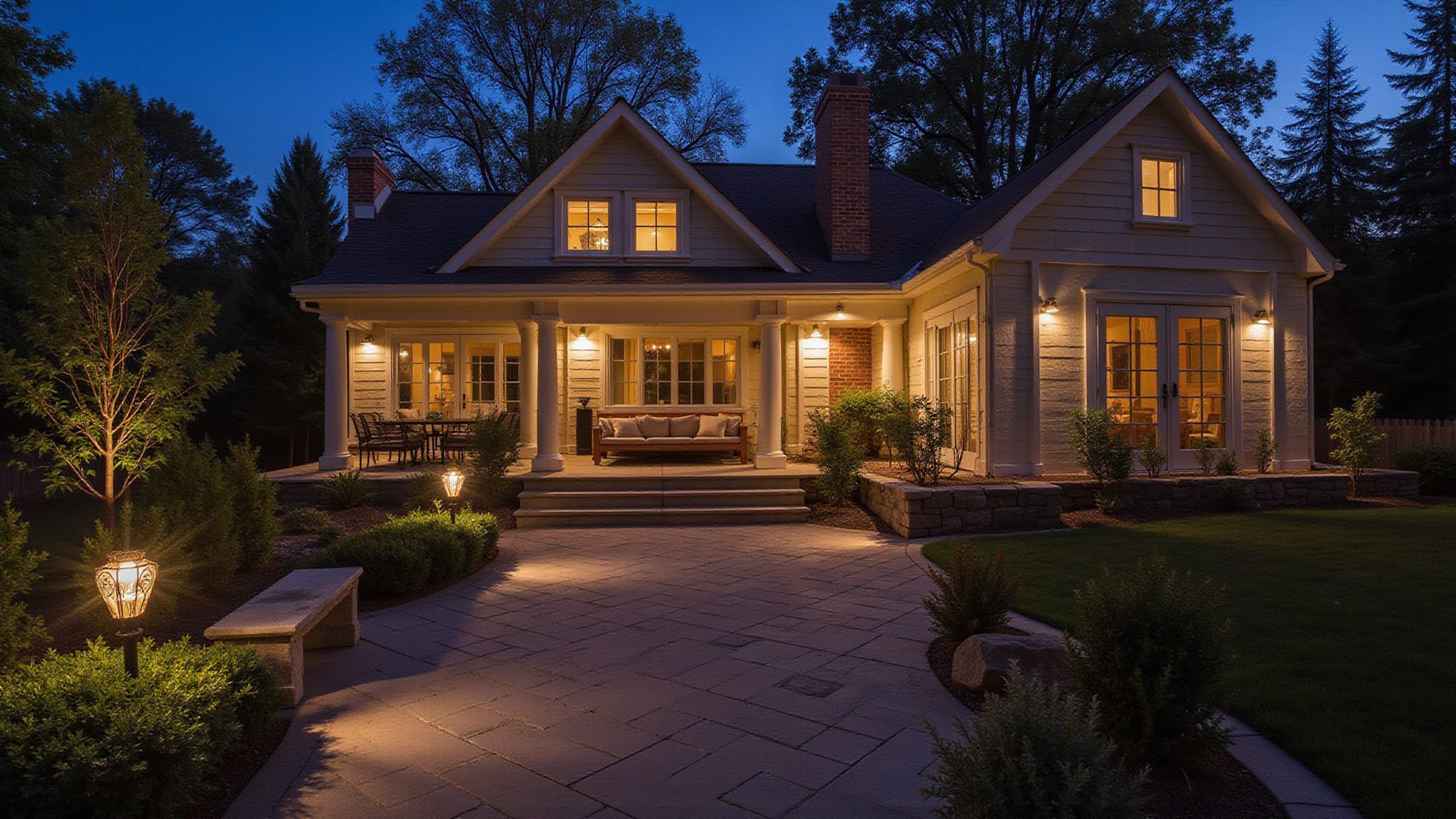
Brightness dictates the mood, depth, and visual hierarchy of your yard far more than fixture placement alone. Higher lumen outputs flatten texture and wash surfaces, while lower outputs preserve shadow gradients that define shape and dimension. You control focus by varying intensity across zones, guiding the eye toward focal points and away from utility areas.
Brightness, not placement, shapes your yard, vary intensity across zones to build depth, guide focus, and preserve dimension.
- Low output (12 to 100 lumens): Steps and hardscape gain subtle definition without glare, keeping edges readable and surfaces textured.
- Mid output (150 to 500 lumens): Shrubs and small trees show layered depth, separating foreground from background cleanly.
- High output (700 to 1300 lumens): Security floods dominate, erasing shadow and prioritizing visibility over aesthetics.
Balancing these tiers builds contrast, so you avoid a uniformly lit, dimensionless yard.
What other factors matter besides lumens
Beyond lumens, several factors shape how light behaves once it leaves the fixture. Beam angle determines whether you get a tight spotlight or a broad wash. Narrow beams (15 to 30°) concentrate light on trunks, while wider spreads suit shrubs and facades. Color temperature shapes mood: 2700K reads warm and inviting, while 4000K feels crisp and clinical. Consider the Color Rendering Index (CRI); higher values render foliage and stone accurately. Fixture placement, mounting height, and shielding control glare and prevent hotspots. Factor in your spacing, 6 to 8 feet for path lights, to avoid dark gaps. Surface reflectivity matters too, since pale walls bounce more light than dark mulch. Finally, layering ambient, task, and accent sources balances your overall composition effectively.
How do you choose the right brightness for your landscape lighting
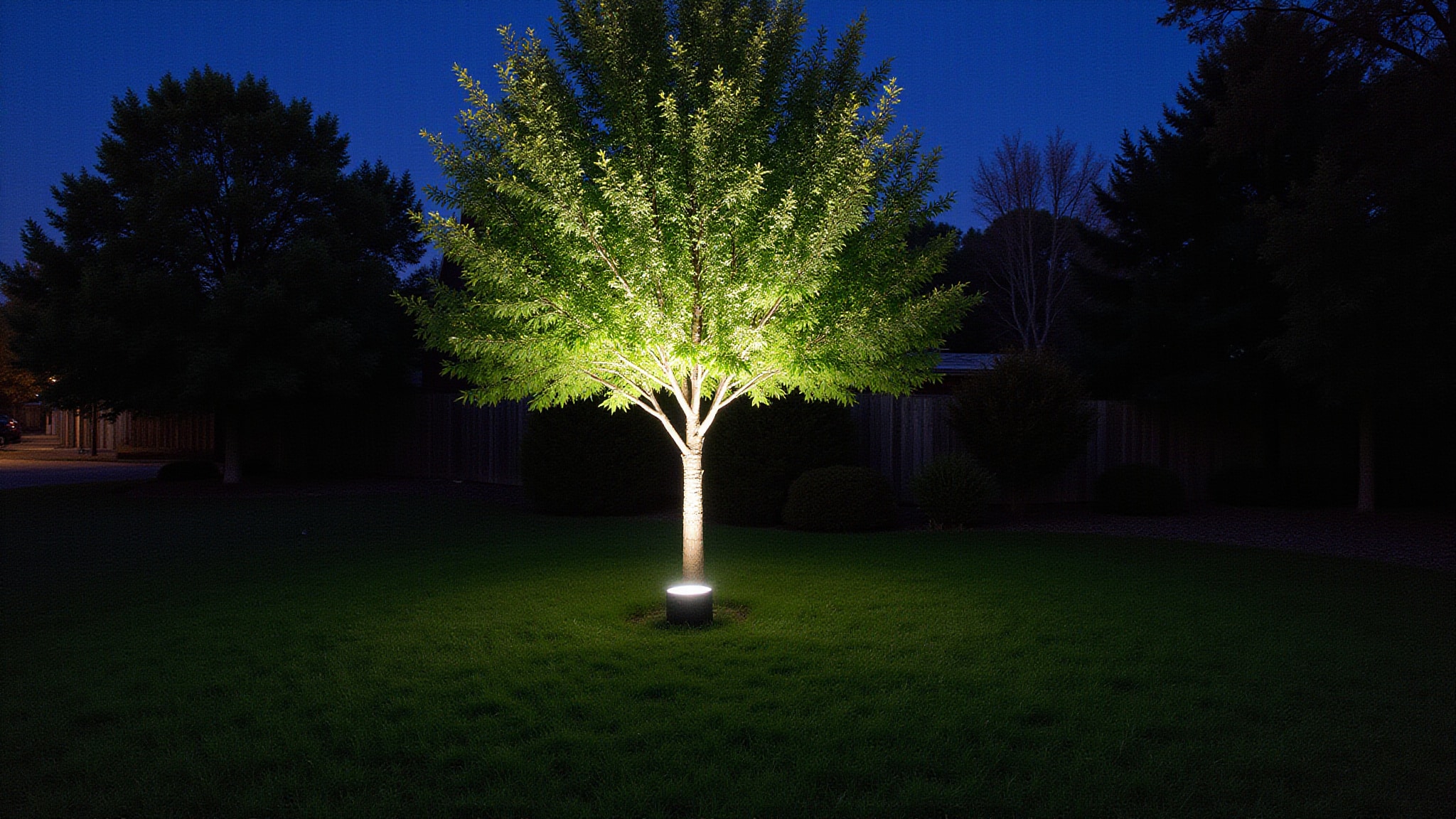
Choose the right brightness by matching lumen output to each feature’s function and scale, then refining from there. Assess what you’re lighting, how large it is, and whether it serves safety, ambient, or accent purposes. Then dial in exact levels feature by feature:
- Pathways and steps: Use 100 to 200 lumens for walkways and 12 to 100 lumens for steps, spacing path lights 6 to 8 feet apart for even, glare-free guidance.
- Trees and shrubs: Scale by height. Use 50 to 150 lumens for small ornamentals, 300 to 500 lumens for small trees, and up to 1000 lumens for large specimens.
- Patios and security: Target 10 to 40 lumens per square foot for seating areas, and 700 to 1300 lumens for flood or motion-based security fixtures.
Layer these outputs to balance function and aesthetics.
Conclusion
Getting the lumens right is what makes landscape lighting feel intentional: gentle output for shrubs and paths, more for facades and focal points, and higher still for security, all in a warm color temperature that flatters the yard. Too bright reads harsh, too dim disappears, so the sweet spot matters. Innovative Outdoor Living designs lighting with the right lumen levels and color for each zone, so a property glows warmly and evenly rather than being simply lit.
Call Today and Illuminate Your Outdoor Space
From uplighting to path lights to color-changing systems, expert installation brings your landscape to life after dark. At Innovative Outdoor Living in Jupiter Farms, FL, our skilled team delivers dependable Landscaping built around your outdoor style and lifestyle. Call +1 (561) 594-1495 today and start your lighting project.
Frequently Asked Questions
What Color Temperature Is Best for Outdoor Landscape Lighting?
Warm white light in the 2700K to 3000K range works best for most outdoor landscape lighting, rendering foliage, brick, and stonework naturally while creating an inviting mood. For cool architectural elements or modern hardscapes, pushing toward 3500K to 4000K gives a crisper, whiter look. Anything above 4000K is best avoided outdoors, since it casts a harsh, bluish tone that flattens color and undercuts a landscape’s warmth.
Are LED or Halogen Bulbs Better for Landscape Lighting?
LEDs perform better in nearly every landscape application. They draw noticeably less power, run cooler, and last far longer than halogen, which reduces maintenance and replacement cycles. They also hit target lumen levels efficiently, whether 50 lumens for shrubs or 700-plus for security. Halogens produce a warm light some prefer, but they waste energy as heat and burn out much sooner, so LEDs win overall.
How Many Lumens Do Solar Landscape Lights Typically Produce?
Solar landscape lights usually produce between 50 and 300 lumens per fixture, depending on design and use. General landscape lighting and small shrubbery sit around 50 to 150 lumens, while medium features push toward 150 to 300. Casual garden paths do well at 100 to 150 lumens per fixture. Solar output does vary with battery capacity, panel efficiency, and available daily sunlight, which affects how consistent the brightness stays.
What Voltage Do Most Outdoor Landscape Lighting Systems Use?
Most outdoor landscape lighting runs on a low-voltage 12-volt system. It is the industry standard because it is safe, energy-efficient, and easy to install without heavy electrical work. Fixtures run off a transformer that steps the home’s standard 120-volt supply down to the safer 12-volt output. That low-voltage setup reduces shock risk and makes it practical to add or move fixtures around the yard.
How Do I Maintain and Clean Outdoor Landscape Fixtures?
Powering down the system first, then wiping each fixture’s lens with a soft, damp cloth clears dirt and debris. Inspecting gaskets and seals for cracks and replacing any that are compromised protects against water intrusion. Clearing leaves and mulch from the housing, tightening loose connections, checking contacts for corrosion, and applying dielectric grease all help. Repositioning tilted fixtures, trimming encroaching foliage, and confirming each lamp’s output finishes the job.