

You need to bury low-voltage landscape lighting wire at least 6 inches deep. That’s the NEC minimum for circuits under 30 volts, and it applies to 12V and 24V transformer systems when you use direct-burial-rated cable like UF-B. For added protection, go deeper, 8 to 12 inches, in high-traffic, rocky, or frost-prone zones. Always call 811 before digging, and confirm your local code. Below, you’ll find depth specs, code details, and damage-prevention tips.
Key Takeaways
- Low-voltage 12V/24V landscape lighting wire requires a minimum burial depth of 6 inches per NEC guidelines.
- Bury wire 8 to 12 inches deep in high-traffic, rocky, or frost-prone zones to prevent damage.
- Always use direct-burial-rated cable like UF-B; never use NM-B (Romex) for direct burial.
- For 120V circuits, depth depends on method: 24 inches for UF, 18 inches in PVC, 6 inches in rigid metal conduit.
- Call 811 to locate utilities before digging and confirm stricter local code requirements first.
Landscape Lighting Wire Burial Depth
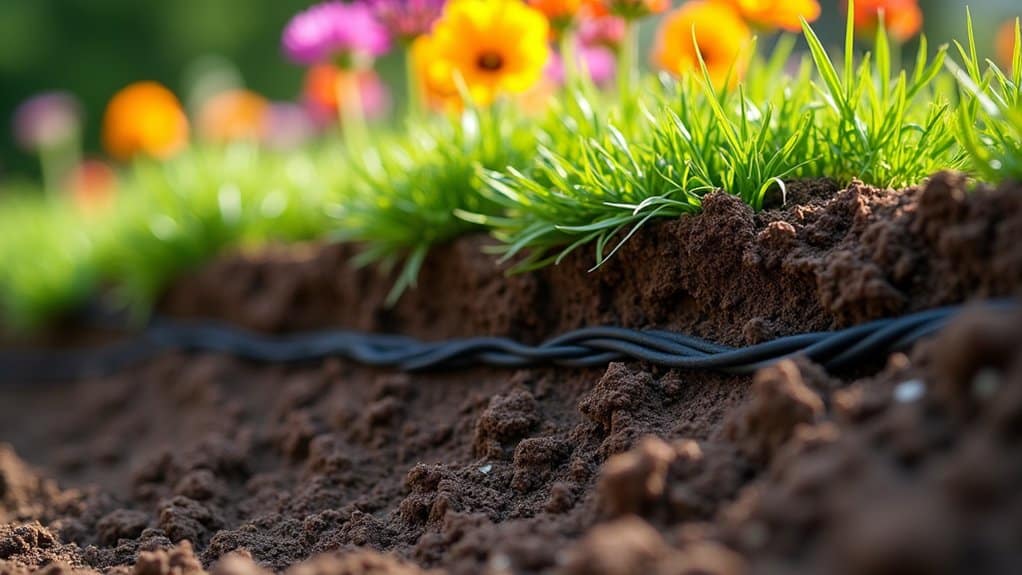
Bury low-voltage landscape lighting wire at least 6 inches deep. This landscape wire burial depth is the NEC-cited minimum for circuits operating under 30 volts, so it’s the baseline you should work from. For 12V and 24V systems connected to a transformer, that 6-inch low voltage wire depth is commonly acceptable when the cable is direct-burial-rated and properly installed.
Many installers treat 6 inches as the code minimum, not the preferred target. A landscape lighting wire depth of 6 to 12 inches gives you a practical residential range that reduces accidental damage. Choose your depth based on soil type, traffic, and maintenance access, and always use underground-rated cable to keep the installation safe and compliant. The optimal lumens for outdoor lighting can significantly enhance the safety and aesthetic appeal of your landscape. By selecting lighting fixtures that provide the right brightness, you can create inviting pathways and highlight key features of your outdoor space.
Why does wire burial depth matter
Wire burial depth matters because it directly affects how long your installation lasts and how safely it operates. When you’re burying landscape lighting wire, depth determines how well the cable resists damage from shovels, edgers, aerators, and frost heave. The 6-inch NEC minimum for low-voltage circuits under 30 volts gives you a safe baseline, but shallow placement leaves your landscape lighting wiring vulnerable in high-traffic, rocky, or tool-heavy zones. Going 8 to 12 inches deep in those areas reduces accidental cuts and future service calls. Deeper burial also protects against animals and future landscaping work. You’re balancing code compliance with practical durability, matching depth to soil, traffic, and maintenance access keeps your system operating safely for years. Signs your lights need maintenance can often manifest as dimming or flickering bulbs. Additionally, if you notice that some fixtures are not turning on at all, it may indicate underlying issues that require attention.
What burial depth is recommended for each wire type
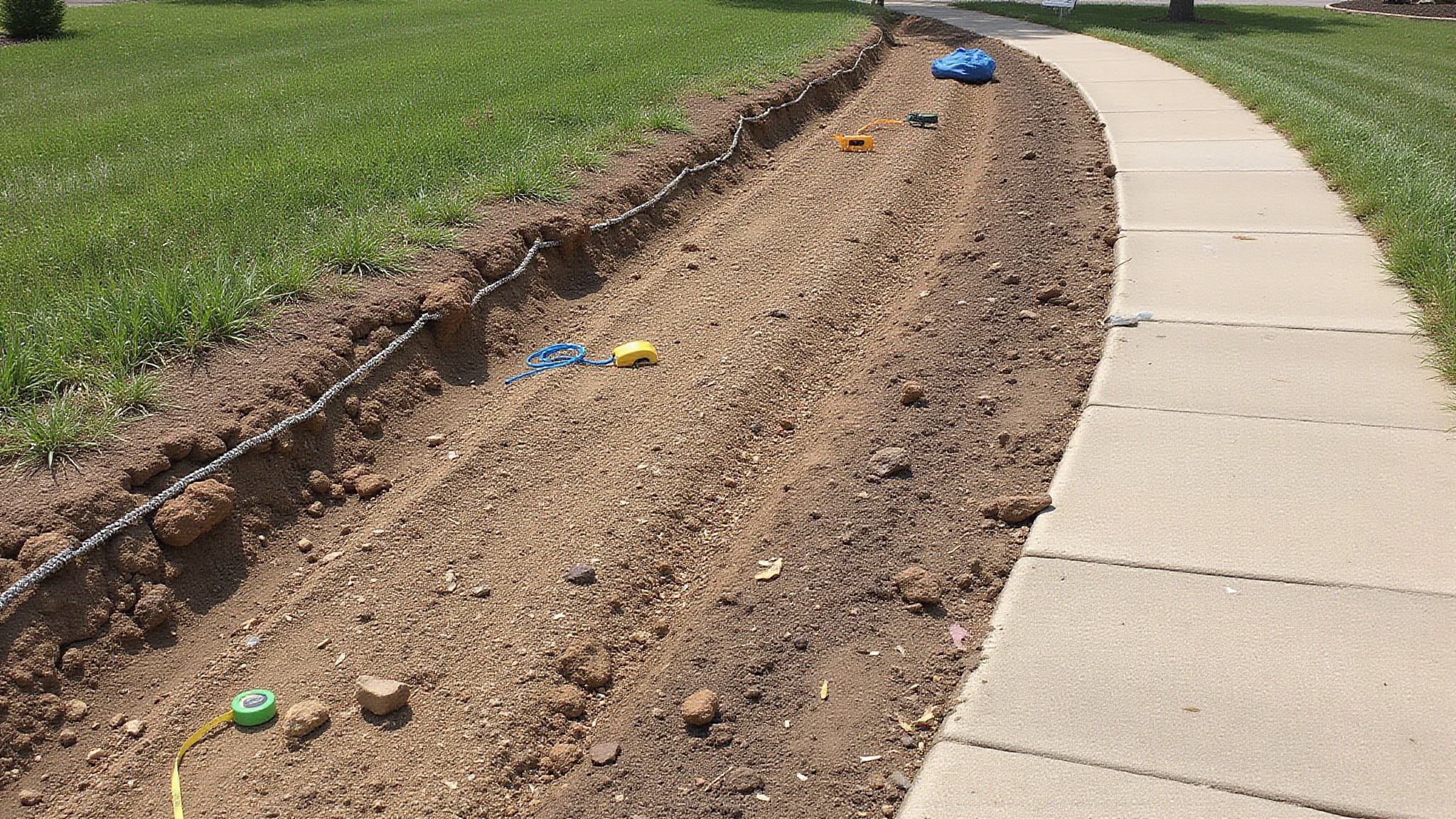
Recommended burial depth depends on wire type and voltage. Low-voltage landscape circuits under 30 volts, like 12V and 24V systems tied to a transformer, are commonly allowed at 6 inches when properly installed. Higher-voltage 120V wiring demands more cover, and the required depth depends on your wiring method, not just the fixture.
| Wire Type / Method | Minimum Cover |
|---|---|
| Low-voltage (12V/24V) | 6 inches |
| 120V UF direct-burial | 24 inches |
| 120V in PVC conduit | 18 inches |
| 120V in rigid metal conduit | 6 inches |
Use direct-burial-rated cable like UF-B for underground runs. Non-direct-burial cable needs conduit. Don’t use NM-B (Romex) for direct burial. Match your method to the voltage you’re running.
What do electrical codes require for burial depth
Under the NEC, low-voltage landscape lighting wire carrying under 30 volts requires a minimum of 6 inches of cover. This baseline applies to 12V and 24V systems connected to a transformer, provided you install them with direct-burial-rated cable. Higher-voltage circuits demand deeper burial, and the required depth depends on your wiring method, not the fixture type. Enhancing outdoor spaces with lighting can significantly improve aesthetics and safety. Properly placed lights highlight pathways and showcase landscaping features while ensuring visibility at night.
Low-voltage landscape wire under 30 volts needs just 6 inches of cover, depth depends on your wiring method, not the fixture.
Here’s how the NEC treats common 120V methods:
- Direct-burial UF cable, 24 inches of cover.
- PVC conduit, 18 inches of cover.
- Rigid metal conduit, 6 inches of cover.
GFCI-protected 120V residential wiring is cited at 12 inches in one NEC-based summary. Confirm your local code before you dig, since jurisdictions can enforce stricter requirements than the national baseline.
How do you bury the wire safely
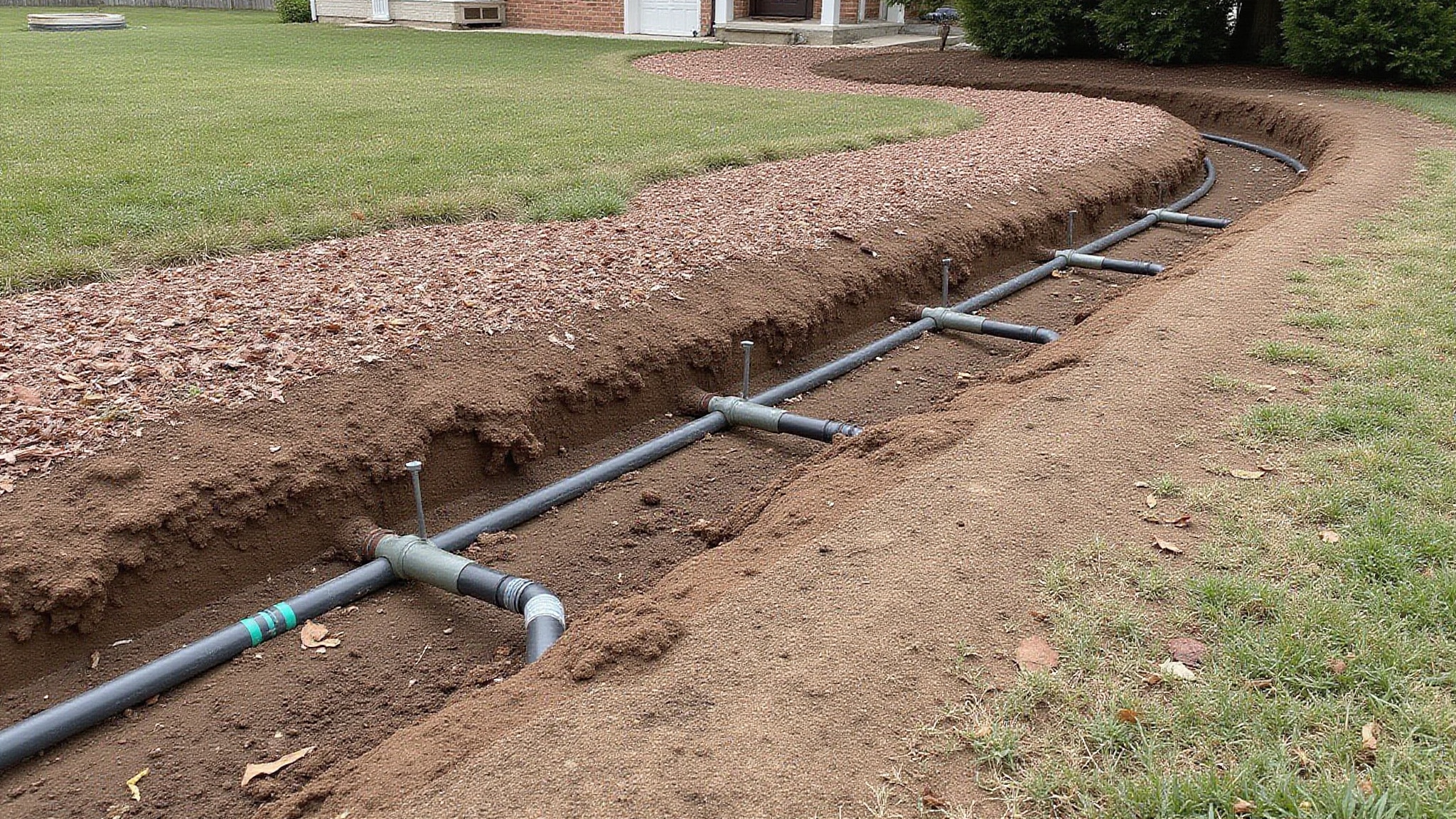
Bury the wire safely by digging your trench to at least 6 inches of cover, going deeper, 8 to 12 inches, in high-traffic, rocky, or frost-prone zones. Call 811 to locate underground utilities and avoid striking a gas, water, or electrical line. Use direct-burial-rated cable, or run non-direct-burial wire through conduit. Keep runs neat, avoiding sharp bends or tight angles that stress the conductor. At underground joints, use direct-burial connectors like gel-filled wire nuts or heat-shrink butt splices to keep moisture out. Test your fixtures before full backfill to confirm they operate properly. In shallow planting beds, secure the wire with landscape staples and mulch. Finally, keep a map or photos documenting the path, depth, gauge, and splice locations for future reference.
How do you protect buried wire from damage
Protect buried wire from damage by placing the cable deeper in high-risk zones and shielding it from the shovels, edgers, and aerators that cause most failures. In rocky, frost-prone, or tool-heavy areas, bury the wire at:
- 8 inches where edgers and aerators work regularly.
- 10 inches in active garden beds prone to digging.
- 12 inches where frost heave or animals threaten the run.
Route the cable away from turf renovation and frequent-digging zones. In planting beds, secure it with landscape staples and cover it with mulch. Use direct-burial connectors, gel-filled wire nuts or heat-shrink butt splices, at every joint. Avoid sharp bends that stress insulation. Finally, keep a map documenting path, depth, gauge, and splice locations for future work.
Conclusion
Burying landscape lighting wire at the right depth, and pairing it with the correct cable, connectors, and a call to 811 first, is what keeps a system safe, code-compliant, and trouble-free for years. Cutting corners underground is exactly where problems surface later. Innovative Outdoor Living installs landscape lighting the right way, burying and connecting wire to spec and documenting the runs, so the system stays reliable long after the trench is filled.
Light Up Your Backyard Beautifully
Well-designed landscape lighting transforms any outdoor space into a stunning evening retreat, safely and efficiently. At Innovative Outdoor Living in Palm Beach Gardens, FL, our experienced team provides trusted Landscaping with expert lighting design and installation. Call +1 (561) 594-1495 today and see your backyard shine.
Frequently Asked Questions
What Wire Gauge Should I Use for Long Lighting Runs?
For long low-voltage runs, the wire should be sized to the total fixture wattage and run length rather than a one-size-fits-all guess. A common guide cites 12-gauge for runs up to 200 feet and 10-gauge for runs up to 300 feet at up to 60 watts. Heavier gauge reduces voltage drop, so going thicker as runs lengthen keeps fixtures performing reliably. Matching the gauge to the load is the key.
Which Connectors Work Best for Underground Low-Voltage Splices?
Direct-burial connectors rated for underground use are the ones to reach for, since standard twist-on nuts do not hold up to moisture. Gel-filled wire nuts make quick, waterproof splices, while heat-shrink butt splices give an even more durable, sealed connection. Both protect low-voltage joints from corrosion and shorts. Keeping runs neat, avoiding sharp bends, and testing each fixture before backfilling confirms the connections are solid underground.
Do I Need to Call 811 Before Digging?
Yes. Even for shallow low-voltage trenches, calling 811 first is the recommended safety step to locate underground utilities like gas, water, electric, and communication lines. The call gets those lines marked, so trenching for lighting wire does not accidentally strike them. It is a simple step that protects against injury, costly damage, and service disruptions, and it should never be skipped.
Can I Use NM-B (Romex) for Landscape Lighting?
No. NM-B, or Romex, is not rated for direct burial, and guidance warns against it even inside conduit. The right choice is UF-B or another underground-rated cable designed for wet, buried conditions. For low-voltage runs, direct-burial-rated cable paired with direct-burial connectors like gel-filled wire nuts or heat-shrink butt splices is how a durable, code-compliant, safe installation comes together.
Should I Keep a Map of Buried Wire Locations?
Yes. Documenting the cable path, burial depth, wire gauge, and every splice location, ideally with photos taken before backfilling, is well worth the few minutes. That record protects future landscaping, edging, or digging from accidental cable damage and costly service calls, and noting the transformer connections helps too. A clear map keeps the system safe and easy to maintain for years.