Uplighting places fixtures near the ground and aims beams upward, revealing the texture and vertical form of trees, facades, and stone walls. It’s your accent layer, creating high-contrast silhouettes with narrow 15°, 35° beams. Downlighting mounts fixtures higher, in trees, on eaves, or pergolas, casting a soft, moon-like glow across patios, paths, and garden beds using wider 40°, 60° angles. Uplighting delivers drama; downlighting delivers calm, functional coverage. Understanding each technique reveals stunning, layered nighttime scenes.
Key Takeaways
- Uplighting aims beams upward from ground-level fixtures to reveal texture and vertical form on trees, facades, and walls.
- Downlighting mounts fixtures higher in trees or on eaves to cast a soft, moon-like glow onto ground areas.
- Uplighting creates drama and high-contrast accents, while downlighting provides ambient, functional illumination for safety and usability.
- Uplighting uses narrow 15°, 35° beams for precise accents; downlighting uses wider 40°, 60° beams for even coverage.
- Combine both by layering downlighting as a base, adding uplighting for focal points, using separate control zones.
Uplighting vs Downlighting in Landscape Design
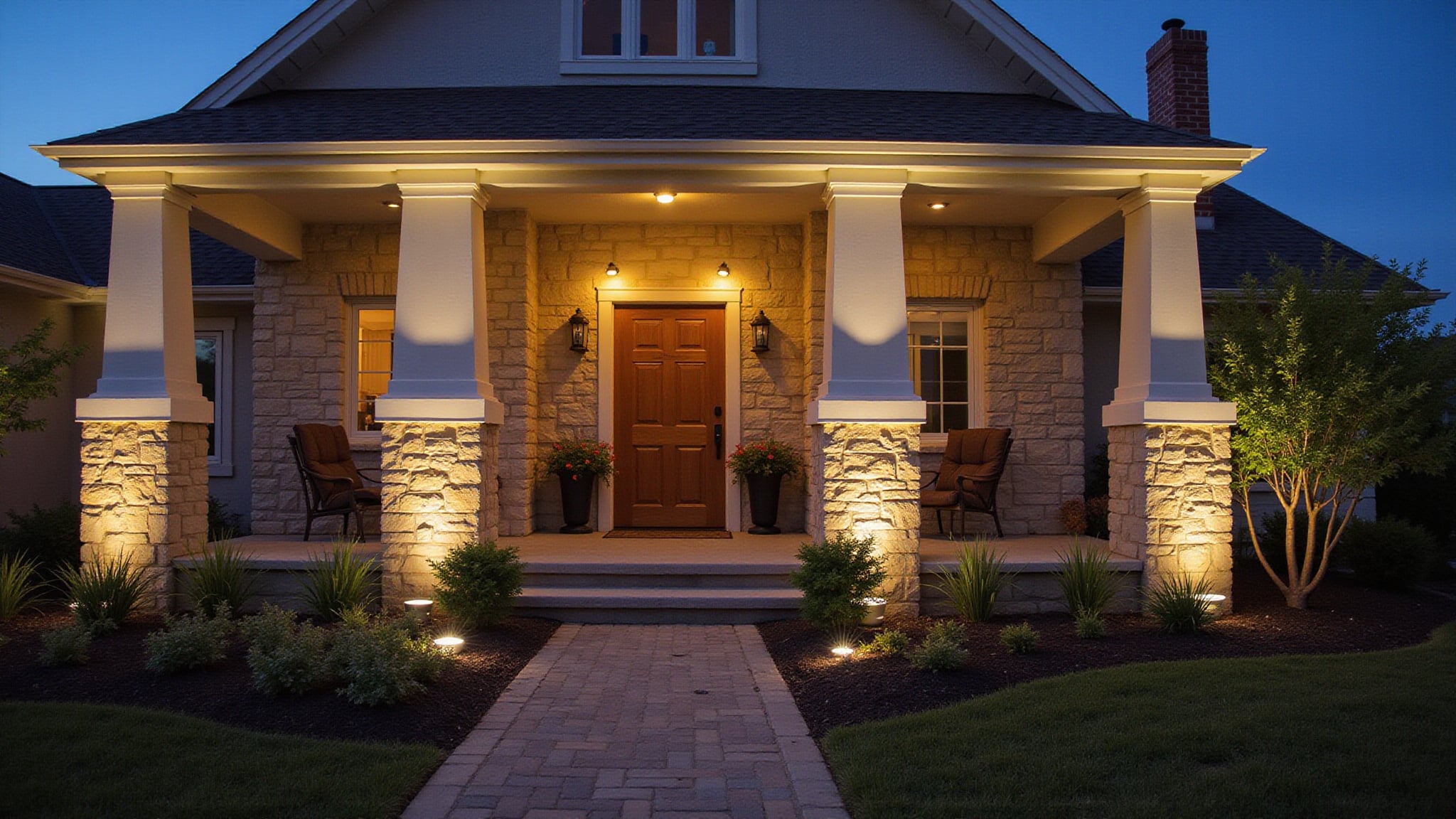
Uplighting and downlighting differ in one key way: light direction. Uplighting places fixtures near ground level and aims them upward, revealing the texture and vertical form of trees, facades, columns, and stone walls. Downlighting mounts fixtures higher, in trees, on eaves, or pergolas, and casts a soft, moon-like glow down onto patios, walkways, and garden beds.
The uplighting vs downlighting distinction shapes your entire atmosphere. Landscape uplighting creates drama, depth, and high-contrast silhouettes that draw the eye upward and make features appear taller. Landscape downlighting spreads calmer, more even illumination below, improving wayfinding and usability after dark. Low voltage landscape lighting benefits include energy efficiency and reduced electricity costs. It allows homeowners to enhance their outdoor spaces while minimizing their environmental impact.
Think of it this way: uplighting delivers accent and statement, while downlighting establishes ambient, functional mood.
What is uplighting in landscape design
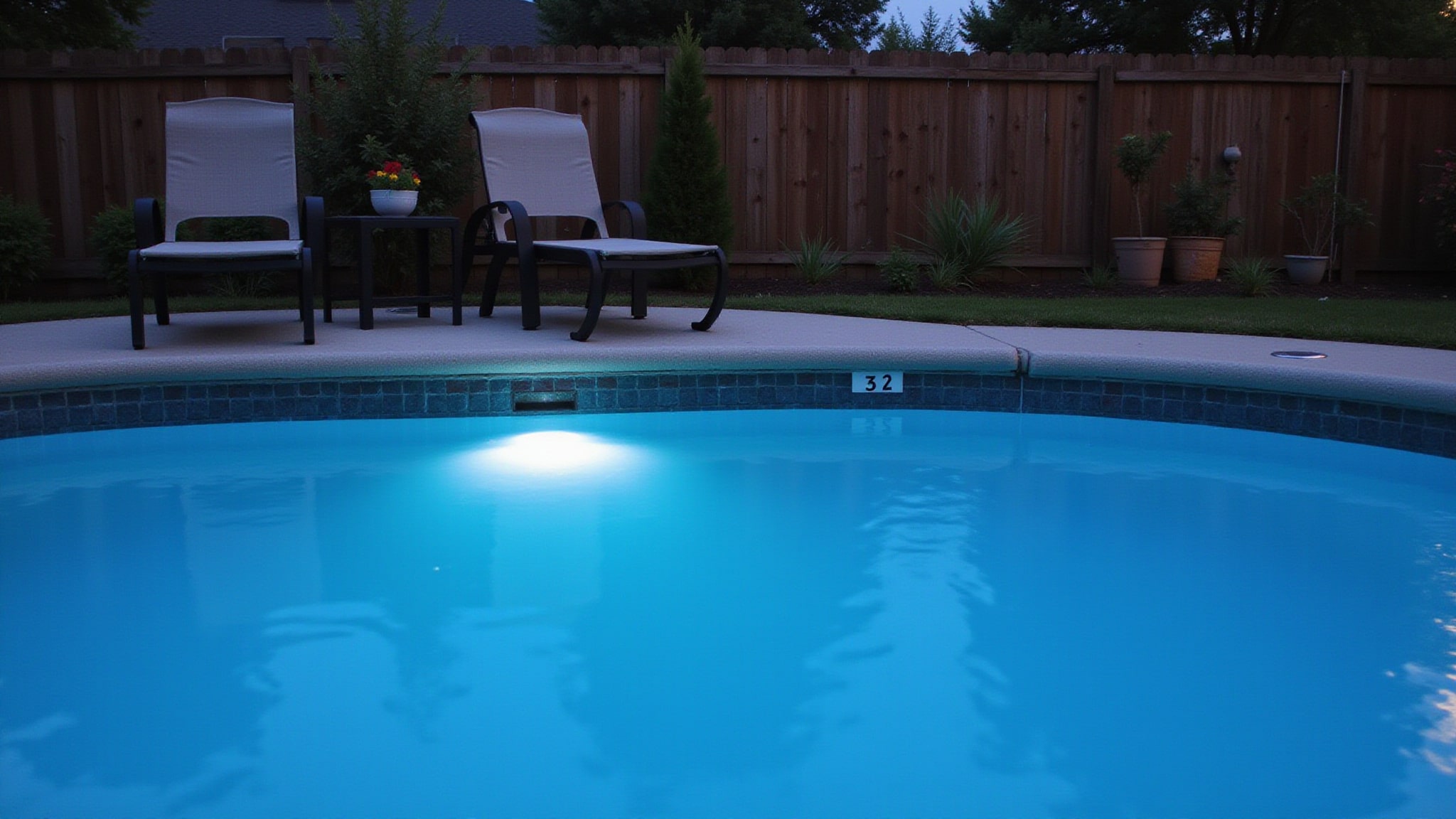
Uplighting is a landscape technique that places fixtures near ground level and aims their beams upward, washing light across trees, facades, columns, and stone walls. As one of the most dramatic outdoor lighting techniques, it reveals texture and vertical form, casting high-contrast silhouettes that draw the eye upward and make features appear taller and more prominent.
In your landscape lighting design, you’ll typically use spotlights, well lights, or accent fixtures to concentrate light on a single subject. Narrow to medium beam angles around 15°, 35° let you sculpt precise accents on leaves, branches, masonry, and carved surfaces. Regular maintenance is essential to ensure that your landscape lighting remains effective and safe. Consider scheduling professional landscape lighting inspection services to check for any issues or to optimize your setup.
Since uplighting functions as accent lighting, you’ll want to reserve it for a few high-value focal points, such as statement trees, architectural details, or stone walls, rather than spreading it everywhere.
What is downlighting in landscape design
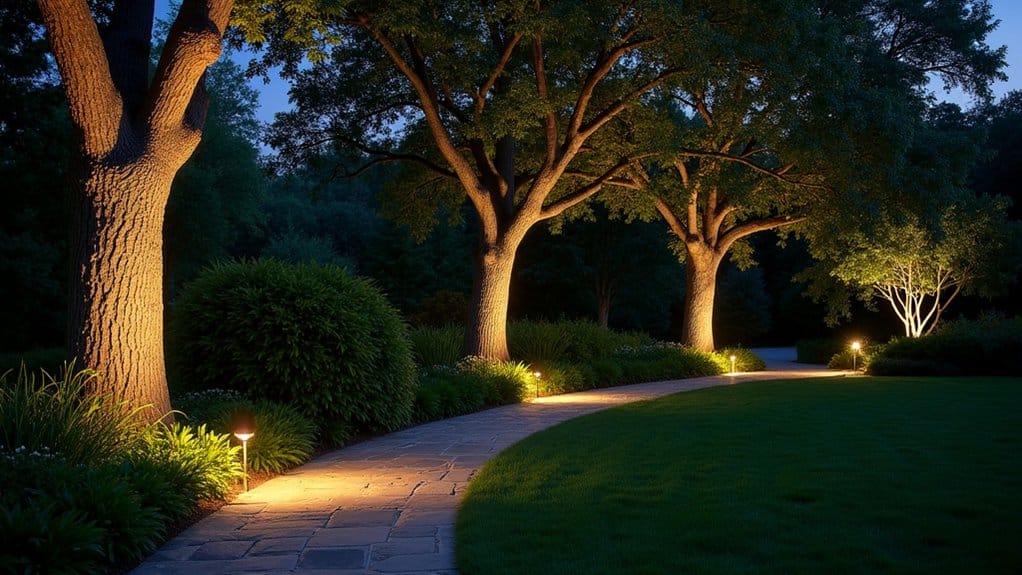
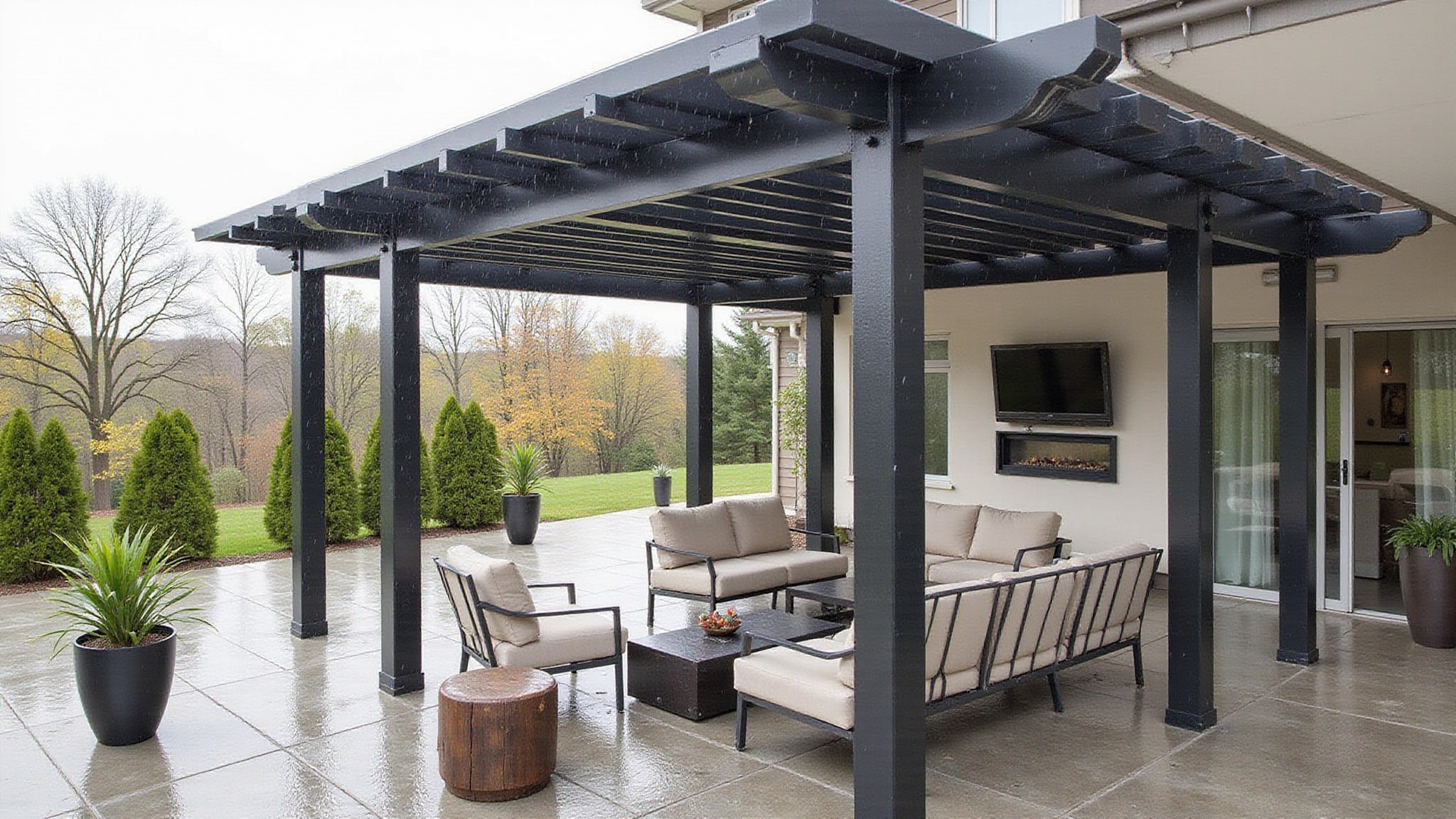
Downlighting is a technique that mounts fixtures higher up, in trees, on eaves, pergolas, or crossbeams, and aims them downward onto patios, paths, driveways, and garden beds. You get a soft, natural glow that mimics moonlight or sunlight filtering from above, spreading an even pool of illumination across the ground below.
Because it establishes functional visibility, downlighting works as your ambient base layer. It improves wayfinding across walkways and outdoor living spaces where you need to see after dark. You’ll typically use wider beam angles, around 40°, 60°, for broad coverage, angling fixtures 45 degrees or steeper to keep light off faces and preserve that gentle effect. Pair warm white LEDs in the 2700K, 3000K range, and you’ll create a calm, cohesive nighttime environment that feels effortless.
How do uplighting and downlighting compare in effect and use
Uplighting and downlighting differ most in light direction, and that single difference drives everything else. When you aim light upward, you reveal vertical texture, cast dramatic silhouettes, and draw the eye toward trees, facades, and columns. When you point it downward, you spread a soft, moon-like glow that calms a space and improves wayfinding across patios and paths.
| Attribute | Uplighting | Downlighting |
|---|---|---|
| Direction | Upward | Downward |
| Effect | Drama, contrast | Soft ambient glow |
| Best use | Focal features | Functional coverage |
| Beam angle | 15°, 35° | 40°, 60° |
When should you use uplighting versus downlighting
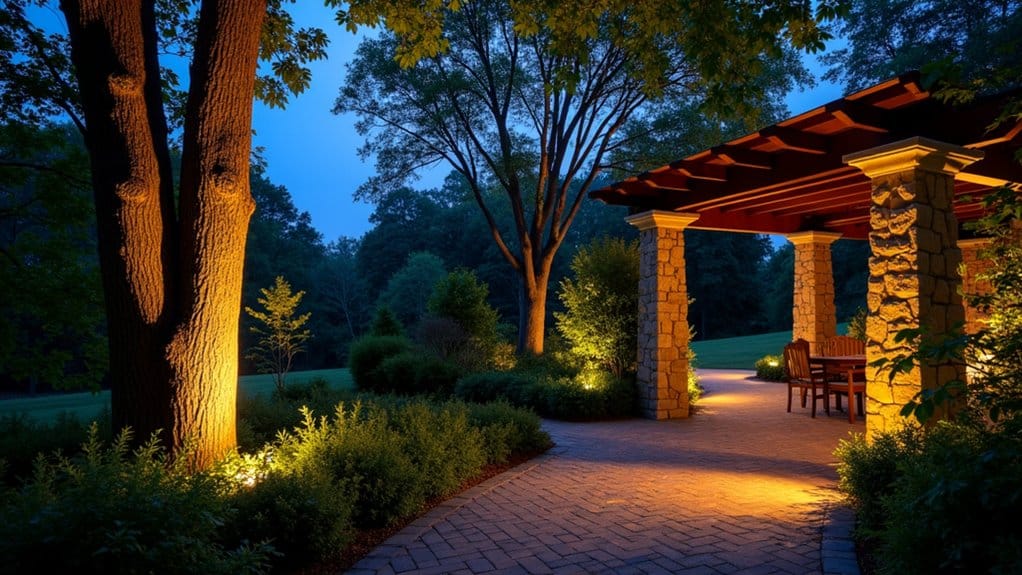
Use uplighting when you want drama and downlighting when you want usability and safety. Aim uplighting fixtures upward at trees, facades, columns, or stone walls to reveal texture, shape, and vertical form through high-contrast silhouettes. Save it for a few high-value focal points rather than spreading it everywhere.
Choose downlighting for usability and calm. Mount fixtures higher in trees, on eaves, or across pergolas to cast a soft, moon-like glow over patios, walkways, driveways, and garden beds. This improves wayfinding after dark while establishing an even ambient baseline. Start with downlighting for function, then layer in uplighting to accent your standout features. Optimal locations for outdoor lighting should also consider the surrounding landscape and the intended use of the space. Strategically placed fixtures can enhance safety while providing aesthetic appeal, making outdoor areas more inviting at night.
How do you combine both in your landscape design
Combine both techniques by starting with downlighting as your base layer and adding uplighting for selected focal points. Establish a functional ambient baseline across your patios, walkways, and garden beds, then layer dramatic accents onto a few high-value vertical features. Wire your uplights and downlights on separate control zones so you can dim each independently and craft flexible nighttime scenes.
- Set your base: Mount downlights in trees, eaves, or pergolas at 45° or steeper, casting soft, moon-like pools across traffic zones.
- Add accents: Position well lights or spotlights at ground level, aiming narrow 15°, 35° beams up trees, walls, and columns.
- Refine comfort: Add shrouds and screening to control glare and protect visual comfort throughout.
Conclusion
Uplighting and downlighting are two halves of the same craft: uplighting dramatizes trees, walls, and architecture from below, while downlighting mimics soft, natural moonlight over paths and patios. The most striking yards use both, layered deliberately for depth and function. Innovative Outdoor Living designs landscape lighting that balances the two, placing each fixture to highlight the best of a property while keeping the whole scene glare-free and inviting after dark.
Light Up Your Backyard Beautifully
Well-designed landscape lighting transforms any outdoor space into a stunning evening retreat, safely and efficiently. At Innovative Outdoor Living in Palm Beach Gardens, FL, our experienced team provides trusted Landscaping with expert lighting design and installation. Call +1 (561) 594-1495 today and see your backyard shine.
Frequently Asked Questions
How Much Does Landscape Lighting Typically Cost to Install?
Installation cost depends on the fixture count, beam quality, and mounting complexity. The money mostly goes into precise accent spotlights, wide-pool downlights, warm 2700K to 3000K LEDs, glare shrouds, and separate control zones for independent dimming, with raised tree or eave mounting adding labor. Focusing the budget on focal points first, then layering functional ambient coverage, spreads it well. A designer can quote a specific yard accurately.
Are LED or Halogen Bulbs Better for Outdoor Lighting?
LEDs are the better choice for outdoor lighting. They are far more energy-efficient, last dramatically longer, and run cooler than halogens, so replacements and power both cost less. Warm white LEDs in the 2700K to 3000K range give a natural, moon-like glow, whether accenting a textured stone wall or washing a patio. Halogens throw pleasing warm light too, but they fade faster and cost more to run over time.
How Do You Maintain and Clean Landscape Lighting Fixtures?
Wiping each fixture’s lens with a soft, damp cloth clears the dust, pollen, and hard-water film that dull a beam. Checking seals and gaskets for cracks that let water in, and reseating any loose housings, protects the electrics. Clearing leaves and mulch away from ground-level uplights, reaiming tilted spotlights back onto their targets, inspecting wiring for corrosion, tightening connections, and replacing fogged lenses all keep the light clean and sharp.
Do Landscape Lights Need a Professional Electrician to Install?
Not always, though it depends on the setup. Low-voltage systems are usually DIY-friendly, since the transformer steps power down to safe levels for wiring uplights and downlights. A licensed electrician is the right call for line-voltage fixtures, new circuits, or panel connections. Mounting downlights high in trees or eaves, or burying cable near existing lines, is also work where a professional is worth having.
How Much Energy Do Outdoor Landscape Lights Consume?
Very little, since modern warm-white LEDs in the 2700K to 3000K range use only a few watts each. Uplighting spotlights and downlighting pools both run efficiently, so trees, walls, patios, and walkways can be lit without spiking the bill. Layering downlights as a base with a few uplit focal points keeps consumption low, especially when separate dimming zones fine-tune each fixture’s output.